
Einaudi Center for International Studies
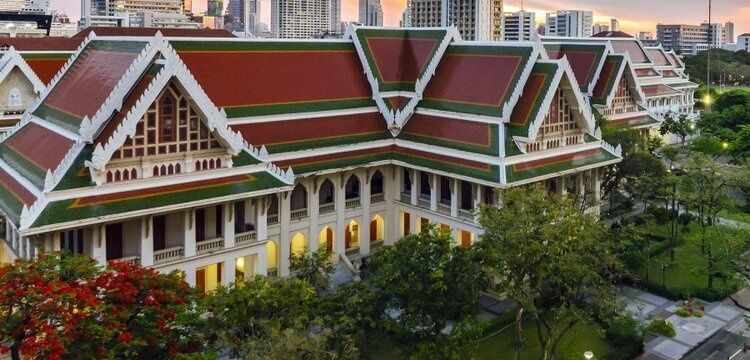
Global Hubs Info Session: Joint Seed Grants with Chulalongkorn University
August 29, 2023
8:00 am
Global Cornell is offering competitive faculty grants in collaboration with Global Hubs partners.
Apply for funding to explore potential research collaborations with colleagues at Hubs universities.
Global Hubs collaborative research seed grants bring together Cornell and partner institution faculty to develop joint projects with the potential to create new or expanded research partnerships and cutting-edge scholarship with academic and societal impact. These international seed grants provide initial financial support for early-stage research projects or capacity-building efforts to create and sustain long-term collaborations and secure external funding.
Please join us on August 29 at 8:00 – 8:45 a.m. ET / 7:00 – 7:45 p.m. Bangkok time for a joint info session to learn more about the Chula–Cornell grant opportunity. Q&A and collaboration matchmaking will follow a short presentation.
Chula-Cornell Seed Funds:
Up to five (5) research proposals will be funded.Each successful proposal may receive up to $5,000/฿200,000 from each university for a total of $10,000/฿400,000. Project duration: January 1–December 31, 2024Application deadline: October 6, 11:59 p.m. ETRegister for the Chula-Cornell Joint Info Session on Zoom
Sign up for the Chula-Cornell collaboration matchmaking
Learn about additional seed grants available with other Global Hubs partners
Additional Information
Program
Einaudi Center for International Studies
Cornell Winter Program in Cambodia Info Session
September 12, 2023
4:30 pm
Uris Hall, 153
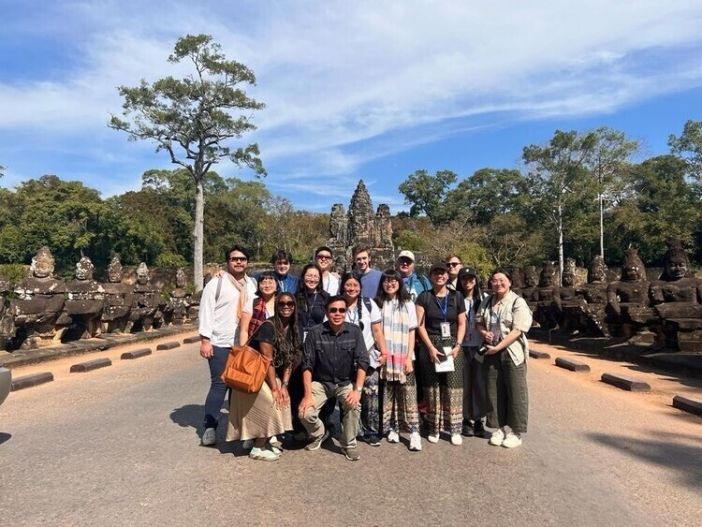
Come learn more about our winter study abroad in Cambodia. In collaboration with the Center for Khmer Studies (CKS), Cornell's Southeast Asia (SEAP, Einaudi) Study Abroad program in Cambodia will provide an in-depth focus on on how the dynamic changes in Phnom Penh and Siem Reap connect to their history, policies, and labor politics. This highly interactive course involves a mix of lectures by scholars and policy makers, with field visits. Given that the labor-intensive garment industry has contributed to making Cambodia one of the fastest growing economies in Asia, we will specifically focus on the role of labor and human capital in Cambodia's development.
Additional Information
Program
Einaudi Center for International Studies
Southeast Asia Program
Cornell Winter Program in Cambodia Info Session

September 11, 2023
12:00 pm
Uris Hall, 153
Come learn more about our winter study abroad in Cambodia, lunch provided. In collaboration with the Center for Khmer Studies (CKS), Cornell's Southeast Asia (SEAP, Einaudi) Study Abroad program in Cambodia will provide an in-depth focus on on how the dynamic changes in Phnom Penh and Siem Reap connect to their history, policies, and labor politics. This highly interactive course involves a mix of lectures by scholars and policy makers, with field visits. Given that the labor-intensive garment industry has contributed to making Cambodia one of the fastest growing economies in Asia, we will specifically focus on the role of labor and human capital in Cambodia's development.
Additional Information
Program
Einaudi Center for International Studies
Southeast Asia Program
International Organizations and the Prioritization of Climate Action
September 28, 2023
12:00 pm
Uris Hall, G08
Climate Cascades
International organizations (IOs) are rapidly reorienting around climate change, despite powerful principal states having divergent preferences. When and why do IOs prioritize climate change? Richard T. Clark, Assistant Professor in the Department of Government at Cornell University, will argue that they do so as a result of an endogenous process of staff learning and rotation. IO staff surveil and implement programs in target states. When working in climate-vulnerable countries, they come to see climate change as an issue warranting aggressive action. As these staff are rotated and promoted, interest in climate diffuses outwards and upwards through the institution. To test this theory, original data is introduced, tracking the International Monetary Fund's attention to climate change and the career paths of key staff. This is complemented with interviews of IMF personnel to support this theory.
About the speaker
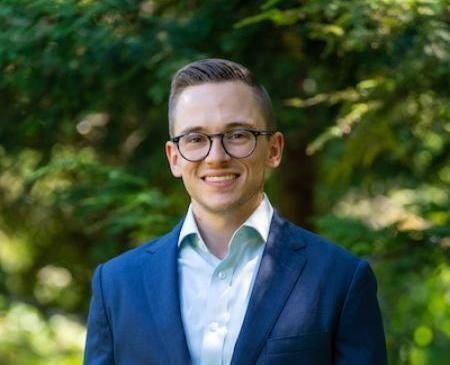
Dr. Richard T. Clark is an Assistant Professor in the Department of Government at Cornell University. His research interests center on international organizations, international finance, public opinion of foreign economic policy, and climate politics. He is particularly interested in policymaking at the World Bank and International Monetary Fund and how these organizations bargain with member states. His work has been published in the American Journal of Political Science, International Organization, and the Journal of Politics, among other outlets. His research has been recognized with several awards, including the 2022 Best Dissertation award from the International Collaboration section at APSA and the 2021 Henry Owen Memorial Award from the Bretton Woods Committee. He holds a Ph.D. from Columbia University.
Host
Judith Reppy Institute for Peace and Conflict Studies
Additional Information
Program
Einaudi Center for International Studies
Reppy Institute for Peace and Conflict Studies
Mandela Washington Fellows
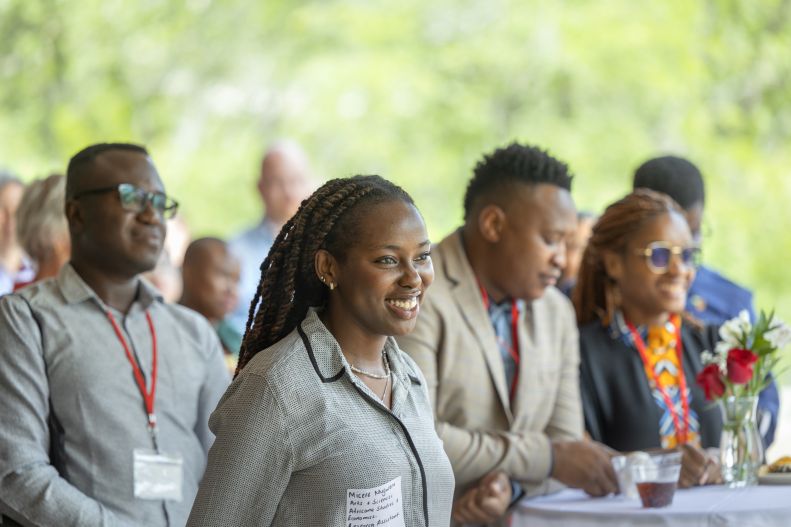
25 African Leaders Find Inspiration at Cornell
Cohosted by Einaudi, Cornell's 25 Mandela fellows honed their skills as public officials and managers in six weeks on campus this summer.
Additional Information
Mandela Fellows at Cornell (video)
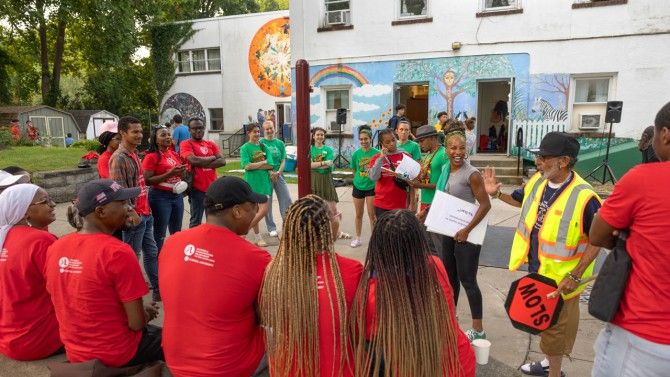
Cohosted by Einaudi and the Brooks School, Cornell's 25 Mandela fellows represent countries from all over sub-Saharan Africa. Learn more about their six weeks on campus.
Additional Information
Community College Impact

Title VI–funded Programs Partner with MCC
Our programs work with community colleges across NY, including Monroe Community College in Rochester, to bring the world to our state's classrooms.
Additional Information
Weaponizing Geography

September 7, 2023
12:00 pm
An Environmental and Technological History of Cold War Mega-Projects in Latin America
Weaponizing Geography demonstrates the consequences of unbuilt mega-projects. Sebastian Diaz Angel will discuss the untold story of how a series of high modernist Cold War projects came into being and what their proponents hoped to achieve, as well as the successes, failures, and consequences of their actions. It examines the so-called “South American Great Lakes System” (SAGLS), a geographical and environmental engineering project (1964-1973) proposed by the Hudson Institute of New York, a think tank related to the U.S. Department of Defense. With the support of influential Latin American elite members, engineers, and war strategists, this think tank sought to transform the major rivers of the continent into a series of massive interlocked, channelized, and navigable artificial reservoirs. Much like the North American Great Lakes, these waterways would provide (in theory) inexpensive riverine transportation, inexhaustible sources of hydropower, and a landscape facilitating large-scale agroindustry, mining, and counterinsurgency operations in allegedly “unexploited and unexplored” tropical regions.
Please join us for this virtual conversation. Register here.
About the speaker
Before starting his Ph.D. at Cornell’s History Department, Dr. Sebastian Diaz Angel had an M.A. in Geography, a B.A. in History, and a B.A. in Political Sciences. He worked as the Digital Map Curator at the National Library of Colombia, lectured at Externado University, and led Razón Cartográfica, an academic network promoting research on the history of geography and cartography in Colombia and Latin America. Sebastian specializes in maps studies and has a profound interest in environmental history, science and technology studies, geopolitics, public history, and the digital humanities.
Host
Judith Reppy Institute for Peace and Conflict Studies
Additional Information
Program
Einaudi Center for International Studies
Reppy Institute for Peace and Conflict Studies
Latin American and Caribbean Studies
More than Red and Blue: Political Parties and American Democracy
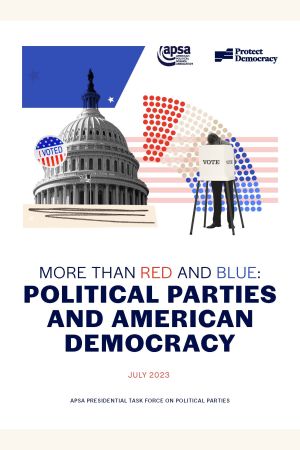
By Our Faculty
Report
Additional Information
Type
- Report
Publication Details
Publication Year: 2023
Masahiko Kinoshita: The Stealth Activist Japanese Supreme Court
October 2, 2023
4:45 pm
Myron Taylor Hall, 390 Moot Court
The Supreme Court of Japan (SCJ) has been described as the most conservative and passive constitutional court in the world. The small number of times the Japanese Supreme Court has struck down statutes as unconstitutional is an argument for such a statement. However, the SCJ has provided important decisions to control legislative and executive power in fields related to the democratic political process, such as the right to vote and freedom of expression.
Masahiko Kinoshita, Graduate School of Law, University of Kobe, Japan gives this talk.
In Japan, the Liberal Democratic Party (LDP) has been in power for a long time. Nevertheless, the fact that Japan has been able to maintain democracy without falling into authoritarianism is largely dependent on the SCJ's accumulation of precedents. This talk will discuss the active aspects of the SCJ in the democratic political process, which have not received much attention so far.
Faculty host and moderator: Yun-chien Chang, the Cornell Law School Jack G. Clarke Professor in East Asian Law
Discussant: Mitchell Lasser, Jack G. Clarke Professor of Law
This event is co-sponsored by the East Asia program and the Cornell Law School Clarke East Asia Law Program.
Additional Information
Program
Einaudi Center for International Studies
East Asia Program