
Einaudi Center for International Studies
"Your Past is My Present": The Case of Ukraine
October 5, 2023
12:00 pm
Uris Hall, G08
Does evoking historical parallels change public opinion regarding foreign policy?
Seeking international support to counter Russia’s February 2022 invasion, Ukrainian President Volodymyr Zelensky has publicly addressed foreign politicians and public in several democratic nations. Media coverage paid special attention to his explicit comparison of Ukraine’s current situation to salient historical events in the audiences' countries.
Since public opinion can influence foreign policy decisions in democracies, we investigate whether evoking the past of the audience's country effectively increases popular support for aiding Ukraine.
Anil Menon and colleagues conducted survey experiments simultaneously in four countries where Zelensky delivered speeches rich in historical parallels – Germany and Israel (Holocaust), United Kingdom (WWII), and the United States (Pearl Harbor and 9/11). Exposure to excerpts from Zelensky's speeches triggered distinctive emotional reactions in all countries consistent with the content tailored for each country.
Only in Israel did exposure increase public support for bolstering Ukraine’s war efforts. Thus, while rhetoric emphasizing past-present commonalities might evoke emotional reactions, its persuasive potential appears limited.
About the Speaker
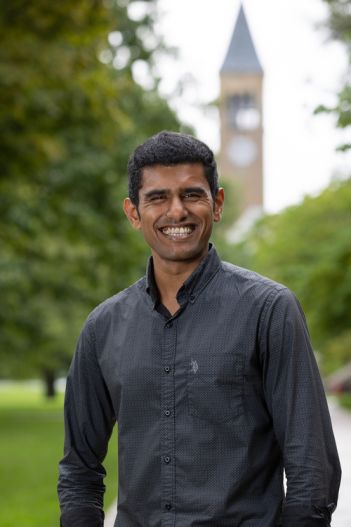
Anil Menon is an Assistant Professor of Political Science at the University of California, Merced. Previously, he was a Klarman Postdoctoral Fellow in the Department of Government at Cornell University and a Visiting Research Fellow at the Center for the Resolution of Intractable Conflict at Harris Manchester College, Oxford University. He earned his Ph.D. in Political Science at the University of Michigan – Ann Arbor.
His research is motivated by three broad questions. How do traumatic experiences – ranging from interstate wars and forced migration to public health crises – shape short- and long-term political attitudes, behaviors, and institutions? What are the historical roots of contemporary patterns of economic and political development? Are rhetorical appeals to the past persuasive?
Cohosts
Institute for European Studies
Judith Reppy Institute for Peace and Conflict Studies
Additional Information
Program
Einaudi Center for International Studies
Reppy Institute for Peace and Conflict Studies
Institute for European Studies
Language Resource Center Speaker Series - Américo Mendoza-Mori - Language Revitalization, Cultural Reclamation, and Global Indigeneity

August 29, 2023
3:30 pm
Stimson Hall, G25
"Language Revitalization, Cultural Reclamation, and Global Indigeneity"
Américo Mendoza-Mori
Lecturer and Faculty Director for the Latinx Studies Working Group, Harvard University
In recent decades, revitalization and reclamation programs for Indigenous languages have emerged at universities, both promoting the language and fostering community empowerment, particularly among youth. We will explore strategies to incorporate Indigenous cultures and languages of the Americas within the Humanities and Social Sciences as relevant and complex curricular components.
For this presentation, we will discuss opportunities for building up academic and cultural programming to challenge and expand traditional notions of Indigeneity as a "thing of the past" into relevant and pressing issues, and to reflect on how colleges and language departments can support more diverse spaces for the representation and visibility of Indigenous cultures, scholarship, and voices, in connection with curricular goals. We will specifically explore the case of Quechua-language initiatives in the global advance of the language. Quechua is the most spoken Indigenous language family of the Americas, with 8-10 million speakers in South America.
Bio: Américo Mendoza-Mori teaches and researches on Indigenous and Latinx Studies at Harvard University where he is a Lecturer and Faculty Director for the Latinx Studies Working Group. Dr. Mendoza-Mori is involved with different research and community-oriented projects to raise awareness of the relevance of Quechua languages and literatures, Latinx and Latin American cultures, and Indigenous systems of knowledge. His work has appeared in a variety of academic publications, a TEDx Talk, and he has been featured at major institutions such as the United Nations and in international media (The New York Times, BBC, NPR, The Guardian).
This event will be held in person in G25 Stimson and will also be streamed live over Zoom (registration required). Join us at the LRC or on Zoom.
The event is free and open to the public. Campus visitors and members of the public must adhere to Cornell's public health requirements for events.
Co-sponsored by the Language Resource Center and the Latin American and Caribbean Studies Program through its Undergraduate International Studies and Foreign Language (UISFL) grant from the U.S. Department of Education.
Additional Information
Program
Einaudi Center for International Studies
Latin American and Caribbean Studies
Unending Capitalism: How Consumerism Negated China’s Communist Revolution
September 12, 2023
4:45 pm
Goldwin Smith Hall, GSH64 Kaufman Auditorium
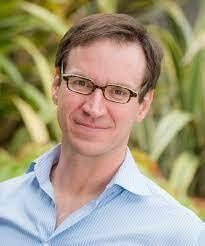
Karl Gerth, History, UC San Diego
What forces shaped the twentieth-century world? Capitalism and communism are usually seen as engaged in a fight-to-the-death during the Cold War. With the establishment of the People’s Republic of China in 1949, the Chinese Communist Party aimed to end capitalism.
Gerth argues that despite the socialist rhetoric of class warfare and egalitarianism, Communist Party policies developed a variety of capitalism and expanded consumerism. This negated the goals of the Communist Revolution across the Mao era (1949-1976) down to the present.
Through topics related to state attempts to manage what people began to desire – wristwatches and bicycles, films and fashion, leisure travel and Mao badges – Gerth challenges fundamental assumptions about capitalism, communism, and countries conventionally labeled as socialist. In so doing, his provocative history of China suggests how larger forces related to the desire for mass-produced consumer goods reshaped the twentieth-century world and remade people’s lives.
Additional Information
Program
Einaudi Center for International Studies
East Asia Program
Ariel Rubinstein: Economics with No Prices and No Games

September 8, 2023
11:30 am
Goldwin Smith Hall, G76
CRADLE Law & Economics Lecture
Ariel Rubinstein is a professor of economics at Tel Aviv University and New York University. He received his B.Sc. in Mathematics, Economics, and Statistics from the Hebrew University in 1974 and his Ph.D. in Economics from the Hebrew University in 1979. His research work focuses on economic theory, bounded rationality, game theory, experimental economics, and choice theory.
Welcome and introductory remarks will be given by Kaushik Basu, Professor of Economics and Carl Marks Professor of International Studies, Rachel Beatty Riedl, director of the Mario Einaudi Center for International Studies and John S. Knight Professor of International Studies, and Robert C. Hockett, Edward Cornell Professor of Law.
Additional Information
Program
Einaudi Center for International Studies
Get Started for Students
We welcome you to join us at the Mario Einaudi Center for International Studies, where you can pursue your international interests and work with faculty and students from across the university.
The Einaudi Center is here to support you as you study and engage with cultures worldwide. At Einaudi, you'll find opportunities and a diverse campus community—and discover new ways to make a difference in the world.
The War in Ukraine

August 31, 2023
12:00 pm
Biotechnology Building, G10
Assessing Paths to Peace
On February 24, 2022, Russia invaded the sovereign nation of Ukraine. The ensuing war has yielded many surprises, including Russia’s botched invasion, division and instability in Russian military leadership, and strength of the Ukrainian defense. Nonetheless, many questions remain about the conflict and prospects for peace. What would be needed to achieve real peace in Ukraine? Can we identify a viable path to peace that does not further injustices against the Ukrainian people, and that does not embolden similar invasions by Russia or other expansionist states? What role has sanctions played in shaping the conflict and alliances around the world, and what role can they play in the future? How are ethnic politics evolving within Russia? Panelists will speak to these and related questions, with ample time allocated for discussion with the audience.
Panelists
Nicholas Mulder, Assistant Professor and Milstein Faculty Fellow, Department of History, Cornell UniversityCristina Florea, Assistant Professor, Department of History, Cornell UniversityLeila Wilmers, Postdoctoral Associate, Department of Sociology, Cornell UniversityModerator
Matthew Evangelista, President White Professor of History and Political Science, Department of Government
Host
Judith Reppy Institute for Peace and Conflict Studies
Cosponsor
Institute for European Studies
Additional Information
Program
Einaudi Center for International Studies
Reppy Institute for Peace and Conflict Studies
Institute for European Studies
Ethnocentrism and Democracy Failure in Afghanistan

September 21, 2023
12:00 pm
Uris Hall, G08
Sharif Hozoori, IIE-SRF fellow and visiting scholar at the Mario Einaudi Center for International Studies' South Asia Program will discuss his research about the failure of liberal democracy in Afghanistan due to the ruling elite's overt ethnocentrism.
Ethnocentrism has been present throughout Afghanistan's political history, but it peaked during President Ashraf Ghani's tenure after the establishment of a democratic regime in 2001. Ghani enacted policies that concentrated power around three individuals: himself, the national security advisor, and the Director General of the administrative office of the President, essentially creating a "Republic of Three Persons" or a "sinister triangle" in Afghanistan. These actions had a profoundly catastrophic effect on the evolution of democratic governance in the country.
About the Speaker
Sharif Hozoori holds a Ph.D. in International Relations from the Center for International Politics, Organization, and Disarmament in the School of International Studies at Jawaharlal Nehru University in New Delhi. He was a professor of International Relations and taught both undergraduate and graduate students in Afghanistan before leaving the country after the Taliban takeover in August 2021. Currently, he is an IIE-SRF fellow and visiting scholar at the Einaudi Center's South Asia Program at Cornell University. His research areas are Afghanistan politics and foreign policy, identity politics, South Asia and Middle East politics, cultural studies, and conflict resolution and peace.
Host
Judith Reppy Institute for Peace and Conflict Studies
Cosponsor
South Asia Program
Additional Information
Program
Einaudi Center for International Studies
Reppy Institute for Peace and Conflict Studies
South Asia Program
How to Promote Amazon Bird Biodiversity

Fieldwork from DPD Grad Student
Charlie Tebbutt's fieldwork in Colombia this summer was supported by Einaudi's Dissertation Proposal Development Program.
Additional Information
Soviet Collapse in the Fullness of Time: Lessons for Putin's Russia, Xi's China, and Beyond
September 13, 2023
5:00 pm
Clark Hall, 700
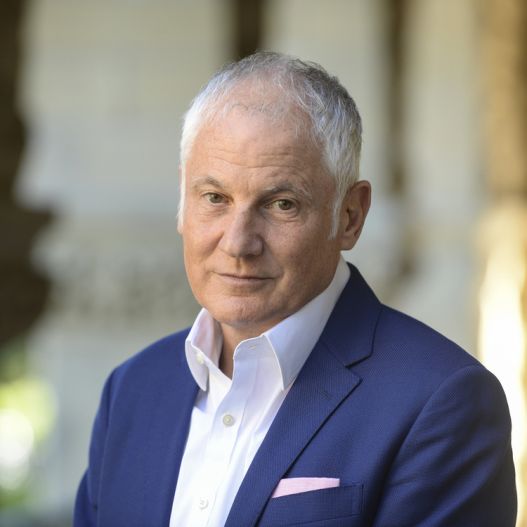
What lessons have Vladimir Putin and Xi Jinping drawn from the Soviet collapse, and what lessons are they failing to draw? Renowned historian Stephen Kotkin, Kleinheinz Senior Fellow at the Hoover Institution at Stanford University and Professor in History and International Affairs emeritus at Princeton University, will talk about how we might see the Soviet collapse, looking back more than three decades. Was the collapse predictable? Did a new world order emerge, and is one emerging now? Could such a collapse be repeated? How can we use history to illuminate the present, and potential futures, and when does history fail us?
Professor Kotkin's talk is the Institute for European Studies' inaugural Luigi Einaudi Distinguished Lecture.
This event will also be livestreamed. No pre-registration is required.
Additional Information
Program
Institute for European Studies
Reppy Institute for Peace and Conflict Studies
Einaudi Center for International Studies
Superpowers, Inc.
September 14, 2023
12:00 pm
Uris Hall, G08
Rethinking the Origins and Significance of Corporate Climate Action
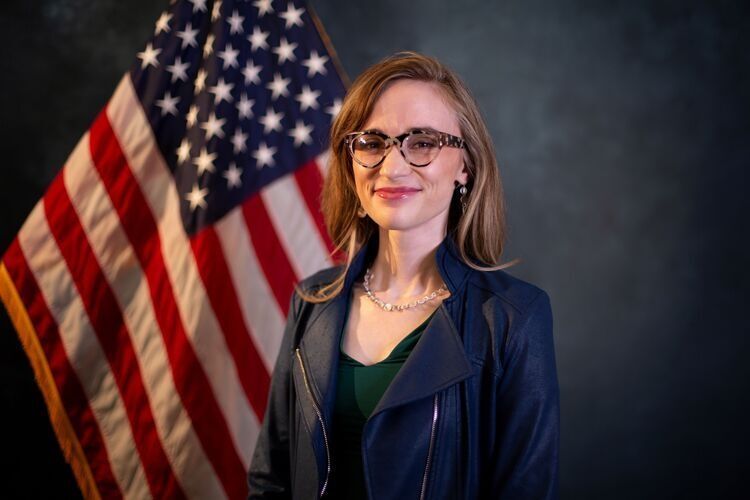
Charlotte Hulme, Assistant Professor of International Affairs at the United States Military Academy, will examine the origins and significance of the corporate climate action phenomenon. Based on her recently published book, she will discuss how and why, throughout the 2010s, a growing cohort of some of the world’s largest corporations adopted certain climate practices and converged around the idea that the private sector has a vital role in addressing climate change and advancing a low-carbon future.
She will address how policy developments that states widely understood as watersheds, particularly the 2015 Paris Climate Agreement, confirmed what the private sector had long believed: that states lacked answers about how to achieve concerted, ambitious, and effective climate action. Dr. Hulme will discuss the potential implications of powerful corporations seeking to fill a perceived leadership vacuum in an area poised to shape future global trends and impact the international security landscape.
About the Speaker
Dr. Charlotte Hulme is an Assistant Professor of International Affairs at the United States Military Academy, where she also serves as the Deputy-Director of the Johnson Grand Strategy Program. Her recently published book, Corporate Climate Action, Transnational Politics, and World Order, examines how and why multinational corporations came to play a more prominent role in the climate change issue area during the 2010s. Charlotte received her Ph.D. in Political Science from Yale University and M.Phil. in Politics and International Studies from Cambridge University, where she studied humanitarian intervention and the responsibility to protect in the African Union context.
Host
Judith Reppy Institute for Peace and Conflict Studies
Additional Information
Program
Einaudi Center for International Studies
Reppy Institute for Peace and Conflict Studies