
Einaudi Center for International Studies
Is the ‘Coolie Woman’ a Banker?

August 28, 2023
12:15 pm
Uris Hall, G08
Talk by Kaneesha Cherelle Parsard (English Language and Literature, University of Chicago)
“Is the ‘Coolie Woman’ A Banker?” revisits the figure of the “coolie woman” during Indian indenture in the British West Indies. Histories of indentured Indian women have focused on the experience of recruitment, labor exploitation, and especially violence at the hands of planters or would-be husbands. Instead, this talk looks instead to the bangles, necklaces, and anklets they carry in plain sight. Following brief but revealing references to jewelry through craft and financial histories, travel writing, poetry, photography, and painting, the “coolie woman” becomes an agent of global finance. Jewelry is a little-seen source of value, her collateral against the violence of the plantation and of companionate marriage.
Kaneesha Cherelle Parsard is an assistant professor of English at the University of Chicago, where she writes about the legacies of slavery and emancipation in the Caribbean and in the broader Atlantic and Indian Ocean worlds. Parsard is working on her first book project, “An Illicit Wage,” an aesthetic history of hustling, sex work, and hoarding as practices of freedom. Her scholarship has been supported by the Mellon Foundation, the Social Science Research Council, and the American Council of Learned Societies and can be found in American Quarterly, Small Axe, the South Atlantic Quarterly, and Representations.
Additional Information
Program
Einaudi Center for International Studies
South Asia Program
Latin American and Caribbean Studies
The Bernd Lambert Memorial Lecture with Sharika Thiranagama

September 22, 2023
3:00 pm
McGraw Hall, 165
To be a good woman? Caste, respectability and violence in South India and postwar Sri Lanka
This talk will focus on gendered lives in the midst of profound transformation. "It is hard to be a good woman", one of the older women I worked with in Kerala told me. She was an agricultural laborer from a Dalit community, and had latterly managed to achieve some form of stability from what had been an unhappy marriage. Like many of the older Dalit women i worked with, for her questions of caste, gender and negotiating with inheriting manual labor were fundamentally entangled with the ongoing realities of deep caste discrimination and also the context of working with one's relatives in the midst of neighborhoods for whom transforming the future were seen as major individual and collective duties. There is a long standing feminist discussion of the burdens and models of respectability that I draw from and challenge in discussing the specificities of how what women inherit and hope to transmit shapes their struggles. This was a question laid in earlier work in Sri Lanka around the challenges of moving beyond scholarly romanticisation of armed women to understand the struggles of ordinary minority Sri Lankan Tamil women when communities are focused on transformation that impose profound gendered costs and losses. I will thus briefly reflect upon the ongoing scholarly fascination with the armed militant which has signally overshadowed more critical analysis of women's lives in wartime and postwar Sri Lanka. This talk will span ethnographic work on Sri Lanka and India over two decades, and hopes to contribute to a larger feminist discussion of how we can sharpen our analysis of local struggles for transformation through centering gender, race and caste.
Sharika Thiranagama is an Associate Professor in the Department of Anthropology at Stanford University.
Sharika Thiranagama’s research has examined how political mobilization and domestic life intersect, focusing on highly fraught contexts of violence, inequality, and intense political mobilization. Her work on Sri Lanka explores changing forms of ethnicisation, the effects of protracted civil war on ideas of home in the midst of profound displacement and the transformations in and relationships between the political and the familial in the midst of political repression and militarization. Most recently, she has written on the effects of deep militarization in post-war Sri Lanka, the deification of the LTTE leader Prabhakaran among other works. She has also conducted research in Kerala, South India based in the Palakkad district, primarily on caste and with Dalit communities. She examines how communist-led political mobilization reconfigured older caste identities, re-entrenching caste inequities into new kinds of private neighborhood life. Her work focuses on the household as the prime site of the inheritance of work, stigma and servitude, as well as the possibility of inheritance, dignity, and social mobility.
The Bernd Lambert Memorial Lecture Series, inaugurated in 2017, was established by the Cornell University Department of Anthropology in honor of one of its distinguished emeriti, Bernd Lambert. A transnational refugee from the Holocaust and an ethnographer of the Pacific Islands, Lambert joined the Cornell faculty in 1964 and is remembered for his kind and generous presence. For over 50 years, his research and teaching ranged widely from issues of kinship, adoption, and social organization to myth and symbol. The Lambert lectures honor Prof. Lambert’s legacy by bringing similarly broad-minded scholars to the Cornell campus.
Co-sponsored by South Asia Program; History; Feminist, Gender, and Sexuality Studies; the Reppy Institute for Peace and Conflict Studies; and the Society for the Humanities. Thank you.
Additional Information
Program
Einaudi Center for International Studies
South Asia Program
Ecuador, Politics of Sustainable Development Info Session

August 28, 2023
4:30 pm
Uris Hall, G08
Find out more about this study abroad opportunity in Ecuador. Politics of Sustainable Development in Latin America is a multi-term, four-credit course that will bring students onsite in Ecuador during the January term. Students will travel to Quito, Ecuador to begin their field study at Cornell's Global Hub partner institution, the Universidad San Francisco de Quito (USFQ). Following their in-country orientation, students will then relocate to the indigenous community of Sacha Waysa in the Amazon region of Ecuador to work with local partners and the Yakum Foundation on projects related to biodiversity, agroforestry, reforestation, food sovereignty, and community planning.
Additional Information
Program
Einaudi Center for International Studies
Latin American and Caribbean Studies
What Remains: Documentary Work and Analysis of Terror, Extrajudicial Killings and Community

September 19, 2023
12:20 pm
Uris Hall, G08
Latin American and Caribbean Studies Program (LACS) Seminar Series, Co-sponsored by: Romance Studies & Department of Performance & Media Studies
Through a long-term personal project called What Remains, Lexi Parra has been documenting the effects of violence, repression by the State, and power of community in the targeted barrios of Caracas, by following the lives of those most affected. In this presentation, Parra will share her ongoing work paired with testimonies from local collaborators to offer an analysis of the militarization of Venezuelan police forces and the false narratives of an improving country as the crisis continues. She will also offer insight into the importance of nuanced, ethical storytelling.
Lexi Parra is a Venezuelan-American photographer and community educator based between Caracas and New York. Her work focuses on youth culture, the personal effects of inequality and violence, and themes of resilience. Parra has worked with The Washington Post, The New York Times, NPR, The New Yorker, and others. Her degree is in Photography and Human Rights, from Bard College. Parra is the founder of Project MiRA, an arts education initiative that fosters visual literacy and critical analysis with youth in the barrios of Caracas. Project MiRA has been supported by Canon USA and the Davis Peace Prize.
Additional Information
Program
Einaudi Center for International Studies
Latin American and Caribbean Studies
The "Progressive Farmer” and the Moral Worlds of Agri-Commodity Standardization in India

September 11, 2023
12:15 pm
Uris Hall, G08
Talk by Amrita Kurian (Center for the Advanced Study of India, University of Pennsylvania)
This paper uses a historical and ethnographic approach to analyze how the ideal of the “progressive farmer” percolates into the literature and processes that help establish the latest standards in Indian Flue-Cured Virginia (FCV) or cigarette tobacco markets. A legacy of colonial and postcolonial agricultural improvement projects, tobacco companies use the term as an accolade, indicating their preference for collaborating with some farmers over others - usually affluent farmers with the resources necessary to invest in improving farming practices. In a cash crop economy dominated by a few large buyers, these preferences also strongly influence the direction of state regulation and infrastructure projects. The paper argues that “progressive farming” practices geared toward producing standardized commodities reinforce the rural hegemony of affluent farmers while masking the infrastructural changes that have, over the years, shifted the financial burden of producing a quality crop from producers onto farmers. On the other hand, farmers, particularly affluent farmers, negotiate evolving metrics used to evaluate farming practices to variously align with the state and corporations and further their own goals of accumulating wealth and prestige.
Amrita Kurian is a Postdoctoral Research Fellow at the Center for the Advanced Study of India, University of Pennsylvania. She has a Ph.D. in Sociocultural Anthropology from UC San Diego and an M.Phil in Sociology from the Delhi School of Economics. Her ethnographic research is based in the Flue-Cured Virginia (FCV) tobacco sector in rural Andhra Pradesh, India, where she studies experts’ scientific and affective mediation of markets and agrarian relations of production. Her articles titled “Flowers of Deception,” “Expert Disenchantment,” and “Progressive Farmers” are at various stages of review in Cultural Anthropology, Science, Technology, and Human Values, and Geoforum. Her essay “Accusations of Corruption: A Cautionary Tale from Indian Tobacco Auctions” was published in India in Transition and Scroll.in.
Additional Information
Program
Einaudi Center for International Studies
South Asia Program
Reproducing Revolution: Women’s Labour and the War in Kachinland
October 12, 2023
12:20 pm
Rockefeller Hall, 374
Gatty Lecture Series
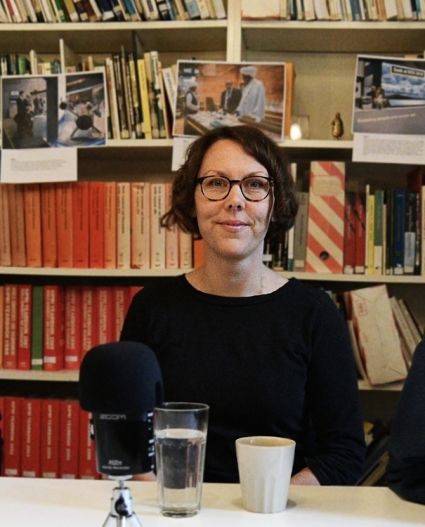
Join us for a talk by Jenny Hedstrom, (Associate Professor in War Studies, Department of War Studies and Military History, Swedish Defence University), who will discuss women's labour and the Kachin conflict.
This Gatty Lecture will take place at the Rockefeller Hall 374. Lunch will be served. For questions, contact seapgatty@cornell.edu.
About the Talk
This book explores insurgency warfare from the vantage point of women’s social reproductive and productive labour. The research combines feminist political economy and war studies to explain why and how war is sustained and reproduced. Developing the concept of militarised social reproduction, I examine how women’s underpaid or undervalued household duties enable and sustain the Kachin Independence Organisation (KIO), a poor insurgent group fighting for political rights and a degree of autonomy in the north of Myanmar. Based on more than one hundred semi-structured interviews and participant observations collected between 2013 and 2023 in Myanmar and Thailand, I show how women’s labour (re)produced from the household provides a critical, if overlooked, piece to the puzzle that is the war in Kachinland. I argue that while dominant accounts of the Kachin conflict are preoccupied with the conduct of States or the actions of military leadership, it is more instructive to focus on the activities of the household. Focusing on women’s reproductive work helps to explain how and why the Kachin conflict has been maintained for so long, despite the superior strength and resources of the Burman military force.
About the Speaker
Jenny Hedström is an Associate Professor in War Studies at the Swedish Defence University. Jenny’s research and teaching concerns the relationship between households, gender, and warfare; gender, transitions, and peacebuilding; women’s activism and resistance; and ethics and methods when researching war, often with a focus on civil wars in Myanmar. Her research has been published in the International Feminist Journal of Politics, Peacebuilding, Critical Military Studies and International Studies Review, and other outlets. Together with Elisabeth Olivius, she is the editor of the edited collection “Waves of Upheaval in Myanmar: Gendered Transformations and Political Transitions” (NIAS Press, 2023). Jenny is the Principal Investigator for the Swedish Research Council-funded project “Women’s Labour in Civil War” and co- Principal Investigator for the project “Gender Experts in Peacebuilding”. Together with Hilary Faxon she leads the “Land, Labour, Love and Revolution” project - a collaboration with farmers, artists, students and activists to trace and understand gendered relations of land, labour and love in the Myanmar Spring Revolution.
Additional Information
Program
Einaudi Center for International Studies
Southeast Asia Program
The Plantationocene as Analytical Concept: A Forum for Dialogue and Reflection
By Our Faculty
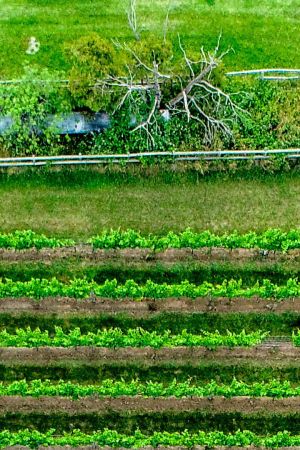
This forum for dialogue and reflection invites empirical and theoretical inquiries that critically interrogate plantations in their myriad forms through the conceptual analytic of the Plantationocene. In doing so, we understand, and invite attention to, the Plantationocene, both as a key for interpreting histories of local to global development and for understanding the role of plantationlogics today. Not all contributors need agree that the Plantationocene is a useful concept.
Paper
Additional Information
Type
- Paper
Publication Details
Publication Year: 2023
Publication Number: DOI: 10.1080/03066150.2023.2228212
Heeju Park Receives Faculty Fulbright

Park brings zero-waste fashion expertise to Korea
Heeju Park, associate professor of human centered design in the College of Human Ecology, has received a Fulbright scholarship to conduct research and teach in South Korea. Park’s project will focus zero-waste digital fashion design and production.
Additional Information
Faith and Floods: Everyday Encounters with the Incompleteness of Reality in Post-diluvian Karachi
September 18, 2023
12:15 pm
Uris Hall, G08
Talk by Adeem Suhail (Anthropology, Franklin & Marshall College)
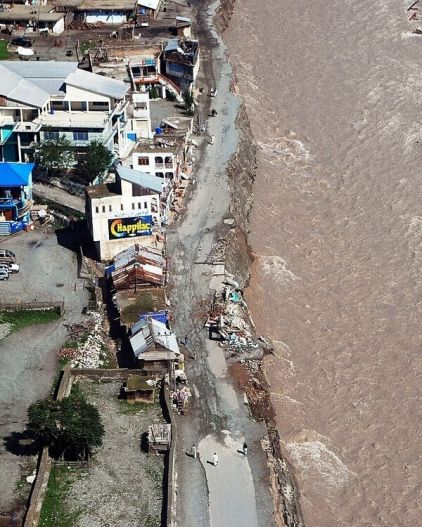
This talk is based on ethnographic explorations of the broken worlds the denizens of contemporary Karachi, Pakistan, inhabit. It examines the period between two catastrophic floods in 2020 and 2022. By observing the efforts of the Wasted to piece together new realities amidst the ruins, the study seeks to understand the everyday processes and practices involved in conjuring through faith a commons as an infrastructure for troubled times. In Karachi, the ruptures caused by a convergence of crises have disrupted the city's function as a labor-driven engine of value creation. With the demise of postcolonial modernity, the city has entered a different temporality, characterized by multiple broken worlds experienced by its inhabitants. Engaging in cosmological speculation, conspiracy theories, and mythopoesis, individuals grapple with uncertainties and possibilities rooted in post-colonial and decolonial practices that produce ambivalent outcomes. Crises here manifest in jagged details that cut. Highlighting the vitality and creativity of the marginalized in contrast to the oppressive practices of the ruling classes who have dubbed these multitudes as being already-sacrificed (nazar hona) and thus Wasted (zaya hona), the talk proposes the idea of a new politics of the Sacrificed and the Wasted.
Adeem Suhail is an Assistant Professor of Anthropology at Franklin and Marshall College. His research addresses issues in the anthropology of violence, social theory, and urban studies. His current project, Machines of Violent Desire, interrogates how non-state violence and transnational kinship networks contribute to order-making in urban South Asia, especially in the context of ecological and political fracture. He is concurrently working on another co-authored book project with David L. Nugent, titled Sacropolitics, which addresses how human communities confront emergent ecological and political crises across the globe through a politics of repair and rejuvenation. His recent publications include Urban Rearrangements: A Movement in Five Suites (IJURR, 2023) and Unarchiving Baloch History: ‘Small’ account of Baloch women that make waves in the Indian Ocean (2023).
Additional Information
Program
Einaudi Center for International Studies
South Asia Program
Speculative History and Unruly Memory: A Conversation with Rea Tajiri and Vince Schleitwiler

July 24, 2023
1:00 pm
Filmmaker Rea Tajiri (Temple University) and comparative ethnic studies scholar Vince Schleitwiler (University of Washington) consider the challenges of critical storytelling and speculative history.
The discussion examines their individual and collective work in documentary film, public art, and hybrid scholarship, including Tajiri’s latest film, Wisdom Gone Wild, which explores the creative, time-traveling reflections on her life by Tajiri’s mother, Rose—previously seen in Tajiri’s landmark work on Japanese American incarceration, History and Memory: For Akiko and Takashige. Inspired by the unruly wisdom of Rose’s critical remixing of past and identity, Tajiri and Schleitwiler discuss their own work on the visual archives of intersecting histories of race, migration, confinement, and empire.
Rea Tajiri is a filmmaker and visual artist who was born in Chicago, Illinois. She earned her BFA and MFA degree from the California Institute of the Arts in post-studio art. Her ground-breaking, award-winning film, digital video and installation work, has been supported by numerous grants, fellowships and artistic residencies, has been exhibited widely in museums, on television and in international film festivals.
Vince Schleitwiler teaches comparative ethnic studies at the University of Washington. He is the author of Strange Fruit of the Black Pacific (NYU Press), and critical essays in African American Review, Film Quarterly, Black Agenda Report, The Margins, and elsewhere. He has collaborated on public art and humanities projects for the Smithsonian APA Center, the Washington Trust for Historical Preservation, the Center for Art and Thought, and others. A fourth-generation Japanese American, he is a descendant of incarcerees at Salinas, Santa Anita, and Poston.
Register to attend the event.
This event is part of the Migrations Summer Institute.
Additional Information
Program
Einaudi Center for International Studies