
Einaudi Center for International Studies
Hubs Collaborations Bring Synergy, Discovery

New Grant Cycle Open Now
Alex Flecker and LACS grad student Ethan Duvall are studying biogeochemical cycling in the Amazon with partners at the Ecuador Hub.
Additional Information
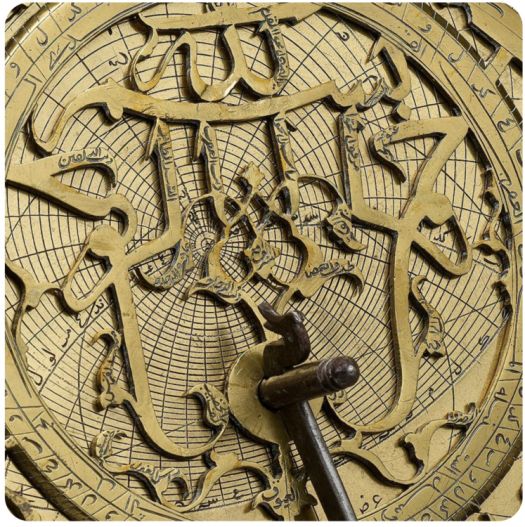
CANCELLED - Trading and Raiding in the Philippines Archipelago in the 7th-18th Centuries: History and Archaeology of Muslim and Spanish Encounters
September 28, 2023
4:30 pm
Uris Hall, G08
Talk by Laura Lee Junker
The history of the Philippines is unique in Southeast Asia's islands in that the country has 14 massive islands, 7000+ smaller islands, and 200+ languages. Strangely, among the historical entities in these thousands of equatorial islands, none of the area's languages were written down. Both historical and archaeological evidence shows us that Chinese, Japanese, Indonesians, Vietnamese, Cambodians, and Indic populations all powered trade well before the 10th century. Area ports sent commerce and numerous missions to the Chinese court. Islamic groups in the Philippines, particularly in what would become Manila, as well as from the southernmost island of Mindanao prior to the influx of Spanish colonizers in the 16th century, also participated in diplomacy and trade. The extensive diversity of various groups on the rugged Filipino landscape, including small bands of Ata and tribal peoples (Bukidnon) living in the mountainous cores of massive islands, supplied equatorial products that connected chains of manufacture sailing from the west and north, down to the tropical belt. In this presentation, Archaeology melds with "material histories" (such as archaeology) and "written histories" (from many viewpoints) in telling this complex story.
Additional Information
Program
Einaudi Center for International Studies
Southeast Asia Program
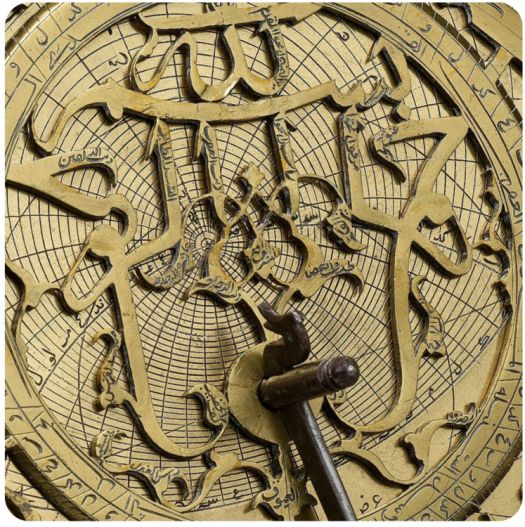
Dreaming Sufism in the Sokoto Caliphate: Dreams and Knowledge between Natural Philosophy, Theology, and Sufism in the works of Shaykh Dan Tafa
September 14, 2023
4:30 pm
Uris Hall, G08
Talk by Oludamini Ogunnaike
This talk explores four remarkable works (currently in unpublished manuscript form) by ‘abd al-Qādir ibn Muṣtafā (known as “Dan Tafa”) (1804-1864), a 19th-century West African Sufi scholar of the Sokoto Caliphate, to examine the ways in which dreams were theorized in the unique synthesis of Sufi, occult, philosophical/medical, theological, and exegetical disciplines that characterized discourse about dreams and dream interpretation in Muslim West Africa on the eve of colonial conquest, and what this can tell us about the distinct conceptions and practices of the human self and knowledge current in the region. The talk will conclude with a brief discussion of the importance and onto-epistemological status of dreams in contemporary West African Sufi communities and attempt to consider why dreams have been and remain so important in these traditions, but not in others.
Additional Information
Program
Einaudi Center for International Studies
Institute for African Development
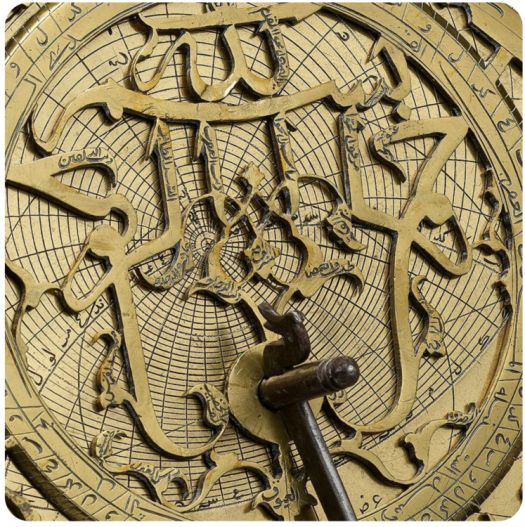
Unveiling the Global Middle Ages: Muslim Perspectives and Encounters with East Asia in Premodern Interactions
August 31, 2023
4:30 pm
Uris Hall, G08
Talk by Hyunhee Park, History, John Jay College of Criminal Justice, CUNY
This presentation delves into the historical interactions and perspectives of Muslims concerning East Asia during cross-cultural exchanges in the premodern era. The Islamic civilization, which emerged in the early seventh century, rapidly expanded and evolved into one of the world’s most prosperous and influential societies during the medieval period. Muslim merchants from the Middle East played a dominant role in the Indian Ocean trades, regularly undertaking voyages to reach China, a paramount commercial hub in premodern Afro-Eurasia. Their contributions greatly facilitated the exchange of people, goods, and ideas across Afro-Eurasia, thereby shaping the global nature of the medieval period. The premodern interactions between the Middle East and East Asia serve as exceptional case studies for understanding the Global Middle Ages, as they offer a wealth of literary and cartographic sources left behind by scholars and firsthand observers from both societies. By comparing evidence from these sources, including written records and maps, we aim to identify patterns of continuity and change in geographic understandings, particularly during the Mongol and post-Mongol eras when both worlds experienced significant political transformations. This exploration allows us to comprehend how Muslim societies developed their conceptualization of the wider world, while also being influenced by it. Importantly, it reveals the active participation of Asian civilizations in global interactions well before 1492, challenging the notion that globalization began solely with European expansion.
Additional Information
Program
Einaudi Center for International Studies
East Asia Program
Land Justice, Resistance, and Community Solidarities in Puerto Rico

October 3, 2023
4:45 pm
165 McGraw Hall
Latin American and Caribbean Studies Program (LACS) Seminar Series, Co-sponsored by: City and Regional Planning (CRP) and the Cornell Center for Health Equity (CCHEq).
A discussion with three Puerto Rican community leaders from Caño Martín Peña CLT, Taller Salud and La Colmena Cimarrona who will be speaking about strategies of resistance, community solidarities and emancipatory processes to advance collective land ownership and land-based repair mechanisms that improve access to housing, built environment, environment, food security, and climate adaptation; ultimately contributing to achieving health justice. Land is at the root of structural inequities. It is also the basis for community sovereignty, justice and healing. Within a Puerto Rican context, community land claims acquire particular relevance due to the continuous exposure to climate injustices, the lack of adequate investment for basic infrastructure on the island and structural power inequities.
Additional Information
Program
Einaudi Center for International Studies
Latin American and Caribbean Studies
Are the Trump Indictments a Turning Point? History Says Not Likely.

Kenneth Roberts, LACS
Ken Roberts, professor of government, discusses the party system.
Additional Information
‘My Goals in Life Vanished’: Afghan Students Rocked by US Visa Denials

Stephen Yale-Loehr, Migrations
Stephen Yale-Loehr, professor of immigration law, explains the impact of the US visa process on Afghan students.
Additional Information
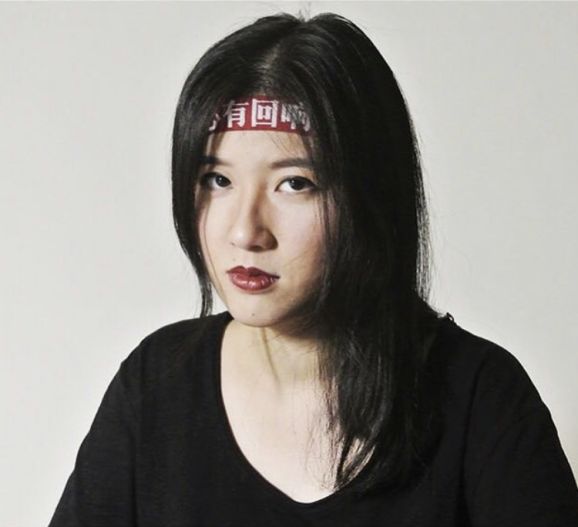
Churan Zheng: Unleashing the Power of Feminist Activism in China
September 18, 2023
4:45 pm
Goldwin Smith Hall, GSH64 Kaufman Auditorium
In the past decade, China's grassroots feminist movement, primarily led by young women, has brought about transformative changes to various gender-discriminatory policies in the country. Through activist endeavors, this movement has initiated a ground-up understanding of feminism among the general public. Despite the constrained political environment, the feminist movement persists in various manifestations and continues to evolve.
In this talk, Churan Zheng, Chinese feminist activist and organizer, provides an overview of the strategies employed by young feminist activists in China, while also delving into the current trajectory and objectives of the feminist movement amidst a backdrop of political tightening.
Zheng will be introduced by Eli Friedman (ILR), faculty host and moderator. The event is hosted by the Einaudi Center's East Asia Program and cosponsored by the Feminist, Gender, and Sexuality Studies Program at Cornell.
***
About the Speaker
Churan Zheng is a Chinese feminist activist and organizer and is one of the China Feminist Five. Since 2012, she has been organizing young Chinese women to engage in policy advocacy and public education and has also worked on advocating for female workers’ rights. She is one of the co-recipients of Ms. Magazine's 10 of the Most Inspiring Feminists of 2015 and one of the BBC's 100 Women in 2016.
Additional Information
Program
Einaudi Center for International Studies
East Asia Program
Cornell Population Center Innovations Seminar
September 29, 2023
12:00 pm
Martha Van Rensselaer Hall, 2250
The Cornell Population Center brings Luca Maria Pesando, Associate Professor of Social Research and Public Pollicy at New York University Abu Dhabi. He will give his talk, "Dynamics of School Expansion and Sociocultural Changes in inter-Casate Marriage in India."
Additional Information
Program
Einaudi Center for International Studies
South Asia Program
Four Maps Explain How Sweden and Finland Could Alter NATO’s Security

Cristin Florea, IES/PACS/GPV
Cristina Florea, assistant professor of history, discusses Finland's relationship with Russia.