
Einaudi Center for International Studies
Biden Resorts to a Classic D.C. Punt on the Debt Ceiling. Progressives Aren’t Pleased.

Robert Hockett, CRADLE
“It feels like a threshold was crossed,” says Robert Hockett, professor of law and public finance. “Some Democrats are finally waking up to that.”
Additional Information
The West Attacked Russia’s Economy. The Result Is Another Stalemate.

Nicholas Mulder, IES/PACS
Nicholas Mulder, professor of history, discusses the West's attempt to sanction Russia.
Additional Information
Ron DeSantis Gets Boost over Florida Anti-immigration Law
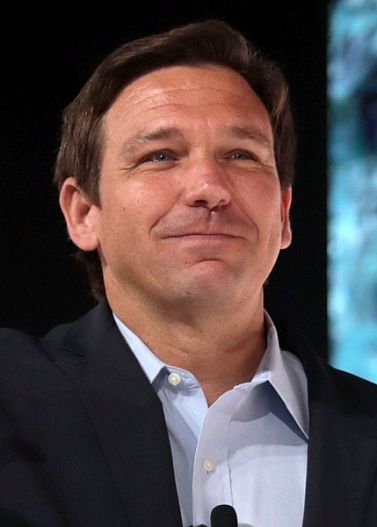
Stephen Yale-Loehr, Migrations
Stephen Yale-Loehr, professor of immigration law, says, “People like immigrants they know, but worry about overall immigration levels. For that reason, it is easy for politicians to demonize immigrants by mouthing simple soundbites rather than tackling the complexity of the issue.”
Additional Information
Emerging Markets in Asia Are Rushing to Adopt Central Bank Digital Currencies

Lourdes Casanova, LACS/GPV
Lourdes Casanova, director of the Emerging Markets Institute, writes that central bank digital currency may offer tempting solutions to several issues – including the dominance of the U.S. dollar.
Additional Information
Rules to Keep AI in Check: Nations Carve Different Paths for Tech Regulation

Sarah Kreps, PACS
Sarah Kreps, professor of government, and James Grimmelmann, professor of law, discuss tech regulation for artificial intelligence.
Additional Information
China Slams US Tech Restrictions

Eswar Prasad, SAP
“I don’t think the U.S. Treasury or the [Biden] administration planned it this way, but this is spectacularly bad timing for China,” said Eswar Prasad, professor of international trade policy and economics.
Additional Information
Fernando Amorsolo: Master Painter of Philippine Sunlight and Elite Conceptions of Nature

December 4, 2023
12:20 pm
Rockefeller Hall, 374
Gatty Lecture Series
Join us for a talk by Nicole CuUnjieng Aboitiz, (Visiting Scholar, Weatherhead East Asian Institute, Columbia University), who will discuss the relationship between the elite class and nature through close analysis of the Philippines fine arts.
This Gatty Lecture will take place at the Rockefeller Hall 374. Lunch will be served. For questions, contact seapgatty@cornell.edu.
About the Talk
Known as the ‘master of Philippine sunlight,’ Fernando Amorsolo is the painter most associated with the Philippine landscape and Philippine pastoral, bringing to both a decided innocence, if not sunlit grace. More than merely formal experimentation with light, however, Amorsolo is canonical because of the distinctly national-pastoral conceptions his work elaborates. Juan Luna, Fernando Amorsolo, and Fernando Zóbel de Ayala are regularly recognized as the three masters of Philippine fine arts. Their works dominate the Philippine canon and, by extension, elite notions of Philippine art. However Amorsolo’s particularizing of the (tropical) place of the Philippines separates him from his colleagues.
An anti-colonial, nationalistic celebration of precolonial, inherent “goodness”—a vision of a simple kind of goodness that I argue is explicitly tied to nature—charged Amorsolo’s works as well as his popular national reception. The American colonial period during the 1920s-30s sparked a wave of national nostalgia for the Filipino pastoral life, with Tagalog songs and Spanish poetry eulogizing the simple, happy barrio life that seemed to be increasingly receding. Amorsolo was part of this wave, which drew on the thwarted independence struggle of the Philippine Revolution, societal reaction to and cultural dislocations across the transition from Spanish to American colonialism, and ongoing political debates surrounding independence. Yet, despite round praise for his “democratic” art and celebration of the common Filipino, Amorsolo’s idea of goodness has deep connection to an underlying elitism in Philippine society and contributes to Amorsolo’s appeal among the elite class. In particular, his elitist vision of the good as grounded in nature had consequences for human relationships with the natural environment, while also being itself a result of existing class relationships with nature. This talk seeks to analyze the relationship between the elite class and nature through close analysis of Amorsolo’s landscape and genre painting.
About the Speaker
Originally from the Philippines, Nicole CuUnjieng Aboitiz is an Associate at Clare Hall at the University of Cambridge and a Visiting Scholar at the Weatherhead East Asian Institute at Columbia University. In 2022, she was elected as a Fellow of the Royal Historical Society. She was also formerly a Postdoctoral Fellow at the Weatherhead Center for International Affairs at Harvard University and earned her Ph.D. in Southeast Asian and International History at Yale University. Her broad research interests center on global intellectual history and Southeast Asian environmental and social history. Her first book, Asian Place, Filipino Nation: A Global Intellectual History of the Philippine Revolution, 1887-1912, published by Columbia University Press in June 2020, charts the emplotment of ‘place’ in the proto-national thought and revolutionary organising of turn-of-the-twentieth-century Filipino thinkers. Her current research analyzes the co-constitution of class and relationships with the natural environment over the 19th to the 20th centuries in the Philippines. Her research has appeared in the American Historical Review, Journal of Imperial and Commonwealth History, and Philippine Studies, among other publications.
Additional Information
Program
Einaudi Center for International Studies
Southeast Asia Program
The Shadow Image: Transnational Southeast Asian Feminist Practices and Pedagogies

November 30, 2023
12:20 pm
Rockefeller Hall, 374
Gatty Lecture Series
Join us for a talk by Viola Lasmana, (ACLS Emerging Voices Fellow / South and Southeast Asian American Studies Postdoctoral Associate, Department of American Studies, Rutgers University-New Brunswick), who will discuss Southeast Asian feminist practices and pedagogies.
This Gatty Lecture will take place at the Rockefeller Hall 374. Lunch will be served. For questions, contact seapgatty@cornell.edu.
About the Talk
This talk explores the possibilities of Southeast Asian feminist practices and pedagogies through a discussion of transnational Indonesian and Vietnamese experimental documentaries, Children of Srikandi (Children of Srikandi Collective, 2012) and Surname Viet Given Name Nam (Trinh T. Minh-ha, 1989). Exploding the documentary form and subverting representation, these works activate a poetics of collaboration and generate what Lasmana calls a shadow imagination, enabling new ways of articulating marginalized women's lives beyond the specter of the nation.
About the Speaker
Viola Lasmana is an Emerging Voices Fellow at the American Council of Learned Societies (ACLS) and a South and Southeast Asian American Postdoctoral Associate in the Department of American Studies at Rutgers University-New Brunswick, where she is also affiliated with Global Asias and Asian Languages and Cultures. She received her PhD in English from the University of Southern California with a certificate in Digital Media and Culture from the USC School of Cinematic Arts, and has taught at Columbia University, USC, and Occidental College. Her work has appeared in Film Quarterly, make/shift: feminisms in motion, The Cine-Files, Visual Anthropology, Alternative Historiographies of the Digital Humanities, and more. She is currently completing a book, Shadow Imaginations: Transpacific Approaches to Post-1965 Indonesian Archives, on the reconstitution of Indonesia’s decimated cultural archive.
Additional Information
Program
Einaudi Center for International Studies
Southeast Asia Program
Women v. The State: Experimental Evidence from Pakistan on the Gendered Usage of State and Traditional Courts

November 20, 2023
12:15 pm
Uris Hall, G08
Talk by Sarah Thompson (Political Science, Stanford University)
In areas where traditional institutions rival the state, how does providing information regarding the quality of state services and whom they benefit induce individuals to use state fora, or continue with tradition? Findings from a combination of an experiment with 2,100 participants in Pakistan’s Newly Merged Districts who invest in state or nonstate legal aid funds and an original survey embedded within it indicate that social inequalities play a large role in determining compliance with the state’s laws. Men and women update favorably to state courts and away from a traditional method of dispute resolution after hearing about general improvements in courts’ efficiency. However, this effect for men goes away when explicitly making clear that women, who remain subjugated to men in the traditional system, will have equal rights in state proceedings. This study provides novel evidence on political behavior from 142 Pashtun villages in an underdeveloped and unstable area typically not accessible to researchers. My findings show that preexisting social inequalities can hinder state-building projects, and point to the distinct political preferences of men and women regarding traditional governance.
Sarah Thompson is a Ph.D. candidate in political science at Stanford University. She utilizes causal inference methods (particularly field experiments and quasi-experimental methods) to research the politics of women and indigenous groups in South Asia and Latin America. She also works closely with policymakers in the field. Her dissertation examines why individuals choose traditional forms of governance over the state, and the impacts this has on security and access to justice.
Additional Information
Program
Einaudi Center for International Studies
South Asia Program
Contemporary Art After Buddhadasa Bhikkhu
November 16, 2023
12:20 pm
Rockefeller Hall, 374
Gatty Lecture Series and the Visual Culture Colloquium
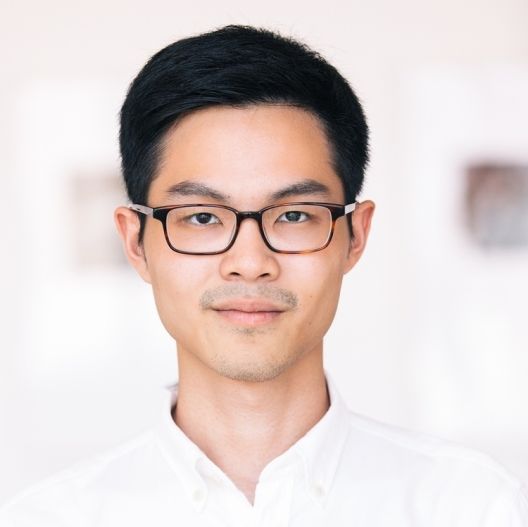
Join us for a talk by Chanon Kenji Praepipatmongkol, (Assistant Professor of Contemporary Art, McGill University), who will discuss the work of reformist monk Buddhadasa Bhikkhu.
This Gatty Lecture will take place at the Rockefeller Hall 374. Lunch will be served, and this event is co-sponsored by the Department of History of Art. For questions, contact seapgatty@cornell.edu.
About the Talk
The temple as exhibitionary complex, the sangha as art public, the filmic as animistic apparatus: these emergent conjectures in the study of Thai visual modernity take religious grammar as a regenerative ground for aesthetic and social form. Building on such interventions, this talk approaches the work of reformist monk Buddhadasa Bhikkhu (1906–1993) as the basis for reconsidering some of contemporary art’s key concepts: the installative, the participatory, and the mediatic. Conceived as an art gallery and movie screening hall, Buddhadasa’s Spiritual Theater (ca. 1962–1972) introduced a visual and soteriological pedagogy that privileged aniconic visuality in a bid not only to rationalize Buddhist teaching, but also to promote a distinctly religious media economy. Buddhadasa’s interest was in the generativity of intermedial translations, whether monks painting murals enlarged from ink paintings, villagers making copies of sculptural reliefs from the stupas at Sanchi, or disciples turning art history slide lectures into interactive performances. Where history written under the sign of the avant-garde often pursues novelty, the Spiritual Theater deforms this model through reproduction and reenactment. Such operations open up to the contemporary not as a matter of accelerated succession, but as entropic ecology.
About the Speaker
Chanon Kenji Praepipatmongkol is Assistant Professor of Contemporary Art at McGill University. Previously, he was Curator at Singapore Art Museum and Visiting Lecturer at National University of Singapore. His current book project develops a postsecular approach to Philippine and Thai modernisms, focusing on how artists made a case for abstraction as a testing ground for various forms of aesthetic, moral, and religious conviction. A second project brings together histories of climate control, art conservation, and conceptual art in the tropics to address questions about ontologies of art in an age of environmental crisis. His writing has appeared in Aperture, Artforum, British Art Studies, MoMA Post, and Oxford Art Journal.
Additional Information
Program
Einaudi Center for International Studies
Southeast Asia Program