Einaudi Center for International Studies
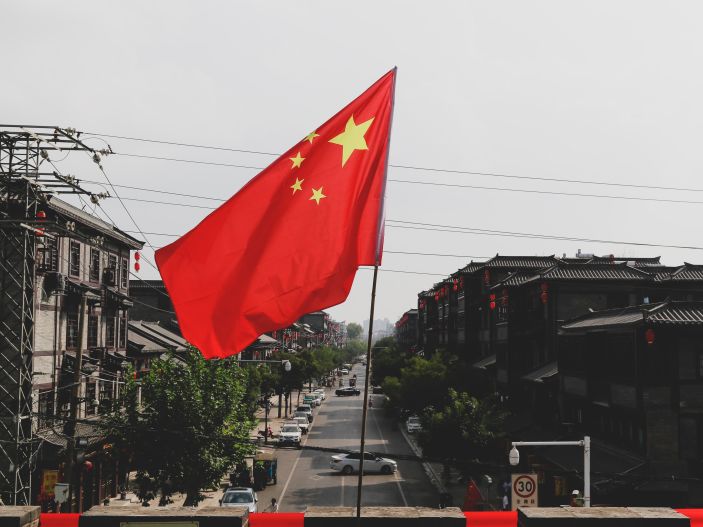
China Pins Growth Hopes on Struggling Small Businesses
Eswar Prasad, SAP
“The government’s challenge now is to rebuild private-sector confidence, which will be essential to boost household consumption and private investment,” says Eswar Prasad, professor of international trade policy and economics.
Additional Information
The Clock Is Ticking on a TikTok Ban
Sarah Kreps, PACS
“Courts do not view this type of legislation kindly or did not when Trump proposed a similar ban. But that was three years ago and antagonism toward China has only increased in the intervening years,” says Sarah Kreps, professor of government and public policy.
Additional Information
In China, Xi Jinping Faces a Difficult Year on Several Fronts
Jessica Chen Weiss, EAP
“Like Washington, Beijing seeks greater stability in the near term while investing in efforts to deter and counter perceived threats,” says Jessica Chen Weiss, professor of government and public policy. Tensions aren’t likely to subside, she says, “without reciprocal actions to lower the temperature,”
Additional Information
Dying to be Read: Suicide Notes of Indian Farmers as Public Texts
March 27, 2023
12:15 pm
Uris Hall, G08
Talk by Jomy Abraham
Wars, pogroms, environmental catastrophes, and resulting refugee crises turn certain geographies into killing fields. We are witnessing ‘unproductive’ geographies and population groups being abandoned to perish. The contemporary world is seeing new modes of narratives and texts emerging from such death-worlds which demand scholarly attention. Agricultural lands in India have turned into death-worlds where a massive number of suicides have been reported since the mid-1990s. Economic policies implemented by consecutive governments, the introduction of GM crops with inadequate research along with changing climate patterns have pushed a vast population into great distress and the agricultural sector as a whole into a crisis. Situating the suicide notes of farmers from India as texts emerging from a geography of abandonment and death, this paper intends to understand how the act of writing and the text, when the self is anticipating to cease, become ‘the political’ act. A suicide note is the final, desperate means for a ‘suiciding’ farmer to speak in a political voice. Having been written at the cusp of life and death, these texts open up a multiplicity of styles, forms, and materiality to acquire the characteristics of ‘public texts’ with the potential to unsettle the state narratives. Discussing these texts in their singularity within the larger context of the continuing agrarian crisis, the paper will argue how the suicide notes as public texts negotiate for the farming community in the age of necro-power.
Dr. Jomy Abraham is a Visiting Scholar at the South Asia Program, Mario Einaudi Center for International Studies, Cornell University. She received her Ph.D. from the Centre for English Studies, Jawaharlal Nehru University, India, in 2021. Her thesis titled Thanatowritings: Death, Self and Writing in the Farmers’ Suicide Notes from Vidarbha Region, Maharashtra is an interdisciplinary work that draws from literary philosophy, environmental humanities, political theory, and critical suicidology studies to understand texts and authors emerging from geographies where death is ubiquitously present. She obtained her MPhil degree from the Department of English, University of Hyderabad, India. Her dissertation titled De/reterritorialising the Nation: Gender Politics in the Short Stories of Contemporary Women Writers in Kerala tries to understand the shift in the gender politics in the stories of women writers from Kerala to problematise the idea of a nation. She is a literary studies scholar interested in the philosophy of literature, death and literature, death and contemporary cultures, environmental humanities, gender and literature, and Indian English fiction. She has published both peer-reviewed and popular articles. She is currently working towards publishing her book titled Suicide Studies: Philosophy, History, and Politics (a rough English translation) in Malayalam, her first language.
Additional Information
Program
Einaudi Center for International Studies
South Asia Program
Ishion Hutchinson
Associate Professor, Literatures in English
Ishion Hutchinson was born in Port Antonio, Jamaica. He is the author of three poetry collections: Far District; House of Lords and Commons; and School of Instructions.
He received the National Book Critics Circle Award for Poetry, a Guggenheim fellowship, the Joseph Brodsky Rome Prize, the Whiting Writers Award, the PEN/Joyce Osterweil Award, and the American Academy of Arts and Letters Award in Literature. He is a contributing editor to the literary journals The Common and Tongue: A Journal of Writing & Art.
Additional Information
Mukoma Wa Ngugi
Associate Professor, Literatures in English
Mukoma Wa Ngugi is the author of The Rise of the African Novel: Politics of Language, Identity and Ownership; the novels Mrs.
Additional Information
Rehabilitating Dictatorship: The Marcos Martial Law Regime and the Election of Ferdinand Marcos Jr.
March 9, 2023
12:30 pm
Kahin Center
Gatty Lecture Series
Join us for a talk by Joseph Scalice, (Presidential Postdoctoral Fellow, Nanyang Technological University), which will focus on the legacy of the Marcos dictatorship in the Philippines.
This Gatty Lecture will take place at the Kahin Center, but people are also welcome to join us on Zoom. Lunch will be served. For questions, contact seapgatty@cornell.edu.
Participate by Zoom here.
About the Talk
In May 2022, fifty years after his father declared martial law, Ferdinand Marcos Jr was elected president of the Philippines. The martial law regime of Marcos Sr was a brutal military dictatorship that ruled for more than a decade. How have the perpetrators and representatives of this regime been rehabilitated?
This lecture will detail the extraordinary events and political crisis that culminated in the 1972 declaration of martial law, examining what we now know about how it was carried out. A historical assessment of the Marcos dictatorship is fundamental to understanding the rhetoric, policies, and social significance of the Marcos Jr government.
About the Speaker
Joseph Scalice (PhD, UC Berkeley) is a historian of revolutionary movements and authoritarianism in Southeast Asia with a focus on the postwar Philippines. He is Presidential Postdoctoral Fellow at Nanyang Technological University in Singapore. His book, The Drama of Dictatorship: Martial Law and the Communist Parties of the Philippines (Cornell, 2023), uncovers the role played by rival Communist parties in the conflict that culminated in Ferdinand Marcos' declaration of martial law in 1972. Scalice has published articles on social struggles, dictatorship, and the Sino-Soviet split in Southeast Asia in Critical Asian Studies, History and Anthropology, Journal of Southeast Asian Studies, Modern Asian Studies, Philippine Studies, and Diplomatic History, among other journals.
Additional Information
Program
Einaudi Center for International Studies
Southeast Asia Program
Plantation Liberalism: Personhood and Property between Philippine Mindanao and the Black Atlantic
March 3, 2023
3:00 pm
Mann Library, 160
On the banana plantations of Mindanao, the Philippines’ southernmost region, activists involved in an anti-chemical campaign decry their exposure to pesticide drift as an infringement on both their person and their personhood. Such forms of plantation-driven dehumanization draw the Pacific and the Atlantic worlds into a tight embrace. This seminar offers the notion of plantation liberalism as a means of overcoming some of the “regional closets” (Jegathesan 2021) that persist in studies of Southeast Asia. Plantation liberalism is the property-oriented vision of personhood introduced by agrarian colonialism that continues to define the contours of environmental activism today. To trace its genealogy in the Philippines, this seminar outlines how American planters of the early 20th century drew on racial ideologies, inherited from the Antebellum South, to project limited personhood onto Mindanawon natives and to impose private property as the path towards their “benevolent assimilation.” It then demonstrates how those ideals became the narrative terrain on which activists continue to articulate environmental campaigns, and on which their claims for justice continue to be adjudicated. By illuminating the transfer of these ideas between Philippine Mindanao and the Black Atlantic, this seminar seeks modes of transregional scholarship attentive to connection and comparison, but sensitive to the contingencies of historical context.
About the speaker:
Alyssa Paredes is Assistant Professor of Anthropology at the University of Michigan, Ann Arbor. She is a socio-cultural anthropologist researching plantation agriculture, scientific convention, transnational trade, and environmental activism between the Philippines and Japan. Her book manuscript, tentatively titled Bananapocalypse: Plantation Economies and Ecologies in a Global Mindanao, draws on transnational fieldwork to identify the crop science, agrochemical regulation, market segmentation techniques, and food standards as arenas where actors contend over the commodity chain’s various externalities. Her work appears in Ethnos: Journal of Anthropology and the Journal of Political Ecology, as well as in edited collections like The Promise of Multispecies Justice (Duke University Press, 2022) and Feral Atlas: The More-than-Human Anthropocene (Stanford University Press, 2020). She holds a PhD with distinction from Yale University. Before joining as assistant professor, she was LSA Collegiate Fellow 2020-2022 at the University of Michigan.
A Gatty Lecture and Critical Development Studies Seminar
This seminar is co-organized by the Cornell Southeast Asia Program, Cornell Global Development, the Department of Anthropology and the Graduate Field of Development Studies.
Seminars in Critical Development Studies are managed by faculty and Ph.D. students in the Department of Global Development and the Graduate Field of Development Studies. You are encouraged to take part in these invigorating discussions in-person in Warren Hall B73 or via Zoom.
Additional Information
Program
Southeast Asia Program
Einaudi Center for International Studies
Climate Change, Water Resources, and Renewable Energy in Afghanistan
February 20, 2023
12:15 pm
Uris Hall, G08
Talk by Noor Ahmad Akhundzadah (South Asia Program & Natural Resources and the Environment, Cornell University)
Climate change and insecurity are the main threats to Afghanistan's water resources and socioeconomic sustainability. Afghanistan's contribution to Greenhouse Gases emissions is negligible on a global scale; nonetheless, Afghanistan is adversely affected by climate change. Climate changes deeply affected Afghanistan's natural resources, including water, agriculture, forests, pastures, rangeland, and ecosystems. People's livelihoods depend on water resources and agriculture, which is the basis of the country's economy. Based on the geological structure and hydrological systems, the surface water of Afghanistan is divided into five major river basins, including Kabul, Helmand, Harirud-Murghab, Northern, and Amu-Darya River Basins. Four of these river basins flow into the neighboring countries of Uzbekistan, Turkmenistan, Iran, and Pakistan. Through the major river basins, Afghanistan has a significant volume of water resources fed by precipitation in the high mountains. The total annual renewable water potential is estimated at 75 Billion Cubic Meters (BCM), of which 57 BCM is surface water and 18 BCM is groundwater. Total hydroelectric capacity is estimated at 23000 Mega Watt (MW). These neighboring countries are struggling to secure enough water to grow their economy. Afghanistan's protracted insecurity and political instability damaged the socioeconomic and environmental infrastructure. In addition, the transboundary water is of great interest to the regional countries, which directly and indirectly often leads to violent conflicts. Furthermore, Afghanistan's renewable energy sources, including hydropower, solar, wind power, and biomass, are abundant, and their potential is much more than the national energy and electricity demands. Therefore, water resources management, renewable energy resources development, and utilization are integral to Afghanistan's socioeconomic development and environmental restoration. This presentation will discuss the role of water and renewable energy resources in Afghanistan's socioeconomic development and environmental restoration. Climate change and the country's protracted insecurity and conflict are potential threats to sustainable development.
Noor Ahmad Akhundzadah received a bachelor's in geology from Kabul University, a Master's in Agriculture, and a Ph.D. in Geotechnical Engineering from Tokyo University of Agriculture and Technology of Japan. Akhundzadah's area of research is groundwater resources investigation, climate change impacts on water resources, climate change mitigation through renewable energy resources, peacebuilding, climate change, and migration. He is an AGU Global Engagement Committee member.
Additional Information
Program
Einaudi Center for International Studies
South Asia Program
Grad Chats: Beyond the IRB: Ethics and International Research
March 29, 2023
4:30 pm
Uris Hall, G-08
Current calls to decolonize global research renew the institutional and personal scrutiny of our “best practices” in conducting field research. Beyond formal adherence to the Belmont principles of “respect, beneficence, and justice,” researchers must reexamine some of the hidden (and not so hidden) costs borne by the local community in the research effort. Panelists will discuss ethical considerations of international research and ethnography in a variety of methodological practices: randomized control trials, focus group discussions, essay competitions, and selective summer camps.
Moderator
Rachel Beatty Riedl (Government, A&S; Einaudi Center)Panelists
Arnab Basu (Dyson School)Alex Nading (Anthropology, A&S)Sarah Thompson (South Asia Program, Einaudi Center)***
Grad Chats: Conversations on International Research and Practice is a series hosted by the Mario Einaudi Center for International Studies to support graduate students with interdisciplinary training and planning around conducting international research.
Spring 2023 Schedule
From Plan A to Plan B: Designing Research for a Changing World (Thursday, February 16, 4:30 pm – 6:00 pm, Uris Hall G02)Beyond the IRB: Ethics and International Research (Wednesday, March 29, 4:30 pm – 6:00 pm, Uris Hall G08)Best Practices and Challenges in International Field Research (Thursday, March 30, 4:30 pm – 6:00 pm, Uris Hall G02)Finding a Research Focus through Creative Writing (Tuesday, April 18, 4:30 pm – 6:00 pm, Uris Hall G08)Travel Health and Safety Awareness for Conducting Research Abroad (Tuesday, May 9, 4:30 pm – 6:00 pm, Uris Hall G08)
Additional Information
Program
Einaudi Center for International Studies
East Asia Program
Southeast Asia Program
Latin American and Caribbean Studies
Institute for African Development
Institute for European Studies
South Asia Program