Einaudi Center for International Studies
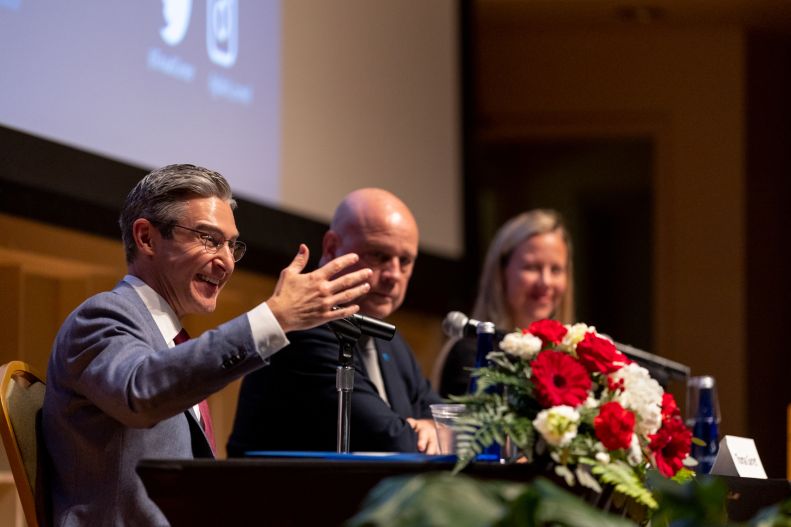
Contesting Autocracy: Lessons from Democratic Social Movements in Portugal, Italy, and Chile
March 6, 2023
4:00 pm
Uris Hall, G08
Autocracy has been on the rise in global political affairs over the past decade, becoming a focal point of academic and public debate. Less attention has been focused, however, on the rise of social protest movements that contest authoritarian regimes in a large number of countries. This panel seeks to draw lessons from previous democratic social movements in Portugal, Italy, and Chile to analyze what role they play in opening up autocratic regimes and paving the way for democratic transitions.
Panelists
Tiago Carvalho, Centro de Investigação e Estudos de Sociologia, Instituto Universitario de Lisboa and Co-Chair of the Social Movements Research Network of the Council of European Studies
Sidney Tarrow, Emeritus Maxwell Upson Professor of Government, Cornell University
Ken Roberts, Richard J. Schwartz Professor Government, Cornell University
Moderator
Prof. Rachel Beatty Riedl, Director of the Mario Einaudi Center for International Studies, John S. Knight Professor of International Studies, and Professor of Government at Cornell University
Register for virtual viewing.
Hosted by the Institute for European Studies in collaboration with the Einaudi Center’s Democratic Threats and Resilience global research priority, this event is cosponsored by the center for Latin American and Caribbean Studies and by the department of Government.
Additional Information
Program
Latin American and Caribbean Studies
Institute for European Studies
Einaudi Center for International Studies
Chinese in the Digital Age by Thomas Mullaney (History, EA Languages and Cultures, Stanford)
April 27, 2023
12:30 pm
For over 70 years, Chinese script has been a driving force in shaping the digital age and pushing it beyond familiar alphabetical ecologies. Western-designed screens, printers, keyboards, character encoding schemes, and more have all been forced to adapt to accommodate the intricacies of the world's one major non-alphabetical writing system. Despite China's position as a global leader in technology, however, these ecologies of Chinese computing have long remained uncharted territories--until now. Join Stanford historian Thomas S. Mullaney on a tour of Chinese in the digital age.
Additional Information
Program
Einaudi Center for International Studies
East Asia Program
Stephen Vider
Assistant Professor, History
Stephen Vider is assistant professor of history and director of the Public History Initiative at Cornell University. His research examines the social practices and politics of everyday life in the 20th century United States, with a focus on intersections of gender, sexuality, race, and ethnicity.
Additional Information
Derrick Spires
Associate Professor, Literatures in English
Derrick Spires is an associate professor of literatures in English and affiliate faculty in American, visual, and media studies. He specializes in early African American and American print culture, citizenship studies, and African American intellectual history. His first book, The Practice of Citizenship: Black Politics and Print Culture in the Early United States (University of Pennsylvania Press, 2019), traces the parallel development of early black print culture and legal and cultural understandings of U.S.
Additional Information
Derek Chang
Associate Professor, History
Derek Chang is an associate professor of history and Asian American studies. He is author of Citizens of a Christian Nation: Evangelical Missions and the Problem of Race in the Nineteenth Century as well as a number of book chapters on the intersection of race and religion.
Additional Information
Mobs and Megaprojects: Infrastructural Populism in Bangladesh
April 10, 2023
12:15 pm
Uris Hall, G08
Talk by Nusrat S Chowdhury (Anthropology, Amherst College)
This paper contemplates the postcolonial trajectories of development and democracy by focusing on a river bridge in Bangladesh which is by far the country’s most high-profile infrastructural project. While the Padma Bridge was inaugurated only in 2022, its status as a populist project and an index of postcolonial corruption dates back more than a decade. In 2011, the World Bank voiced concern over possible corruption and decided to withdraw funding. In 2013 a Canadian court dismissed the case in absence of acceptable evidence. In 2019, multiple people in Bangladesh were killed based on a rumor that the Padma Bridge needed children’s heads for timely completion. In light of these entangled set of events, along with the fetishistic attachments that the bridge has unearthed, my paper aims to situate megaprojects as articulating a specific imagination of development. Analytically, I propose that while infrastructural development thrives on and energizes visibiliites, language is often seen as a supplement to the visual. I want to rethink this relationship to argue that language, as much as visibility, is constitutive of the connections that Padma Bridge brings to our attention.
Nusrat S. Chowdhury is a political anthropologist who focuses on questions of political communication and popular sovereignty. Her first book, Paradoxes of the Popular is an ethnography of the crowd. Her current book is a meditation on populism as mediated through infrastructure. This work also privileges language as integral to the way in which infrastructure is accommodated in everyday life that goes beyond the spectacular visuals that development megaprojects thrive on and promise.
Additional Information
Program
Einaudi Center for International Studies
South Asia Program
Crossroads, Crossings, and Transgressions: Deconstructing Borders and Barriers in Southeast Asian/American Studies
March 13, 2023
12:30 pm
Kahin Center
Gatty Lecture Series
Join us for a talk by Khatharya Um, (Associate Dean and Associate Professor, UC Berkeley), which will focus on borders and barriers in Southeast Asian studies.
This Gatty Lecture will take place at the Kahin Center, but people are also welcome to join us on Zoom. Lunch will be served. For questions, contact seapgatty@cornell.edu.
Participate by Zoom here.
About the Talk
While Southeast Asia has long been a crossroad of influences and transnational movements, the rise of Asia-Pacific as an economic and political power center has brought increased attention to regional dynamics and transnational connections, processes and practices. Transnational flows of people, goods, capital, and ideas have engendered optimism about exchange, interdependence, and understanding, while persisting conflicts over resources, territorial claims, and national belonging have animated the discourse about borders, boundaries, lines of differentiation and stratification, crossings and transgressions in the examination of both the causes and consequences of conflict. These new im/mobilities and spatialities, in turn, compel a re-thinking of prevailing approaches and epistemologies that have been delimited by disciplinary boundaries.
This talk maps and interrogates the ways in which global, regional and local forces and dynamics inform new im/mobilities, spatialities, and belongings, and the negotiations that Southeast Asian individuals and communities have to engage at multiple levels and in multiple arenas. It is particularly attentive to the linkages between macro forces and the micro politics of the everyday struggle to survive and resist. It critiques and problematizes the binary between area and Ethnic/American Studies, and argues for a more expansive analytical approach that focuses on continuum, intersectionality, and relationality between peoples, communities, histories, and fields of study without abandonment of historical, contextual, and experiential specificities.
About the Speaker
Professor Khatharya Um is a political scientist, Associate Dean for Diversity, Equity, Inclusion, Belonging and Justice, and Associate Professor of Asian American and Asian Diaspora Studies at the University of California, Berkeley where she also received her PhD in Political Science and was the Chancellor’s Distinguished Postdoctoral Fellow. Professor Um is also a core faculty of Global Studies, the Center for Southeast Asian Studies, and The Institute for European Studies at Berkeley. She is a co-founder of the Critical Refugee Studies Collective, and Chair of the Global Transformation Strategic Working Group of the International Alliance of Research Universities.
Professor Um’s research and teaching interests center on Southeast Asia and Southeast Asian American studies, migration and critical refugee studies, colonial and postcolonial studies, and peace and conflict studies, with a particular focus on genocide studies. She has published extensively and in multiple languages on Southeast Asia and Southeast Asian diaspora, including the recent books From the Land of Shadows (NYU Press), Southeast Asian Migration (Sussex Academic Press),Departures (UC Press) and Southeast Asian Migration: People on the Move in Search of Work, Refuge and Belonging (Sussex Academic Press. Her pathbreaking research on Southeast Asian American educational and health disparities has informed policies and programs.
In addition to her academic work, Professor Um is also actively involved in community advocacy, principally on issues of refugee integration and of educational access for linguistically and culturally diverse students. She has founded and served on the board of numerous refugee led and refugee-serving organizations, including as Founder and Chair of the National Cambodian American Organization, as Board Chair of the Washington DC- based Southeast Asian Resource Action Center, and as President of the National Association for the Education and Advancement of Cambodian, Laotian and Vietnamese Americans. She was also a Commissioner of the National Cambodian Health Crisis Initiative, and member of the Panel of Experts of the National Education Association Quality Schools Project.
Professor Um has received numerous awards for her community leadership and service, including congressional recognitions from Congresswoman Barbara Lee and Congresswoman Anna Eshoo, and the prestigious Berkeley Chancellor’s Award for Advancing Institutional Excellence and Equity. She was the first Cambodian American woman to receive a Ph.D.
This Gatty Lecture will take place in person at the Kahin Center, but people are also welcome to join us on Zoom.
Lunch will be served.
For questions, please contact seapgatty@cornell.edu
Additional Information
Program
Einaudi Center for International Studies
Southeast Asia Program
"Capturing the Voice of Venezuelan Migrants" by Douglas Lyon, MD
March 16, 2023
12:25 pm
Uris Hall, G08
The story of TodoSomos, two years on the Venezuelan Colombian border, rigorously documenting the humanitarian crisis through the collection of first-person narrative and how we created an archive of the story that is undeniable and inconvenient to those responsible for the crisis.
TodoSomos on the Colombian Border
TodoSomos is a US-based nonprofit specializing in collecting, analyzing, and sharing narratives of those afflicted by humanitarian crises. Collecting testimony in a rigorous ongoing way provides an undeniable record of what a refugee population has been through over time. Why they left, what they faced on their journey, their fears, and their hopes for the future. Our work is that of sociologists and anthropologists, only in conflict and unstable areas requiring both nimbleness and academic rigor. We sample broadly over a long period and with the open-ended question, “tell us your story.” The story you would share with your best friend, grandfather, or sister. Why did you leave? What happened along the way? Where will you go? What are your hopes and fears?
From the fall of 2019 through the spring of 2022, in 26 legal ledgers, we collected over 2,000 handwritten testimonies. On a monthly basis, we used local community to read through and summarize the narratives. From these narratives, we produced a quarterly report for the United Nations, National and International NGOs, and local governments involved in the immediate response. We will make our greater archive available to academic institutions as they review, reflect, and publish on this critical moment in global history.
About the Speaker
Douglas Lyon is a family physician and epidemiologist with more than 25 years spent working in Oregon and Internationally with Doctors without Borders, the US Centers for Disease Control, and the UN High Commission for Refugees. His work in the US has primarily cared for the underserved in county and migrant health clinics. His international work has been in various positions as a clinician, medical advisor, and country director, principally in complex emergencies and the management of epidemics – HIV/AID, Cholera, Ebola, and COVID-19.
He is the founder of an NGO called TodoSomos, which collects first-person narratives of Venezuelan refugees in Colombia and South America - TodoSomos hopes to bring global attention to the hardship and cause of the displacement of the more than 5 million that have left their country over the last three years.
His favorite quote is from Mahatma Gandhi, ‘The best way to find yourself is to lose yourself in the service of others.’
********
Cosponsored by the Department of Roman Studies
This is an in-person event, however, if you can't make it, join us by registering through the Zoom link below:
https://cornell.zoom.us/webinar/register/WN_CWI6Hqd-QvO0LpkJTBZ5LQ
After registering, you will receive a confirmation email containing information about joining the webinar.
Additional Information
Program
Einaudi Center for International Studies
Latin American and Caribbean Studies
Berger International Speaker Series Lunchtime Panel – Can the MENA Region Meet the Sustainable Development Goals? Several Open Questions
January 31, 2023
12:15 pm
Myron Taylor Hall, Zhu Faculty Lounge (L28)
Please join us on Tuesday, 1/31/2023 from 12:15 p.m. to 1:15 p.m. in Room L28 (Zhu Faculty Workshop Room, Hughes Hall) for a lunchtime panel moderated and presented by Dr. Radwa Elsaman, Adjunct Professor at Cornell Law School and International Development & Rule of Law Consultant, and featuring distinguished guests Dean and Professor Susan L. Karaminian of Hamad Bin Khalifa University College of Law, Legal Consultant Mahmoud Salah of the World Bank Group, and Management Consultant and Technical Advisor Amber Neumann of the Rule of Law Project.
Lunch will be provided during the event, so don’t forget to RSVP!
RSVP here
Please fill out the following short form: https://cornell.ca1.qualtrics.com/jfe/form/SV_3waRePbOO9HxFPM
Can’t make it to our event in-person? You can attend virtually!
We are also livestreaming the event, so you can sign up to attend the Zoom Webinar at this link: https://cornell.zoom.us/webinar/register/WN_O-rKaqO0QwWe6hiPnuOg0A
Please feel free to distribute the link to anyone you feel would be interested in the seminar. All are welcome!
The Seminar:
Can the MENA Region Meet the Sustainable Development Goals? Several Open Questions
Though many states in the MENA region have substantial wealth and a bustling investment climate due to their oil and gas reserves, many others struggle to establish a future with financial prosperity for their people. In this panel, four scholars and practitioners will discuss sustainable development in MENA. Dr. Radwa Elsaman, Adjunct Professor at Cornell Law School and International Development & Rule of Law Consultant, will start with an overview of the economic, legal, and political challenges in efforts to adopt sustainability in MENA. Dr. Elsaman will describe an underlying struggle that impedes the rule of law from being recognized. Follows Professor Susan L. Karamanian, the Dean of Hamad Bin Khalifa University College of Law, to examine the role of sports, particularly the FIFA World Cup 2022, in promoting SDGs in the region, with a specific focus on the legal legacy. Mahmoud Salah, a legal consultant with the World Bank Group, will summarize the World Bank's Women, Business and the Law Project's findings on the MENA region's regulatory impediments in entrepreneurship and labor force spheres. Finally, Amber Neumann, Rule of Law Project Management Consultant and Technical Advisor, will discuss regional court modernization initiatives, specifically efforts to leverage technology to promote transparency and efficiency. In doing so, Amber will discuss the associated risks and opportunities emergent technologies present to court systems, relevant ethical questions to be explored, and how technologies would be used to advance access to justice actively. The panel will be moderated by Dr. Elsaman, who will also conclude by making a few comments regarding the potential for future development in the region.
About our Distinguished Guests:
Dr. Radwa Elsaman, Adjunct Professor at Cornell Law School and International Development & Rule of Law Consultant
Dr. Radwa Elsaman is a law professor, legal expert, and institutional development professional. She is currently a visiting scholar at Cornell University School of Law and a law professor at Cairo University. She has taught law and conducted academic research at prominent universities throughout the world, including, for example, Boston University and Central European University. Her publications have appeared in worldwide-law journals, such as the University of California Los Angles Pacific Basin Law Journal, Richmond Journal of Global Law, New England Journal of International and Comparative Law, and George Mason Journal of International Brief. She contributes to the Cambridge Handbook on Comparative Law. She is well-known in the Middle East for assisting governments and private sector entities with legal and institutional reform. She has consulted with the World Bank, USAID, the European Investment Bank, the International Development Law Organization (IDLO), the German development agency (GIZ), and the European Union’s Euromed Justice Project. Her professional engagements also include working for the international law firms of Dentons and DLA Piper. Being intensively engaged in community work, particularly in the rule of law and international development fields, she received several awards, including the recognition of the American Association of University Women (AAUW) in Washington, DC. Recently, the Governing Council of the International Institute for the Unification of Private Law in Rome (UNIDROIT) appointed her as a Correspondent for Egypt, and LexisNexis nominated her as a judge for the LexisNexis Middle East Women in Law Awards’ Panel. Elsaman received her Masters and Ph.D. in law from the American University’s Washington College of Law in Washington, DC.
Prof., Susan L. Karamanian, the Dean of Hamad Bin Khalifa University College of Law
Susan L. Karamanian is Dean of the College of Law at the Hamad Bin Khalifa University. She was previously Associate Dean for International and Comparative Legal Studies and Burnett Family Professorial Lecturer at the George Washington University Law School and a Partner in Locke Lord LLP in Dallas. She has lectured around the world, including at the Hague Academy of International Law (Director of English Studies). She is a member of the Executive Council of the American Society of International Law (ASIL) (previously ASIL Vice President). She is a Trustee of the Center for American and International Law, a member of the board of directors of Texas Appleseed, and a member of the Council on Foreign Relations and the American Bar Foundation. Susan is a graduate of the University of Texas (J.D.), Oxford University (B.A. Hons.), where she was a Rhodes Scholar, and Auburn University (B.S.).
Mahmoud Salah, a legal consultant with the World Bank Group
Mahmoud Salaheldin is a legal consultant with the World Bank’s Women, Business, and the Law project. He has broad experience working for the Egyptian judiciary, the International Development Law Organization in Italy, and a leading corporate law firm in Egypt. Mahmoud holds two LL.M degrees from the University of Pittsburgh School of Law and Loyola University Chicago School of Law. He is currently an SJD candidate at Central European University in Austria.
Amber Neumann, Rule of Law Project Management Consultant and Technical Advisor
Amber Neumann is the Principal of Neumann Law, a rule of law project consultancy firm with a focus on the Arab region. She is a licensed lawyer, an experienced adjudicator, and a project management professional with over twenty years of experience in the design and delivery of complex, multi-partner projects in Egypt, Libya, Canada, and the United States. Ms. Neumann has practiced public law for the Ontario Ministry of the Attorney General, and has worked with USAID, IDLO, and the UNDP to support rule of law projects in the region.
Her technical focus is on initiatives that increase access to justice in civil and administrative matters by supporting judicial and quasi-judicial systems to be more transparent, more accessible, and more efficient. Ms. Neumann is particularly interested in exploring ways in which alternative dispute resolution (ADR) mechanisms and emergent technologies can be used to promote access to justice in the Arab Region. She holds a BA (Honours) from the University of Windsor, and a Juris Doctor (JD) from the University of Toronto Faculty of Law.
How to Get Here:
The Zhu Faculty Lounge is on the L level of Hughes Hall in Cornell Law School (the side of the building closest to the gorge).
From Jane Foster Entrance: When entering the Law School through the Jane Foster Front entrance, continue straight through the atrium, past the elevators, slight left and down to the end of the hall, descend the stairs to Level L. The Zhu Faculty Lounge will be down the small set of stairs and to the left (L28).
From the Myron Taylor Hall Entrance: Continue down the hallway in front of you, descend the stairs into the Foyer, and turn left to follow the short hallway past the Registrar. Turn right at the end of the hall and continue down that hallway until you reach the staircase. Descend two levels until you reach level L. The Zhu Faculty Lounge will be down the small set of stairs and to the right (L28).
Additional Information
Program
Einaudi Center for International Studies
Institute for African Development
Video: Laidlaw Scholar Kobi Rassnick in Guatemala
Laidlaw scholar Kobi Rassnick traveled to Santiago Atitlán, Guatemala, for his leadership in action experience. He worked with FARVets, a group based out of the Cornell College of Veterinary Medicine.