Einaudi Center for International Studies

Information Session: Global Internships

November 13, 2025

4:30 pm

Uris Hall, G08

Go global in summer 2026! Global Internships give you valuable international work experience in fields spanning global development, climate and sustainability, international relations, communication, business, governance, and more.

Applications are open now.

Can’t attend? Contact programs@einaudi.cornell.edu.

***

The Mario Einaudi Center for International Studies hosts info sessions for graduate and for undergraduate students to learn more about funding opportunities, international travel, research, and internships. View the full calendar of fall semester sessions.

Additional Information

Program

Einaudi Center for International Studies

Reppy Institute for Peace and Conflict Studies

East Asia Program

Southeast Asia Program

Latin American and Caribbean Studies

Institute for African Development

Institute for European Studies

South Asia Program

Migrations Program

Southwest Asia and North Africa Program

Information Session: Global Internships

October 23, 2025

4:30 pm

Uris Hall, G08

Go global in summer 2026! Global Internships give you valuable international work experience in fields spanning global development, climate and sustainability, international relations, communication, business, governance, and more.

Applications are open now.

Can’t attend? Contact programs@einaudi.cornell.edu.

***

The Mario Einaudi Center for International Studies hosts info sessions for graduate and for undergraduate students to learn more about funding opportunities, international travel, research, and internships. View the full calendar of fall semester sessions.

Additional Information

Program

Einaudi Center for International Studies

Reppy Institute for Peace and Conflict Studies

East Asia Program

Southeast Asia Program

Latin American and Caribbean Studies

Institute for African Development

Institute for European Studies

South Asia Program

Migrations Program

Southwest Asia and North Africa Program

Information Session: Global Internships

October 2, 2025

4:30 pm

Uris Hall, G08

Go global in summer 2026! Global Internships give you valuable international work experience in fields spanning global development, climate and sustainability, international relations, communication, business, governance, and more.

Applications will open in the fall.

Can’t attend? Contact programs@einaudi.cornell.edu.

***

The Mario Einaudi Center for International Studies hosts info sessions for graduate and for undergraduate students to learn more about funding opportunities, international travel, research, and internships. View the full calendar of fall semester sessions.

Additional Information

Program

Einaudi Center for International Studies

Reppy Institute for Peace and Conflict Studies

East Asia Program

Southeast Asia Program

Latin American and Caribbean Studies

Institute for African Development

Institute for European Studies

South Asia Program

Migrations Program

Information Session: Graduate Student Opportunities at the Einaudi Center

September 18, 2025

4:30 pm

Uris Hall, G08

Join us to learn about opportunities for graduate students with the Einaudi Center for International Studies. This session will discuss how to discover or strengthen global interests, including research and travel grants, guest lectures, fellowships, and more!

Can't attend? Email programs@einaudi.cornell.edu for more information.

Additional Information

Program

Einaudi Center for International Studies

Reppy Institute for Peace and Conflict Studies

East Asia Program

Southeast Asia Program

Latin American and Caribbean Studies

Institute for European Studies

South Asia Program

Migrations Program

Institute for African Development

Southwest Asia and North Africa Program

Information Session: Undergraduate Opportunities at the Einaudi Center

September 9, 2025

4:30 pm

Uris Hall, G08

Join us to learn about opportunities for undergraduate students with the Einaudi Center for International Studies. This session will discuss how to discover or strengthen global interests, including academic minors, guest lectures, summer research and travel experiences, and more!

Can't attend? Email programs@einaudi.cornell.edu for more information.

Additional Information

Program

Einaudi Center for International Studies

Reppy Institute for Peace and Conflict Studies

East Asia Program

Southeast Asia Program

Latin American and Caribbean Studies

Institute for European Studies

South Asia Program

Migrations Program

Institute for African Development

Southwest Asia and North Africa Program

How Great-Power Competition Threatens Peace and Weakens Democracy

October 2, 2025

12:00 pm

Uris Hall, G08

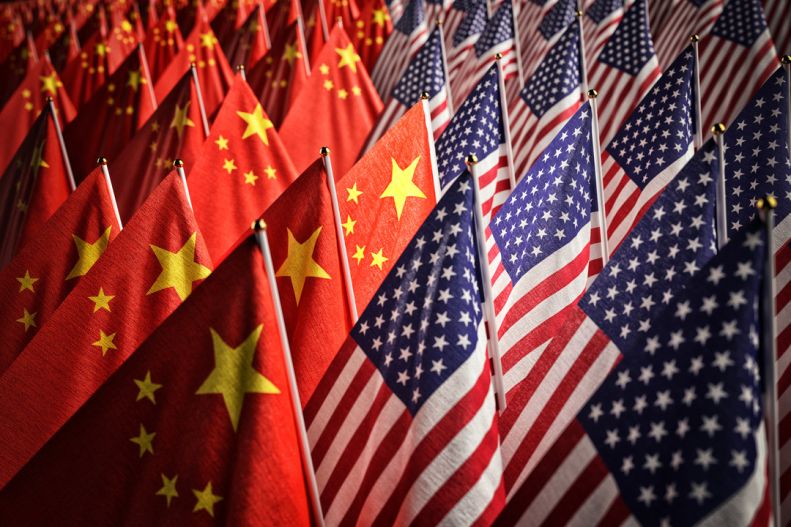
For close to a decade, the U.S. government has been preoccupied with the threat of China, fearing that the country will “eat our lunch,” in the words of President Joe Biden. The United States has crafted its foreign and domestic policy to help constrain China’s military power and economic growth. This talk will argue that great-power competition with China is misguided and vastly underestimates the costs and risks that geopolitical rivalry poses to economic prosperity, the quality of democracy, and, ultimately, global stability. Great-power competition exacerbates inequality, leads to xenophobia, and increases the likelihood of violence around the world. In addition, it distracts from the priority of addressing such issues as climate change while at the same time undercutting democratic pluralism and sacrificing liberty in the name of prevailing against an enemy “other.” A better, saner, more democratically accountable grand strategy of easing tension and achieving effective diplomacy is possible.

About the speaker

Michael Brenes is Co-Director of the Brady-Johnson Program in Grand Strategy and Senior Lecturer in Global Affairs at Yale University. He is the author of For Might and Right: Cold War Defense Spending and the Remaking of American Democracy (University of Massachusetts Press, 2020), the co-author with Van Jackson of The Rivalry Peril: How Great-Power Competition Threatens Peace and Weakens Democracy (Yale University Press, 2025), and co-editor with Daniel Bessner of Rethinking US Power: Domestic Histories of US Foreign Relations (Palgrave MacMillan, 2024) and Cold War Liberalism: Power in a Time of Emergency (Cambridge University Press, 2026). He is currently writing a history of the War and Terror from the 1990s to the present, to be published by Grove Atlantic.

Host

Reppy Institute for Peace and Conflict Studies, part of the Einaudi Center for International Studies

Co-host

Cornell Brooks School Tech Policy Institute

Additional Information

Program

Einaudi Center for International Studies

Reppy Institute for Peace and Conflict Studies

Cultivating a Southasian Public: Film Screening and Discussion with Beena Sarwar and Ronojoy Sen

September 12, 2025

4:00 pm

A. D. White House

Please join us for a screening of the Pulitzer Center-supported film Democracy in Debt: Sri Lanka Beyond the Headlines (2024, 25 min) and a discussion about fostering and engaging cross-border, Southasian publics with producer Beena Sarwar, SAPAN, and Ronojoy Sen, National University of Singapore, moderated by Hadia Khan, Jamhoor.
Watch the trailer here.

Reception to follow the discussion

This session is part of the Cornell-QMUL Global Hubs workshop: Majority-Minority Politics and Democracy in South Asia, supported by Cornell-QMUL Global Hubs, Center on Global Democracy - Cornell Brooks Public Policy, Cornell South Asia Program, Religious Studies Program, Institute of Comparative Modernities, Department of Anthropology, and the Department of Government.

The global decline in democracy has increasingly been shaped by ethnic and religious majoritarianism, which serves as a core mechanism for authoritarian politics. Across South Asia, governments are working to further entrench permanent majorities and minorities through exclusionary legal, political, and economic structures. At the same time, electoral shifts, protest movements, and new forms of collective action highlight the contested nature of these projects and the possibilities for resistance. This workshop aims to examine majoritarianism in South Asia through historical, legal, and anthropological perspectives and to explore strategies to counter these developments. In bringing together scholars working across the areas that comprise Bangladesh, India, Nepal, Pakistan, and Sri Lanka, we hope to foster cross-disciplinary and cross-border analyses that move beyond nation-specific accounts.

Workshop Participants

Hana Shams Ahmed, Anthropology, York University, Toronto, CanadaMohsin Alam Bhat, Law, Queen Mary University London, London, UKMona Bhan, Anthropology, Syracuse University, Syracuse, USANatasha Raheja, Anthropology, Cornell University, Ithaca, USARadhika Mongia, Sociology, York University, Toronto, CanadaSadia Mahmood, Religious Studies, Quaid-e-Azam University, Islamabad, Pakistan Salah Punathil, Sociology, University of Hyderabad, Hyderabad, IndiaSalman Hussain, Anthropology, York University, Toronto, CanadaSana Batool, Journalism, Falmouth University, Falmouth, UKTashi Ghale, Anthropology, Washington University Saint Louis, Saint Louis, USA

Drawing by Rohait Bhagwant

Additional Information

Program

Einaudi Center for International Studies

South Asia Program

The New Arms Race and How to Stop It

September 25, 2025

12:00 pm

Uris Hall, G08

In this 80th year of the atomic age, the catastrophic risks posed by nuclear weapons are growing. The US and Russia are developing new nuclear bombs and missiles and upgrading weapons delivery systems. China is rapidly expanding its nuclear weapons capabilities.

In the history of the atomic age, progress toward arms limitation has usually been the result of social protest and organized political advocacy. The initiative for halting the new arms race will have to come from the bottom up, through grass roots mobilization.

Drawing from his new book, Protest and Policy in the Iraq, Nuclear Freeze and Vietnam Peace Movements, Cortright will identify lessons for effective advocacy. He will share principles of strategies and tactics and will emphasize the importance of mass public support, compelling narratives and combining non-institutional and institutional politics.

Cortright will recount organizing experiences to identify how movements influenced nuclear policy in the 1980s and helped to end the cold war. He will suggest new strategies for today, describing the new Appeal to Halt and Reverse the Arms Race and suggesting coalitional alliances with religious communities and today’s movement to save democracy.

About the speaker

David Cortright is a Visiting Scholar at Cornell University’s Reppy Institute for Peace and Conflict Studies and Professor Emeritus at the University of Notre Dame’s Kroc Institute for International Peace Studies. He is the author or editor of 23 books and has written widely on peace policy, nonviolent social change, soldier dissent, nuclear disarmament, and the use of multilateral sanctions and incentives as tools of international peacemaking.

In 2002 Cortright was a co-founder of Win Without War, which opposed the US invasion of Iraq and remains an active voice today in promoting progressive foreign policy issues. He continues to serve on the group’s board of directors.

As director of policy studies for Notre Dame’s Kroc Institute for International Peace Studies, Cortright initiated policy advocacy campaigns to reduce and eliminate nuclear weapons; refine the utilization of economic sanctions as instruments of diplomacy; reduce the adverse humanitarian impacts of sanctions; develop effective nonmilitary means of countering violent extremism; and support the UN Women, Peace and Security agenda in Afghanistan and Iraq.

Cortright helped to create and for four years directed the Kroc Institute’s Peace Accords Matrix Barometer project monitoring implementation of the Columbia Peace Agreement.

Host

Reppy Institute for Peace and Conflict Studies, part of the Einaudi Center for International Studies

Additional Information

Program

Einaudi Center for International Studies

Reppy Institute for Peace and Conflict Studies

GETSEA Receives $1 Million Luce Grant

The roof of a temple, with Buddhist motifs visible in the background.
July 22, 2025

Led by Southeast Asia Program

The Graduate Education and Training in Southeast Asian Studies (GETSEA) consortium has been awarded a $1 million grant. 

Launched in 2020, GETSEA is a national consortium dedicated to advancing Southeast Asian studies through resource sharing, coordinated programming, and developing innovative ways to support graduate students across U.S. institutions. The four-year Henry Luce Foundation grant supports the creation of an adaptive infrastructure to sustain the field amid mounting federal challenges. 

Current partner institutions include the University of California–Berkeley; University of California–Los Angeles; University of Hawai'i at Mānoa; University of Michigan; Northern Illinois University; University of Washington; and University of Wisconsin–Madison. GETSEA partners hope to expand the consortium to include other institutions actively engaged in graduate education in Southeast Asian studies.

Grant principal investigator Abigail Cohn, professor of linguistics in the College of Arts and Sciences and a founding member of GETSEA, said, “I am gratified by this very tangible recognition of the work and collaborative framework that GETSEA has accomplished, and I look forward to furthering these innovative collaborations over the life of the grant and beyond, especially as we navigate a new era beyond Title VI.”

Since its inception, GETSEA has launched a suite of virtual initiatives, including graduate mini-courses, professional development workshops, a simulcast documentary screening series, and collaborative programming designed to support early-career scholars and sustain language and regional expertise. With the new funding, the consortium will deepen these efforts, expand access to shared resources and courses, and build new pathways for interdisciplinary research and training.

SEAP is part of the Mario Einaudi Center for International Studies, Cornell’s hub for global area and thematic studies. Area studies programs in the United States are under increasing pressure as universities face budget constraints, federal funding cuts, and critiques from both ends of the political spectrum. At the same time, the need for deep regional expertise has never been greater. 

“The Luce grant not only recognizes Cornell’s leadership in Southeast Asian studies, but also supports a project that should serve as a model for programs focused on other regional areas,” said Einaudi Center director Ellen Lust. “It fosters collaboration across the country and shows the power of working together in the face of increased constraints.”

As universities confront questions about the value of global research, GETSEA’s new phase represents an opportunity to create a model for sustaining capacity in the most rarely taught languages and provide meaningful networking opportunities for early-career scholars as teaching modalities shift.

Founded in 1950, SEAP is one of the oldest and most distinguished centers for Southeast Asian studies in the United States. As GETSEA’s administrator, SEAP will take a leading role in charting the future of area studies. 

For 160 years, Cornell has carried out groundbreaking international work that turns bold ideas into solutions and improves lives abroad and in the United States. Learn more from Global Cornell about why international research matters—for national security, competitiveness, public health, and education.

The Henry Luce Foundation seeks to deepen knowledge and understanding in pursuit of a more democratic and just world. Established in 1936 by Henry R. Luce, the co-founder and editor-in-chief of Time, Inc., the Luce Foundation advances its mission by nurturing knowledge communities and institutions, fostering dialogue across divides, enriching public discourse, amplifying diverse voices, and investing in leadership development.

Additional Information

Subscribe to Einaudi Center for International Studies