Einaudi Center for International Studies

Peace, Security, and U.S. Presence in the World

September 4, 2025

12:00 pm

Clark Hall, 700

Please RSVP for the panel on Eventbrite.

Lunch will be served starting at 11:30 am.

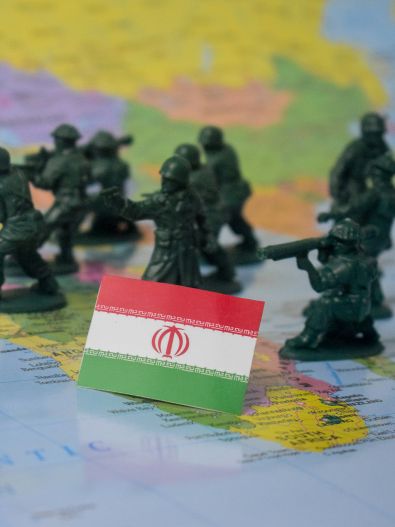
U.S. foreign policies are changing dramatically, with profound implications for peace and security throughout the world. The administration of Donald J. Trump has broken with many decades of precedent by expressing sharp criticism of NATO and historical allies, while expressing admiration for historic adversaries such as Russia. U.S. support for Ukraine’s defense against Russia’s invasion has wavered, with Trump even suggesting that Ukraine rather than Russia is to blame for the conflict. U.S. humanitarian aid to many of the world’s most needy people has ended or been sharply reduced. Changes in migration policy are also placing many groups at heightened risk of political violence. The administration has bombed Iran’s nuclear facilities, acting in violation of international law and suggesting a preference for military action over diplomacy. And changes in trade policy, particularly with China, have the potential to reshape military capabilities and alliances around the world.

These changes raise several questions. Is the re-arming of Europe a necessary bulwark against an expansionist Russia, or a new arms race that encourages nuclear proliferation and increases the risk of war? Will the cancellation of humanitarian aid encourage other nations to increase their capacity, or simply leave the world’s most vulnerable people without hope? What other nations might step in to fill the vacuum left by the loss of such aid, and will these nations be more or less exploitative than the United States? How will changing U.S. policies affect regional security alliances, for example between Russia and China? This panel will provide perspectives on how recent changes to foreign policy are likely to affect issues of peace and security in several regions around the world.

Panelists

Jok Madut Jok, Professor of Anthropology, Syracuse University

Jok’s areas of specialization include security, governance, democracy and development in South Sudan and Sudan. He has also written extensively about gender, sexuality and reproductive health, humanitarian aid, ethnography of political violence, gender-based violence, and war and slavery and the politics of identity in South Sudan and Sudan. He is the author of Breaking Sudan: The Search for Peace (Oneworld Publications, 2017), Sudan: Race, Religion and Violence (One World Publication, 2007), War and Slavery in Sudan (University of Pennsylvania Press, 2001), and Militarization, Gender and Reproductive Health in South Sudan (Edwin Mellen Press, 1998). He also co-edited The Sudan Handbook (with J. Willis, J. Ryle and S. Baldo, James Currey, 2011). Before joining Maxwell he was visiting professor of anthropology at the University of Oxford and a Fellow of Linacre College. He also served in the government of South Sudan as undersecretary in the Ministry of Culture and Heritage, 2010-13. He is the founding director of the Sudd Institute, a public policy research center.

Kaija E. Schilde, Associate Professor of International Studies, Pardee School of Global Studies, Boston University

Professor Schilde’s research focuses on the political economy of security, with a particular emphasis on defense industry politics and the political development of the European Union. In July 2021 she was named Acting Director of BU’s Center for the Study of Europe and in January 2022 she received the Jean Monnet Chair in European Security and Defense. Her book, The Political Economy of European Security (Cambridge University Press, 2017) investigates the state-society relations between the EU and interest groups, with a particular focus on security and defense institutions, industries, and markets. Her research interests span multiple dimensions of the historical institutionalism of security organizations, including the causes and consequences of military spending; the relationship between spending, innovation, and capabilities; defense reform and force transformation; the politics of defense protectionism; and the international diffusion of internal and border security practices.

Zheng Wang, Professor at the School of Diplomacy and International Relations, Seton Hall University

Professor Wang’s research interests lie in three closely connected areas: (1) identity-based conflicts, nationalism, and the politics of historical memory; (2) peace and conflict management in East Asia, with a special focus on China’s rise and its impact on regional peace and security; (3) foreign-domestic linkages in Chinese politics and foreign relations. He is the author of Never Forget National Humiliation: Historical Memory in Chinese Politics and Foreign Relations (Columbia University Press, 2012), which received the International Studies Association’s Yale H. Ferguson Award in 2013. He is also author of Memory Politics, Identity and Conflict: Historical Memory as a Variable (Palgrave Macmillan, 2018) and editor of COVID-19 and U.S.-China Relations (Palgrave Macmillan, 2024). He is currently under contract with the Oxford University Press to write a book about the rise of nationalism and populism and the crises in the US-China relations. He is Director of the Center for Peace and Conflict Studies (CPCS) at Seton Hall University.

Diego Chaves-González, Senior Manager for Latin America and Caribbean Initiative, Migration Policy Institute

Chaves-González’s research focuses on forced displacement, legal pathways, integration, migration and development, and regional cooperation in migration management. He previously worked for the World Bank and the United Nations. While at the World Bank, he helped expand the scope of the Global Concessional Financing Facility (GCFF). He also co-authored the 2019, 2020, and 2021 GCFF annual reports, and helped coordinate the Secretary of the Multilateral Development Bank platform. While working for the United Nations, Mr. Chaves-González initiated a platform in Colombia to coordinate the work of UN agencies, NGOs, and their partners in response to migrant and refugee situations. He also helped develop a strategy to involve victims of conflict and internally displaced persons in the peace deal negotiations that ended Colombia’s civil war. Chaves-González also played an essential role as a presidential advisor in the registration and regularization of 500,000 migrants in Colombia and helped provide advice on how to structure similar initiatives in Costa Rica, Ecuador, and Peru. Since the start of the Venezuelan crisis, he has assisted Latin American governments in developing policies to integrate arriving migrants and refugees into receiving communities, accommodating both newcomer and local needs.

Host

Reppy Institute for Peace and Conflict Studies, part of the Einaudi Center for International Studies

Co-sponsors
Institute for European Studies, part of the Einaudi Center for International Studies
Migrations Program, part of the Mario Einaudi Center for International Studies, and the Mellon Foundation’s Just Futures Initiative

Additional Information

Program

Einaudi Center for International Studies

Reppy Institute for Peace and Conflict Studies

East Asia Program

Southeast Asia Program

Latin American and Caribbean Studies

Institute for African Development

Institute for European Studies

South Asia Program

Migrations Program

Southwest Asia and North Africa Program

The Many Lives of the Soviet Dissident Movement

September 26, 2025

12:30 pm

A. D. White House

An extraordinary account of the Soviet dissident movement, To the Success of Our Hopeless Cause: The Many Lives of the Soviet Dissident Movement shows how dissidents spearheaded the struggle to break free of the USSR’s totalitarian past, a struggle that continues in Putin’s Russia—and that illuminates other struggles between hopelessness and perseverance today.

Professor and author Benjamin Nathans joins us for a talk about his book, which won the Pulitzer Prize for nonfiction this year.

About the Book

Beginning in the 1960s, the Soviet Union was unexpectedly confronted by a dissident movement that captured the world’s imagination. Demanding that the Kremlin obey its own laws, an improbable band of Soviet citizens held unauthorized public gatherings, petitioned in support of arrested intellectuals, and circulated banned samizdat texts. Soviet authorities arrested dissidents, subjected them to bogus trials and vicious press campaigns, sentenced them to psychiatric hospitals and labor camps, sent them into exile—and transformed them into martyred heroes. Against all odds, the dissident movement undermined the Soviet system and hastened its collapse. Taking its title from a toast made at dissident gatherings, To the Success of Our Hopeless Cause: The Many Lives of the Soviet Dissident Movement is a definitive history of a remarkable group of people who helped change the twentieth century.

About the Speaker

Benjamin Nathans is the Alan Charles Kors Endowed Term Professor of History at the University of Pennsylvania, where he teaches and writes about Imperial Russia and the Soviet Union, modern European Jewish history, and the history of human rights. Nathans' most recent book, To the Success of Our Hopeless Cause: The Many Lives of the Soviet Dissident Movement (Princeton University Press, 2024), tells the dramatic story of the men and women who became dissidents—from Nobel laureates Andrei Sakharov and Alexander Solzhenitsyn to many others who are virtually unknown today. Drawing on diaries, memoirs, personal letters, interviews, and KGB interrogation records, To the Success of Our Hopeless Cause reveals how dissidents decided to use Soviet law to contain the power of the Soviet state. This strategy, as one of them put it, was “simple to the point of genius: in an unfree country, they began to conduct themselves like free people.”

Awards and Recognition

Winner of the Pulitzer Prize in General NonfictionShortlisted for the Pushkin House Russian Book PrizeShortlisted for the Lionel Gelber Prize, Lionel Gelber FoundationFinalist for the Literary Award, Athenaeum of PhiladelphiaA Stevereads History Book of the Year
Followed by a book signing and sale courtesy of Buffalo Street Books.

Host

Institute for European Studies, part of the Einaudi Center for International Studies

Co-sponsors

Society for the Humanities

Department of History

RSVP on Eventbrite.

Additional Information

Program

Einaudi Center for International Studies

Institute for European Studies

Crucibles of Power

September 11, 2025

12:00 pm

Clark Hall, 700

During the Cold War, the Smolensk Archive held the only collection of Communist Party documents available to Western scholars, becoming the foundation for generations of scholarship on Soviet history. Crucibles of Power returns to the Smolensk Region with fresh eyes and fresh sources. Prizewinning historian Michael David-Fox traces the experiences of Smolensk residents between the interwar years and the end of World War II, a period during which the city and region passed from Stalinist rule to Nazi occupation and back. The result is a revelatory examination of choice and power under dueling forms of murderous totalitarianism.

Author Michael David-Fox joins us for a talk about his book. Followed by a book signing.

About the Book

Exploring the life-and-death decisions of a fascinating cast of characters—from young women in the Communist Youth League to a defense lawyer during Stalin’s Great Terror who became Smolensk’s collaborationist mayor during the German occupation—David-Fox shows how deeply the Stalinist and Nazi regimes relied on the cooptation of average citizens motivated by greed and need, but always within the orbit of ideology. Challenging today’s Russian nationalist narrative of heroic WWII resistance, he finds that large numbers of Russians aided the Nazi occupation of Smolensk in order to protect themselves, secure their own self-interest, or pursue vendettas against a Soviet state they found no less corrupt or oppressive than its German foe.

At a time when much of the world is tilting away from liberal democracy and toward authoritarianism, Crucibles of Power masterfully unravels the threads of dictatorial rule. Smolensk emerges as a laboratory for understanding the mechanics of both outright coercion and subtler forms of power, as well as the enabling behavior of ordinary citizens acquiescing to extraordinary crimes.

About the Speaker

Michael David-Fox is the author or editor of fifteen books, including Crossing Borders: Modernity, Ideology, and Culture in Russia and the Soviet Union and Showcasing the Great Experiment: Cultural Diplomacy and Western Visitors to the Soviet Union, 1921–1941. He is Director of the Center for Eurasian, Russian, and East European Studies and Professor of History at Georgetown University.

Host

Reppy Institute for Peace and Conflict Studies, part of the Einaudi Center for International Studies

Co-sponsors

Department of History
Jewish Studies Program

Please RSVP on Eventbrite.

Order a copy of the book from the Cornell Store.

Additional Information

Program

Einaudi Center for International Studies

Reppy Institute for Peace and Conflict Studies

Institute for European Studies

15th Annual Tagore Lecture--Mixed Metaphors: Adventures in Translationland

September 19, 2025

4:30 pm

A. D. White House

Talk by Daisy Rockwell (Artist, writer, and Hindi-Urdu translator)

Translators love to use metaphors to capture the nature of their work, yet every metaphor seems to fall short, resulting in a great, unusable tangle of mixed metaphors. In this lecture, Daisy Rockwell will share some of her own handcrafted metaphors for translation and explore the many dimensions of the art.

Daisy Rockwell is an artist, writer, and Hindi-Urdu translator living in Vermont. She has translated numerous classic and contemporary literary works from Hindi and Urdu into English. Her translations have been awarded the International Booker Prize, the Warwick Prize for Women in Translation, the MLA Aldo and Jeanne Scaglione Prize for Translation of a Literary Work, the Wisconsin Prize for Poetry in Translation, and the Vani Foundation Distinguished Translator Award. Her translations have been honored with grants from the National Endowment for the Arts, the National Endowment for the Humanities, and PEN Translates. Her novel Alice Sees Ghosts, and Mixed Metaphors, her collection of poems about translation, are both forthcoming from Bloomsbury India in 2025 and 2026. Her memoir Our Friend, Art is forthcoming from Pushkin Press in 2027.

Books will be available for sale and signing after the lecture, from Odyssey Bookstore.

Cornell graduate students can register for two workshops with Daisy Rockwell on Thursday, September 18 and Friday, September 19.

The Rabindranath Tagore Lecture Series in Modern Indian Literature is made possible by a gift from the late Cornell Professor Emeritus Narahari Umanath Prabhu and his wife, Sumi Prabhu. Inspired by Rabindranath Tagore’s expansive imagination, unbounded by geopolitical boundaries, the series has regularly featured prominent writers from across South Asia and its diasporas.

Cosponsored by the Society for the Humanities and the Department of Literature in English

Additional Information

Program

Einaudi Center for International Studies

South Asia Program

Subscribe to Einaudi Center for International Studies