
Einaudi Center for International Studies
Summer Internships Are Here!

Undergrads, Apply by Jan. 15
Apply now for 2023 global summer internships! These in-person experiences let you polish your real-world skills and advance your career goals.
Additional Information
From Xinjiang to Shanghai, Protests Grow in China over COVID Restrictions

Eli Friedman, EAP
The cross-class, cross-ethnic protests are a “movement against surveillance” says Friedman, professor of international and comparative labor.
Additional Information
Global Grand Challenges Town Hall

December 8, 2022
2:00 pm
Following the recent Global Grand Challenges Symposium, we are continuing the conversation with this virtual faculty and staff town hall.
The symposium brought together the Cornell community and international partners to discuss the most urgent challenges around the world and how we can work together to address them. This informal session with time for participants' remarks will provide a brief overview of outcomes from Migrations, Cornell's first Global Grand Challenge; gather community feedback about new themes; and describe the process for selecting the next Global Grand Challenge.
Whether or not you attended the symposium, we invite you to join the December 8 town hall and complete this short survey with your thoughts on potential themes for universitywide international collaboration.
Register today!
Additional Information
Program
Einaudi Center for International Studies
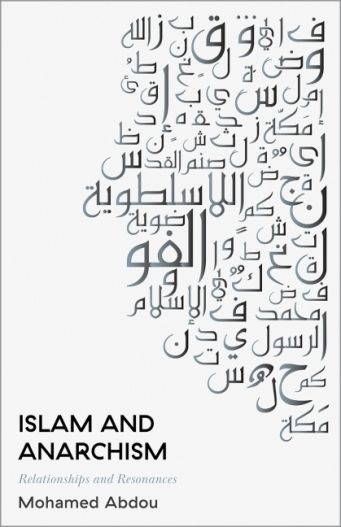
Islam and Anarchism: Relationships and Resonances | Einaudi Center “Author Meets Critics”
February 22, 2023
5:00 pm
Uris Hall, G-08
Discourse around Muslims and Islam all too often lapses into a false dichotomy of Orientalist and fundamentalist tropes. A popular reimagining of Islam is urgently needed. Yet it is a perhaps unexpected political philosophical tradition that has the most to offer in this pursuit: anarchism. To better understand this topic, the Mario Einaudi Center for International Studies has assembled a panel discussion of Dr. Mohamed Abdou’s book, Islam and Anarchism: Relationships and Resonances (Pluto Press, 2022).
Islam and Anarchism is a highly original and interdisciplinary work, which simultaneously disrupts two commonly held beliefs—that Islam is necessarily authoritarian and capitalist; and that anarchism is necessarily anti-religious and anti-spiritual. Deeply rooted in key Islamic concepts and textual sources, and drawing on radical Indigenous, Islamic anarchistic and social movement discourses, Abdou proposes “Anarcha-Islam.”
Constructing a decolonial, non-authoritarian and non-capitalist Islamic anarchism, Islam and Anarchism philosophically and theologically challenges the classist, sexist, racist, ageist, queerphobic and ableist inequalities in both post- and neo-colonial societies like Egypt, and settler-colonial societies such as Canada and the USA.
Author of Islam and Anarchism:
Mohamed Abdou, Global Racial Justice Postdoctoral Fellow, Einaudi Center
“Author Meets Critics” Moderator and Discussants:
Edward E. Baptist (History) - ModeratorDurba Ghosh (History)Seema Golestaneh (Near Eastern Studies)Jolene Rickard (History of Art and Visual Studies)
About the Forum:
The “Author Meets Critics” forum stages scholarly conversations around the Einaudi Center’s research priority areas: Inequalities, Identities, and Justice and Democratic Threats and Resilience.
Additional Information
Program
Einaudi Center for International Studies
Black Storytelling and Methodological Rebellions in a Pandemic and Politically Cruel World

January 23, 2023
4:30 pm
Hosted by the Mario Einaudi Center for International Studies, as part of its research priority theme on Inequalities, Identities, and Justice.
What are the roles of science, math, music, art, hope, religion, and spirituality in Black life? What counts as Black liberation given BIPOC complicity with (neo)liberalism? What are some of the bridges that can be built to combat woke-online armchair allyships and the algorithmic logics of “digitized racism” and its production of Black death and suffering? What are some of the tools that can be deployed to enact genuine acts of solidarity practices in the wake of what Robin D. G. Kelley calls the “Black Spring” of 2020 and in light of what Saidiya Hartman calls the ongoing “afterlife to slavery projects”?
At this event, Katherine McKittrick and Chanda Prescod-Weinstein read the spectrum of demands by BLM groups in relation to the Black Power legacies of, for example, the Black Panthers who incepted alternatives as the free breakfast programs and argued for the right to self-defense. How crucial is an internationalized anti-imperial and anti-colonial Black abolitionist politics to anti-racism and for combatting anti-blackness locally and globally? How might we collectively devise an overarching strategy to do so?
In what ways do extant imperial and colonial forces operate differently toward Black people in terms of “necropolitics” in determining who is invited into the realm of economic, political, and scientific life and who, instead, is confined to social death? This question—who must die so others may live—is central to our discussion on the ongoing theme of “decolonizing anti-racism.”
Speakers
Katherine McKittrick is Professor of Gender Studies and Canada Research Chair in Black Studies at Queen’s University in Kingston, Canada. She authored Demonic Grounds: Black Women and the Cartographies of Struggle (UMP, 2006) and edited and contributed to Sylvia Wynter: On Being Human as Praxis (DUP, 2015). Her most recent monograph, Dear Science and Other Stories (DUP, 2021) is an exploration of black methodologies.
Chanda Prescod-Weinstein is an assistant professor of physics and astronomy and core faculty in women’s and gender studies at the University of New Hampshire. Her research in theoretical physics focuses on cosmology, neutron stars, and dark matter. She researches Black feminist science, technology, and society studies. Her first book, The Disordered Cosmos: A Journey into Dark Matter, Spacetime, and Dreams Deferred won the 2021 Los Angeles Times Book Prize in the science and technology category and was named a Best Book of 2021 by Publishers Weekly, Smithsonian Magazine, and Kirkus.
Moderator
Mohamed Abdou is a global racial justice postdoctoral fellow and part of the Mario Einaudi Center for International Studies’ Inequalities, Identities, and Justice research team. He graduated from Queen’s University with a doctorate in cultural studies and holds a BAH/MA in sociology. graduated from Queen’s University with a doctorate in cultural studies and holds a BAH/MA in sociology. He is an interdisciplinary scholar of Indigenous, Black, critical race, and Islamic studies, as well as gender, sexuality, and decolonization. He is the author of the book Islam and Anarchism: Relationships and Resonances (Pluto Press, 2022). He wrote his transnational dissertation on Islam & Queer-Muslims: Identity & Sexuality in the Contemporary.
Event Attendance Information:
Limited in-person seating; free ticket required: reserve your ticket today!
If you're not able to attend in-person we invite you to join our zoom webinar. Register here.
Additional Information
Program
Einaudi Center for International Studies
Info Session: Migrations Grants for Faculty

December 13, 2022
9:00 am
Join us for an information session to learn more about the new cycle of Migrations grants, open to all PI-eligible faculty across colleges and schools. Faculty-led programs and centers within the university are also welcome to apply.
The Cornell Migrations codirectors will address questions about priorities, selection criteria, budgets, and other guidance on how to prepare a successful application. Proposals are due January 18, 2023.
In this call for proposals, there are opportunities for Cornell faculty from any academic discipline to study migration at both the domestic and international levels. With support from the Mellon Foundation's Just Futures Initiative, we are funding U.S.-focused work that has long-term and discernible benefits addressing racial and immigrant justice on campus and beyond. Research with a broader international focus may apply for multispecies, interdisciplinary Migrations grants on any migration-related subject.
Register for the information session.
Additional Information
Program
Einaudi Center for International Studies
Institute for European Studies
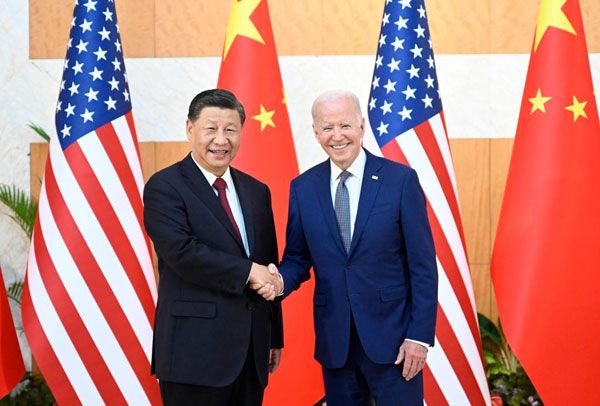
U.S.-China Economic Ties Continue to Fray, Despite Biden-Xi Meeting
Eswar Prasad, SAP
“Xi Jinping’s clear signals about the contours of his administration’s economic policies, which will be less favorable to private enterprise, are likely to discourage U.S. investments in China and lead to continued gradual economic and financial decoupling,” says Eswar Prasad, professor of economics and international trade policy.
Additional Information
Waiting for the People: The Idea of Democracy in Indian Anticolonial Thought

March 23, 2023
11:25 am
It is now widely accepted that the age of decolonization was also a turning point in the history of democracy, as the vast majority of the non-European world replaced imperial rule with democratic republics. Although this fact is taken for granted, scholarly attention so far has been focused on the nationalist aspiration of anticolonial movements and their contesting visions of self-determination. In the moment of its global conquest, democracy, it may seem, was an afterthought—or, at best, a logical corollary—for anticolonial thinkers preoccupied with overcoming empire.
Focusing on colonial India and departing from the standard narratives of anticolonialism, Nazmul Sultan argues that democracy was neither a given ideal waiting to be claimed nor reducible to the concerns of territorial sovereignty. Nazmul suggests that the problem of peoplehood sat at the heart of the monumental clash between the British Empire and the Indian anticolonial movement, inspiring in the process a rethinking of the meaning of democracy for the colonial world. He will also reflect on the place of the anticolonial moment in the global history of democratic thought.
Please join us for this virtual conversation. Register here.
About the Speaker
Nazmul S. Sultan is an Assistant Professor of Political Theory in the Department of Political Science at the University of British Columbia. He is the author of Waiting for the People: The Idea of Democracy in Indian Anticolonial Thought (forthcoming with the Belknap Press of Harvard University Press). His research has also appeared in the American Political Science Review, Political Theory, and Review of Politics, among others.
Presented by the Reppy Institute for Peace and Conflict Studies. Co-sponsored by the South Asia Program, and the Gender and Security Sector Lab.
Additional Information
Program
Einaudi Center for International Studies
Reppy Institute for Peace and Conflict Studies
South Asia Program
Alexandra Dufresne

Professor of the Practice, Cornell Brooks School of Public Policy
Additional Information
Jaclyn Kelley-Widmer
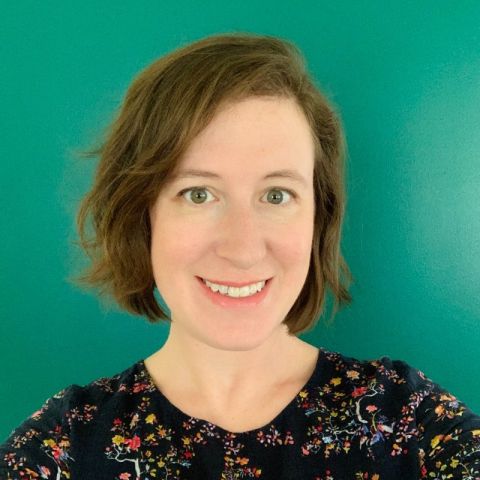
Associate Clinical Professor of Law, Cornell Law School