
Einaudi Center for International Studies
How Did Brazil’s Pollsters Underestimate Support for Bolsonaro?

Gustavo Flores-Macias, LACS
“It gives a sense the polls cannot be trusted, or the integrity of the election is in question,” says Gustavo Flores-Macias, professor of government and public policy.
Additional Information
U.S. Aims to Turn Taiwan into Giant Weapons Depot

Jessica Chen Weiss, EAP
“The U.S. has to make clear that the U.S. doesn’t have a strategic interest in having Taiwan being permanently separated from mainland China,” says Jessica Chen Weiss, professor of government and public policy.
Additional Information
What to Make of Art Today?: Xu Bing, A.D. White Professor-at-Large
October 20, 2022
5:00 pm
Goldwin Smith Hall, Hollis E. Cornell Auditorium
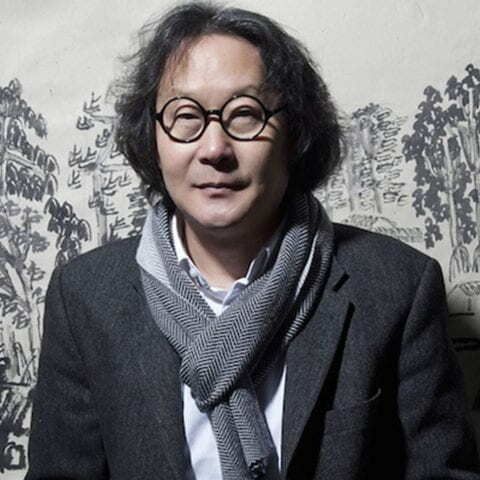
A.D. White Professor-at-Large Xu Bing will present the public lecture “What to Make of Art Today?” on Thursday, October 20 at 5pm at the Hollis E. Cornell Auditorium in Goldwin Smith Hall.
You may also attend the lecture via Zoom.
This event is part of an A.D. White Professors-at-Large (ADW-PAL) visit and is co-sponsored by the Johnson Museum of Art and the Cornell Council for the Arts.
Xu Bing is an internationally acclaimed Chinese artist whose creative and cultural interventions touch on the fields of public and ecological art, printmaking, new media installations, drawing, and sculpture. Xu Bing operates studios in New York and Beijing where he served as Vice President of the Central Academy of Fine Arts. For the 2022 Cornell Biennial, the Herbert F. Johnson Museum of Art has commissioned his newest Background Story, a lyrical light box in dialogue with an historical Chinese ink painting in the Museum’s collection. His biography charts the path of the international influence of Chinese contemporary art and its complex place in Chinese culture over the last forty years.
Xu Bing will visit Cornell as an ADW-PAL from October 17-21, 2022. He was elected as an ADW-PAL in 2015. His appointment runs through 2023.
Xu Bing's "Background Story" exhibition opens October 8, 2022 and closes January 22, 2023. Located in the Gold Gallery, Floor 2L, in the Herbert F. Johnson Museum of Art.
Xu Bing has created a new work based on a centuries-old Chinese painting, Woodcutter in the Winter Mountains by Yang Xun, in the Johnson Museum’s collection for his series Background Story. Through the manipulation of recycled plastic and miscellaneous trash from daily life, the artist dilutes or intensifies light to “draw” an ink-like image on glass that conveys traditional Chinese reverence for nature while serving as a warning about humans’ ongoing mistreatment of the environment.
2022 Cornell Biennial
Sponsored by the Cornell Council for the Arts and curated by Timothy Murray, the 2022 Cornell Biennial "Futurities, Uncertain" features exhibitions, installations, and performances by 23 international and 17 Cornell-based artists. Free and open-to-the-public events will rotate on the Cornell Ithaca campus and the Cornell Tech campus in New York City from July through December 2022.
Additional Information
Program
Einaudi Center for International Studies
East Asia Program
From Dissertation to Manuscript: A Conversation with Rachel Blaifeder from Cambridge University Press
October 13, 2022
4:00 pm
Uris Hall, G02
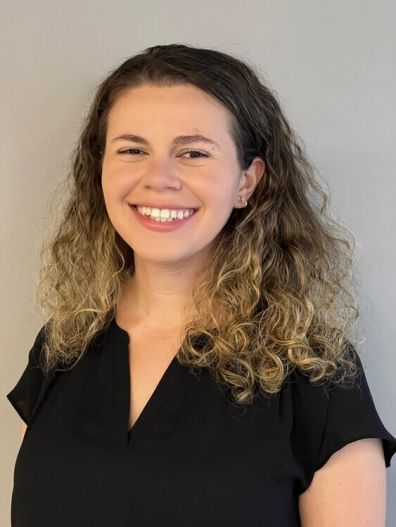
Gain advice and insights about the process of turning your dissertation into a book manuscript from Rachel Blaidfeder, commissioning editor at Cambridge University Press. This is a great opportunity for advanced graduate students and postdoctoral fellows to get guidance from a publishing professional and ask questions in a casual conversation setting!
Rachel Blaifeder commissions a broad array of academic, reference, and trade titles within Cambridge’s political science and sociology lists. Within political science, she focuses on comparative politics, American politics, and Latin American politics and also have interests in gender and politics, religion and politics, political communication, and political psychology. Within sociology, she focuses on political sociology, historical sociology, and social inequality. She is interested in books that tackle big questions, especially those that combine insights and tools from across the social sciences.
Additional Information
Program
Einaudi Center for International Studies
International Archives Explainer

Tips for Grad Students from a Global PhD Research Scholar
Government PhD candidate Vincent Mauro shares his strategies for making the most of your time at an international collection of primary materials.
“The scope did not change much, but the methodological approach evolved. This development was ultimately fruitful for my project’s strength and depth.”
Vincent Mauro’s 2021–22 Amit Bhatia ’01 Global PhD Research Award from the Einaudi Center took him to archival collections in Brazil and Colombia to study how Latin American party systems shape social reform and economic inequality. He was new to archival research when he started his fieldwork.
Mauro’s research aligns with Einaudi’s work on Democratic Threats and Resilience. Read about his research experiences in Latin America.
On this page: Mauro shares what he learned when the pandemic forced him to shift from primarily in-person interviews to archival data.

A Conversation with Vincent Mauro
Briefly set the stage for us: What question is at the center of your dissertation?
At its core, my research seeks to understand why certain democracies are able to redistribute income and ameliorate inequality more effectively than others.
Party systems are present in virtually every democracy and are the key set of organizations that link society to formal political systems. The project draws on an eclectic array of cross-national data and two longitudinal case studies—Brazil and Colombia—to test how dynamics within party systems affect the advance of social reforms, income redistribution, and levels of inequality.
What did you find in the archives you explored?
I was able to find extremely rich collections of primary sources that provide significant access to the inner world of political parties, allowing me to trace how dynamics such as elite capture, intraparty factionalism, and party organization contributed to the advance or inhibition of redistributive social reforms.
I primarily analyzed private correspondence among political elites and party members from the major parties in Brazil and Colombia’s traditional party systems (1946–64 and 1930–2002, respectively).
What would you tell a graduate student planning a similar field experience?
I had no formal training or experience in archival methods, so I didn’t have clear expectations going into the field—and I underestimated how much time the analysis of archival materials would take. To make the most of limited time and resources, I have four major pieces of advice to share.
- Stay Nearby
It’s best to find accommodation as close to the archives as possible. Some archives are essentially first come, first served, and there may be fewer spots than people who want to use them. Staying nearby makes it easier to arrive early. More importantly, spending hours in the archives each day is incredibly draining. Adding on a commute wastes unnecessary energy.
- Get Acquainted in Advance
Try to get a strong grasp of the contents of the archives before you arrive. This is not always possible, but depending on the archive, there may be guidebooks that give you some details.
Portions of the archive may also be online. Spending a couple of weeks going through these before you arrive is extremely helpful for getting a feel for other parts of the collection. Lastly, consider contacting the head archivist or librarian to inquire about individual collections.
- Develop Filters for Speed
Archives always contain a large amount of material that is wholly irrelevant to your project. You need a set of heuristics or “filters” that help you zero in on pertinent materials. As you cull through materials, try to limit how much you allow yourself to thoroughly analyze, since this level of attention is the most time-consuming. You may need multiple rounds of applying different sets of filters to reach a manageable set of highly relevant materials to analyze closely.
For example, I found that telegrams rarely, if ever, contained enough substantive information to make it worth the time it took to read or analyze them—which meant I saved a substantial amount of time simply skipping stacks of telegrams and moving on to other documents in the box. Another filter I used was to have a set of keywords in my head—for instance, “parties,” “divisions,” and “factions”—that I would scan for when quickly going through documents.
- Balance Collection and Analysis
Understand that collecting materials is infinitely faster than analyzing them. If you spend too much—or all—of your time each day simply collecting, you will quickly overburden yourself with material that needs to be analyzed.
Make the conscious decision to split your time into separate collection and analysis blocks. There are different ways to do this—blocks of time each day, alternating weeks, or other approaches. Staying on top of analysis as you go along also helps you refine your filters for more efficiency.
Learn more about Einaudi's Latin American and Caribbean Studies Program, including graduate funding opportunities.
Additional Information
Institute for African Development Seminar Series: People, Practice, Power: Digital Humanities Outside the Center

November 10, 2022
2:40 pm
Uris Hall, G-08
The Issues in African Development Seminar Series examines critical concerns in contemporary Africa using a different theme each semester. The seminars provide a forum for participants to explore alternative perspectives and exchange ideas. They are also a focal activity for students and faculty interested in African development. In addition, this seminar series prepares students for higher level courses on African economic, social, and political development. The presentations are designed for students who are interested in development as well as Africa’s place in global studies, want to know about the peoples, cultures, and societies that call Africa home, and wish to explore development theories and alternate viewpoints on development practice.
Additional Information
Program
Einaudi Center for International Studies
Institute for African Development
What Polls Say about Bolsonaro vs. Lula Just Ahead of Brazil’s Election
Gustavo Flores-Macias, LACS
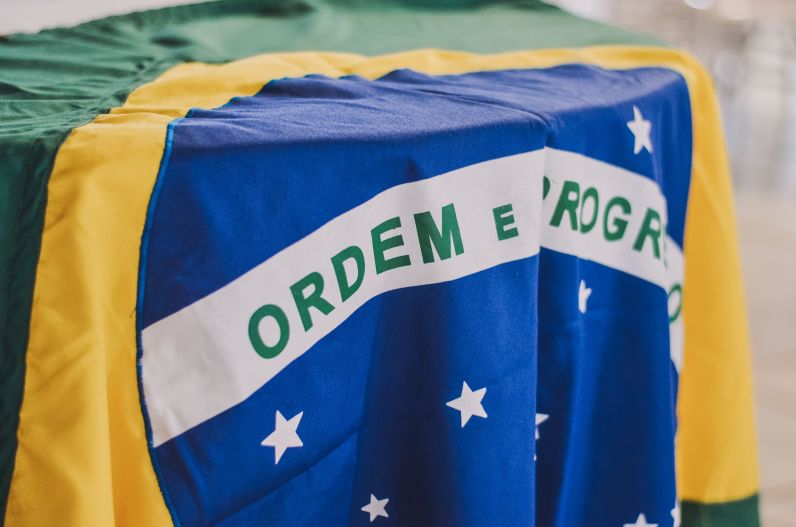
“Polls suggest Luiz Inacio Lula da Silva enjoys a sizable advantage and might avoid a second round of voting, but President Jair Bolsonaro has discredited the electoral process and blamed the media for an uneven playing field,” says Gustavo Flores-Macias, professor of government and associate professor of public policy.
Additional Information
There Are ‘No Easy Fixes’ in Florida. But Could Hurricane Ian's Havoc Bring a Call for Better Planning?

Linda Shi, Global Public Voices
“None of this is surprising,” says Linda Shi, assistant professor of city and regional planning. “How much does it take for us to want to make a change? Our policies and our choices have led us to this point.”
Additional Information
The Dollar Is Strong. That Is Good for the U.S. But Bad for the World.

Eswar Prasad, SAP
“For the rest of the world, it’s a no-win situation,” says Eswar Prasad, professor of applied economics and policy. “Any delay in action could make things potentially even worse.”
Additional Information
Filipino Survivors of Martial Law Still Haunted by Abuses 50 Years after Declaration

Christine Bacareza Balance, Global Public Voices and SEAP
Christine Bacareza Balance, associate professor of Asian American studies, is quoted in this piece. Her forthcoming book, Making Sense of Martial Law, looks at the rule of the elder Marcos and his wife, Imelda Marcos.