
Einaudi Center for International Studies
A Chorus of Hopes for 2023

Kaushik Basu, SAP
This piece on people’s hopes for 2023 includes those of Kaushik Basu, professor of economics.
Additional Information
China: Another Covid Wave Expected in Rural Areas after Lunar New Year
Jeremy Wallace, EAP
“I’m very surprised that the messaging seems to be denial of the depth of suffering from this wave and, as far as I’ve seen, no communication about flattening the curve to reduce pressure on its overburdened health systems,” says Jeremy Wallace, associate professor of government.
Additional Information
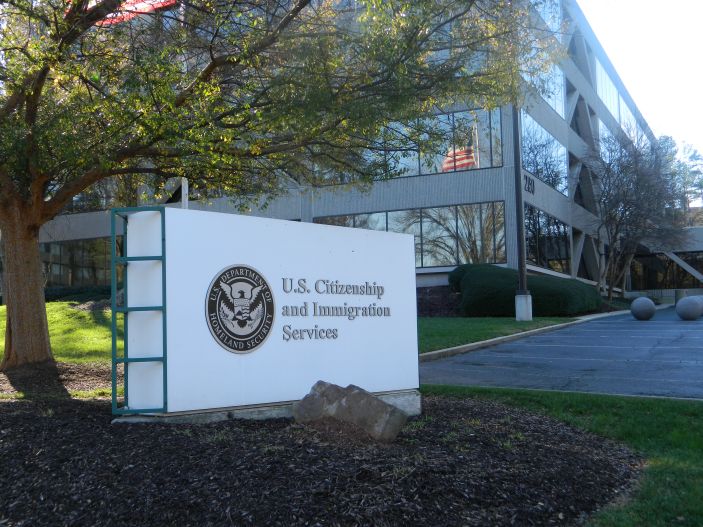
U.S. Proposes Hiking Fees for Work-related Immigration Applications to Fund Asylum Program
Stephen Yale-Loehr, Migrations
“The USCIS needs more money to help dig itself out of a massive backlog and to modernize its technology,” says Stephen Yale-Loehr, professor of law. “But it might not legally be able to force employers to pay for asylum-related costs. Employers might sue to block some of the new fee increases if they don’t seem justified.”
Additional Information
CCCI: The Fabric of Care: Women’s Work and the Politics of Livelihood in Socialist China
May 8, 2023
4:45 pm
Goldwin Smith Hall, GSH64 Kaufman Auditorium
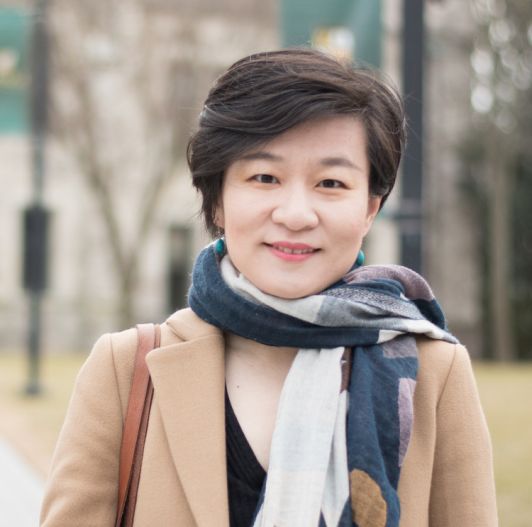
The final CCCI talk of the semester titled, "The Fabric of Care: Women’s Work and the Politics of Livelihood in Socialist China" will be given by Yige Dong (Sociology, University at Buffalo). She is an assistant professor in both the Department of Sociology and the Department of Global Gender and Sexuality Studies.
Based on the speaker’s book-in-progress, this lecture examines how the way of doing care—performing paid and unpaid reproductive labor that maintains our daily life and attends to people who are in need—has changed among Chinese workers during the rise and fall of industrial socialism.
Drawing on archival data, oral histories, and participatory observation in a textile mill town in central China, this research compares three generations of manufacturing workers’ experience of doing care, with a focus on the realm of childcare and domestic labor, and explains why care work had changed from unpaid “women’s work” in the household to a core constituent of labor welfare during socialist industrialization, and then has been removed from welfare provisions in recent decades. Shifting the analytical focus from the sphere of production to that of social reproduction, this study offers a reinterpretation of Chinese socialism and highlights the indispensable role of gender in understanding political economy.
Prof. Dong’s primary research interest lies at the intersection of political economy, social inequality, and social change. Currently, she is working on a book project, The Fabric of Care: Women’s Work and the Politics of Livelihood in Industrial China, which examines the changing politics of care in China’s industrial sector in the past century. Prof. Dong has been awarded the Luce/ACLS Early Career Fellowship in China Studies (2021-2022).
Engendering China is the theme of the Cornell Contemporary China Initiative (CCCI) spring '23 lecture series hosted by faculty member, Yue (Mara) Du (History, Cornell), and the series corresponds to the course of the same name that she is teaching (Engendering China: CAPS2932, ASIAN 2291, FGSS 2932, HIST 2932).
In contemporary China, as in many other places of the world, the ideology and social reality of gender relations are highly paradoxical. Women are flattered for their power as consumers and commitment to the family while they are also expected to engage in wage-earning employment. Men, on the other hand, face the constant pressure of being tough and social problems such as skewed gender ratio and costly betrothal gifts as unintended consequences of a gender regime that is supposedly male-oriented. Are these paradoxes a betrayal of the socialist experiment of erasing gender differences? Are they remnants of China’s long imperial tradition? The series and course explore the power dynamics of gender relations in China from ancient times to the present.
Along with the East Asia Program, this lecture series is co-sponsored by the Department of Asian Studies, Cornell Center for Social Sciences, Feminist, Gender and Sexuality Studies, the Department of History, ILR School's Global Labor Institute, The Levinson China and Asia Pacific Studies Program, and Cornell's Society for the Humanities.
Additional Information
Program
Einaudi Center for International Studies
East Asia Program
CCCI: Transgender in Late Imperial China: Case Studies from the Qing Archives
April 20, 2023
4:45 pm
Goldwin Smith Hall, GSH64 Kaufman Auditorium
Matthew Sommer (History, Stanford University)
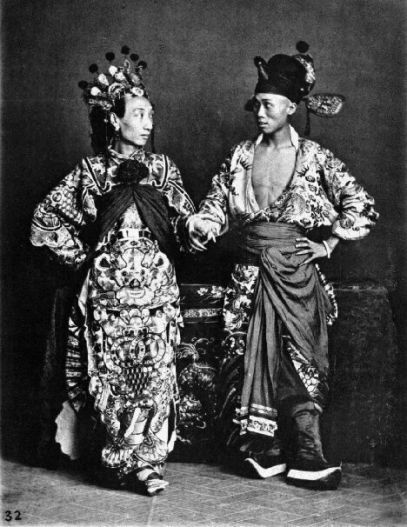
This talk presents three case studies from the Qing dynasty of people assigned male at birth who lived as women, while carefully concealing their assigned sex from others. One presented themself as a widow and had a successful career as a midwife for thirty years. Two others practiced faith-healing, and enjoyed relationships with male partners whom they served as wives. All three were eventually exposed and prosecuted for the crime of “masquerading in women’s attire.” What were the circumstances of these individuals’ lives, and how did Qing officials interpret their violation of normative gender boundaries?
Sommer is a social and legal historian of China in the Qing dynasty (1644-1912). His research focuses on gender, sexuality, and family, and the main source for his work is original legal case records from local and central archives in China.
Engendering China is the theme of the Cornell Contemporary China Initiative spring '23 lecture series hosted by faculty member, Yue (Mara) Du (History, Cornell), and the series corresponds to the course of the same name that she is teaching (Engendering China: CAPS2932, ASIAN 2291, FGSS 2932, HIST 2932).
In contemporary China, as in many other places of the world, the ideology and social reality of gender relations are highly paradoxical. Women are flattered for their power as consumers and commitment to the family while they are also expected to engage in wage-earning employment. Men, on the other hand, face the constant pressure of being tough and social problems such as skewed gender ratio and costly betrothal gifts as unintended consequences of a gender regime that is supposedly male-oriented. Are these paradoxes a betrayal of the socialist experiment of erasing gender differences? Are they remnants of China’s long imperial tradition? The series and course explore the power dynamics of gender relations in China from ancient times to the present.
Along with the East Asia Program, this lecture series is co-sponsored by the Department of Asian Studies, Cornell Center for Social Sciences, Feminist, Gender and Sexuality Studies, the Department of History, ILR School's Global Labor Institute, The Levinson China and Asia Pacific Studies Program, and Cornell's Society for the Humanities.
Additional Information
Program
Einaudi Center for International Studies
East Asia Program
CCCI: Men, Masculinity, and Childbirth in Early Twentieth-Century China
February 13, 2023
4:45 pm
Goldwin Smith Hall, GSH 64 Kaufman Auditorium
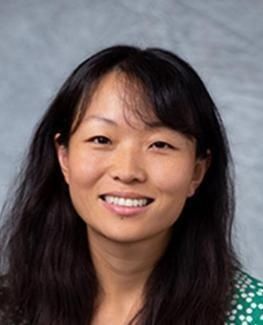
Ling Ma (History, SUNY, Geneseo) kicks off this semester's Cornell Contemporary China Initiative (CCCI) lecture series with a talk on "Men, Masculinity, and Childbirth in Early Twentieth-Century China."
What roles did ordinary men historically play in events such as childbirth and abortion? How and why did their involvement change over time? And what can the lens of everyday reproduction tell us about the moving fault lines of masculinity? Historians of reproduction have long placed women and the female body at the center of inquiries about pregnancy, childbirth, abortion, and maternal illnesses and death. Such narratives often focus on women’s negotiation with patriarchal demands, collective interests, gender norms, reproductive technologies, and politics. Men did leave their imprints, usually as theorists, reformers, doctors, or policymakers, who commanded institutions of childbirth and maternal care from a privileged and distant position. Rarely did they come to us as gendered everyday agents—for example, as flawed, confused, but caring partners and fathers—who were deeply involved in and impacted by seemingly feminine reproductive events.
This study makes a deliberate intervention by exploring childbirth and labor pains as a “his-tory.” It argues that childbirth served as a key site for defining and differentiating masculinity and male identity in early twentieth-century China. Individual fathers and partners, far from being uniformly absent or aloof, demonstrated varied enthusiasm and attitudes and performed a diversity of responsibilities and roles during times of pregnancy, childbirth, and reproductive loss. Some of them, defying religious and gender taboos against men’s presence during childbirth, personally assisted their partners in labor and handled the afterbirth. Some litigated, mourned, or chronicled reproductive complications and losses that occurred in their lives. Some openly and unabashedly displayed their disinterest and irritation towards fatherhood and the nitty-gritty of reproduction, while others questioned male sexual and gender privileges and considered their ability to empathize and to share reproductive chores an enlightened masculine strength. By highlighting the plurality and vibrancy of gender innovations and masculine performances surrounding childbirth in early twentieth-century China, this presentation hopes to both enrich our understanding of the recent Chinese past and hearten students of contemporary China with a wider range of gender precedents.
Engendering China is the spring '23 CCCI lecture series hosted by faculty member, Yue (Mara) Du (History, Cornell), and the series corresponds to the course of the same name that she is teaching (Engendering China: CAPS2932, ASIAN 2291, FGSS 2932, HIST 2932).
In contemporary China, as in many other places of the world, the ideology and social reality of gender relations are highly paradoxical. Women are flattered for their power as consumers and commitment to the family while they are also expected to engage in wage-earning employment. Men, on the other hand, face the constant pressure of being tough and social problems such as skewed gender ratio and costly betrothal gifts as unintended consequences of a gender regime that is supposedly male-oriented. Are these paradoxes a betrayal of the socialist experiment of erasing gender differences? Are they remnants of China’s long imperial tradition? The series and course explore the power dynamics of gender relations in China from ancient times to the present.
Along with the East Asia Program, this lecture series is co-sponsored by the Department of Asian Studies, Cornell Center for Social Sciences, Feminist, Gender and Sexuality Studies, the Department of History, ILR School's Global Labor Institute, The Levinson China and Asia Pacific Studies Program, and Cornell's Society for the Humanities.
This event is primarily in person. If you need to attend virtually, please register in advance.
Additional Information
Program
Einaudi Center for International Studies
East Asia Program
What are Russians really thinking?

Bryn Rosenfeld in Monkey Cage
Bryn Rosenfeld (IES) takes the pulse of Russian public opinion on the war in Ukraine.
Additional Information
Info Session: Language Opportunities and Funding

February 8, 2023
4:30 pm
Mario Einaudi Center for International Studies , G-08 Uris Hall
Get involved with the Mario Einaudi Center for International Studies and the Language Resource Center to enhance your language skills!
Through resources on campus, students of all levels can improve global language skills, apply for funding to practice language abroad, and more.
Opportunities include:
Foreign Language and Area Studies (FLAS) FellowshipRare and Distinctive (RAD) Language FellowshipForeign Language Introduction Program (FLIP)Conversation HoursLearn more about student information sessions from the Einaudi Center on minors, funding opportunities, Fulbright, summer language programs, and much more.
Additional Information
Program
Einaudi Center for International Studies
Reppy Institute for Peace and Conflict Studies
East Asia Program
Southeast Asia Program
Latin American and Caribbean Studies
Institute for African Development
Institute for European Studies
South Asia Program
Songs of Love and Loss: Crafting Buddhist Poetry in Early Modern Cambodia
March 23, 2023
12:30 pm
Kahin Center
Gatty Lecture Series
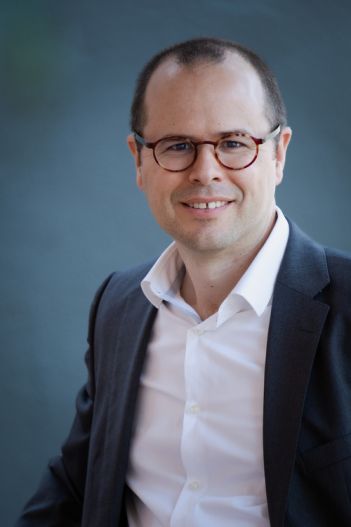
Join us for a talk by Trent Walker, (Lecturer, Department of Religious Studies, Stanford University), which will focus on Buddhist Poetry in Cambodia.
This Gatty Lecture (co-sponsored by the Religious Studies Program) will take place at the Kahin Center, but people are also welcome to join us on Zoom. Lunch will be served. For questions, contact seapgatty@cornell.edu.
Participate by Zoom here.
About the Talk
From at least the seventeenth century, Cambodian writers have been composing vernacular Khmer poems for recitation in Buddhist rituals. Chanted with haunting, highly melismatic melodies, individual songs in this genre may take up to three hours to perform in dusk-to-dawn ceremonies of healing, remembrance, and consecration. Drawing on translations from the speaker's recent book, Until Nirvana's Time: Buddhist Songs from Cambodia, this talk highlights the aesthetic and affective dimensions of the four primary types of sung Buddhist poems in Cambodia: retellings of the Buddha's life, expressions of filial gratitude, meditations on the process of dying, and aspirations for future bliss. Poems across these four categories reveal how early modern authors wove intimate reflections on love and loss into a broader doctrinal and ritual framework for the end of life. The talk will also feature live demonstrations of the intricate vocal styles that have shaped the performance and reception of Khmer Buddhist verse over the past four centuries.
About the Speaker
Trent Walker specializes in Southeast Asian Buddhist music, literature, and manuscripts, and has published widely on Khmer, Lao, Pali, Thai, and Vietnamese Buddhist texts and recitation practices. He is the author of Until Nirvana’s Time: Buddhist Songs from Cambodia (Shambhala Publications, 2022) and the co-editor of Out of the Shadows of Angkor: Cambodian Poetry, Prose, and Performance through the Ages (University of Hawai‘i Press, 2022). He earned his PhD in Buddhist Studies at the University of California, Berkeley, and was the Khyentse Foundation Postdoctoral Fellow at Chulalongkorn University in Bangkok from 2018 to 2020. For links to his publications and other resources, visit www.trentwalker.org.
Additional Information
Program
Einaudi Center for International Studies
Southeast Asia Program
We are (not) Monkeys: Raciality, Animality, and Cosmopolitical Struggles in Indonesian West Papua
February 9, 2023
6:00 pm
Gatty Lecture Series
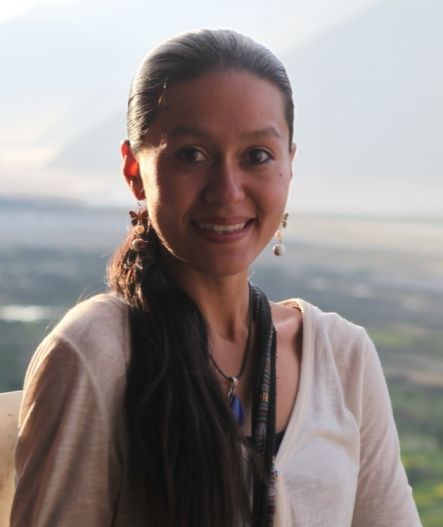
Join us for a talk by Sophie Chao (Discovery Early Career Researcher Award (DECRA) Fellow and Lecturer in the Discipline of Anthropology, University of Sydney).
This Gatty Lecture will take place on Zoom only. For questions, contact seapgatty@cornell.edu.
Participate by Zoom here.
About the Talk
In 2019 anti-racism protests erupted across the Indonesian-controlled region of West Papua. Organized largely by Papuan students, the protests expressed Papuans’ deep-seated frustration with their oppression under Indonesian rule since the early 1960s. In this seminar, Dr Chao will examine how Papuan demonstrators from the district of Merauke repurposed the racialized figure of the monkey—a species routinely deployed in Indonesian discourse to deprecate Papuans as primitive and backward—to support their demands for emancipation from Indonesian rule and to redeem nonhuman beings as consequential and meaningful entities in their own right.
Chao will then situate this specific example against other contexts of multispecies relationality among the Indigenous Marind communities of Merauke, West Papua, whose lives and experiences on an emergent oil palm frontier form the topic of her recent book, In the Shadow of the Palms: More-Than-Human Becomings in West Papua (2022, Duke University Press). In doing so, Chao will demonstrate how the symbolic mobilization of different animals and plants by Papuan activists foregrounds the more-than-human dimensions of their struggle for social, racial, and multispecies justice—one in which humans and nonhumans sit in alternately indexical or antithetical relation to each other as contested cosmopolitical actors and world makers.
About the Speaker
Sophie Chao is Discovery Early Career Researcher Award (DECRA) Fellow and Lecturer in the Discipline of Anthropology at the University of Sydney. Her research investigates the intersections of Indigeneity, ecology, capitalism, health, and justice in the Pacific. Sophie is author of In the Shadow of the Palms: More-Than-Human Becomings in West Papua (2022), which received the Duke University Press Scholars of Color First Book Award in 2021, and co-editor of The Promise of Multispecies Justice (2022), also published by Duke University Press. Sophie previously worked for the human rights organization Forest Peoples Programme in Indonesia, supporting the rights of forest-dwelling Indigenous peoples to their customary lands, resources, and livelihoods. For more information about Sophie’s research, please visit www.morethanhumanworlds.com.
Additional Information
Program
Einaudi Center for International Studies
Southeast Asia Program