
Einaudi Center for International Studies
Fighting Yesterday's War: Soviet Influences in Putin's Foreign Policy
October 6, 2022
11:25 am
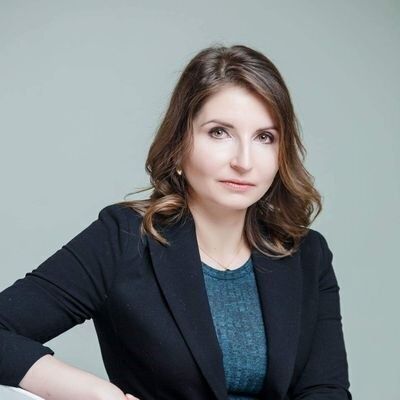
Dr. Maria Snegovaya examines the drivers of Russian revanchism. Russia’s behavior has thrown into doubt the purported strength of international norms regarding territorial integrity, not least because Putin himself has spoken of seeking to ‘re-gather’ adjacent territory deemed ‘lost’—as they had been once under possession by Imperial Russia or the Soviet Union—through military means.
While recognizing that decisions to go to war and to reclaim lost territory are complex and multifaceted, the speaker argues that many analyses overlook—ironically—the nature of the political regime that rules Russia. If domestic political variables do matter for observers of Russia, the emphasis is on how Russia is institutionally autocratic such that it will pursue a foreign policy more aggressive than what would have been the case if it were democratic.
Maria Snegovaya and her co-author define a political regime in both institutional and behavioral terms to acknowledge the structural organization of power as well as the qualities of the elites that exercise influence. They show a strictly institutional definition of political regimes neglects the elite continuity that ties together the Soviet and the Russian leadership. This elite continuity across the two systems matter because the political regime still privileged particular beliefs about the use of force to settle international disputes, the intentions of the United States, and the relationship that certain nations should have vis-à-vis Russia. These beliefs, which they show to hold sway, had their Soviet antecedents.
Please join us for this virtual conversation. Register here.
About Speaker
Maria Snegovaya is a Postdoctoral Fellow in Political Science at Georgetown University's Walsh School of Foreign Service, a Visiting Scholar at the Institute for European, Russian, and Eurasian Studies at George Washington University, and Adjunct Senior Fellow at the Center for New American Security. She is a comparative politics, international relations, and statistical methods specialist. The key focus of her research is democratic backsliding in Central and Eastern Europe, as well as Russia’s domestic and foreign policy.
***
Presented by the Reppy Institute for Peace and Conflict Studies. Co-sponsored by the Institute for European Studies and the Gender and Security Sector Lab.
Additional Information
Program
Einaudi Center for International Studies
Reppy Institute for Peace and Conflict Studies
Institute for European Studies
Built to Fail: How Bureaucratic and Institutional Origins Undermined State Building in Afghanistan
September 8, 2022
11:25 am
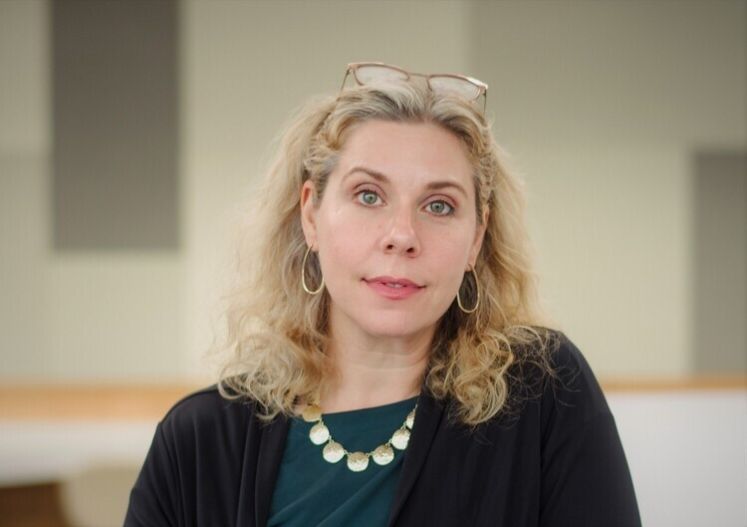
Jennifer Brick Murtazashvili presents evidence from Afghanistan to illustrate how failure to break from Soviet-era centralized public administration undermined the massive state-building project and perpetuated a wedge between Afghan civil society and a state that failed to deliver on its promise.
Liberal state building continues to fall short of its promise of political order and economic development. The persistence of bureaucratic legacies in states seeking to recover from conflict, especially the persistence of centralized administrative structures, help explain these failures. These institutions are often the source of state collapse yet are often reinforced by the international community once the dust of war settles. This leads to a vicious cycle of centralization that reinforces rigidity through influxes of foreign aid. Elections often serve as a smokescreen that detract from meaningful administrative reform. The desire to concentrate power is at odds with societies that have governed without the state, or have become deeply distrustful of it, during conflict.
Please join us for this virtual conversation. Register here.
About the Speaker
Jennifer Brick Murtazashvili is an Associate Professor of Public and International Affairs, at the University of Pittsburgh.
***
Presented by the Reppy Institute for Peace and Conflict Studies. Co-sponsored by the South Asia Program and the Gender and Security Sector Lab.
Additional Information
Program
Einaudi Center for International Studies
Reppy Institute for Peace and Conflict Studies
South Asia Program
“Number and Non-Conceptual Identity in the Andean World: The Case of the Quechua -ntin/-nintin," by Vanessa Gubbins, LACS Seminar Series

December 5, 2022
4:30 pm
Uris Hall, 312
Change in Time to 4:30pm and room to 312 Uris Hall.
This talk discusses identity formation in the Andean world through a study of the Quechua suffix -ntin/ -nintin. It also raises the suffix’s broader philosophical and political ramifications for questions of unity, collectivity, and the relationship between part and whole.
Vanessa Gubbins is Assistant Professor of Latin American Studies in the Department of Romance Studies at Cornell.
Additional Information
Program
Einaudi Center for International Studies
Latin American and Caribbean Studies
100 Years of Economic Development Conference

September 17, 2022
12:00 am
Cornell University
View and download the final conference program here.
After some stops and starts due to the pandemic, 100 Years of Economic Development will be held at Cornell University in Ithaca, NY, from September 15-17.
From the end of World War I to now, it has been a tumultuous 100 years, during which a host of newly-independent nations began to chart out their own policies, often guided by the emerging discipline of development economics. It is a century that straddled the Great Depression and the Great Recession, witnessed rapid globalization with the creation of multilateral organizations, and attempts at global coordination of policy.
Recent decades have seen major breakthroughs in digital technology, and the rise of Big Tech, compelling us to rethink the foundations of economics and the nature of regulation. These changes have occurred alongside a reckless exploitation of the environment, which has cast a shadow over human sustainability. There is a scramble now, aided by the jolt received from the COVID-19 pandemic reminding us of the urgency of reform, to rectify some of this damage.
This conference is an occasion for a stocktaking of economics and economic policymaking. There will be a combination of plenary panels and keynote addresses, with papers from economists and social scientists from around the world, including developing economies.
We expect the conference to result in several published works. The Journal of Economic Behavior and Organization, and the new journal, Oxford Open Economics, have agreed to publish proceedings based on this conference.
Kaushik Basu
Professor of Economics and Carl Marks Professor of International Studies, Department of Economics and SC Johnson College of Business, Cornell University
Administrative Manager: Rick Lee (rick.lee@cornell.edu), Einaudi Center
Advisory Committee: Chris Barrett, Panle Barwick, Arnab Basu, Michele Belot, Nancy Chau, Amrita Dhillon, Brian Dillon, Robert Hockett, Suraj Malladi, Anandi Mani, Ugo Panizza, Sudipta Sarangi
The event is cosponsored by Cornell's Department of Economics (Arts & Sciences) and the Mario Einaudi Center for International Studies.
Additional Information
Program
Einaudi Center for International Studies
South Asia Program
"Protecting the Andes and Amazon: Rights of Rivers and Forests in Ecuador," by David Cordero, Esq., LACS Seminar Series

September 26, 2022
1:00 pm
Uris Hall, 153
In 2008, the people of Ecuador approved a new constitution that establishes that nature has rights. The rights of nature (RoN) are the product of a biocentric conception defending nature's intrinsic value. The RoN differs from the environmental law because it uses a different approach to the tolerable limits of the impact of human activity. While environmental law is the compromise between business and conservation, RoN creates scientific redlines based on the capability of the ecosystems to self-regenerate. If there is a species extinction risk or permanent damage to the ecosystem cycle, the risky activity should be forbidden.
How are RoN working after ten years? Do legal institutions play the expected role in protecting nature? Does an individual member of a species have rights? Or is the whole specie the right holder? Is it the entire ecosystem? Or is the earth entitled to the rights? The Constitutional Court of Ecuador has been discussing these questions in its jurisprudence for the last three years. We will analyze those decisions that recognize the personhood of rivers and forests and their implications on the broader discussion about sustainability, climate change, and development. Finally, we will discuss the enforceability and impact of the aforementioned jurisprudence in Ecuador.
David Cordero-Heredia is an Associate Professor of Law at the Pontificia Universidad Católica del Ecuador (PUCE). He has been visiting professor at Universidad Andina Simón Bolívar (UASB), Universidad de las Americas (UDLA) and Universidad del Azuay (UDA).
David has represented indigenous peoples and individuals against Mexico, Guatemala, Colombia, Peru, and Ecuador in the Inter-American Commission on Human Rights and the Inter-American Court of Human Rights (I/A Court HR). The cases include a vast number of topics, including forced disappearances, torture, illegal detentions, massacres, migrants' rights, indigenous peoples' rights, access to free health services, force eviction, mass incarceration, oil & mining industries, fair trial, police brutality, and rights of nature.
Professor Cordero has an LL.B. from PUCE, master's degrees from UASB and Universidad de Alcala, and an LL.M. and a JSD from Cornell University. He is a visiting scholar in Cornell's Latin American and Caribbean Studies program (LACS).
Additional Information
Program
Einaudi Center for International Studies
Latin American and Caribbean Studies
"Greening Mexican Cinema" by Carolyn Fornoff, Romance Studies, LACS Seminar Series

September 19, 2022
1:00 pm
Uris Hall, 153
How can we think about the relationship between cinema and the environment beyond the realm of representation? Building off the "material turn" in media studies, which attends to the substances that compose media, in this talk I explore Mexican cinema through a material lens. As an industry that has long been funded by state oil revenue, what would it mean to decarbonize Mexican cinema? To get at this question, I spotlight recent efforts to disentangle cinema and oil by filmmakers and film distributors.
Carolyn Fornoff is an Assistant Professor of Latin American Studies in the Romance Studies department. She has coedited two books in the environmental humanities: Timescales: Thinking Across Ecological Temporalities (University of Minnesota Press, 2020) and Pushing Past the Human in Latin American Cinema (SUNY Press, 2021).
Cosponsor: Romance Studies Department
Zoom Link Registration:
https://cornell.zoom.us/webinar/register/WN_ydjJblhpSm6vEy09qxoN4A
Additional Information
Program
Einaudi Center for International Studies
Latin American and Caribbean Studies
World’s Key Workers Threaten to Hit Economy Where It Will Hurt

Eli Friedman, EAP
“There’s a very tight labor market, so that puts workers in a position where they have both an accumulation of lots of grievances and they feel empowered,” says Eli Friedman, associate professor and chair of International & Comparative Labor.
Additional Information
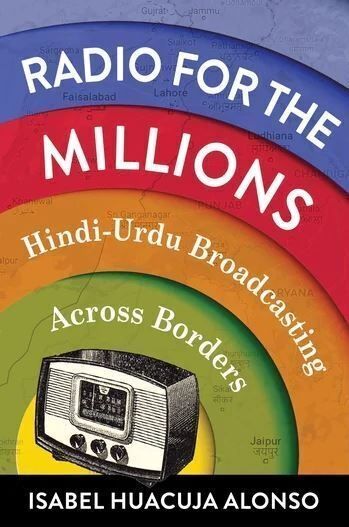
BOOK TALK: Radio for the Millions: Hindi-Urdu Broadcasting Across Borders
November 7, 2022
12:15 pm
Uris Hall, G08
Talk by Isabel Huacuja Alonso
From news about World War II to the broadcasting of music from popular movies, radio played a crucial role in an increasingly divided South Asia for more than half a century. Radio for the Millions examines the history of Hindi-Urdu radio during the height of its popularity from the 1930s to the 1980s, showing how it created transnational communities of listeners.
Isabel Huacuja Alonso argues that despite British, Indian, and Pakistani politicians’ efforts to usurp the medium for state purposes, radio largely escaped their grasp. She demonstrates that the medium enabled listeners and broadcasters to resist the cultural, linguistic, and political agendas of the British colonial administration and the subsequent independent Indian and Pakistani governments. Rather than being merely a tool of nation-building in South Asia, radio created effective links that defied state agendas, policies, and borders. It forged an enduring transnational soundscape, even after the 1947 Partition had made a united India a political impossibility.
Huacuja Alonso traces how people engaged with radio across news, music, and drama broadcasts, arguing for a more expansive definition of what it means to listen. She develops the concept of “radio resonance” to understand how radio relied on circuits of oral communication such as rumor and gossip and to account for the affective bonds this “talk” created. By analyzing Hindi film-song radio programs, she demonstrates how radio spurred new ways of listening to the cinema. Drawing on a rich collection of sources, including newly recovered recordings, listeners’ letters to radio stations, original interviews with broadcasters, and archival documents from across three continents, Radio for the Millions rethinks assumptions about how the medium connects with audiences.
Isabel Huacuja Alonso is an assistant professor in the Department of MESAAS at Columbia University She is a historian of sound media and modern South Asia. Her publications have appeared in Public Culture, South Asia, and Bioscope. Her book Radio for the Millions: Hindi-Urdu Broadcasting Across Borders is forthcoming with Columbia University Press. The book expands on her dissertation, which won the Sadar Patel 2016 Award for best dissertation on modern India in any discipline defended at a US institution. At Columbia, Dr. Huacuja Alonso teaches courses on South Asian history from an interdisciplinary perspective and on sound studies as well as Contemporary Civilization in the Core Curriculum. She completed her doctorate in history from The University of Texas at Austin and her BA in Economics at Cornell University.
Additional Information
Program
Einaudi Center for International Studies
South Asia Program
Italy’s Government Is in Turmoil. Here’s How It Got There – and What’s Next

Christopher Way, IES/PACS
"Mario Draghi was such a trusted pair of hands across Europe," says Christopher Way, associate professor of government. "He was so respected for his competence that it's a loss no matter who replaces him."
Additional Information
The Economy: Tearing Down the Bamboo Walls
Panle Jia Barwick, EAP
Piece about “local protectionism” in China, mentions research by Panle Jia Barwick about priority given locally made cars to access express lanes.