
Einaudi Center for International Studies
IMF Must Act to Rescue Sri Lanka

Kaushik Basu, SAP
The IMF will “need to be proactive, suspending some of their bureaucratic rules to help Sri Lanka through this acute phase of the crisis,” says Kaushik Basu, professor of economics at Cornell University and a former chief economic adviser to the Government of India.
Additional Information
How Populism Deals with Complexity
September 6, 2022
4:30 pm
Uris Hall, G08
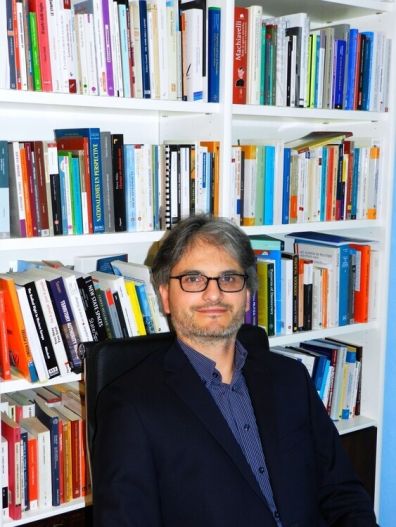
There is a strong tendency in social and political sciences to simplify the academic use of the concept of populism. This is what populists do when they dichotomise reality into friends and enemies. The goal of this talk is to highlight and discuss why scholars have to develop an adaptive and multifaceted perspective, and how changing realities across Europe and the United States, including the experience of Covid-19 pandemic, might contribute to strengthen this perspective.
Speaker
Oscar Mazzoleni, Professor of Political Science and Political Sociology, University of Lausanne
Register for the session here.
Presented by the Institute for European Studies
Additional Information
Program
Institute for European Studies
Einaudi Center for International Studies
Seeking Leverage Over Europe, Putin Says Russian Gas Flow Will Resume

Eswar Prasad, SAP
Prasad, an economist at Cornell said “Keeping a low flow through Nord Stream could strengthen Russia’s position and even weaken Europe’s resolve if the war drags on. Maintaining Europe’s energy dependency on Russia and stoking uncertainty about natural gas supplies, are among the reasons Mr. Putin would want to keep Nord Stream online.”
Additional Information
Evidence in Governance and Politics (EGAP) Meeting
October 29, 2022
8:30 am
ILR Conference Center
Evidence in Governance and Politics (EGAP) in collaboration with the Reppy Institute for Peace and Conflict Studies, the Institute of Politics and Global Affairs, the Gender and the Security Sector Lab, Department of Government, and the Brooks School of Public Policy will be hosting a two-day meeting at Cornell University on October 28th and 29th. Sabrina M. Karim, Hardis Assistant Professor in the Department of Government and member of the EGAP network, will head the organization of the event, which will focus on two thematic areas:
Crime Reduction & Police AccountabilityDemocracy, Conflict, & Polarization
This closed event will bring together invited scholars and practitioners from the EGAP network, along with other experts in these two thematic areas, to showcase findings, identify research questions and promising interventions, and provide opportunities for matchmaking between researchers and practitioners.
For more information, please contact Sabrina Karim at smk349@cornell.edu or Ayuko Picot, Administrative Assistant, EGAP at ayukopicot@berkeley.edu.
Additional Information
Program
Einaudi Center for International Studies
Reppy Institute for Peace and Conflict Studies
Language Resource Center Speaker Series - Claudia Holguín Mendoza
October 28, 2022
4:30 pm
"Antiracist Critical Literacy: Methodologies of the Oppressed for Language Education"
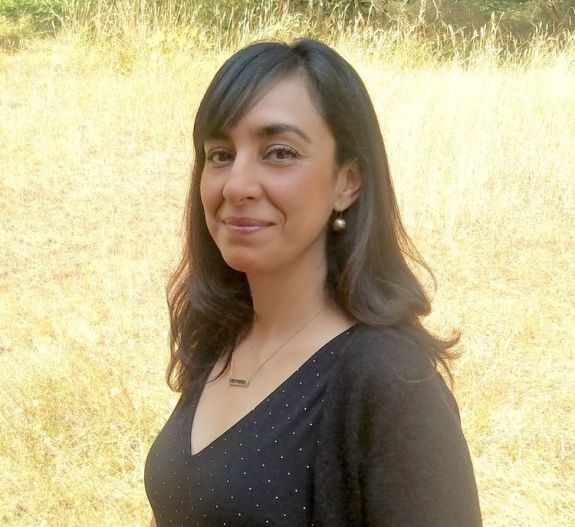
Claudia Holguín Mendoza
Associate Professor of Spanish Linguistics, University of California, Riverside
In this presentation, Dr. Holguín Mendoza describes the design and implementation of a comprehensive critical literacy and Critical Language Awareness (CLA)-oriented Spanish Heritage Language (SHL) program that deconstructs and questions sociopolitical hierarchies, challenges the subordination of SHL students' linguistic practices, and elevates students' voices and agency. She underscores the importance of building critical SHL programs on three interrelated foundations: stakeholder engagement, curriculum, and assessment. A truly comprehensive critical literacy and CLA-oriented program must integrate critical teacher training with a wide stakeholder engagement that serves to build on strengths from across the institution and to position the SHL program as a promoter of Latinx student success. Sociolinguistic justice and antiracist transformation through literacy occur when we critically understand how language and sociocultural access and expertise are socially constructed. Finally, Dr. Holguín Mendoza describes assessment tools that have demonstrated how comprehensive critical literacy programs have proven to be a valuable model for language education and student empowerment.
Bio: Dr. Claudia Holguín Mendoza is an Associate Professor of Spanish linguistics at the University of California, Riverside. She specializes in the sociolinguistics of race in the Mexican borderlands and Greater Mexico as well as critical pedagogies for the teaching of Spanish as a heritage language. She publishes in both English and Spanish and her work has appeared in journals such as International Multilingual Research Journal, Hispania, Studies in Hispanic & Lusophone Linguistics, Identities, and Frontera Norte.
This event will be held in person on campus (Goldwin Smith Hall G76) and will also be streamed live over Zoom (see link for registration details).
The talk is part of the 2022 Consortium for Language Teaching and Learning Fall Workshop titled Connecting Language Teaching and Social Justice: A Call for Diversity, Equity, and Inclusion. The event is free and open to the public. Registration is required. Campus visitors and members of the public must adhere to Cornell's public health requirements for events.
Additional Information
Program
Einaudi Center for International Studies
Latin American and Caribbean Studies
Language Resource Center Speaker Series - Stacey Margarita Johnson
September 20, 2022
4:30 pm
Stimson Hall, G25
"Problem-Based Models for Language and Culture Instruction"
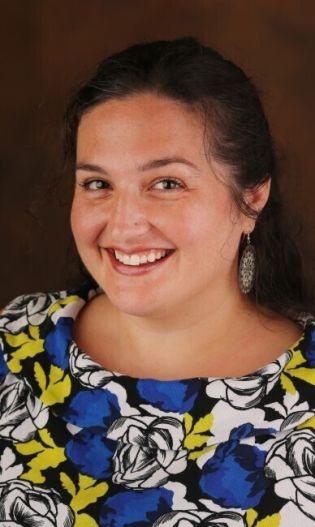
Stacey Margarita Johnson
Assistant Director at the Center for Teaching and Senior Lecturer of Spanish, Vanderbilt University
A problem-based approach to language instruction infuses the communicative classroom with current events, critical thinking, and interdisciplinary connections. Through a process of identifying a problem, gathering resources to understand the problem, and then working with a group to process and report on what they have learned, students acquire language as they learn about the world around them and engage deeply with others' perspectives. Although problem-based language learning can be used as the foundation of an entire course or program of study, this talk will emphasize how and why instructors can implement problem-based language learning right away through intentional, research-informed modifications to their existing plans.
Bio: Dr. Stacey M Johnson is a teacher of Spanish as well as language teaching methods and second language acquisition. Stacey is also a researcher, technology administrator, editor of the journal Spanish and Portuguese Review, and producer of the podcast We Teach Languages. Her academic interests include postsecondary language classroom practices, hybrid/blended instruction, professional development, and adult learning including transformative learning and critical pedagogy. Her first book, Hybrid Language Teaching in Practice: Perceptions, Reactions, and Results, co-authored with Berta Carrasco, was published in March 2015, and her second book, Adult Learning in the Language Classroom, came out later that same year. Stacey’s recent publications include a book chapter and a magazine article about collecting authentic resources and an article about social justice in the language classroom. Currently she is working on projects including: 1) her third book, co-authored with Claire Knowles with expected publication in 2022, about the potential of a problem-based model for language and culture instruction, and 2) an edited collection co-edited with Kelly Davidson and LJ Randolph titled How We Take Action: Social Justice in K-16 Language Classrooms. At Vanderbilt University, in addition to her role as the Assistant Director for Educational Technology in the Center for Teaching, Stacey also holds appointments as a Senior Lecturer of Spanish in the Department of Spanish and Portuguese and as adjunct faculty in the English Language Learners program in Peabody College, and is Affiliated Faculty in the Center for Second Language Studies.
This event will be held in person in G25 Stimson and will also be streamed live over Zoom. Join us at the LRC or on Zoom.
The event is free and open to the public. Campus visitors and members of the public must adhere to Cornell's public health requirements for events.
Additional Information
Program
Einaudi Center for International Studies
Latin American and Caribbean Studies
"Final Stage of Russian Decline"

Bykov Talks with New Yorker
Visiting critic Dmitry Bykov discusses Russia—and Russians—under Putinism on the New Yorker Radio Hour.
Additional Information
4 Places That Could Be Trouble if the Economy Goes South

Eswar Prasad, SAP
It’s a time of great peril, says Cornell economics professor Eswar Prasad. Though he doesn’t see cascading crises at this stage, Prasad says countries with high levels of foreign currency debt, economic and political challenges are vulnerable as global financial conditions tighten.
Additional Information
What Biden Wanted in the Middle East — and What He Actually Got

Tejasvi Nagaraja, Global Public Voices
In the way that Washington has rationalized the need for Biden to travel to Saudi Arabia, Tejasvi Nagaraja, a professor at Cornell University, sees echoes of a term put forward by the late sociologist C. Wright Mills in the 1950s, “crackpot realism.”
Additional Information
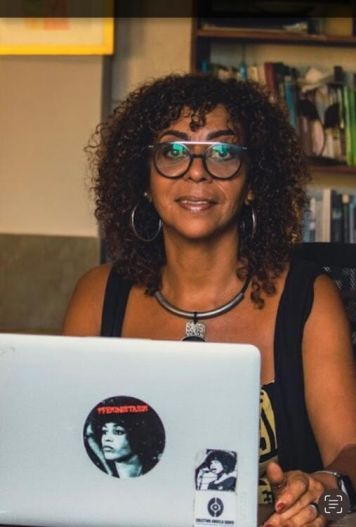
"Do Black Lives Matter in Brazil? Political Mobilization and Black Feminist Protagonism," by Brazilian Scholar Ângela Figueiredo, Universidade Federal do Recôncavo da Bahia
November 3, 2022
6:00 pm
Goldwin Smith Hall, G22
A LACS Public Issues Forum in collaboration with the African Diaspora Knowledge Exchange Project
Two cases have become emblematic for understanding the intensification of racism and sexism in Brazilian society during the pandemic that killed more than 650,000 Brazilians and since the election of Jair Bolsonaro as President of Brazil. The first death recorded in Brazil by Covid-19 was a black woman, 63 years old, a domestic worker, contaminated by her employer; the second was the death of 5-year-old Miguel Otávio when he fell from the 5th floor of the building where his mother worked. Throughout this period, black women's movements carried out various face-to-face activities. They acted strongly through social networks, conducting campaigns to collect resources, clothes, and food and denouncing the violence and the neglect of President Bolsonaro's government concerning public policies to combat the pandemic. They participated in the political campaign of black women in the 2020 elections, such as the Marielle Franco Forum, ENEGRECER a Política, Black Women Decide, Eu Voto em Negra. This presentation considers the political setback and loss of rights in recent years and addresses the Brazilian socio-political context and the political response of black feminist organizations. I focus mainly on processes of knowledge production, institutional political dispute, and the confrontation of political gender violence. The data presented result from effective participation as an activist and researcher and the analysis of social media cards, lives, seminars, and webinars produced in the last two years.
Ângela Figueiredo, PhD. is a professor in the Social Sciences Department of the Federal University of Recôncavo da Bahia in Cachoeira-Bahia, Brazil (CAHL – UFRB); an associate of the Graduate Program in Ethnic and African Studies (POSAFRO) and the Postgraduate Program in Interdisciplinary Gender Studies (PPGNEIM) at the Federal University of Bahia. Dr. Figueiredo is also the coordinator of the research and activist group Collective Angela Davis. Dr. Figueiredo has produced two documentaries - Ebony Goddess (Deusa do Ébano, 2004) e Dialogues with the Secret (Diálogos com o Sagrado, 2013) and curated the Global African Hair exhibition that took place in Salvador, Bahia. She has published the following books: New Black Elites (Novas elites de cor, 2002), Black Middle Class (Classe média negra, 2012), Black Beauty (Beleza Negra, (2016). She has also written several articles on Black Feminism in Brazil, including "Decolonial Black Feminist Epistemology" (2021) and "Letter to Judith Butler from an ex-mulatto woman" (2016).
This LACS Public Issues Forum event was organized by the Latin American and Caribbean Studies Program (LACS) as part of Celebrating it's 60th Anniversary (1961-2021) in collaboration with the African Diaspora Knowledge Exchange Project..
This event was made possible by the generous support of Cornell’s College of Arts and Sciences, the Mario Einaudi Center for International Studies, Romance Studies Department, Africana Studies and Research Center, Feminist Gender and Sexuality Studies (FGSS), the Latin American and Caribbean Studies Program, and the Anthropology Department.
Can't make it in person? Join us through eCornell, register at: https://ecornell.cornell.edu/keynotes/overview/K110322/
Additional Information
Program
Einaudi Center for International Studies
Latin American and Caribbean Studies
Institute for African Development