
Einaudi Center for International Studies
Day in the Life Video: Fulbright U.S. Student
U.S. Fulbright student Amanda Cronin '21 shares a day in her life as an English teaching assistant in Argentina.
Rising seniors, May graduates, and recent alumni interested in applying for 2023–24 awards should email fulbright@einaudi.cornell.edu as soon as possible in order to meet this year’s August 29 national deadline. Find out more about the U.S. Student Program.
Additional Information
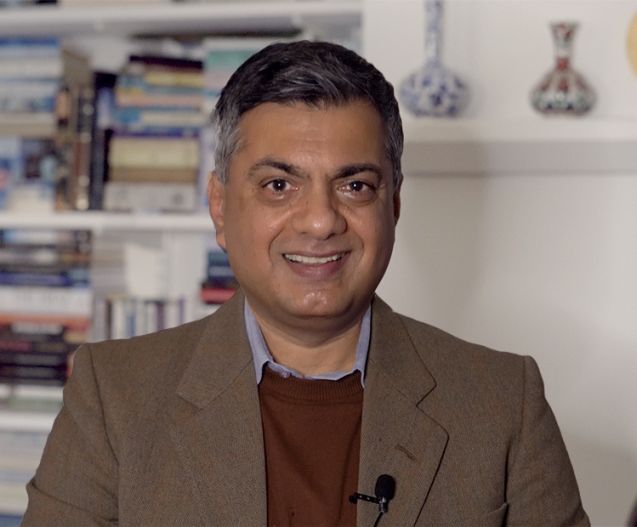
Faisal Devji, Islam, Capitalism, and the Loss of Theology
July 6, 2022
3:30 pm
Goldwin Smith Hall, G76
Stemming from the rediscovery of Carl Schmitt, the recent work on political theology emphasizes the irreducibility of the theological in modern politics. Dating from the 1980s, a decade bookended by the Iranian Revolution and the Rushdie Affair, this work has attended to the persistence of religion and the crisis of secularism. As important, however, was the collapse of modernization theory with the disintegration of the Third World and its anti-colonial project.
Central to though rarely acknowledged by this research, Islam has come to represent the chief example of theology’s irreducibility. Yet Schmitt’s statement, about all political concepts being the secularization of theological ones, can also be read as a description of the latter’s evanescence in their very expansion. Rather than representing its persistence, contemporary Islam is defined by the loss of the theological as it is reproduced in capitalist ways.
Islam serves as both a repository and displacement of the theological for other religions. Yet its own spectacles of outrage and violence, over alleged insults to Muhammad, rehearse the absence of the theological. Emerging out of colonial capitalism, such controversies over representations of Muhammad have also secularized blasphemy and promoted the rise of offences against identity in Euro-American societies.
Additional Information
Program
Einaudi Center for International Studies
South Asia Program
Climate Disasters Collide with Ukraine War to Deepen Hunger Crisis

Rachel Bezner Kerr, Einaudi
“It does feel as though what we had in the report is just playing out in live stream when I read the news,” says Rachel Bezner Kerr, professor of global development.
Additional Information
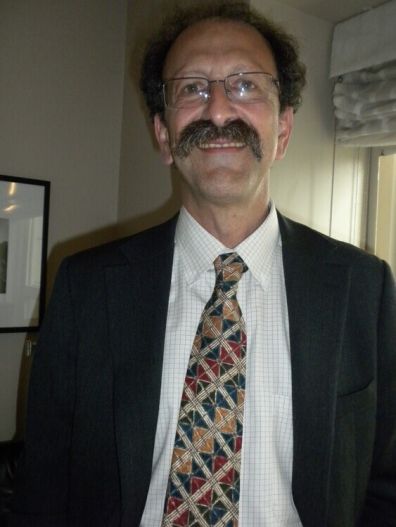
David Shulman, The Silent Witness in the Mind: Doing the Right Thing in South India and Palestine
July 12, 2022
3:30 pm
Goldwin Smith Hall, G76
Additional Information
Program
Einaudi Center for International Studies
South Asia Program
How Bad Is the Global Food Crisis Going to Get?

Chris Barrett, IAD/SEAP
“It used to be that child stunting—the cumulative impact of poor nutrition and health—was basically every place that was poor,” says agriculture and development economist Chris Barrett in this column from writer David Wallace-Wells. “Now it’s basically just those places that are poor and have conflict,” Barrett says.
Additional Information
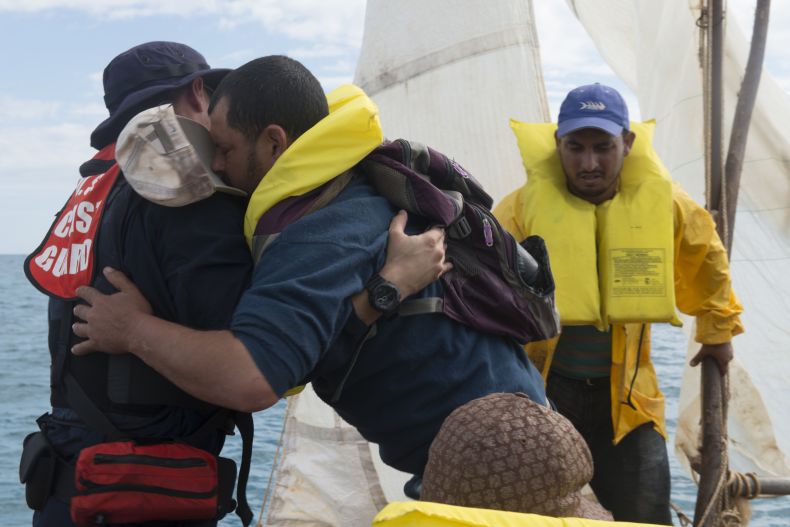
UK Deports Refugees to Rwanda
Einaudi Migrations Postdoc on Today, Explained
"This is a crucial moment for what justice could look like in border spaces," says Eleanor Paynter.
Additional Information
Confused by Crypto?
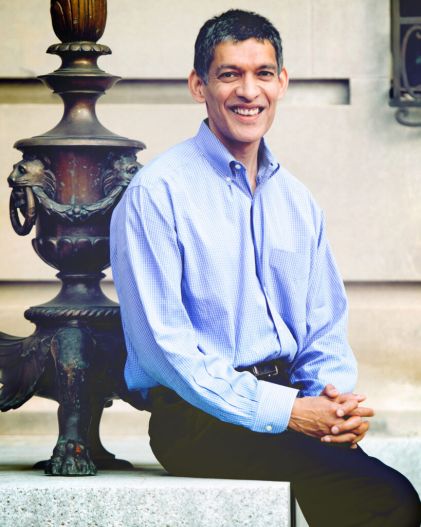
SAP Faculty Member Has the Answers
Economist and South Asia Program core faculty Eswar Prasad weighs in on the end of cash, the rise of electronic payments, and Bitcoin.
Additional Information
California—not Biden—Is Leading Climate Cooperation with China

Jeremy Wallace, EAP
Jeremy Wallace, associate professor of government, writes this Q and A analysis about U.S. climate cooperation with China.
Additional Information
Cybersecurity Expertise: Practice, Performance, Power

June 17, 2022
9:30 am
This two-day workshop aims to center analysis of the people, organizations and work that ultimately make and break cybersecurity. However, it aims to do so in a way that bridges the gap between two very different kinds of methods and theoretical perspectives: science and technology studies, which tends to adopt a grounded and “bottom-up” approach to analysis; and international relations, which tends to take more of a “top-down” approach that centers nation-states and the international system.
SCHEDULE
THURSDAY, JUNE 16 - 9:45 am - 5:00 pm (ET)
9:45—10:15 am Welcome and Lightning Round
Workshop participants will be asked to introduce themselves in 1-2 minutes.
Panel 1 -10:15 – 12:15 PM THREATS
Chair: Sarah Kreps, Cornell University
Discussant: Frank Smith, Naval War College
Whose Expertise? The Static, Contingent, and Recursive Strategies of Malware Analysis and Detection
Andrew Dwyer, Durham University
Dark champions: The Emergence of Commercial Cyber Threat Intelligence in Great Power Competitor States
JD Work, Columbia University
The Making of Cyber(in)security: Sociotechnical Practices and Anticipation of Future Threats
Lilly Muller, Kings College London
Protest, Police, and the Sociotechnical Construction of Threat
Jason Ludwig and Rebecca Slayton, Cornell University
Panel 2 -1:15 – 2:45 PM HACKERS
Chair: Rebecca Slayton, Cornell University
Discussant: Jesse Sowell, University College London
The Hack-and-Leak
Gabriella Coleman, Harvard University
Computer Security and Its Discontents: The Anti-Security Movement, 2000 – 2002
Matt Goerzen, Harvard University
Bounty Everything: Hackers and the Making of the Global Bug Marketplace.
Ryan Ellis, Northeastern University; Yuan Stevens
Panel 3 - 3:30-5:00 PM MATERIALITY
Chair: Lilly Muller, Cornell University
Discussant: Aaron Gluck-Thaler, Harvard University
The Casual Counterfeiter in the Age of Desktop Publishing
Gili Vidan, Cornell University
Black sites: cybersecurity expertise and digital absence
James Shires, Leiden University
The Blurry Lines Between Operations and Information
Clare Stevens, Bristol University
FRIDAY, JUNE 17, 9:30 am-1:30 pm (ET)
Chair: Lilly Muller, Cornell University
Discussant: Jon Lindsay, Georgia Tech
Panel 1 - 9:30 am-11:30 am ORGANIZATIONS
The Technopolitics of Cybersecurity Incident Response
Rebecca Slayton and Frank Smith
Collective Resistance in the Digital Domain: An Exploratory Case Study of the Cyber Partisans
Max Smeets, ETH Zurich
Global Innovation, Knowledge Management, and Cybersecurity: UK Universities as a Case Study
Madeline Carr, University College London
Operational Epistemic Authorities in the Internet's Infrastructure
Jesse Sowell, University College London
12:30 - 1:30 pm FUTURE DIRECTIONS
Open discussion of research gaps and next steps
SPONSORED BY
Reppy Institute for Peace and Conflict Studies
Mario Einaudi Center for International Studies
U.S. National Science Foundation Award # 1553069.
Register here : https://cornell.zoom.us/meeting/register/tJwpd-yvqz4oE9Ld5SDfXOhPZkxFpC…
Additional Information
Program
Einaudi Center for International Studies
Reppy Institute for Peace and Conflict Studies
Roe v. Wade: Health, Inequality, and Democracy

June 21, 2022
12:00 pm
A reversal of Roe vs. Wade by the United States Supreme Court has implications for individual and population health, health equity, and norms of democracy and law in the United States and globally. Protection of reproductive rights is a key indicator of health outcomes and health equity for women and children around the world. Restricted access to reproductive health services disproportionately affects low-income populations and people of color.
This webinar brings together a cross-disciplinary panel of experts to investigate the implications of this decision going forward.
Moderator: Charley Willison, Cornell University Department of Public & Ecosystem Health
Panelists:
Khiara M. Bridges - University of California Berkeley School of Law
Tiffany L. Green - University of Wisconsin-Madison School of Medicine and Public Health
Elizabeth J. King - University of Michigan School of Public Health
Rebecca J. Kreitzer - University of North Carolina Chapel Hill Public Policy
Additional Information
Program
Einaudi Center for International Studies