
Einaudi Center for International Studies
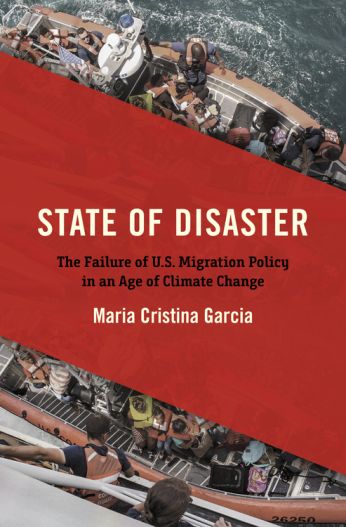
State of Disaster: The Failure of U.S. Migration Policy in an Age of Climate Change
September 29, 2022
4:30 pm
Olin Library, 107
Natural disasters and the dire effects of climate change cause massive population displacements and lead to some of the most intractable political and humanitarian challenges seen today. And yet, under current U.S. law, there is no such thing as a climate refugee.
To address today’s realities, U.S. migration policies need to change, argues María Cristina García in a live Chats in the Stacks talk about her book State of Disaster: The Failure of U.S. Migration Policy in an Age of Climate Change (UNC Press, 2022). The book offers a critical history of U.S. policy on migration in the Global South, with a focus on Central America and the Caribbean, where natural disasters worsen poverty, inequality, and domestic and international political tensions.
García is the Howard A. Newman Professor of American Studies at Cornell University, where her work focuses on the history of displaced and mobile populations in the Americas. She is a fellow of the American Academy of Arts and Sciences and the Society of American Historians. She is a recipient of a 2016 Andrew Carnegie Fellowship, the 2010 Cornell Stephen and Margery Russell Teaching Award, and the 2016 Kendall S. Carpenter Memorial Advising Award.
This book talk is sponsored by Olin Library. Light refreshments will be served.
Additional Information
Program
Latin American and Caribbean Studies
Einaudi Center for International Studies
Leaders, Bureaucracy, and Miscalculation in International Crisis

September 29, 2022
11:25 am
Uris Hall, G08
Professor Tyler Jost develops a theory of crisis miscalculation that emphasizes variation in institutional relationships between political leaders and foreign policy bureaucracies. He argues that two dimensions of these institutions – capacity for information search and oversight structure – help explain why some states are more prone to miscalculate than others.
To test his argument, he introduces a novel data set that measures these institutional differences across the globe from 1946 to 2015. Contrary to canonical theories that argue that bureaucratic advice undermines strategic judgment, the analysis finds that institutions that integrate bureaucrats into a leader's decision-making process tend to perform better in interstate crises than those that exclude them. The theory and findings improve our understanding of how bureaucracy shapes the crisis behavior of modern states.
About the speaker
Professor Tyler Jost is an Assistant Professor of Political Science at Brown University, and an Assistant Professor of China Studies at the Watson Institute for International and Public Affairs. His research focuses on national security decision-making, bureaucratic politics, and Chinese foreign policy.
Moderator
Paul Lushenko is a U.S. Army Lieutenant Colonel and a Ph.D. student in International Relations at Cornell University
***
Presented by the Reppy Institute for Peace and Conflict Studies. Co-sponsored by Cornell Center for Social Sciences, the Department of Government, and the Gender and Security Sector Lab.
Additional Information
Program
Einaudi Center for International Studies
Reppy Institute for Peace and Conflict Studies
The Revolution will be Livestreamed: Technology, Communication, and Terrorist Violence

September 22, 2022
11:25 am
Uris hall, G08
Dr. Levi West will articulate a framework for understanding the manner in which innovative forms of violence, narrative and communicative dynamics, and emergent information and communications technologies can be integrated by terrorists and other violent non-state actors to achieve strategic effect.
The framework will be applied to a contemporary case study, namely the Islamic State, while additionally making use of historical case studies including transatlantic anarchist terrorism in the late 1800s and early 1900s, and political violence undertaken in support of the liberation of Palestine in the aftermath of the 1967 War. The framework seeks to provide explanatory insight into the means by which asymmetrically weak actors are able to cause disproportionately consequential strategic effect on their adversaries. The framework can assist with understanding the non-kinetic purposes and impacts of terrorist violence, while also providing a degree of insight into the strategic utility of highly calibrated, choreographed, targeted violence. In identifying a consistent strategic calculus that underpins terrorist violence across temporal and ideological contexts, the framework also suggests that it is possible to understand the enduring nature and strategic logic to terrorist violence, despite its frequently changing character.
About the Speaker
Dr. Levi West is the Director of Terrorism Studies at the Australian Graduate School of Policing and Security at Charles Sturt University in Canberra, and the Executive Director of Leviathan Analysis, a bespoke consulting firm that provides research, advisory, and professional development services to the law enforcement and national security sectors.
Moderator
Paul Lushenko is a U.S. Army Lieutenant Colonel and a PhD student in International Relations at Cornell University.
***
Presented by the Reppy Institute for Peace and Conflict Studies. Co-sponsored by the Department of Government and the Gender and Security Sector Lab.
Additional Information
Program
Einaudi Center for International Studies
Reppy Institute for Peace and Conflict Studies
Institute for African Development
Institute for European Studies
Ukraine, Russia, and the Long Shadow of Nuclear Weapons

September 1, 2022
12:15 pm
Emma Belcher, president of Ploughshares Fund, joins a national panel of experts for a vital look at the future of nuclear security policy at a time when the United States, Russia, and other nations continue to maintain enough nuclear weapons to destroy life on earth.
The Russian invasion of Ukraine emphasizes the ever-present threat of nuclear war, raising urgent questions:
Did the U.S. possession of weapons utterly fail to deter Russian aggression? Did Russia’s possession of nuclear weapons embolden it to invade Ukraine, a nation that gave up nuclear weapons at the end of the Cold War? What is the wisdom and what are the risks of continuing to maintain large numbers of nuclear weapons in a world marked by growing authoritarianism in Russia, China, and elsewhere? What are the implications of the crisis in Ukraine for the global movement to abolish nuclear weapons? Please join us for this virtual conversation. Register now!
Introduction
Peter Katzenstein, Walter S. Carpenter Jr. Professor of International Studies, Director, Reppy Institute for Peace and Conflict Studies, Cornell University
Panelists
Fiona Cunningham, Assistant Professor of Political Science, University of Pennsylvania
Mariana Budjeryn, Senior Research Associate, Belfer Center for Science and International Affairs, Harvard Kennedy School
Pavel Podvig, Senior Researcher, United Nations Institute For Disarmament Research
Moderator
Emma Belcher, President, Ploughshares Fund
***
Hosted by the Judith Reppy Institute for Peace and Conflict Studies, part of the Mario Einaudi Center for International Studies, with additional support from Einaudi's Institute for European Studies and the Institute of Politics and Global Affairs. The event is part of the Einaudi Center's Democratic Threats and Resilience research priority.
Additional Information
Program
Einaudi Center for International Studies
Reppy Institute for Peace and Conflict Studies
Institute for European Studies
U.S. and Taiwan Hold First Round of Trade Talks in New Bid to Counter China’s Economic Influence

Allen Carlson, CMSP/EAP/SAP
Allen Carlson, director of Cornell University’s China and Asia-Pacific Studies program, comments on U.S.-China relations.
Additional Information
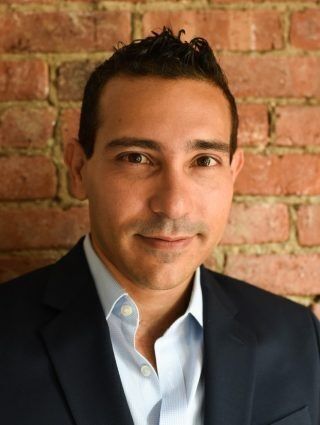
The Many Faces of Chavismo: Towards a Comprehensive Account," by Alejandro Velasco, LACS Seminar Series
October 24, 2022
1:00 pm
Uris Hall, 153
For decades now, efforts to understand Venezuela’s mutating crises have often reflected rather than risen above the same polarization that has turned the country’s politics into a winner-take-all conflict between Chavistas and anti-Chavistas. In turn, polarized accounts have often rested on incomplete pictures of Hugo Chávez and Chavismo aimed less at explaining than at apportioning or deflecting blame. Is a different account possible? What might a history of Chavismo that stresses contingency and contradiction over telos and consistency look like? This presentation offers a sweeping account of Chávez and Chavismo that emphasizes the evolving nature of both. Seen as a whole, Chavismo takes shape less as a single movement linked by an overriding ideology than as an assemblage of often contradictory movements and ideologies that developed in distinct stages. Though each stage created and responded to new challenges and opportunities, all were and remain thread together by the changing whims of its charismatic, polarizing leader, in life and long after his death.
Alejandro Velasco is a historian at New York University's Gallatin School and Department of History, and was Executive Editor of the NACLA Report on the Americas from 2015 to 2021. Velasco's first book Barrio Rising: Urban Popular Politics and the Making of Modern Venezuela (University of California Press, 2015), won the 2016 Fernando Coronil Prize for best book on Venezuela, awarded biennially by the Section on Venezuelan Studies of the Latin American Studies Association. A frequent media contributor, his editorials and analysis have appeared in NACLA, Nueva Sociedad, The Nation, the New York Times, the Washington Post, Current History, and others. Velasco also frequently contributes radio and television commentary in outlets including NPR, MSNBC, Al Jazeera, CBS, France 24, the BBC, and the CBC.
Additional Information
Program
Einaudi Center for International Studies
Latin American and Caribbean Studies
Democracy in Hard Places

Einaudi Director on Benin and Democracy
"Benin’s transition to democracy is a complete rupture from the past," Rachel Beatty Riedl tells the Democracy Paradox podcast.
Additional Information
Dudley Appointed to National Advisory Council on Migrant Health
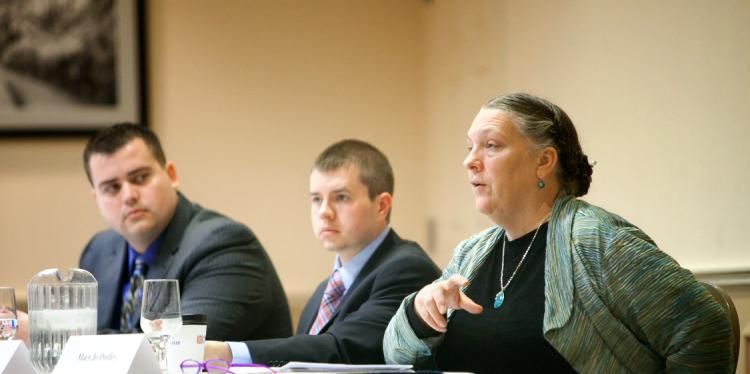
Mary Jo Dudley, LACS
Mary Jo Dudley has been appointed to the National Advisory Council on Migrant Health.
Additional Information
Peecyclers Have #1 Idea

Einaudi Faculty Research Addresses Supply Chain Shortage
Rebecca Nelson (IAD/LACS) is trying to bind urine’s nutrients onto biochar, a kind of charcoal, to enrich soil without chemical fertilizer.
Additional Information
Polarized Politics: Class, Race, and Populism Around the World

June 22, 2022
3:00 pm
From North America to Latin America, the Caribbean to Europe, and beyond, new politics of the left, center, and right have emerged, each experimenting with how they talk about class divides and economic identities.
Right-wing politicians, like Donald Trump and Jair Bolsonaro, have been described as “populists” and often claim to challenge some kind of cultural “elite.” Left-wing politicians, such as Alexandria Ocasio-Cortez and Luiz Inácio Lula da Silva, have claimed to represent truer working-class constituencies, with a promise to challenge economic elites. All over the world, each definition of popular or elite class politics has been unsettled and conflicted, often refracted through race, gender, and other intersections.
In this panel discussion, leading scholars of class and racial formations will interpret the intersecting history of class, race, and the politics of economic identity to discuss how different paradigms have been manipulated or mobilized in the contexts of specific countries. The conversation will aim to clarify key patterns that may echo across multiple countries as rightist, centrist, or leftist political movements attempt to forge coalitions and realize their ambitions.
Panelists:
David Roediger (Foundation Distinguished Professor of American Studies, The University of Kansas)
Louis Römer (Visiting Assistant Professor of Anthropology, Vassar College)
Mary Hicks (Assistant Professor of History, The University of Chicago)
Tejasvi Nagaraja (Assistant Professor of History, ILR, Cornell University)
Wendy Muse (Doctoral Candidate of History, New York University)
***
Class, Race, Global: An event series sponsored by Cornell’s Mario Einaudi Center for International Studies
Class, Race, Global brings together scholars, journalists, and activists for dynamic conversations on diverse topics in history and politics. We ask: How do class, race, and global inequalities and struggles intersect with one another? What links can be revealed between “domestic” issues and “foreign” regions?
The series is part of the Einaudi Center’s inequalities, identities, and justice global research priority.
Additional Information
Program
Einaudi Center for International Studies