
Einaudi Center for International Studies
Info Session: International Relations Minor

September 20, 2022
4:45 pm
Uris Hall, G-08
Is the Einaudi Center's international relations minor for you? Join this Einaudi Center Student Info Session to find out.
In the international relations minor, you study the politics, economics, history, languages, and cultures of the world and gain a fresh perspective on your major field of study. Graduates go on to successful careers in fields like international law, economics, agriculture, trade, finance, journalism, education, and government service.
***
Contact: irm@einaudi.cornell.edu
Additional Information
Program
Einaudi Center for International Studies
Reppy Institute for Peace and Conflict Studies
East Asia Program
Southeast Asia Program
Latin American and Caribbean Studies
Institute for African Development
Institute for European Studies
South Asia Program
Info Session: Latin American and Caribbean Studies Opportunities for Undergraduates

September 14, 2022
4:45 pm
Uris Hall, G-08
The Latin American and Caribbean Studies Program (LACS) offers an interdisciplinary minor, summer internships, and other funding opportunities. Join this Einaudi Center Student Info Session to find out what LACS has in store for you!
The Latin American studies minor is an undergraduate minor across disciplines that allow you to explore the history, culture, government, politics, economy and languages of Latin America and the Caribbean. Qualifying courses can be found in almost every college.
Our summer internships sent several students to Ecuador in 2022!
***
Contact: lacs@cornell.edu
Additional Information
Program
Einaudi Center for International Studies
Latin American and Caribbean Studies
East Asia Program
Southeast Asia Program
Institute for African Development
Info Session: European Studies Minor and Undergraduate Funding Opportunities

September 8, 2022
4:45 pm
Through an interdisciplinary curriculum that you can mold to your interests, the European studies minor provides the opportunity to explore Europe’s past, present, and future.
You will cultivate a knowledge of European languages, culture, history, politics, and international relations. The minor offers the chance to take courses across colleges on subjects that shape your understanding of a globalizing world, while also providing you with an area of expertise. You will gain critical thinking skills, language abilities, and helpful frameworks for assessing today’s most pressing issues in Europe and around the world.
Several funding opportunities are available for you to pursue undergraduate research projects focused on Europe. Join this Einaudi Center Student Info Session to learn about application requirements, deadlines, and how to construct a strong proposal.
Additional Information
Program
Einaudi Center for International Studies
Reppy Institute for Peace and Conflict Studies
Institute for European Studies
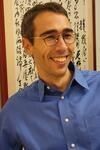
Cornell Classical Chinese Colloquium with Lucas Bender
December 2, 2022
3:30 pm
Rockefeller Hall, Asian Studies Lounge third floor
The Cornell Classical Chinese Colloquium (CCCC) 古文品讀 is pleased to have Lucas Bender (East Asian Languages, Yale) lead this text reading.
Bender's text-reading is on "What Troubles the World is Inequality": Politics Before Metaphysics in Guo Xiang's 郭象 (252-312) Zhuangzi 莊子 Commentary
Faculty hosts: TJ Hinrichs (History, Cornell) and Suyoung Son (Asian Studies, Cornell). Sponsored by the East Asia Program. The Cornell Classical Chinese Colloquium (CCCC) 古文品讀 is a reading group for scholars interested in premodern Sinographic (古文) text. The group typically meets monthly during the semester to explore a variety of classical Chinese texts and styles. Other premodern texts linked to classical Chinese in Japanese, Korean, and Vietnamese have been explored. Presentations include works from the earliest times to the 20th century. Workshop sessions are led by local, national, and international scholars.
All are welcome with any level of experience with classical Chinese. At each session, a participant presents a classical Chinese text. Attendees discuss historical, literary, linguistic, and other aspects of the text, working together to resolve difficulties in comprehension and translation. No preparation is required. All texts will be distributed at the meeting.
If you are unable to attend in person, you may register in advance here.
Additional Information
Program
Einaudi Center for International Studies
East Asia Program
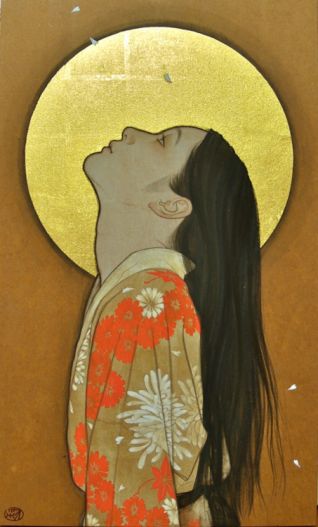
Prostitutes, Hostesses, and Actresses at the Edge of the Japanese Empire
November 7, 2022
4:45 pm
Uris Hall
Nobuko Yamasaki, Assistant Professor, Department of Languages and Literatures, Program in Feminist, Gender, and Sexuality Studies, Lehigh University speaks about her book titled, Prostitutes, Hostesses, and Actresses at the Edge of the Japanese Empire.
Analyzing materials from literature and film, this book considers the fates of women who did not or could not buy into the Japanese imperial ideology of “good wives, wise mothers” in support of male-empire building. Although many feminist critics have articulated women’s active roles as dutiful collaborators in the project of empire, their attention has focused principally on male-dominated narratives of empire building. In contrast, the roles of marginalized women such as sex workers, women entertainers, and hibakusha have rarely been analyzed. This book addresses this intellectual lacuna by closely examining memories of, (semi-)autobiographical short stories, and newspaper articles, grounded in and inspired by lived experiences not only in Japan but also in Shanghai, Manchukuo, colonial Korea, and the Pacific.
Co-sponsored by the Feminist, Gender, and Sexuality Studies Program and the Department of Performing and Media Arts.
Additional Information
Program
Einaudi Center for International Studies
East Asia Program
Taiwan Trade Talks Advance; U.S. Will Start Official Negotiations in the Fall

Eswar Prasad, SAP
Eswar Prasad, professor of applied economics and policy, says, “It’s a market for certain U.S. exports, such as agricultural products, but also, consumer goods that actually come through China do have technology from Taiwan. Taiwan also exports directly to the U.S.”
Additional Information
Chinese Crip Poetry
October 19, 2022
4:45 pm
Uris Hall, G08
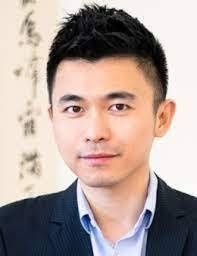
Crossing the World to Sleep with You: Chinese Crip Poetry and its Cross-Cultural Translatability is the title of this talk to be given by Hangping Xu, (East Asian Languages and Culture, UC, Santa Barbara).
Yu Xiuhua rose to her celebrity status when her poem “Crossing China to Sleep with You” went viral in 2014 on Chinese social media platforms, causing what can be called a cultural event, which director Fan Jian documents in his 2016 film Still Tomorrow. As a female poet who lives with cerebral palsy in rural China, Yu was often labeled by media representations as a “brain-paralyzed peasant poet.” Such a sensationalist labeling strategy exploits her various minority identities. Focusing on the rise of Yu as a “crip” trickster figure, the talk advances a critical account of Chinese internet poetry as transmedial performance.
Hangping Xu specializes in modern and contemporary Chinese literary, cultural, and visual studies, comparative literature, and Taiwan Studies. Situating China in the world and destabilizing the notion of “Chineseness,” his research also pays attention to the history of diaspora, dispersion, immigration, and globalization. His interdisciplinary research engages two significant turns in literary and cultural studies—namely, the affective and the ethical —by foregrounding disability as a mode of critique. It particularly examines “disability aesthetics,” that is, how the disabled body in our cultural imaginaries evokes affective responses, or what can be called “aesthetic nervousness.” It explores the ways in which disability opens up new ethical horizons because its excessively corporeal and often spectacularized embodiment conceptually and aesthetically challenges how a culture defines what it means to be human.
The East Asia Program's Graduate Student Steering Committee (GSSC) welcomes Professor Xu. We invite graduate students to contact us if you are interested in participating in a grad student workshop with him on October 20th at noon. email: eap-gssc@cornell.edu for details.
Additional Information
Program
Einaudi Center for International Studies
East Asia Program
Dissidence: Exiled Writers on Resistance and Risk
September 23, 2022
12:00 pm
Goldwin Smith Hall, G64
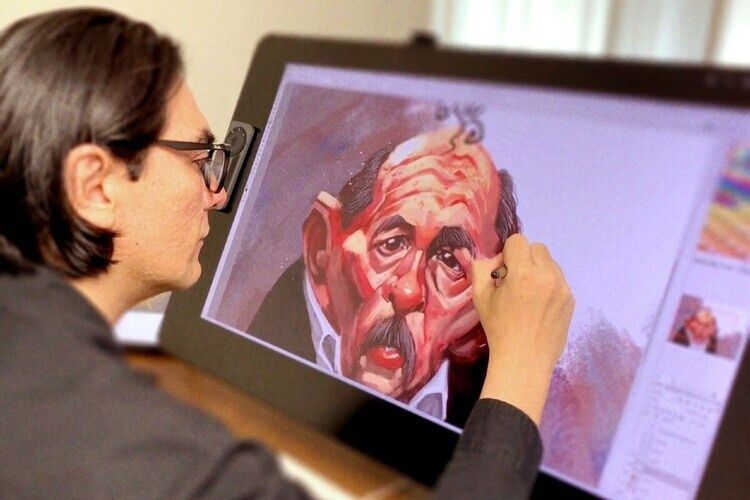
Poet Dmitry Bykov was nearly killed in a poisoning, then found himself banned from teaching at Russian universities. Essayist Pwaangulongii Dauod received death threats for writing about queer culture in his native Nigeria. Cartoonist Pedro X. Molina watched as Nicaraguan state forces jailed his colleagues and occupied the offices of the newspaper where he published his work. Novelist Anouar Rahmani was threatened with imprisonment for writing about human and environmental rights in Algeria.
All four were forced to flee their homelands, and all four were able to resume their creative work in “cities of asylum” in the United States.
“DISSIDENCE: Exiled Writers on Resistance and Risk” is supported by a grant from Cornell University’s Migrations Global Grand Challenge and the Mellon Foundation’s Just Futures Initiative. The event is also supported by CIVIC. The Migrations Initiative, part of Global Cornell, studies the movement of all living things through an interdisciplinary, multispecies lens, with a special focus on themes of racism, dispossession, and migration.
About the writers
Dmitry Bykov (Ithaca City of Asylum) is one of Russia’s best-known public intellectuals. He spent five days in a coma after falling ill during a speaking tour in 2019. An independent investigation blamed Russian security forces for poisoning him with the nerve agent Novichok. In addition to prohibiting him from teaching at the university level, the government has also barred him from appearing on state radio or TV. Bykov is currently a visiting critic at Cornell University and a fellow of the Open Society University Network.
Pwaangulongii Dauod (City of Asylum Detroit) is a novelist, essayist, and memoirist from Nigeria. His 2016 essay in Granta, “Africa’s Future Has No Space for Stupid Black Men,” sparked a national conversation about queer issues in Nigeria and provoked threats to his life. Woke Africa Magazine named him one of the “Best African Writers of the New Generation.” He is currently an Artist Protection Fund Fellow in residence at Wayne State University.
Pedro X. Molina (Ithaca City of Asylum) is a political cartoonist who fled Nicaragua during a crackdown on dissent in 2018. He was an International Writer in Residence at Ithaca College and was an Artist Protection Fund Fellow in residence at Cornell University. Among his many honors is a 2021 Gabo Award, a 2019 Maria Moors Cabot Award from Columbia Journalism School, and the 2018 Courage in Editorial Cartooning Award from Cartoonists Rights Network International.
Anouar Rahmani (City of Asylum Pittsburgh) is a novelist, journalist, and human rights defender from Algeria. He has faced legal harassment for his advocacy for individual freedom, environmental rights, and the rights of minorities, women, and LGBTQ+ people. In 2021, he was shortlisted for the Index on Censorship’s Freedom of Expression Awards. He is currently an Artist Protection Fund Fellow in residence at Carnegie Mellon University.
Each writer will present an 8-10 minute reading followed by a moderated Q&A session.
Additional Information
Program
Einaudi Center for International Studies
Latin American and Caribbean Studies
Institute for European Studies
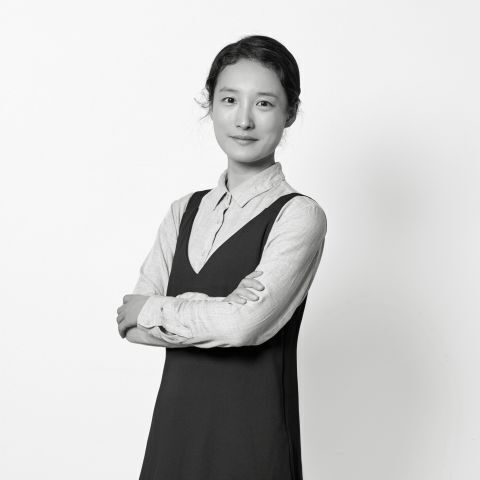
The Cyborgs Have Always Been Zombies with Soyi Kim
October 4, 2022
4:45 pm
Goldwin Smith Hall, G22
“The Cyborgs Have Always Been Zombies: South Korean Body Politics and Lee Bul’s Body Art” a Pulse of Art History lecture
This presentation revisits the early body art of Korean artist Lee Bul before she became internationally renowned for her Cyborg series (1991-present) and dystopia-themed sculpture series (2002-present). I read Lee’s early art as not only having a formative effect on her later works, but also a response to South Korean government’s control over women’s reproductive rights: its decades-long abortion bans and family planning campaigns to curb female fertility. I argue that zombie, a figure that often indicates the status of social death in critical theories, helps locate Lee’s artistic critique against the modernizing South Korea’s developmentalist and masculine visions.
Soyi Kim is the inaugural LB Korean Studies Research Scholar for the East Asia Program, Mario Einaudi Center for International Studies
Dr. Kim's work creatively brings together urgent questions about the ethics and politics of epidemiology and a critical humanities approach to aesthetic problems in art and digital cultures. Dr. Kim’s work, while situated in visual studies, is truly interdisciplinary, and seeks to place Korean art and visual culture in historical and cultural context. While her work is not history of medicine per se, it engages with biopolitics as Koreans encountered first Japanese, and then American imperial occupation, and a diverse series of medical and bureaucratic interventions which have directly affected the bodies and health of Koreans.
Additional Information
Program
Einaudi Center for International Studies
East Asia Program
International Fair Aug. 30
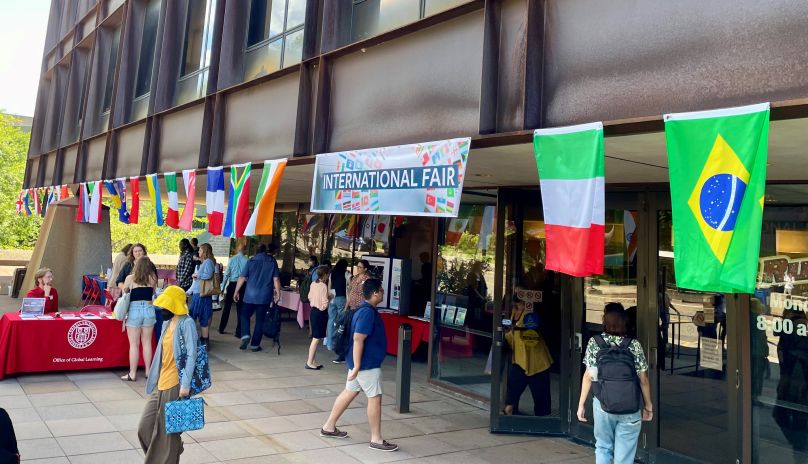
Einaudi Showcases World of Opportunities
Don't miss this year’s International Fair on Aug. 30 from 11 a.m. to 1 p.m. on Uris Hall Terrace.