
Einaudi Center for International Studies
Institute for African Development Seminar Series: Digitalization in Africa

August 25, 2022
2:40 pm
Digitalization in Africa: Pace, Challenges, Possibilities and Accomplishments
Hybrid link
Information and communication technologies (ICTs) impact has increased dramatically since the second half of the 20th century with accelerated pace since the beginning of the 21st century. The functioning of many social institutions and sectors such as education, the economy, health care, political process and various other areas were impacted by the increasing use of the technology with the expectation of efficacy. However, when the authorities of World Health Organization (WHO) declared on March 11, 2020, COVID-19 a pandemic, there was no common anticipation of the duration of the pandemic, its effects on of the functioning of all the sectors of society and the extraordinary acceleration of the digitalization albeit in a damage control and survival mode. One of the most striking upsurges of technology was in the education sector as school children and older learners were confined to their homes because of school closures due to lockdowns and curfews. Hence education had to be taught utilizing digital technologies. Efforts toward digitalization were already underway even before COVID-19, like the notable innovations of a cashless economy with the digitization of a well-known money transfer application known as M-Pesa, prevalent in East Africa and other similar smart phone transfer systems were being utilized throughout the entire African continent. In this advanced COVID-19 era, it has become now evident that careful and deliberate adoption of digitization is no longer a distant future: It is now. Throughout the semester, scholars from multiple disciplines will share their respective insights on the state and prognosis of the future in the digitalization era, in relation to: dimensions of the education systems, political processes, functioning of the domestic and global economy and specific business activities, healthcare provision and management, and forth.
Additional Information
Program
Einaudi Center for International Studies
Institute for African Development
With Nationalism Rising, Turkey Turns against Refugees It Once Welcomed

Mostafa Minawi, IES/CO+POS
Mostafa Minawi, associate professor of history, says that the current climate in Turkey “might be economic and political, but the tools are cultural identity.”
Additional Information
Aftershocks: Geopolitics since the Ukraine invasion

September 22, 2022
5:30 pm
Schwartz Center for Performing Arts, Kiplinger Theatre
As the war in Ukraine rages on, how is the ground shifting across Eurasia and beyond? Leading journalists and scholars covering Russia, Europe, China and the global political landscape will discuss how international relations, security, trade and economics are shifting in ways not seen since World War II.
This Arts Unplugged event will feature:
Ann Simmons, the Wall Street Journal's Moscow Bureau Chief
Mark Landler, the New York Times' London Bureau Chief
Peter Katzenstein, the Walter S. Carpenter, Jr. Professor of International Studies
Jessica Chen Weiss, associate professor of government in the College of Arts & Sciences
Ray Jayawardhana, the Harold Tanner Dean in the College of Arts and Sciences, will moderate the discussion.
Additional Information
Program
Institute for European Studies
Reppy Institute for Peace and Conflict Studies
Einaudi Center for International Studies
East Asia Program
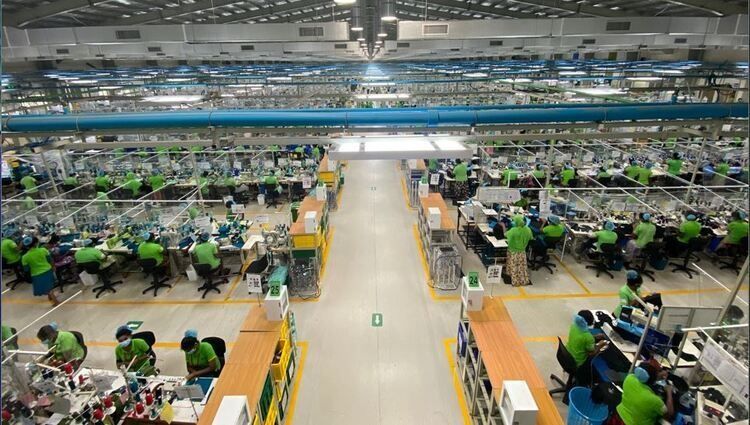
Apparel Innovations, Sustainable Interventions, and Ethical Aspirations: Garment Manufacturing in Sri Lanka
October 17, 2022
12:15 pm
Uris Hall, G08
Talk by Denise N. Green
In 2015 I began teaching a class at Cornell about fiber, textile, and apparel production in India, which included a winter break field trip to manufacturing facilities. Inspired by the students' transformative learning experience and the connections we created, I wanted to expand the course to include Sri Lanka. Apparel is the country's leading export, making garment manufacturing one of Sri Lanka's largest industries. I began preliminary research in January-February 2022 by visiting factories, innovation centers, educational institutions, students, faculty, garment workers, industry leaders, and domestic designers. While the COVID-19 pandemic eroded revenues and significantly reduced production capabilities, apparel manufacturing was poised for a powerful comeback in 2022 when export revenues increased by 23% in January and projections anticipated 3-4% annual growth. As Sri Lanka's economic and political crisis worsened in spring 2022 and inflation in buying markets continued, manufacturers braced for a significant reduction in orders. Organizations like the Ethical Trading Initiative, Clean Clothes Campaign, American Apparel and Footwear Association, Workers United, among others, have called upon the fashion industry to support Sri Lanka with continued orders, timely payments, and price negotiations that account for rising costs of energy, raw materials, and labor. How did Sri Lanka become an exemplar of sustainable, ethical, and innovative production? The industry grew and expanded globally in the mid-late 20th century with the World Trade Organization's Multifibre Arrangement (MFA, 1974-1994) and Agreement on Textiles and Clothing (ATC, 1995-2004), but pivoted after elimination of the quota system by creating the Joint Apparel Association Forum (JAAF) in 2002 and their subsequent “Garments Without Guilt” campaign in 2006. With nearly 90% of manufacturers participating, the industry conveyed collective commitment to sustainable and ethical production. Using examples from my recent fieldwork trip, I will consider how these commitments articulate with the aspirations, challenges, possibilities, and realities facing Sri Lanka's garment workers and apparel manufacturers today.
Denise Nicole Green is an associate professor of fashion design and management in the College of Human Ecology at Cornell where she also directs the Cornell Fashion + Textile Collection. She holds a PhD in socio-cultural anthropology, a Master's of Science in textiles, and a Bachelor's degree in apparel design, which has enabled interdisciplinary inquiry into the study of fashion as both an industry and an expressive medium through which individual and collective identities are produced and represented. She co-authored the book Fashion and Cultural Studies (2022) with Dr. Susan Kaiser and has written numerous journal articles and book chapters in addition to her curatorial work, design scholarship, and documentary filmmaking.
Additional Information
Program
Einaudi Center for International Studies
South Asia Program
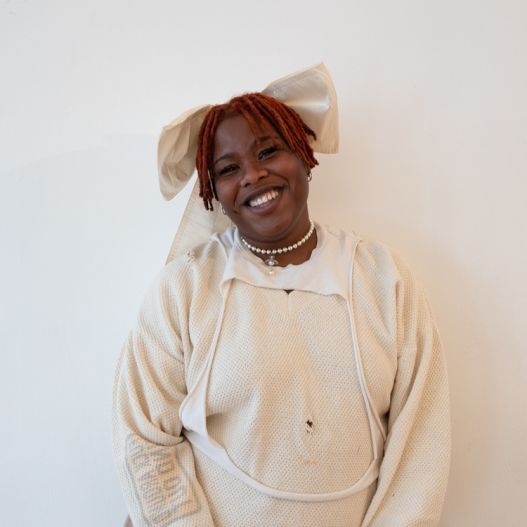
Precious Okoyomon: Migrations Visiting Artist Talk
September 1, 2022
5:15 pm
Johnson Museum of Art, Wing lecture room
Join the Johnson Museum of Art and Precious Okoyomon—Nigerian American poet, sculptor, and avant-garde chef—for a participatory talk exploring themes of migration, dispossession, and redress. Okoyomon’s large-scale, immersive artworks are especially concerned with the entangled fate of humans, plants, and animal species as they move from place to place across the planet. Approaching artmaking like a poet, Okoyomon mines the metaphorical associations of all manner of found objects and raw materials—from kudzu vine to lambswool—to elicit new reflections upon our complex, interconnected histories.
Okoyomon was born in England in 1993, raised in Nigeria and the United States, and currently lives in Brooklyn, New York.
This visiting artist talk is the second in an ongoing series with the campus-wide Migrations Global Grand Challenge, part of Global Cornell, with support from the Mellon Foundation’s Just Futures Initiative.
Masks are suggested at the Museum and social distancing will be encouraged in the Museum's wing lecture room.
Additional Information
Program
Einaudi Center for International Studies
“Welcome and Opening of the course LATA 4000/6000," Latin American and Caribbean Studies (LACS) Program Weekly Seminar Series

August 22, 2022
1:00 pm
Uris Hall, 204
Welcome, opening, and requirementd for the course LATA 4000/6000 the Latin American and Caribbean Studies (LACS) Program Weekly Seminar Series
Additional Information
Program
Einaudi Center for International Studies
Latin American and Caribbean Studies
Was Commodus the Worst Emperor in Ancient Roman History?

Barry Strauss, PACS
Barry Strauss, professor in history and classics and former PACS director, weighs in on leadership during Rome's Imperial Period and eventual decline - from the heights of Marcus Aurelius to the infamy of Caligula, Nero, and Commodus.
Additional Information
National Hispanic Heritage Month Q&A
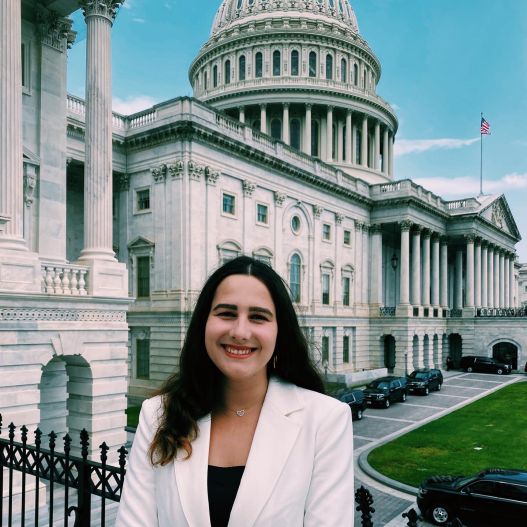
Alexis Fintland, Migrations Scholar
Alexis Fintland, a 2022 graduate of the ILR School and a first-generation Cuban American, discusses her student experience and more in this Q&A piece.
Additional Information
Laboring for the Nation: Transnational Capital and ‘Muslim’ Women’s Work in Bangladesh

November 29, 2022
4:30 pm
Morrill Hall, Room 404
Talk by Dina Siddiqi
In Bangladesh, as elsewhere today, bodies marked Muslim are constitutive sites of feminist and other politics. The figure of the female garment worker – tasked with saving the national economy through her public, visible labor – has emerged as an especially dense site of debate and signification. This paper traces the ideological labor that garment workers, or rather their sartorial practices, perform for Islamists as well as the secular intelligentsia, in national as well as transnational spaces. Juxtaposed to accounts of how workers navigate the competing discursive economies in which they are embedded, the paper offers a situated reading of parda (practices of covering).
Additional Information
Program
Einaudi Center for International Studies
South Asia Program
Nomads and Demons: The Painted Lives in the “Muhammad Siyah Qalam” Corpus in Central Asia

November 17, 2022
12:00 pm
Talk by Nicoletta Fazio
The word muraqqa‘ (lit. patchwork) indicates a composite album containing a vast array of material from both contemporary artists and past masters. The early Timurid albums are treasure troves for the study of artistic practices of professional painters in Iran and Central Asia at the turn of the 9th century AH. In particular, the albums H.2153 and H.2160 in Topkapı Sarayı Müzesi preserve a unique corpus of paintings that have enthralled scholars until today. Attributed to a phantomatic painter named “Muhammad Siyah Qalam”, they depict, in strong and vibrant manners, scenes of nomadic life in Central Asia, sufi gatherings, and supernatural beings (either jinn or demons). They have been dated between the end of the 8th century AH and the second half of the 9th century AH and feature peculiar iconographies that will not be replicated in the following centuries. Differences in style show that they are the work of different artists, who have presumably drawn from the rich and diverse artistic heritage of the Silk Road (from Iran up to Tibet and China) to create these puzzling images. Based on previous research of mine, this seminar aims to be an open discussion, presenting this painting corpus to reflect on their iconographies and propose some interpretative readings vis-à-vis to the most recent scholarship.
Additional Information
Program
Einaudi Center for International Studies