
Einaudi Center for International Studies
The Girl and the Spider

September 12, 2022
9:15 pm
Willard Straight Theatre
2021 > Switzerland > Directed by Ramon & Silvan Zürcher
With Henrietta Confucius, Liliane Amuat, Ursina Lardi
Lisa is moving out. Mara is left behind. As boxes are shifted and cupboards built, abysses begin to open up and an emotional roller coaster is set in motion. A tragicomic catastrophe film that meanders between a study of everyday life, a fairy-tale and a psychological portrait of a brittle world. Winner of the Encounters Award for Best Director at the Berlin International Film Festival. Subtitled. More at https://the-girl-and-the-spider.com/
1 hr 38 min
Additional Information
Program
Einaudi Center for International Studies
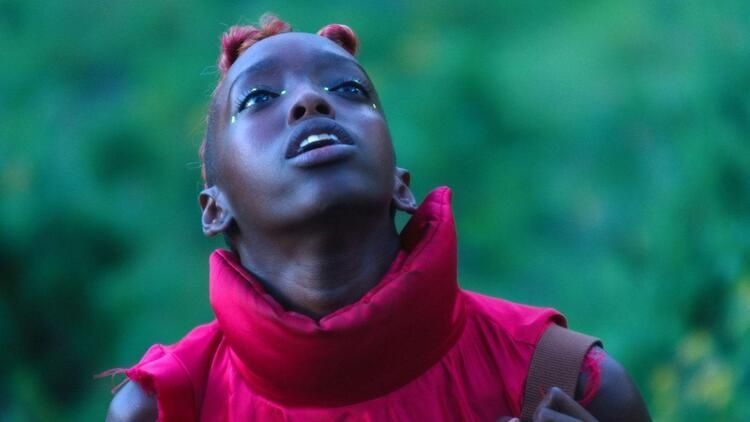
Neptune Frost
September 10, 2022
7:00 pm
Willard Straight Theatre
2021 > Rwanda, United States, France, Canada > Directed by Saul Williams, Anisia Uzeyman
With Cheryl Isheja, Elvis Ngabo, Bertrand "Kaya Free" Ninteretse
A boisterous and idiosyncratic vision of Afrofuturist techno-revolution, in a tale of labor organization, intersexuality and cyberfeminism. From the mind of actress and playwright Anisia Uzeyman, and her husband, poet and rapper Saul Williams comes a queer sci-fi musical about hacking computers, gender, and reality itself that is as politically astute as it is artistically invigorating. Cosponsored by the Institute for African Development. Subtitled. More at www.kinolorber.com/film/view/id/5188
1 hr 45 min
Additional Information
Program
Einaudi Center for International Studies
Institute for African Development
Happening

September 11, 2022
7:00 pm
Willard Straight Theatre
2021 > France > Directed by Audrey Diwan
With Anamaria Vartolomei, Kacey Mottet Klein, Luˆna Bajrami
The autobiographical drama of writer Annie Ernaux, who pursued an illegal abortion in 1960s France. A mixture of heartfelt coming-of-age narrative and crucial social critique that feels tragically pertinent to our current events. Subtitled. More at www.ifcfilms.com/films/happening
1 hr 40 min
Additional Information
Program
Einaudi Center for International Studies
Locating the Affluent Middle Class in Dhaka, Bangladesh

September 19, 2022
11:00 am
Talk by Seuty Sabur
Both an Asian Development Bank (ADB) report (2016) and a World Bank report (2014) have spoken of the possibility of Bangladesh becoming an upper-middle-income country by 2021. From 1990 to 2010, the size of the middle classes expanded from 9% to 20%. Yet, despite this newfound interest in the middle class, questions about its composition, the practices, and aspirations of its constituents are hardly ever raised. The political implications of such questions are also never acknowledged, let alone debated. My longitudinal research attempts to make a section of this class tangible. In this essay, I explore the material conditions under which these gendered-class consolidations were possible during successive colonial and postcolonial periods. Through memoirs, genealogies, intergenerational family histories, and archives, I attempt to locate my interlocutors and their class position across space and time. Their intergenerational narratives reveal how their spatial mobilities (birth, marriage, work, and retirement) are entwined with the accumulations of various capitals and how that collided with Dhaka's urban formations as a metropolitan city.
Seuty Sabur is currently an associate professor of anthropology at BRAC University. She obtained her PhD in sociology from the National University of Singapore and her MA in cultural dynamics from Hiroshima University, Japan. Seuty Sabur teaches a range of undergraduate courses, including critical social theory, methodology, gender, class, kinship, and family. For the past few years, her core research interest has been the ‘Metropolitan Middle Class of Bangladesh’. As an activist and academic based in Bangladesh, she has been drawn to multiple recent social movements. She has been writing on the women’s movement, the Shahbag uprising, the gendered construction of the nation, and the culpability of left and liberal forces. Her research has been published in reputed journals such as ‘Fieldsights’ by the Society for Cultural Anthropology, ‘Journal of South Asian Development,’ ‘South Asia Chronicles’ and ‘South Asia: Journal of South Asian Studies.’ She has authored numerous op-eds for international and national newspapers and portals. She is currently working on her upcoming book “Marriage and Friendship: Social Networks of the Bangladeshi Affluent ‘Middle Class”.
Additional Information
Program
Einaudi Center for International Studies
South Asia Program
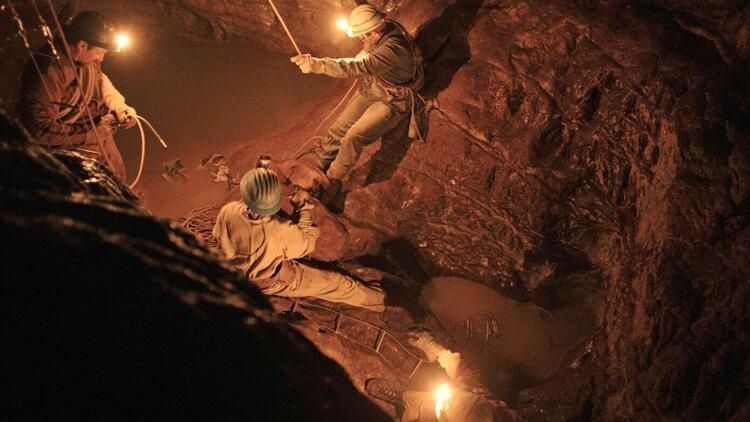
Il Buco
September 4, 2022
7:00 pm
Willard Straight Theatre
2021 > Italy > Directed by Michelangelo Frammartino
With Paolo Cossi, Jacopo Elia, Denise Trombin, Nicola Lanza
The extraordinary adventure of the young members of the Piedmont Speleological Group who, having already explored all the caves of Northern Italy, changed course and went South to explore other caves unknown to man. Another work of nearly wordless beauty that touches on the mystical from the visionary director of Le Quattro Volte, Michelangelo Frammartino's Il Buco is "a masterful work of sound and sight." (Hollywood Reporter) Winner of a Special Jury Prize at the Venice Film Festival. Subtitled. More at grasshopperfilm.com/film/il-buco
1 hr 33 min
Additional Information
Program
Einaudi Center for International Studies
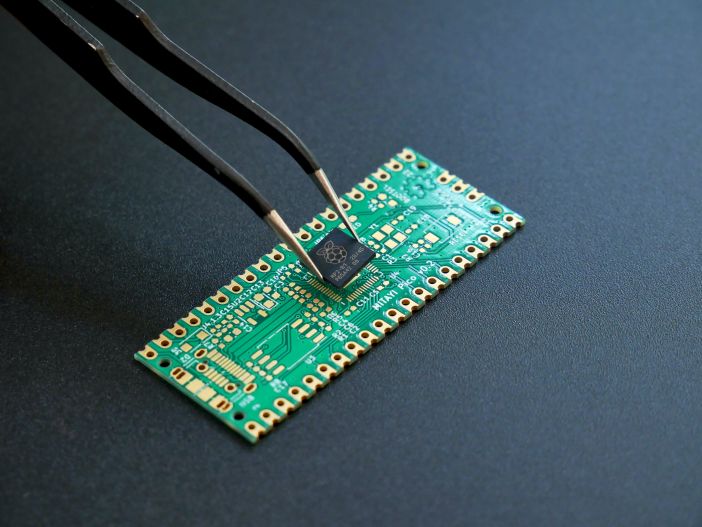
Race for Semiconductors Influences Taiwan Conflict
Lourdes Casanova, Global Public Voices and LACS
Lourdes Casanova, director of the Emerging Markets Institute and senior lecturer of management, says "Taiwan-based TSMC is the biggest world producer of chips, and China and the rest of the world need TSMC semiconductors. Hence, I don’t expect China to target electronic exports.”
Additional Information
3 Ways the China-Taiwan Standoff Could Impact World Markets

Sarah Kreps, PACS
Sarah Kreps, professor and director of the Cornell Tech Policy Lab, says China semiconductor chip imports, including from Taiwan, "have become almost a third rail," that China does not want to touch.
Additional Information
Gatty Lecture: The Future of Land in Myanmar
November 18, 2022
8:00 pm
Miles Kenney-Lazar
Assistant Professor, Department of Geography, National Unviersity of Singapore
On February 1st, 2021, the armed forces of Myanmar (Burma) carried out a coup d’état, toppling the democratically elected government formed by the National League for Democracy (NLD). Since that fateful event, the country has experienced radical changes driven by political and violent conflict between the military government and the wide range of groups that oppose it. Everyday citizens took to the streets to protest the military junta, many of whom were shot and killed by security forces. A civil disobedience movement (CDM) formed amongst civil servants while workers from various industries engaged in labor strikes to bring the functioning of the military-controlled government to a halt. Militias known as people’s defense forces sprung up across the country to defend communities from military violence, such as air strikes in ethnic regions. As the durability of the coup became apparent, new institutions were formed to
create a stronger opposition to the military. Members of Parliament (MPs) elected in the 2020 election formed a legislative body and government in exile. Additionally, a political platform was created to facilitate an alliance among elected MPs, ethnic resistance organizations, and other anti-regime groups. Thus, the stage has been set for a longer conflict and resistance groups are increasingly driven by the desire for an absolute revolution that abolishes the military and institutes a federal democracy.
Within this dynamic political environment, there has been a pivot from immediate protest and reaction to the junta toward longer-term strategic action. A range of political actors have been discussing what the future Myanmar society they are fighting for should look like. There are ongoing deliberations concerning the desired principles of federal democracy and how they might be embodied in a new constitution. Ongoing debates concern how to set up new systems of humanitarian support, health care, and education. This talk addresses ongoing efforts to devise new approaches for governing land and associated natural resources. Supported by a team of CDM researchers, interviews were held online from June to August 2022 using encrypted communication. Various oppositional actors and key informants working on land issues shared their visions for the future of land and recommendations for actions that should be taken to achieve them. Land issues may seem inconsequential at this moment in comparison to the humanitarian conflicts and crises the country is facing, but the interviewees felt otherwise. Many expressed that it is essential to begin thinking now about how land relations should
be organized in an equitable, democratic, decentralized, and just society to avoid repeating the problems of the past. Furthermore, there is much that can be done right now to protect frontline communities from threats to their land and set up governance systems that strengthen opposition to the military.
I am interested in the changing political ecologies of land and property in the Mekong Region, especially how the capitalization and commodification of land produces unequal agrarian and environmental geographies with significant livelihood ramifications. I have long been captivated by the the possibility of resistance by the rural poor to the dispossession of their lands and their capacity to influence governance processes. Empirically, my research has examined land contestation related to the expansion of Chinese, Vietnamese, and Burmese agro-industrial plantations and special economic zones in Laos and Myanmar. I also maintain broader theoretical interests in the intersections of value and nature under capitalism, the transformation of late socialist political economies, and the relational construction of sovereignty over land and resources. Beyond political ecology, my scholarship contributes to political geography, development geography, agrarian studies, and Southeast Asian area studies.
***Note that this talk takes place at 8pm, not the usual 12:30pm. It will be held entirely on Zoom.
For questions, please contact seapgatty@cornell.edu.
Additional Information
Program
Einaudi Center for International Studies
Southeast Asia Program
Gatty Lecture: Translated History: Thai Revolution Reborn in Fiction
November 7, 2022
12:30 pm
Kahin Center
Sunisa Manning
Writer
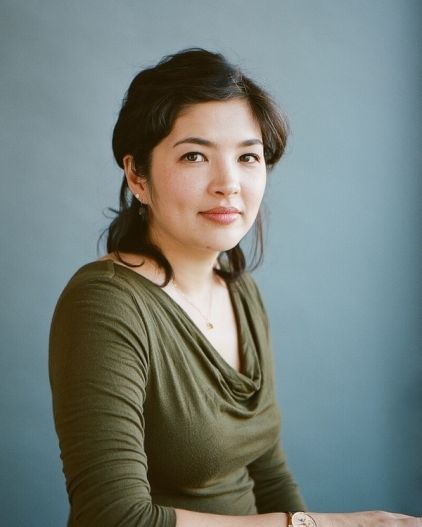
Sunisa Manning’s work challenges us to consider how fiction can translate movements across borders while remaining loyal to their origin stories. Her recent novel A Good True Thai describes the Thai 1970s student radicalization and revolution. This reading and talk will extend the questions of her novel to consider how writing fiction can operate as a decolonial praxis and translate history for new audiences.
Sunisa Manning was born and raised in Bangkok by Thai and American parents. Her first novel, A Good True Thai, was a finalist for the Epigram Books Fiction Prize for Southeast Asian writers. It was published in September 2020, and went into a second printing in February 2021.
Co-sponsored by the Asian & Asian American Center (A3C); and the Department of Performing and Media Arts.
This Gatty lecture will take place in person at the Kahin Center, but people are also welcome to join us on Zoom.
Lunch will be served.
For questions, please contact seapgatty@cornell.edu.
Additional Information
Program
Einaudi Center for International Studies
Southeast Asia Program
Gatty Lecture: Plantation Life: Corporate Occupation in Indonesia’s Plantation Zone
November 4, 2022
8:00 pm
Kahin Center
Tania Li and Pujo Semedi
Tania Li: Professor of Anthropology, University of Toronto
Pujo Semedi: Associate Professor of Anthropology, Gadjah Mada University
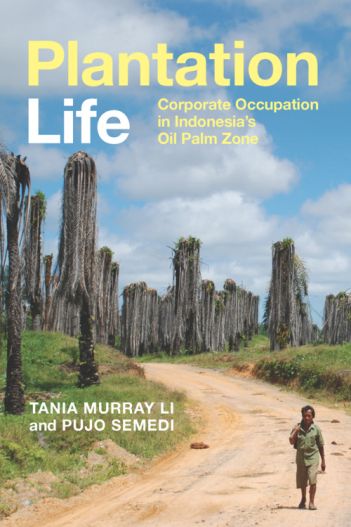
Plantation Life examines the structure and governance of Indonesia’s contemporary oil palm plantations, which supplies 50% of the world’s palm oil. Li and Semedi theorize “corporate occupation” to underscore how massive forms of capitalist production and control over the palm oil industry replicate colonial-style relations that undermine citizenship. In so doing, they question the assumption that corporations are necessary for rural development, contending that the dominance of plantations stems from a political system that privileges corporations. In this talk, the authors will present the main arguments of the book and describe the methods they devised for collaborative research and writing.
Tania Murray Li is Professor of Anthropology at the University of Toronto. Her publications include Plantation Life: Corporate Occupation in Indonesia’s Oil Palm Zone (with Pujo Semedi, Duke University Press 2021), Land's End: Capitalist Relations on an Indigenous Frontier (Duke University Press, 2014), Powers of Exclusion: Land Dilemmas in Southeast Asia (with Derek Hall and Philip Hirsch, NUS Press, 2011), The Will to Improve: Governmentality, Development, and the Practice of Politics (Duke University Press, 2007) and many articles on land, labour, class, capitalism, development, resources and indigeneity with a particular focus on Indonesia.
Pujo Semedi is an associate professor at the Dept. of Anthropology, Gadjah Mada University. His research mostly addressed the issues of environmental and economical dynamics in rural, agricultural communities. He published articles on Indonesian fishing communities, upland agriculture communities, and tea and palm oil plantations in Java and Kalimantan. Currently he collects data on the social transformation from agricultural to industrial society in Southern Germany and Norway in the last century.
This Gatty lecture will take place in person at the Kahin Center, but people are also welcome to join us on Zoom.
***Note that this talk takes place at 8pm, not the usual 12:30pm.
For questions, please contact seapgatty@cornell.edu.
Additional Information
Program
Einaudi Center for International Studies
Southeast Asia Program