
Einaudi Center for International Studies
Institute for African Development Seminar Series: Emergence of Black Entrepreneurs in Eastern Africa
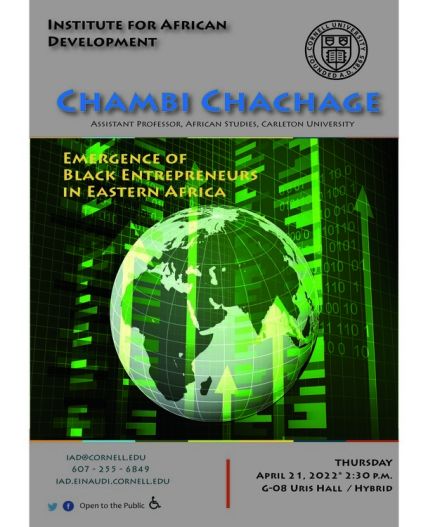
April 21, 2022
2:40 pm
Uris Hall, G-08
Register
Additional Information
Program
Einaudi Center for International Studies
Institute for African Development
Crossing Borders: New Book Shifts Focus From Fear to Restoring Immigrant Dignity

April 27, 2022
1:00 pm
Over the last decade, record numbers of displaced people have been caught in the middle of an intensifying tug-of-war between Western liberal democracies and Eastern autocrats. With little chance of returning to their homes in Syria or Central America, these people crossed borders to seek political, religious, or economic freedom. Yet the plight of refugees was often weaponized and exploited for political gain.
Join author Ali Noorani, CEO of the National Immigration Forum, for a virtual discussion about his newest book, “Crossing Borders: The Reconciliation of a Nation of Immigrants,” with Cornell immigration law expert Stephen Yale-Loehr and Wall Street Journal reporter Michelle Hackman. Based on interviews in Honduras, Mexico, Eastern Europe, and communities across the U.S., Mr. Noorani’s book presents the complexities of migration through the stories of families fleeing violence and poverty, the government and nongovernmental organizations helping or hindering their progress, and the American communities receiving them. Going beyond highly charged partisan debates, our panel offers real insights and actionable strategies for restoring the dignity of both immigrants and the United States itself.
Additional Information
Program
Einaudi Center for International Studies
Fact Check Team: Is the US Headed for a Recession?

Robert Hockett, CRADLE
Robert Hockett, professor of law and regulation of financial markets and institutions, says that the U.S.’s economic growth is too strong to be crushed by the Fed’s measure.
Additional Information
European Leaders Again Reject Russia's Demand That Gas Deliveries Be Paid in Rubles

Eswar Prasad, SAP
“Putin seems determined to show that he can dictate terms and force countries that are dependent on his country’s natural gas exports to sing to his tune,” says Eswar Prasad, professor of international trade policy. The piece syndicated to The Boston Globe.
Additional Information
To Support Ukraine, the West Must Unleash Power of IMF and World Bank

Sarah Kreps, PACS
Richard Clark, incoming assistant professor of government, Sarah Kreps, professor of government and adjunct professor of law, and Don Casler, incoming assistant professor of political science at the University of Illinois at Urbana-Champaign, co-author this opinion piece about how the West should support Ukraine.
Additional Information
Cornell Student China Collaboration Research Symposium

April 28, 2022
4:30 pm
All Cornell graduate students, undergraduates, and postdocs conducting academic research in collaboration with researchers, enterprises, and institutions in China are invited to register and join the virtual 2022 Cornell Student China Collaboration Research Symposium on 28 April 2022 from 4:30-6:00 pm EDT via Zoom. This symposium is an opportunity to share a short summary of your work, discuss your research experiences with others, and network with other researchers. Come give a lightning presentation on your China-related research involving collaborators in China -- on any topic, in any discipline, at any stage.
Interested Cornell students and postdocs are invited to sign up to participate and indicate their research topic by April 27:
https://cornell.ca1.qualtrics.com/jfe/form/SV_06Vtmu1cPosBaf4
Registrants will be emailed the Zoom meeting link before the symposium.
Registrants should provide 1 PPT slide: use the default widescreen slide size of 13.3" by 7.5" / 1280 by 720 pixels), and email to yz549@cornell.edu before the event date.
Event questions may be directed to chinacenter@cornell.edu
Additional Information
Program
Einaudi Center for International Studies
Visiting Critic Dmitry Bykov

For Dissident Writer, Fight for Russia’s Future is Personal
Bykov joins Einaudi's Institute for European Studies: “I would rather be known for my literary writing than for my politics or my poisoning.”
Additional Information
"Migrant Rights are Human Rights"
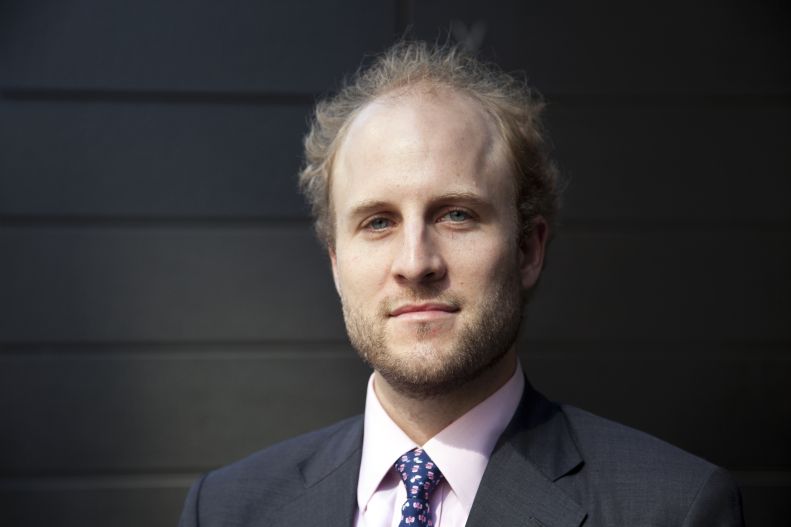
Ian Kysel on Video
Past Global Public Voices fellow Ian Kysel (Cornell Law) talks about his migrations research and advocacy for migrants' rights.
Additional Information
Institute for African Development Seminar: University of Ghana, Department of Adult Education and Human Resource Studies Special Topic Seminar Series, Spring 2022

April 28, 2022
2:40 pm
Uris Hall, G-08
Register
Issues in African Development Seminar Series examines critical concerns in contemporary Africa using a different theme each semester. The seminars provide a forum for participants to explore alternative perspectives and exchange ideas. They are also a focal activity for students and faculty interested in African development. In addition, prepares students for higher level courses on African economic, social and political development. The presentations are designed for students who are interested in development, Africa’s place in global studies, want to know about the peoples, cultures and societies that call Africa home, and explore development theories and alternate viewpoints on development.
Additional Information
Program
Einaudi Center for International Studies
Institute for African Development
How the UN Trusteeship Council might have shaped a substantive decolonization—and why it didn’t
April 28, 2022
11:25 am
Uris Hall, G08
This is a hybrid event. Registration information is below.
This talk sheds light on what various actors engaged with the United Nations trusteeship system wanted decolonization to mean, what they thought, or hoped, it should mean, and their contests of power over normalizing its meaning. The speaker will explain the importance of the UN trusteeship system in establishing decolonizing norms, particularly the meaning of universal rights within those norms. In opting not to address land claims and abuse of power complaints that petitioners brought to its attention, the Trusteeship Council created a precedent for excluding substantive rights from decolonization’s meaning in international law. This talk will elucidate what decolonization could mean within the trusteeship system, by examining the making of Italian Somaliland’s trusteeship agreement within the Trusteeship Council.
About the speakers
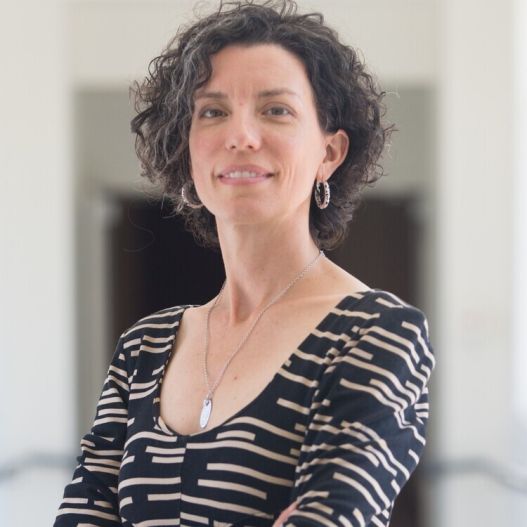
Meredith Terretta, is Professor of History at the University of Ottawa. She examines transregional legal and rights activism, both past and contemporary. Professor Terretta is now co-editing, with Dr. Samuel Moyn, The Cambridge World History of Rights, Volume 5: The Twentieth and Twenty-First Centuries. Her work appearing this academic year includes a special issue on African Refuge for the Canadian Journal of African Studies, co-edited with Dr. Philip Janzen, as well as single-authored articles on rights, international law, and decolonization in The Law and History Review; the Comparative Studies of South Asia, Africa and the Middle East; and the Humanity Journal: An International Journal of Human Rights, Humanitarianism, and Development.
This seminar is part of the spring seminar series with the Reppy Institute for Peace and Conflict Studies (PACS).
Register here
In accordance with university event guidance, all campus visitors who are 12 years old or older must also present a photo ID, as well as proof of vaccination for COVID-19 or results of a recent negative COVID-19 test. If you are not currently participating in the Cornell campus vaccination/testing program, please bring proof of vaccination or the results of a recent negative test.
Additional Information
Program
Einaudi Center for International Studies
Reppy Institute for Peace and Conflict Studies
Institute for African Development