
Einaudi Center for International Studies
Designing for the Pluriverse: Restor(y)ing Life, Remaking Worlds
April 18, 2022
4:30 pm
Warren Hall, B73
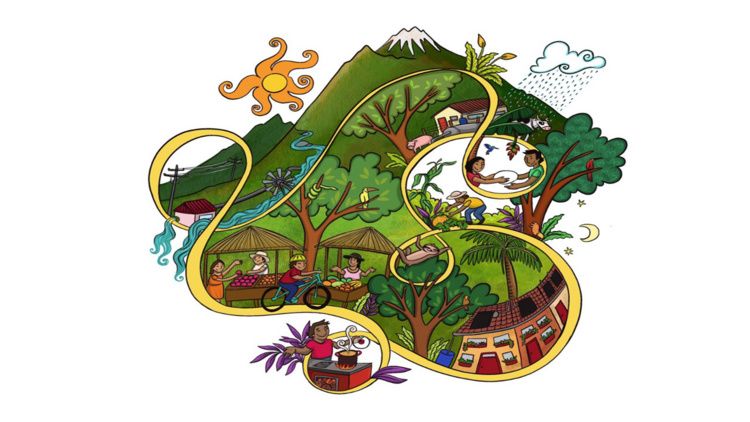
Arturo Escobar Location: Warren B74 and Zoom This talk examines emerging narratives of life that differ significantly from dominant anthropocentric perspectives of the world and their associated extractive modes of global development. Based on the notion of radical interdependence, these narratives propose a new foundation for social life and for designing worlds relationally, which is indispensable for confronting the terracide produced by mono-humanism. The talk will focus on one such emergent narrative – centered on notions of territoriality, communality, autonomy, re-existence, and pluriversality. Arturo Escobar is an activist-researcher from Cali, Colombia, working on territorial struggles against extractivism, post-developmentalist transitions, and 'ontological design'. He was the Kenan Distinguished Professor of Anthropology and Political Ecology at the University of North Carolina, Chapel Hill; and is currently affiliated with the PhD Program in Design and Creation at Universidad de Caldas, Manizales, Colombia; and the PhD program in Environmental Sciences, Universidad del Valle, Cali. Over the past twenty-five years, he has worked closely on these issues with several Afro-Colombian, environmental and feminist organizations. Professor Escobar is the author of the celebrated study, Encountering Development: The Making and Unmaking of the Third World (1995, 2nd edition, 2011). His more recent books include Designs for the Pluriverse: Radical Interdependence, Autonomy, and the Making of Worlds (2018), and Pluriversal Politics: The Real and the Possible (2020). He is currently working on a book, Designing Relationally: Making and Restor(y)ing Life), with Michal Osterweil and Kriti Sharma. Featured image: "Energías Libres" by Angie Vanessita Sponsors: Polson Institute for Global DevelopmentLatin American and Caribbean Studies Program
Additional Information
Program
Einaudi Center for International Studies
Latin American and Caribbean Studies
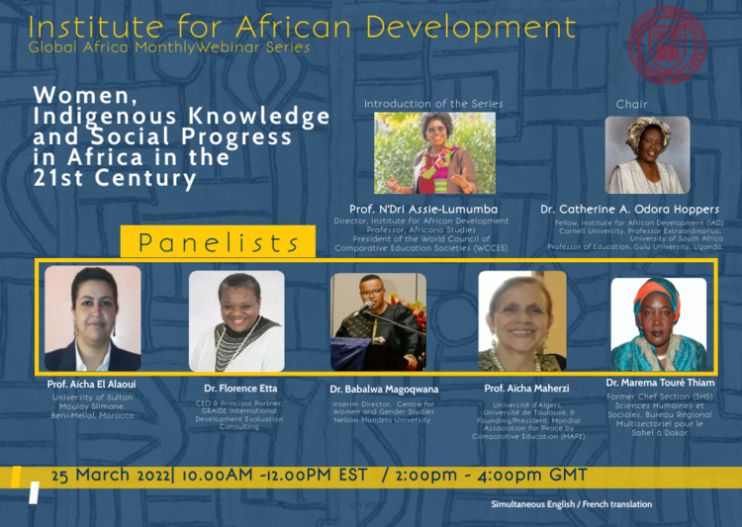
IAD Global Africa Monthly Webinar Series: Women, Indigenous Knowledge and Social Progress in the 21st Century
March 25, 2022
10:00 am
This webinar series features diverse voices from the African continent and the Diaspora on a wide range of themes, challenges, breakthroughs in cutting-edge research outcomes, innovations, and discoveries across all disciplines and area studies. It is open to the global public. Register here
Introduction to the Series
N'Dri Assie-Lumumba, Professor, Africana Studies and Director, Institute for African Development and the current President of the World Council of Comparative Education Societies (WCCES),
Discussant
Catherine A. Odora Hoppers, Professor of Education, Gulu University, Uganda. Founder/Director, Global Institute of Applied Governance in Science, Knowledge Systems and Innovation
Panelists
Dr. Aicha El Alaoui is the professor-researcher at the University Sultan My Slimane of BéniMellal, and the President of Dihiya Centre for Human Rights, Democracy and Development in Rabat-Morocco.
Dr. Florence Etta, CEO & Principal Partner, GRAIDE International Development Evaluation Consulting
Dr. Marema Touré Thiam, Former Chef Section (SHS) Sciences Humaines et Sociales, Bureau Régional Multisectoriel pour le Sahel à Dakar
Prof. Aïcha Maherzi, Université d’Algers, Université de Toulouse, & Founding/President, Mondial Association for Peace by Comparative Education (MAPE)
Dr. Babalwa Magoqwana, Interim Director, Centre for Women and Gender Studies, Nelson Mandela University, South Africa
Additional Information
Program
Einaudi Center for International Studies
Institute for African Development
Emerging Markets Theme Research Seminar: Tarun Khanna
May 5, 2022
11:30 am
Sage Hall, B08
Registration Link: https://cglink.me/2cm/r1538464
Lancet Citizens’ Commission
Pathways to Universal HealthCare for India’s 1.3 billion
The Lancet Citizens’ Commission on Reimagining India’s Health System is a cross- sectoral research endeavor to lay out a policy roadmap to achieving universal health coverage (UHC) for India’s 1.3 billion, after 75 years of failed efforts. A guiding principle for the Commission is that structural change towards UHC can only be attained through consultative and participatory engagement with the diverse sectors involved in health care and, most importantly, with India’s citizenry.
The Commission’s ‘big tent’ approach transcends traditional boundaries of expertise to actively engage stakeholders whose voices have rarely been heard in previous reports: those who deliver healthcare and those who receive it. It is thus a Citizens’ Commission in as complete a sense as we can envisage.
A consequence of this framing is that the Commission is explicitly confronting several hitherto-ignored schisms in the provision of Indian healthcare: between the public and private sectors in the delivery of care; between allopathic medicine and traditional medicine; between aficionados and sceptics of the role of technology in attaining UHC.
Our working hypothesis half-way through is that a (dramatic) shift in mental models at all levels is needed for India to be on a path towards UHC. Two overarching mindset changes include (a) Citizens shifting from being passive consumers of healthcare to an active and more informed participatory role, demanding access but also sharing responsibility and (b) Recognizing the role of the private sector in the health system and holding it accountable, rather than only relying on the state.
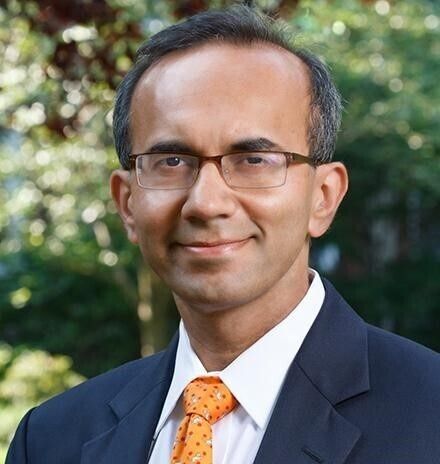
Tarun Khanna is the Jorge Paulo Lemann Professor at the Harvard Business School. For over two decades, he has studied entrepreneurship as a means to social and economic development in emerging markets. At HBS since 1993, after obtaining degrees from Princeton and Harvard, he has taught courses on strategy, corporate governance and international business to MBA and Ph.D. students and senior executives.
Additional Information
Program
Einaudi Center for International Studies
Latin American and Caribbean Studies
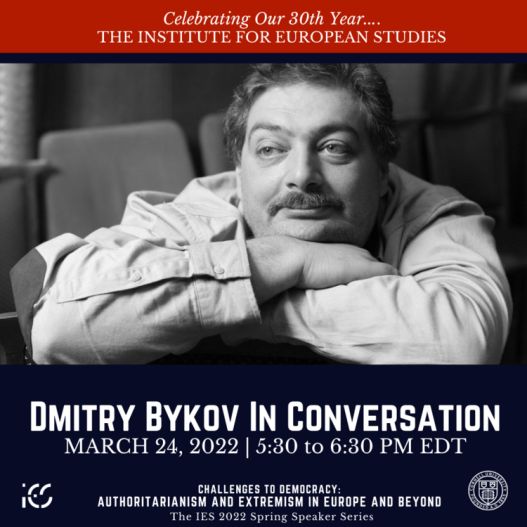
Dmitry Bykov in Conversation
March 24, 2022
5:30 pm
Uris Hall, G08
Dmitry Bykov is one of Russia’s leading public intellectuals, and a Visiting Scholar hosted by Cornell’s Institute for European Studies, under the auspices of the Open Society University Network. Meet with Dmitry for an hour of public conversation with Mabel Berezin, Director of the Institute for European Studies. Prof Berezin will ask him about the role of dissent and intellectual life in Russia, what drove him to becoming a poet and satirist, and his views on the current situation in Ukraine and Russia.
Speaker bios:
Russian dissident Dmitry Bykov is an Open Society University Network fellow and visiting critic based in the Einaudi Center’s Institute for European Studies (IES). One of Russia’s best-known public intellectuals, he is a novelist, poet, critic, satirist, and university professor. Bykov has authored more than 80 books, including novels, poetry, biographies, and literary criticism. He is a three-time winner of the Bolshaya Kniga (Big Book) award, one of Russia’s most prestigious literary prizes. A popular lecturer and public speaker, he has also served as the host of numerous television and radio programs.
Mabel Berezin is Professor of Sociology at Cornell University and the Director of the Institute for European Studies. Her expertise lies in the area of extreme and exclusionary forms of nationalism, such as fascism and right-wing populist politics, and the threats that these phenomena pose to democratic political culture and governance. Berezin has written books on Italian fascism; on territorial politics in Europe; and on contemporary French and Italian right-wing politics, including Making the Fascist Self: The Political Culture of Interwar Italy, which was awarded the J. David Greenstone Prize by the American Political Science Association. In addition, Prof. Berezin has also published numerous articles and review essays, and has edited collaborative volumes on democratic culture, emotions and the economy, qualitative methods, and health and culture.
This event is a hybrid event. Those who are not from the Cornell community can attend via Zoom. Register here.
Additional Information
Program
Einaudi Center for International Studies
Institute for European Studies
Faculty and Students on the War in Ukraine

Experts, Experiences, and Discussion
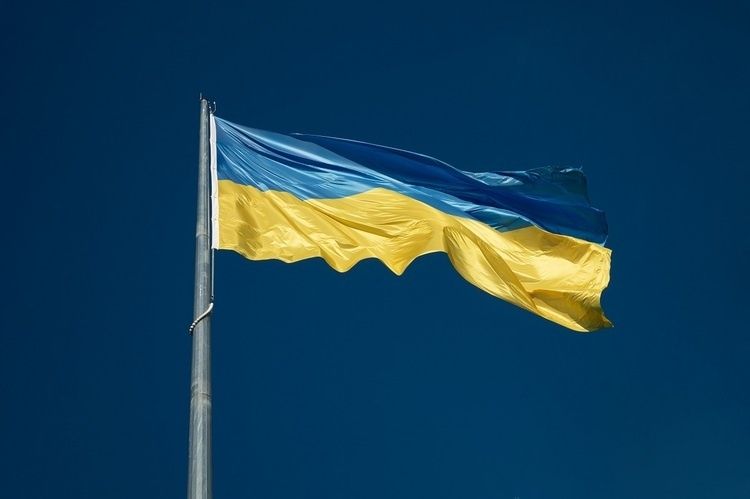
Faculty experts and Ukrainian students will speak about the Russian invasion of Ukraine at an event on March 17 at 4:30 p.m.
Additional Information
Faculty and Students on the War in Ukraine
March 17, 2022
4:30 pm
Experts, Experiences, and Discussion
Hosted by Global Cornell, this virtual forum gives Cornell faculty, staff, and students a time to come together, learn more about the unprovoked invasion—and stand with the Ukrainian people.
Join scholars based in Ukraine, and Cornell faculty and students, as they speak about how the Russian invasion of Ukraine threatens lives, the post–Cold War international order, and the stability of the global economy. Following a panel discussion, participants will connect in breakout rooms, share experiences, and receive further resources.
Faculty in Ukraine
Tymofii Brik (Professor and wartime Acting Vice President of International Affairs, Kyiv School of Economics)Yuliya Bidenko (Associate Professor, Political Science, Karazin Kharkiv University)Natalia Kudriavtseva (Professor, Translation and Slavic Studies, Kryvyi Rih State University)Cornell Faculty
Matthew Evangelista (Professor, Department of Government/A&S)Cristina Florea (Assistant Professor, Department of History/A&S)Steve Israel (Director, Institute of Politics and Global Affairs/BPP; Professor of Practice, Department of Government/A&S)Stephen Yale-Loehr (Migrations faculty fellow; Professor of Immigration Law Practice/Cornell Law)Eswar Prasad (Tolani Senior Professor of Trade Policy, Dyson/JCB/CALS)Bryn Rosenfeld (Assistant Professor, Department of Government/A&S)Cornell Community Members
Ivan Kosyuk (Operations Research and Information Engineering, MEng ’22)Olaf de Rohan Willner (Computer Science and Government/A&S ’24)Olga Zimina (Postdoctoral Associate, School of Integrative Plant Science/CALS)This event is open to the Cornell community only and intended as a protected space for learning and discussion. NetID authentication is required to register and attend. Please register with your Cornell NetID email address (not an alias email address).
Additional Information
Program
Einaudi Center for International Studies
Reppy Institute for Peace and Conflict Studies
Institute for European Studies
'People are dying': Global Warming Already Being Seen in North America, UN Report Finds
Rachel Bezner Kerr, Einaudi
"No one is left unaffected by climate change,” says Rachel Bezner Kerr, professor of global development. “Every increased amount of warming will increase the risk of severe impacts, and so the more (rapidly) we can take strong action to reduce greenhouse gas emissions, the less severe the impacts will be.”
Additional Information
China Has Tools to Help Russia's Economy. None are Big Enough to Save It.

Eswar Prasad, SAP
“China will not save the sinking boat of the Russian economy,” says Eswar Prasad, professor of economics and international trade policy. But, he says, China could “perhaps allow it to float a little longer and sink a little more slowly.”
Additional Information
The Four Ways Sanctions Work (Or Don't)

Nicholas Mulder, IES
This piece features an interview with Nicholas Mulder, assistant professor of history, on the impact of sanctions. Mulder is also similarly quoted in Vox.
Additional Information
What Would Be the Impact of a US 'Digital Dollar'?

Eswar Prasad, SAP
Eswar Prasad, professor of international trade policy, says, “The overwhelming dominance of the dollar gives the US the luxury of learning from... other countries.” Similar mention can be found in The New York Times and Yahoo! Money. Prasad also discusses US regulation of digital assets on CNBC.