
Einaudi Center for International Studies
"Protecting the Andes and Amazon: Rights of Rivers and Forests in Ecuador," by David Cordero, Esq., LACS Seminar Series

September 26, 2022
1:00 pm
Uris Hall, 153
In 2008, the people of Ecuador approved a new constitution that establishes that nature has rights. The rights of nature (RoN) are the product of a biocentric conception defending nature's intrinsic value. The RoN differs from the environmental law because it uses a different approach to the tolerable limits of the impact of human activity. While environmental law is the compromise between business and conservation, RoN creates scientific redlines based on the capability of the ecosystems to self-regenerate. If there is a species extinction risk or permanent damage to the ecosystem cycle, the risky activity should be forbidden.
How are RoN working after ten years? Do legal institutions play the expected role in protecting nature? Does an individual member of a species have rights? Or is the whole specie the right holder? Is it the entire ecosystem? Or is the earth entitled to the rights? The Constitutional Court of Ecuador has been discussing these questions in its jurisprudence for the last three years. We will analyze those decisions that recognize the personhood of rivers and forests and their implications on the broader discussion about sustainability, climate change, and development. Finally, we will discuss the enforceability and impact of the aforementioned jurisprudence in Ecuador.
David Cordero-Heredia is an Associate Professor of Law at the Pontificia Universidad Católica del Ecuador (PUCE). He has been visiting professor at Universidad Andina Simón Bolívar (UASB), Universidad de las Americas (UDLA) and Universidad del Azuay (UDA).
David has represented indigenous peoples and individuals against Mexico, Guatemala, Colombia, Peru, and Ecuador in the Inter-American Commission on Human Rights and the Inter-American Court of Human Rights (I/A Court HR). The cases include a vast number of topics, including forced disappearances, torture, illegal detentions, massacres, migrants' rights, indigenous peoples' rights, access to free health services, force eviction, mass incarceration, oil & mining industries, fair trial, police brutality, and rights of nature.
Professor Cordero has an LL.B. from PUCE, master's degrees from UASB and Universidad de Alcala, and an LL.M. and a JSD from Cornell University. He is a visiting scholar in Cornell's Latin American and Caribbean Studies program (LACS).
Additional Information
Program
Einaudi Center for International Studies
Latin American and Caribbean Studies
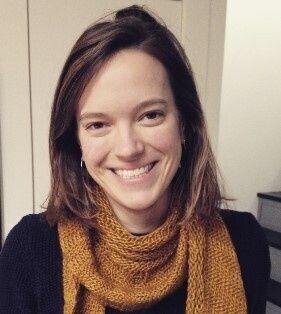
"Greening Mexican Cinema" by Carolyn Fornoff, Romance Studies, LACS Seminar Series
September 19, 2022
1:00 pm
Uris Hall, 153
How can we think about the relationship between cinema and the environment beyond the realm of representation? Building off the "material turn" in media studies, which attends to the substances that compose media, in this talk I explore Mexican cinema through a material lens. As an industry that has long been funded by state oil revenue, what would it mean to decarbonize Mexican cinema? To get at this question, I spotlight recent efforts to disentangle cinema and oil by filmmakers and film distributors.
Carolyn Fornoff is an Assistant Professor of Latin American Studies in the Romance Studies department. She has coedited two books in the environmental humanities: Timescales: Thinking Across Ecological Temporalities (University of Minnesota Press, 2020) and Pushing Past the Human in Latin American Cinema (SUNY Press, 2021).
Cosponsor: Romance Studies Department
Zoom Link Registration:
https://cornell.zoom.us/webinar/register/WN_ydjJblhpSm6vEy09qxoN4A
Additional Information
Program
Einaudi Center for International Studies
Latin American and Caribbean Studies
World’s Key Workers Threaten to Hit Economy Where It Will Hurt
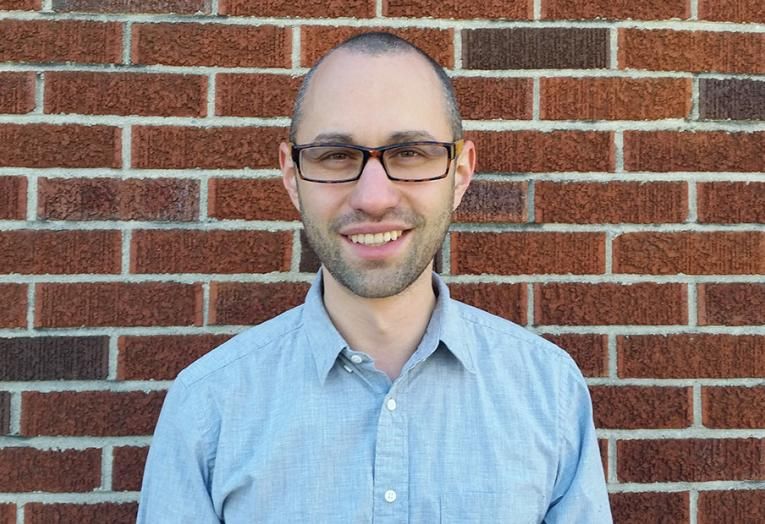
Eli Friedman, EAP
“There’s a very tight labor market, so that puts workers in a position where they have both an accumulation of lots of grievances and they feel empowered,” says Eli Friedman, associate professor and chair of International & Comparative Labor.
Additional Information
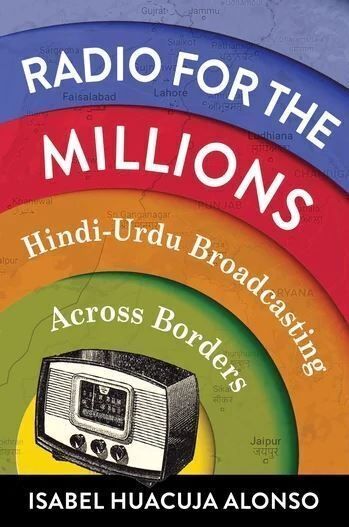
BOOK TALK: Radio for the Millions: Hindi-Urdu Broadcasting Across Borders
November 7, 2022
12:15 pm
Uris Hall, G08
Talk by Isabel Huacuja Alonso
From news about World War II to the broadcasting of music from popular movies, radio played a crucial role in an increasingly divided South Asia for more than half a century. Radio for the Millions examines the history of Hindi-Urdu radio during the height of its popularity from the 1930s to the 1980s, showing how it created transnational communities of listeners.
Isabel Huacuja Alonso argues that despite British, Indian, and Pakistani politicians’ efforts to usurp the medium for state purposes, radio largely escaped their grasp. She demonstrates that the medium enabled listeners and broadcasters to resist the cultural, linguistic, and political agendas of the British colonial administration and the subsequent independent Indian and Pakistani governments. Rather than being merely a tool of nation-building in South Asia, radio created effective links that defied state agendas, policies, and borders. It forged an enduring transnational soundscape, even after the 1947 Partition had made a united India a political impossibility.
Huacuja Alonso traces how people engaged with radio across news, music, and drama broadcasts, arguing for a more expansive definition of what it means to listen. She develops the concept of “radio resonance” to understand how radio relied on circuits of oral communication such as rumor and gossip and to account for the affective bonds this “talk” created. By analyzing Hindi film-song radio programs, she demonstrates how radio spurred new ways of listening to the cinema. Drawing on a rich collection of sources, including newly recovered recordings, listeners’ letters to radio stations, original interviews with broadcasters, and archival documents from across three continents, Radio for the Millions rethinks assumptions about how the medium connects with audiences.
Isabel Huacuja Alonso is an assistant professor in the Department of MESAAS at Columbia University She is a historian of sound media and modern South Asia. Her publications have appeared in Public Culture, South Asia, and Bioscope. Her book Radio for the Millions: Hindi-Urdu Broadcasting Across Borders is forthcoming with Columbia University Press. The book expands on her dissertation, which won the Sadar Patel 2016 Award for best dissertation on modern India in any discipline defended at a US institution. At Columbia, Dr. Huacuja Alonso teaches courses on South Asian history from an interdisciplinary perspective and on sound studies as well as Contemporary Civilization in the Core Curriculum. She completed her doctorate in history from The University of Texas at Austin and her BA in Economics at Cornell University.
Additional Information
Program
Einaudi Center for International Studies
South Asia Program
Italy’s Government Is in Turmoil. Here’s How It Got There – and What’s Next

Christopher Way, IES/PACS
"Mario Draghi was such a trusted pair of hands across Europe," says Christopher Way, associate professor of government. "He was so respected for his competence that it's a loss no matter who replaces him."
Additional Information
The Economy: Tearing Down the Bamboo Walls
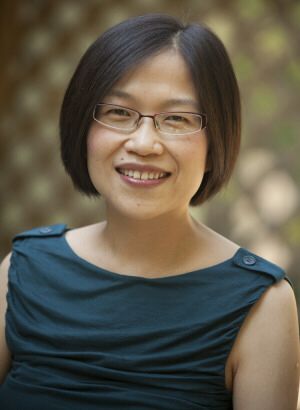
Panle Jia Barwick, EAP
Piece about “local protectionism” in China, mentions research by Panle Jia Barwick about priority given locally made cars to access express lanes.
Additional Information
IMF Must Act to Rescue Sri Lanka

Kaushik Basu, SAP
The IMF will “need to be proactive, suspending some of their bureaucratic rules to help Sri Lanka through this acute phase of the crisis,” says Kaushik Basu, professor of economics at Cornell University and a former chief economic adviser to the Government of India.
Additional Information
How Populism Deals with Complexity
September 6, 2022
4:30 pm
Uris Hall, G08
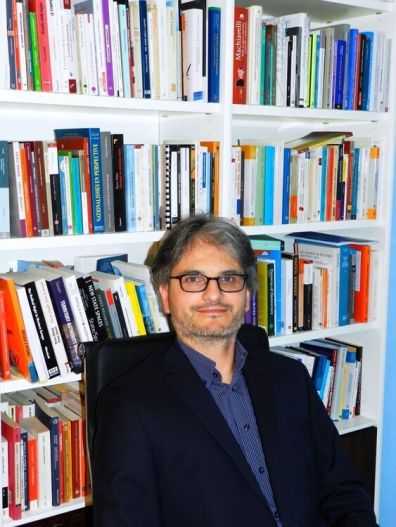
There is a strong tendency in social and political sciences to simplify the academic use of the concept of populism. This is what populists do when they dichotomise reality into friends and enemies. The goal of this talk is to highlight and discuss why scholars have to develop an adaptive and multifaceted perspective, and how changing realities across Europe and the United States, including the experience of Covid-19 pandemic, might contribute to strengthen this perspective.
Speaker
Oscar Mazzoleni, Professor of Political Science and Political Sociology, University of Lausanne
Register for the session here.
Presented by the Institute for European Studies
Additional Information
Program
Institute for European Studies
Einaudi Center for International Studies
Seeking Leverage Over Europe, Putin Says Russian Gas Flow Will Resume

Eswar Prasad, SAP
Prasad, an economist at Cornell said “Keeping a low flow through Nord Stream could strengthen Russia’s position and even weaken Europe’s resolve if the war drags on. Maintaining Europe’s energy dependency on Russia and stoking uncertainty about natural gas supplies, are among the reasons Mr. Putin would want to keep Nord Stream online.”
Additional Information
Evidence in Governance and Politics (EGAP) Meeting
October 29, 2022
8:30 am
ILR Conference Center
Evidence in Governance and Politics (EGAP) in collaboration with the Reppy Institute for Peace and Conflict Studies, the Institute of Politics and Global Affairs, the Gender and the Security Sector Lab, Department of Government, and the Brooks School of Public Policy will be hosting a two-day meeting at Cornell University on October 28th and 29th. Sabrina M. Karim, Hardis Assistant Professor in the Department of Government and member of the EGAP network, will head the organization of the event, which will focus on two thematic areas:
Crime Reduction & Police AccountabilityDemocracy, Conflict, & Polarization
This closed event will bring together invited scholars and practitioners from the EGAP network, along with other experts in these two thematic areas, to showcase findings, identify research questions and promising interventions, and provide opportunities for matchmaking between researchers and practitioners.
For more information, please contact Sabrina Karim at smk349@cornell.edu or Ayuko Picot, Administrative Assistant, EGAP at ayukopicot@berkeley.edu.
Additional Information
Program
Einaudi Center for International Studies
Reppy Institute for Peace and Conflict Studies