
Einaudi Center for International Studies
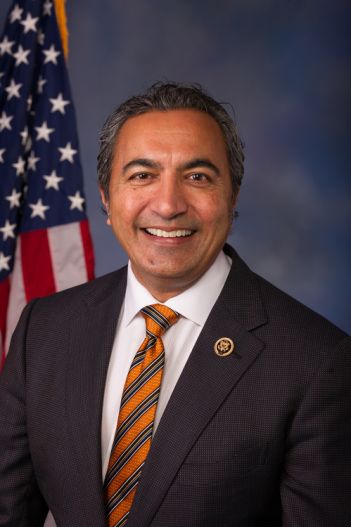
Development in the U.S./China Relationship: A Conversation with Rep. Ami Bera
May 17, 2022
7:00 pm
This event is canceled due to a change in the House voting schedule. The Congressman must be on the floor of the Capitol to vote.
We welcome Rep. Ami Bera to discuss China and nonproliferation moderated by Rep. Steve Israel and Vice Provost Wendy Wolford.
Speaker
Rep. Ami Bera, M.D., U.S. House of Representatives (CA-7th); Chairman, House Subcommittee on Asia, the Pacific, Central Asia, and Nonproliferation
Moderators
Wendy Wolford, Vice Provost for International Affairs; Robert A. and Ruth E. Polson Professor, Department of Global Development
Steve Israel, Director, Institute of Politics and Global Affairs at Cornell University and former U.S. Representative (D-NY)
The Institute of Politics and Global Affairs is a non-partisan institute dedicated to elevating public discourse and stimulating civic engagement.
Additional Information
Program
Einaudi Center for International Studies
East Asia Program
Storm Still Blowin’: Critical Jewish Studies Now

May 24, 2022
10:00 am
A. D. White House, Guerlac Room
Register by May 13 to attend. Space is limited.
This workshop is a unique two-day international workshop being held on the occasion of the thirtieth anniversary of the publication of Jonathan Boyarin’s "Storm from Paradise: The Politics of Jewish Memory." In that book, Professor Boyarin notes the evident reality in which the “storm [is] still blowing” and Benjamin’s “Angel of History” not only resists the still unfolding global crisis, but also marks a proximity to a redemptive, utopian potentiality: “Part of the import of Benjamin’s image is the lesson that we are always once again being driven out; in some sense we have always just lost paradise, hence we are always close to it.” This sense that “something precious is eternally being lost” points to a fugitive alternative politics that is even more relevant today than it was thirty years ago.
The workshop will reflect on three decades of intersecting threads of critical scholarship in postcolonial studies, critical race theory, feminist studies, experimental approaches to the poetics and politics of literary form in academic writing, and the critique of secularism, and collaboratively project these critical possibilities into the future. Storm from Paradise was one of the earliest introductions of these intersecting critical paradigms to the field of Jewish Studies, and we look forward to revisiting and expanding on these questions 30 years later.
Register by May 13 to attend. Space is limited.
Participants will receive pre-circulated works in progress by Jonathan Boyarin, Daniel Boyarin, J. Kameron Carter, Joyce Dalsheim, Nancy Ko, Elad Lapidot, Laura Levitt, Amnon Raz-Krakotzkin, Naomi Seidman, Noah Tamarkin, Raef Zreik, Itamar Haritan, and Re’ee Hagay.
Co-sponsored by the Jewish Studies Program, Mario Einaudi Center for International Studies, Department of Anthropology, Department of Near Eastern Studies, Society for the Humanities, Department of History, Department of Literatures in English, Department of German Studies, Institute for German Cultural Studies, Africana Studies and Research Center, and Institute for Comparative Modernities.
Please adhere to Cornell University’s COVID-19 guidelines. Stay informed at covid.cornell.edu.
Workshop schedule:
Monday, May 23
10:30-11:00 Reception
11:00-12:20 Session I
Opening remarks“Between Exile and Diaspora: Two Dimensions of Jewish Counter-Histories” Amnon Raz-Krakotzkin, Ben-Gurion University and the Van Leer Institute
12:20-1:20 Lunch Buffet
1:30-4:20 Session II
“Palestinian Question as Jewish Question?” Raef Zreik, Tel Aviv University and the Van Leer Institute
“The Angel of OTD History” Naomi Seidman, University of Toronto
“The Diaspora Politics of Memory: What the Storm Provides” Daniel Boyarin, University of California, Berkeley
4:45-5:35 Session III
“When Benjamin Met Mackey: A Fugitive Angelology” J. Kameron Carter, Indiana University, Bloomington
“Follow the Sponges: Towards an Environmental History of Jewish Memory and Racial Capitalism in the Global Mediterranean” Nancy Ko, Columbia University
6:35 Dinner at A.D. White Dinning Room
Tuesday, May 24
10:00 Gathering
10:15-12:05 Session IV
“Anonymous Remains: Between The Arcades Project and the Cairo Geniza” Re'ee Hagay, Cornell University
“Angelus Altnovus: Critique of Postcolonial Zionism” Elad Lapidot, Bern University, Switzerland
12:05-12:55 Lunch Buffet
12:55-2:45 Session V
“Memory and Double-Consciousness” Itamar Haritan, Cornell University
“Household Tales or Unheimliche Mayses” Joyce Dalsheim, University of North Carolina, Charlotte
3:10-5:30 Session VI
“Angels and Lost Overcoats: Letting Go of Certitude with Christa Wolf” Laura Levitt, Temple University
“Other Angels/Planetary Conversions” Jonathan Boyarin, Cornell University
6:00-7:00 Reception
Additional Information
Program
Einaudi Center for International Studies
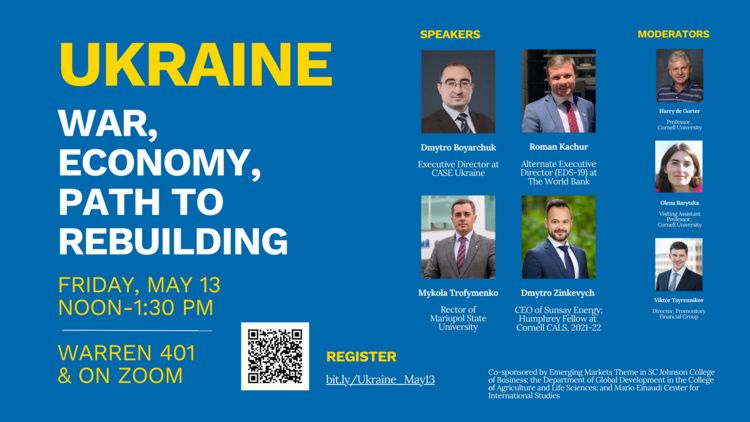
Ukraine: War, Economy, Path to Rebuilding
May 13, 2022
12:00 pm
Warren, 401
Hybrid event: Warren 401 and on Zoom. Now in its third month, the unfolding crisis in Ukraine has killed thousands, displaced millions, and destroyed civil infrastructure throughout the country. The damages to Ukraine's economy exceed $1 trillion by some estimates. While the war is far from the end, a panel of Ukrainian experts will converge at Cornell for a hybrid event to discuss the war, economy, and the path to rebuilding. This is a hybrid event. Guests are welcome to attend the event at Warren 401 on the Cornell campus or take part on Zoom. Speakers: Dmytro Boyarchuk will be speaking from Ukraine, where he is executive director at CASE Ukraine. He has extensive expertise in macro-economic forecasting, social policy and fiscal sector. He will be speaking from UkraineRoman Kachur is alternate executive director at the World Bank. Before the World Bank, Roman worked as a deputy finance minister in Ukraine and is an expert on international finance. He will be speaking from the United StatesMykola Trofymenko is the rector at Mariupol State University. He will be speaking from UkraineDmytro Zinkevych is the CEO of Sunsay Energy, a company that provides solar energy solutions in Ukraine, and he is a current a Humphrey fellow at Cornell studying challenges and solutions in the renewable energy sector. He will be speaking from the United States.Moderators: Harry de Gorter, professor at CornellOlena Rarytska, visiting assistant professor at CornellViktor Tsyrennikov, director at the Promontory Financial Group Co-sponsors: Emerging Markets Theme in the SC Johnson College of Business, the Department of Global Development in the College of Agriculture and Life Sciences, and the Mario Einaudi Center for International Studies.
Additional Information
Program
Einaudi Center for International Studies
Institute for European Studies
Reppy Institute for Peace and Conflict Studies
Interview: Cornell Professor Talks Healthcare Inequality

Landon Schnabel, GPV
Landon Schnabel, assistant professor of sociology, discusses how gender and socioeconomic status impact healthcare access.
Additional Information
Fearful of Getting Cut Off, China Pushes for Self-Reliance

Eswar Prasad, SAP
“One lesson that China is probably taking from the fallout is it remains vulnerable to financial, economic and technological sanctions,” says Eswar Prasad, professor of international trade policy and economics.
Additional Information
The Long History of Disinformation During War

Barry Strauss, PACS
Barry Strauss, professor of humanistic studies, writes this piece about the history of disinformation during war.
Additional Information
Fulbright-Hays for Faculty

Applications Open May 9
The Fulbright-Hays Faculty Research Abroad Program is back in 2022, after a 10-year hiatus. Don't miss out! Find out how to apply.
Additional Information
Fulbright-Hays Faculty Research Abroad Program
Details
This Department of Education program supports faculty conducting international research in modern foreign languages and area studies. The Einaudi Center will assist you through the application process, beginning with your intent to apply.
Start your application by emailing our Fulbright project director, David Holmberg, to indicate intent to apply. Please note that your application must be submitted through the university and have your department chair's approval.
What is the Fulbright-Hays Program?
The Fulbright-Hays FRA Program provides grants to colleges and universities to fund individual faculty members. Funded faculty conduct research in other countries in modern foreign languages and area studies for periods of three to twelve months.
Additional Information
Funding Type
- Program
Role
- Faculty
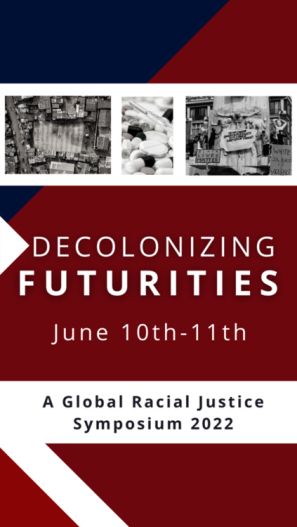
Decolonizing Futurities: A Global Racial Justice Symposium
June 10, 2022
9:00 am
Uris Hall, G08
This is a two-day symposium occurring on June 10th & 11th
The 2022 “Decolonizing Futurities” symposium will be hosted by the inaugural cohort of Global Racial Justice Fellows of the Mario Einaudi Center for International Studies at Cornell University. Through this symposium, we seek to critically analyze the construction of race and racial relations, and to reimagine a horizon of racial justice in contemporary life. Our aim is, thus, to decolonize existing anti-racist approaches, recognizing that decolonization is not a metaphor but an ongoing practice.
To this end, our panels on Friday, June 10th address key arenas of social life: how we think, how we live, and how we remember. In our first panel, we explore how elements of (settler-)colonial thought have endured—over time and across spaces—to shape postcolonial imaginaries. In our second panel, we consider the implications of racialization in access to healthcare, nutrition, and housing in contemporary life. In our third panel, we reassess our understanding of what constitutes “history” to reflect the complex global realities we currently inhabit. All three panels will then convene in a final roundtable on Saturday, June 11th to attempt a radical re-imagining of our futures—a novel solidarity framework that honors a politic of shared responsibility.
Free ticket required: Reserve your ticket
This symposium will take place in person at Uris Hall, and breakfast and lunch will be provided. Virtual attendees are also welcome to join us via Zoom. Please register here (day one, day two) if you wish to attend virtually.
Learn more about our symposium.
Please contact grjfellows@cornell.edu with any questions.
***
Detailed Schedule
Friday, June 10th
Breakfast & Opening Remarks | 9:00am – 10:00am
Keynote Address: Danika Medak-Saltzman | 9:30am – 10:00am
Panel 1 | How We Think: Colonial Thought | 10:00am – 11:30am
Panelists:
Oumar Ba | Cornell University, NY, USAReggie Jackson | University of Michigan, MI, USASarah Radcliff | Cambridge University, UKIn this panel, we propose to study how elements of colonial thought have endured or evolved, over time and across spaces. To this end, we ask the following questions: (1) How have colonial “ideas” and “symbols” been reformulated by non-Western actors in their own projects of domination? (2) How have these ideas been internalized and even co-opted by societies engaged in anti-colonial struggles or post-colonial nation-building? And (3) Given the persistence of colonial thought in the contemporary period, what would “decolonization” entail? In answering these questions, we hope to identify some underexplored mechanisms by which Western colonial thought has helped install other formations of essentialism and the processes by which colonial norms became institutionally, behaviorally, and rhetorically entrenched and came to shape postcolonial imaginaries. Ultimately, our aim is to reconsider today’s decolonizing frameworks.
Break | 1:30am – 12:00pm
Panel 2 | How We Live: Health and Housing | 12:00pm – 1:30pm
Panelists:
Jonathan Cohen | University of Southern California, CA, USATashara Leak | Cornell University, NY, USAAmali Lokugamage | University College, UKJill Stewart | Middlesex University, UKAt the local level, social injustices are highlighted in health, housing and quality-of-life disparities, and the sequelae of affected interpersonal experiences and development opportunities. In this subpanel we will explore the determinants and consequences of inequity and how the colonial building blocks of society have shaped our contemporary systems of environmental and human health. We aim to identify possible entry points and calls to action to address mechanisms that inhibit justice and obfuscate the ability to thrive within our communities. We will highlight the causes and implications of each issue, as well as important methodological obstacles to consider in understanding and communicating each facet.
Lunch | 1:30pm – 2:30pm
Panel 3 | How We Remember: Sites of Memory in Public Space | 2:30pm – 4:00pm
Panelists:
Durba Ghosh | Cornell University, NY, USAZayd Minty | Wits University, South AfricaJames Chase Sanchez | Middlebury College, VT, USAIn this panel we want to address how space and place are racially coded, and how institutionalized practices of collective remembering can often sustain assumptions of racial inequality. Public spaces continuously reflect back to us the history of the present, thereby necessitating political discussion about their role in maintaining assumptions regarding the limits of community. Referencing recent conflicts around contentious public monuments in the U.S. and elsewhere, we wish to examine symbols of public space– whether construed as ‘vandalism’ or ‘abolition’ – and consider what they say about current disconnects between state identity and the lived experiences of their diverse populations. In so doing, how might we rethink our relationship to the colonial past? How might we reconsider practices of commemoration to account for the living relationship between the present and our inheritances rather than consigning these legacies to a past that has always already been “overcome”? And finally, if authentic enfranchisement in the present necessitates a comparable enfranchisement in a collective past, how can we take action within our own institutions to have them serve as more effective interfaces between our inherited past and our contingent future?
Saturday, June 11th
Breakfast | 9:00am – 10:00am
Roundtable | How We Imagine: Decolonizing Futurities | 10:00am – 11:30am
This last conversation will include perspectives from each of the 3 panels, with outlooks on how to approach our future.
Closing remarks | 11:30am – 11:45am
Additional Information
Program
Einaudi Center for International Studies
East Asia Program
Latin American and Caribbean Studies
South Asia Program
Inequalities, Identities, and Justice - International Studies Summer Institute 2022

June 28, 2022
9:00 am
A.D. White House
The 2022 International Studies Summer Institute (ISSI), a professional development workshop for practicing and pre-service K–12 teachers hosted annually by the Cornell University Einaudi Center for International Studies in collaboration with the Syracuse University South Asia Center, will be exploring inequalities, identities, and justice.
During this cross-curriculum workshop, educators will engage in activities that integrate world-area knowledge from regions such as South Asia, Southeast Asia, Latin America, and Africa by exploring inequalities, identities, and justice, both historical and contemporary issues. Teachers will explore ideas on how to use the experience of the protests against racism and structural inequality, which crescendoed in the United States and more than 60 countries around the world in 2020. Doing so will grant them extensive knowledge about intersectional inequalities worldwide where marginalized groups struggle to access resources, health, rights, security, and well-being. Topics will address inequalities experienced across the globe, including cleavages in a society like race, religion, gender and sexuality, class, caste, language, and ethnicity.
The nature of this theme, the 2022 ISSI, will be suitable for elementary, middle, and high school teachers from various disciplinary backgrounds. Participating teachers will complete a lesson plan that incorporates content from the workshop with the support and guidance of our outreach staff.
Topics and list of presenters:
Social injustices vulnerabilities and climate change in the Brazilian Amazon, by Fabio ZukerFábio will present how climate change exacerbates already existing inequalities, injustices, and vulnerabilities, taking as a departing point his own fieldwork at the Tapajós River (Pará Brazilian amazon), and the questions around the denial of indigenous identity by soy farmers. He will also mention other examples of how environmental conflicts and soybean expansion in the savannah-like biome named cerrado have exacerbated the sanitary vulnerabilities of the Xavante people during the Covid-19 pandemic.
Education and Social Transformation of Africa: Historical and Contemporary Factors of Gender Inequality, by N’Dri Assie-Lumumba The contemporary European-inherited systems of formal education that were introduced to African societies during the colonial era, were at their inception imbued with inequality on various grounds. Among the grounds of inequality, the gender-based imbalance was the most persistent, with typical patterns of female under-representation in education. In the 20th century, after independence, there was considerable progress in female enrolment, due to robust policies. However, in many countries, a plateau had peaked dating decades back. However, numerous reforms that are in place, lack either consistent implementation or tend to reproduce and intensify gender inequality. The gaps, which exist at the basic level, tend to generally widen in higher education. Furthermore, post-secondary education tends to be characterized by gender-based disciplinary clusters that have negative implications for the female population. These distortions impede access to education for girls and women, a basic human right. Furthermore, considering the centrality of formal education that translates to socio-economic attainments of individuals, families, and ultimately national development of the State, it is imperative to undertake educational policies that are transformational.
Hindu Exceptionalism in India, by Mona Bhan In this talk, Bhan discusses how Narendra Modi and his right-wing Hindu allies’ from the BJP, India’s ruling Hindu majoritarian political party, have diligently promoted “Hindu exceptionalism” as a framework for everyday governance (Bhan and Bose 2020). A vital goal of the BJP government since it came to power in 2014 was to establish India as a “Hindu Rashtra (nation)” and frame Muslims as foreign invaders responsible for diminishing Hindu glory and weakening India’s ancient and unique Hindu civilization. Bhan draws from her ethnographic fieldwork in the Indian-occupied region of Kashmir to discuss how Hindu exceptionalism has sanctioned unprecedented violence against Kashmir’s Muslim populations. She also explores how this legitimized settler-colonial interventions to materialize India’s transformations into a Hindu Rashtra.
The Rohingya Question in Myanmar’s Rakhine State, by Kyaw Yin Hlaing Since 2012, Myanmar's Rakhine State has been a site of communal violence and human rights violations. While around a million Rohingya now live in Bangladesh as refugees, hundreds of thousands of others were (and remain) internally displaced. A large majority of Rohingya have lost not only their homes, but also their citizenship and access to higher education and proper medical care. Mutual misunderstandings and lack of trust between Rohingya and members of other ethnic groups, especially the Rakhine, have caused persistent communal tensions that often boil over into communal violence. As a result, Rakhine State had become the most volatile state in Myanmar. However, there have recently been some positive developments. Awareness-raising on social cohesion by local civil society organizations and the political changes that have occurred following the military coup in 2021 have contributed to these improvements. This talk will explain how communal tensions between the Rohingya and other ethnic groups have evolved and how recent political changes have contributed to ameliorating these tensions in Rakhine State.
Teaching ‘the East’ in ‘the West’: From Postcolonial Theory to Pedagogical Practice, by Dr. Andrew Harding One of the major criticisms levelled at area studies disciplines over the last twenty years is that the division of the globe into distinct geo-political regions (e.g. “East Asia”) was initially undertaken in the interest of U.S. national security, rather than with a mind to greater cross-cultural understanding and collaboration. As a result, flagship Area Studies classes such as “Introduction to Japan” have tended to posit the target culture as an object “over there” which requires analysis precisely because it is distinct from “our” way of life “over here”. In a world in which border- and culture-crossing is increasingly the normal experience however, this assumed affinity between region and identity is becoming rapidly out of date and, from the perspective of students, largely irrelevant to their experience of the world as a single global continuum. In this presentation, I foreground a pedagogical approach in which I center authorial positionality, rather than national positionality, in relation to East Asian histories and societies. Rather than assuming that an author speaks for Japan, for example, what might it mean to think of them writing from or even to Japan? Why limit area studies to a study of those we assume to be from or representative of the “area” at all? By thus foregrounding an approach to “area” from a social, rather than national-cultural positionality, students are encouraged to consider social relations as a global operation, rather than one that is nationally or even culturally confined.
Registration is required https://bit.ly/22ISSI
Sponsored by Syracuse University, Moynihan Institute for Global Affairs, South Asia Center, Cornell University’s Mario Einaudi Center for International Studies, Southeast Asia Program, South Asia Program, Institute for African Development, East Asia Program, Latin American Studies Program, Cornell Institute for European Studies, TST-BOCES, U.S. Department of Education Title VI Program
Additional Information
Program
Einaudi Center for International Studies
Reppy Institute for Peace and Conflict Studies
East Asia Program
Southeast Asia Program
Latin American and Caribbean Studies
Institute for African Development
South Asia Program
Institute for European Studies