
Einaudi Center for International Studies
CEAS Author talk | Spring and Autumn Annals of Wu and Yue
March 21, 2022
4:45 pm
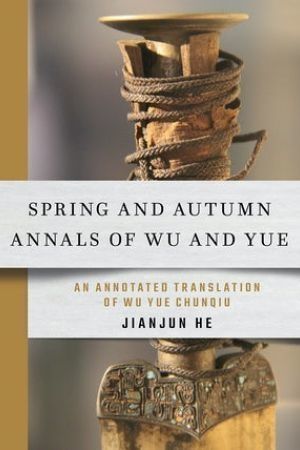
CEAS (Cornell East Asia Series) welcomes author Jianjun He to discuss his book, 'Spring and Autumn Annals of Wu and Yue: An Annotated Translation of Wu Yue Chunqiu'.
Spring and Autumn Annals of Wu and Yue is the first complete English translation of Wu Yue Chunqiu, a chronicle of two neighboring states during China's Spring and Autumn period. This collection of political history, philosophy, and fictional accounts depict the rise and fall of Wu and Yue and the rivalry between them, the inspiration for centuries of poetry, vernacular fiction, and drama.
Jianjun He is an Associate Professor, Chinese Studies at the University of Kentucky. His primary research interest is on early Chinese literature and cultural history with a special emphasis on political conceptualization and social practice of the body in early China. His approach to the materials is interdisciplinary and involves Chinese literature, philosophy, medicine, and paleography. Currently, he is working on a book that draws on this research. In addition to this, he is also interested and trained in the field of medieval and late-imperial studies.
Hosted by CEAS editor, Alexis Siemon. Housed in the East Asia Program, CEAS is an internationally known, award-winning scholarly press. CEAS publishes on subjects relative to the cultures of East Asia, covering topics in history, culture, and society, and translations of literary works.
Additional Information
Program
Einaudi Center for International Studies
East Asia Program
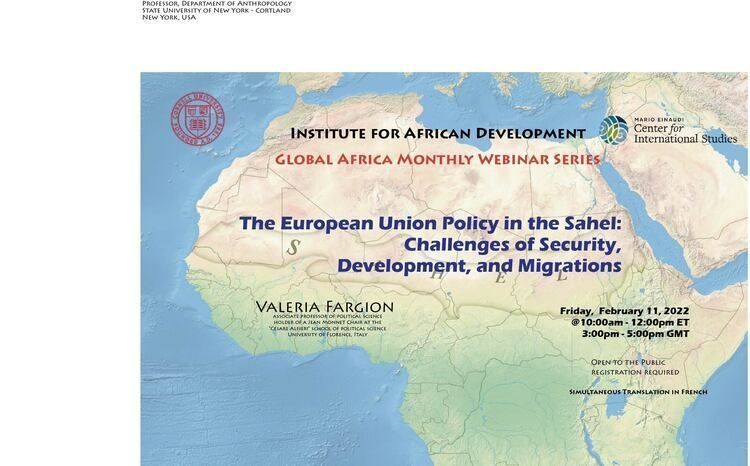
IAD Global Africa Monthly Webinar Series: The European Union Policy in the Sahel Region: Challenges of Security, Development and Migration
February 11, 2022
10:00 am
Friday February 11th, 2022 at 10:00am (EST) / 3:00pm – 5:00pm (GMT). Simultaneous French translation. Zoom registration link here
Introduction of the Series - N’Dri Thérèse Assié-Lumumba is the Director of the Institute for African Development (IAD) and Professor of African and African Diaspora education, Comparative and International education, Social institutions, African social history, and the study of Gender, in the Africana Studies and Research Center at Cornell University.
Chair - Marcel Kitissou is a historian and political scientist. He is a professor in the African Studies Department at the State University of New York at Albany and an IAD Regional Scholar Affiliate. Professor Kitissou previously served as Faculty Director of the Global Humanitarian Action Program and Executive Director of the Africa Faith and Justice Network.
Discussant - Kassim Kone is a Professor in the Department of Anthropology at the State University of New York-Cortland. Professor Kone teaches Introduction to Cultural Anthropology, Peoples of Africa, Introduction to Linguistics, Language in Culture and Society, Development Anthropology, Anthropological Theory, and Research Methods.
Panelists
Valeria Fargion is associate professor of political science, holder of a Jean Monnet Chair at the "Cesare Alfieri" school of political science of the University of Florence, where she teaches "Politics of European Integration" for the master's degree in international relations and European studies. Until 2020 she coordinated the path of European Studies and was responsible for international relations for the School of Political Science. Her priority attention to the international dimension and to the dialogue between scholars from different disciplinary fields and socio-political and cultural contexts have led her over the years to cover coordination roles in a series of transnational academic networks: two mandates (2002-2006 and 2006-2010) as an elected member of the Executive Board of the Research Committee 19 "Poverty, Social Welfare and Social Policy" of the International Sociological Association; from 2002 to 2007, she was a member of the executive committee of ESPANET (the European network of social policy scholars) and from its foundation until 2014, Co-Chair of ESPANET-Italy. From 2008 to 2010 she worked as a national expert for the DG Employment of the European Commission, and from its foundation in 2014 until 2019, she was co-director and then director of Politiche Sociali / Social Policies, published by Il Mulino.
Additional Information
Program
Einaudi Center for International Studies
Institute for African Development
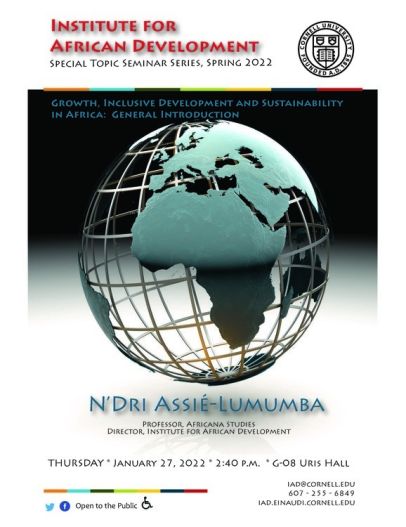
Institute for African Development Seminar Series: Growth, Inclusive Development and Sustainability in Africa: General Introduction
January 27, 2022
9:40 am
Uris Hall, G-08
Issues in African Development Seminar Series examines critical concerns in contemporary Africa using a different theme each semester. The seminars provide a forum for participants to explore alternative perspectives and exchange ideas. They are also a focal activity for students and faculty interested in African development. In addition, prepares students for higher level courses on African economic, social and political development. The presentations are designed for students who are interested in development, Africa’s place in global studies, want to know about the peoples, cultures and societies that call Africa home, and explore development theories and alternate viewpoints on development.
Speaker's bio details can be found here
Zoom registration link here
Additional Information
Program
Einaudi Center for International Studies
Institute for African Development
Contemporary China | Ant Tribes (Yizu) in China's contested Urban Space
April 11, 2022
11:30 am
CCCI welcomes Kimiko Suda, Ph.D. Post Doc researcher, National Discrimination and Racism Monitor (NaDiRa) speaking on, 'Ant Tribes'(Yizu) in China´s contested Urban Space: A Discourse Perspective.'
In 2009 the term "Yizu" (Ant tribe) was selected as one of the ten most popular terms in China´s social media discussions. It was coined by the economist Lian Si to provoke a discussion about the social group of migrant graduates from China´s rural areas, working and living in precarious situations in China´s biggest cities, often in so-called urban villages. The term was taken up by various actors from governmental strategists, scientists, social media influencers, TV-script writers, novelists, to critical media activists. They functionalized the figure of the "Yizu" to tell their version of the story about the "Chinese Dream“, urban transformation processes, social stratification, social mobility, new emerging collective identities, and different shades of the brightness of the future. When analyzing the different variations of the narratives about "Yizu", it all boils down to one question: how to keep your human dignity in a social context, in which an increasing economization and mediatization of almost everything shapes everyday life, and makes it impossible to create a stable, publicly respected and self-determined social identity and position.
Kimiko Suda´s talk is based on a chapter of her book "Das Phänomen Yizu“ (published in September 2021 by transcript)
The Contemporary China Initiative this spring is directed by Arnika Fuhrmann, Associate Professor of Southeast Asian Studies at Cornell University and the author of Ghostly Desires: Queer Sexuality and Vernacular Buddhism in Contemporary Thai Cinema.
This semester's CCCI lecture series is connected to Asian 6623 being taught by Professor Fuhrmann called 'The City.'
CCCI spring 2022 is co-sponsored by the East Asia Program, the Department of History, Asian Studies, The Cornell Society for the Humanities, and the Migrations initiative.
Additional Information
Program
Einaudi Center for International Studies
East Asia Program
Southeast Asia Program
Contemporary China | Provincializing China: Race and Architecture
March 14, 2022
4:45 pm
Rockefeller Hall 122, 122
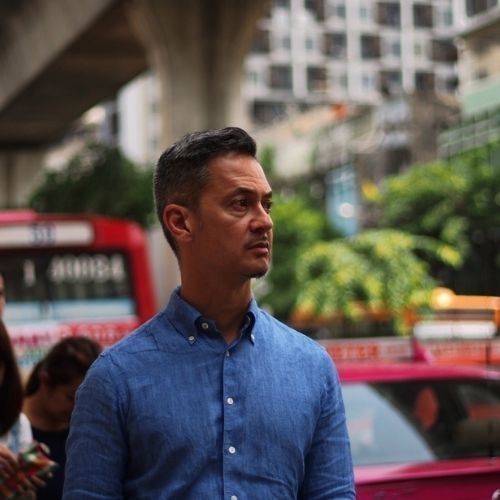
HYBRID event: CCCI welcomes Lawrence Chua, of Syracuse University, to speak on "Provincializing China: Race and Architecture in Colonial-era Penang."
This presentation examines the role of architecture in racialization in 19th and 20th-century Penang. It uses three case studies: the Khoo Kongsi (邱公司) (1850), a Hokkien clan temple; the Penang mansion of Cheong Fatt Tze (1898-1903), deemed “China’s first capitalist and last mandarin”; and the mansions built by wealthy towkay or comprador families on Northam Road in the early 20th century. These three sites allow scholars to tease out the diverse histories of the region that the term “Chinese” often disguises. Racialized identities began to develop in mid-19th-century Penang that sought to consolidate diverse migrant groups into racial categories that could be more easily controlled and manipulated by the colonial state. Architecture became a key instrument in the racialization of urban space and the built environment but it also expressed ambivalence towards official categories of race.
Lawrence Chua, is an Associate Professor at the School of Architecture, Syracuse University.
The Contemporary China Initiative this spring is directed by Arnika Fuhrmann, Associate Professor of Southeast Asian Studies at Cornell University and the author of Ghostly Desires: Queer Sexuality and Vernacular Buddhism in Contemporary Thai Cinema.
This semester's CCCI lecture series is connected to Asian 6623 being taught by Professor Fuhrmann called 'The City.'
CCCI spring 2022 is generously co-sponsored by the East Asia Program, the Department of History, Asian Studies, and the Migrations initiative.
Additional Information
Program
Einaudi Center for International Studies
East Asia Program
Southeast Asia Program
Contemporary China | Everyday Erotics: Older Chinese Lesbians
February 22, 2022
7:30 pm
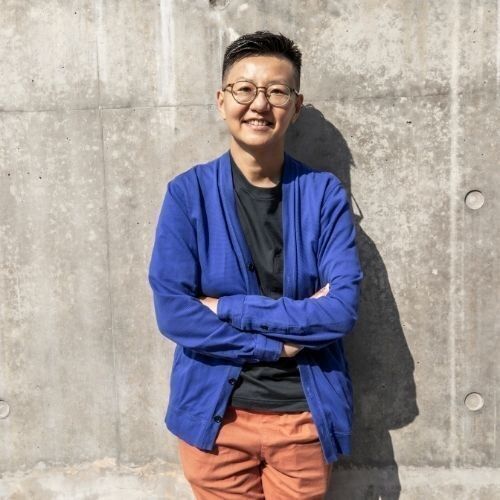
The Cornell Contemporary China Initiative is pleased to start its spring '22 lecture series with Denise Tang of the Lingnan University of HK. Her talk is titled,
'Everyday Erotics: Older Chinese Lesbians and Bisexual Women'
This talk presents the life stories of older Chinese lesbians and bisexual women (born in the 1940s and 50s) in Hong Kong, Singapore, and Taiwan through an interdisciplinary ethnography combining fieldwork and cultural analysis of inter-Asia mediations of femininities and masculinities. I will examine the figure of the Chinese lesbian as both real and imagined in our historical narratives and contemporary social worlds.
Denise Tang, is an Associate Professor, in the Department of Cultural Studies, and the Associate Dean, of the Arts Department at Lingnan University, in Hong Kong.
The Contemporary China Initiative this spring is directed by Arnika Fuhrmann, Associate Professor of Southeast Asian Studies at Cornell University and the author of Ghostly Desires: Queer Sexuality and Vernacular Buddhism in Contemporary Thai Cinema.
This semester's CCCI lecture series is connected to a course Asian 6623 being taught by Professor Fuhrmann called 'The City.'
CCCI spring 2022 is generously co-sponsored by the East Asia Program, the Department of History, Asian Studies, and the Migrations initiative.
Additional Information
Program
Einaudi Center for International Studies
East Asia Program
Southeast Asia Program
Migration in the Age of Pandemics (Lund Critical Debate)

February 16, 2022
9:30 am
The spread of the COVID-19 pandemic has strained the world's healthcare systems and compounded challenges for governments and NGOs dealing with global waves of forced and voluntary migration. These movements of peoples across borders have magnified pressing issues ranging from social and economic inequalities and global climate change to civil war and political unrest. In the United States and worldwide, how can we promote the best public health outcomes while working to protect human rights, manage resources, and address inequality?
With a focus on the intersection of mobility, human rights, and public health, the Einaudi Center's Lund Critical Debate this year brings together one of the world's leading public health policymakers at the World Health Organization with a United States Senator and Chair of the Senate Foreign Relations Committee, who led the Senate's efforts to study the consequences of global forced migration. The event will examine the geopolitical dimensions, the epidemiological aspects, and the humanitarian issues of this critical topic. The debate will illuminate key issues surrounding public health, migration, and racial and social justice at stake globally and nationally.
We welcome questions during the event. Registration is required.
Panelists
Dr. Zsuzsanna Jakab serves as Deputy Director-General of the World Health Organization (WHO), the United Nations agency dedicated to promoting public health and responsible for responding to health emergencies. Prior to her current appointment, Dr. Jakab has held several high-profile national and international public health policy positions: as WHO Regional Director for the European Region (2010-2019); as Founding Director of the European Centre for Disease Prevention and Control (2005-2010); and as State Secretary at the Hungarian Ministry of Health, Social, and Family Affairs (2002-2005), where she managed the country’s preparations for European Union accession in the area of public health.
Sen. Bob Menendez (D-NJ). The son of Cuban immigrants, Sen. Menendez has represented the state of New Jersey in the United States Senate since 2006. As Chairman of the Senate Foreign Relations Committee, he has established himself as a foreign policy leader, seeking to do globally what he has done in New Jersey—supporting the most vulnerable in our society and lending a voice to those least able to speak for themselves. In June 2020, under his leadership, the committee published the report, "Global Forced Migration: The Political Crisis of Our Time." He helped pass the Senate's COVID relief packages and other healthcare legislation as well as playing a key role in shaping immigration reform bills. Prior to his position in the Senate, he served in the U.S. House of Representatives from 1993-2006.
Moderator
Dr. Gunisha Kaur is an assistant professor of anesthesiology who specializes in human rights research. Dr. Kaur serves as the Founding Director of the Human Rights Impact Lab, a Medical Director of the Weill Cornell Center for Human Rights, and a Faculty Fellow at the Mario Einaudi Center for International Studies, where she co-leads the migrations research team. Dr. Kaur’s research interests focus on advancing the health of displaced populations such as migrants, refugees, and asylum seekers. She has used her extensive training and research in neuroscience as an analytical framework to pioneer the study of human rights through scientific methodology. Her research is currently funded by the National Institutes of Health. A foremost leader in scientific investigations into migrant health, Dr. Kaur was selected as a member of the Sigma Xi Scientific Research Honor Society and as a Stephen M. Kellen Term Member at the Council on Foreign Relations. She earned her B.S. from Cornell University in 2006, M.D. from Weill Cornell Medical College in 2010, and her M.A. in medical anthropology from Harvard University in 2015.
About the Debate
This year's Lund Critical Debate is hosted by the Mario Einaudi Center for International Studies and co-sponsored by Migrations: A Global Grand Challenge and in partnership with the Institute of Politics and Global Affairs, with production assistance from eCornell. Established in 2008, Einaudi's Lund Critical Debate Series is made possible by the generosity of Judith Lund Biggs ’57.
Additional Information
Program
Einaudi Center for International Studies
Reppy Institute for Peace and Conflict Studies
East Asia Program
Southeast Asia Program
Latin American and Caribbean Studies
Institute for African Development
Institute for European Studies
South Asia Program
Classical Chinese | Jingya Guo, Ph.D. grad student
February 11, 2022
3:30 pm
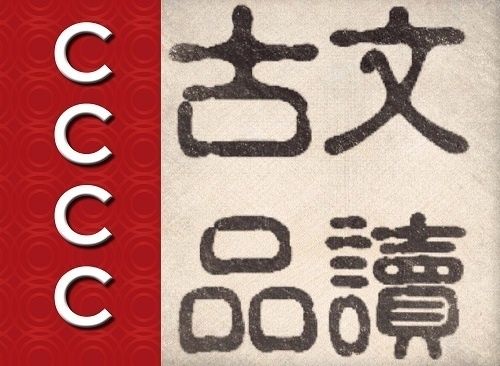
The Cornell Classical Chinese Colloquium (CCCC) is pleased to start spring '22 with a text reading led by Jingya Guo, Ph.D. graduate in the Department of History at Cornell.
The text is titled, “Xinke zengbu Gujin yijian,” 新刻增補古今醫鑑(1576)(1576)
The Cornell Classical Chinese Colloquium (CCCC) 古文品讀 is a reading group for scholars interested in premodern Sinographic (古文) text. The group typically meets monthly during the semester to explore a variety of classical Chinese texts and styles. Other premodern texts linked to classical Chinese in Japanese, Korean, and Vietnamese have been explored. Presentations include works from the earliest times to the 20th century. Workshop sessions are led by local, national, and international scholars. No preparation is required, all texts will be distributed at the meeting.
Additional Information
Program
Einaudi Center for International Studies
East Asia Program
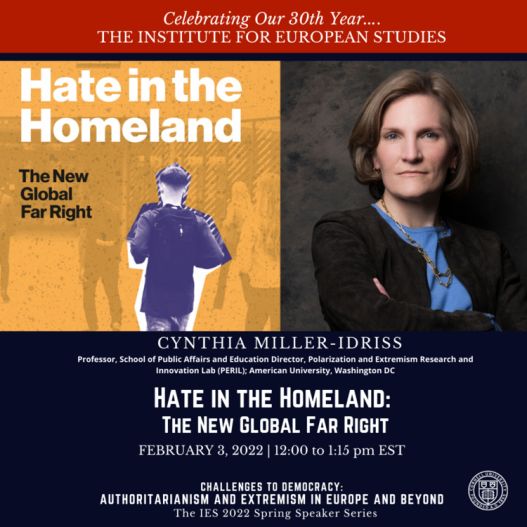
Hate in the Homeland: The New Global Far Right
February 3, 2022
12:00 pm
REGISTER FOR THE EVENT HERE.
Hate crimes. Misinformation and conspiracy theories. Foiled white-supremacist plots. The signs of growing far-right extremism are all around us, and communities around the globe are struggling to understand how so many people are being radicalized and why they are increasingly attracted to violent movements. Cynthia Miller-Idriss shows how tomorrow’s far-right nationalists are being recruited in surprising places, from college campuses and mixed martial arts gyms to clothing stores, online gaming chat rooms, and YouTube cooking channels. She demonstrates how young people on the margins of our communities are targeted in these settings, and how the path to radicalization is a nuanced process of moving in and out of far-right scenes throughout adolescence and adulthood. Most importantly, she offers ideas about the role that all of us – from academics to parents to TV presenters – can work together to halt the march of extremism in the US, Europe, and around the world.
This virtual event is co-sponsored by the Department of Sociology.
Dr. Cynthia Miller-Idriss is a professor at the American University in Washington, DC, where she directs the Polarization and Extremism Research and Innovation Lab (PERIL) in the Center for University Excellence (CUE). Dr. Miller-Idriss has testified before the U.S. Congress and regularly briefs policy, security, education and intelligence agencies in the U.S., the United Nations, and other countries on trends in domestic violent extremism and strategies for prevention and disengagement.
She appears regularly in the media as an expert source and political commentator, including recent appearances on CNN with Fareed Zakaria, PBS News Hour, MSNBC Hardball with Chris Matthews, The Today Show, and Good Morning America as well as in global media outlets in over a dozen countries. She is also a regular columnist for MSNBC. Her most recent book is Hate in the Homeland: The New Global Far Right (Princeton University Press, 2020).
Please use discount code CMID to get 30% off of Cynthia's book!
Link to paperback: https://press.princeton.edu/books/paperback/9780691222943/hate-in-the-h…
Link to hardcover: https://press.princeton.edu/books/hardcover/9780691203836/hate-in-the-h…
Additional Information
Program
Einaudi Center for International Studies
Institute for European Studies
Gokul Joshi and Revolutionary Asceticism among Nepali “People’s Singers”

May 2, 2022
12:15 pm
Talk by Anna Stirr
Gokul Joshi (1930-1961) was a radical progressive poet and singer who was born in poverty and lived an itinerant life in Nepal and India in the 1940s and 50s, performing his songs and poetry and organizing workers and peasants against their exploiters wherever he went. He was an exceptionally talented exponent of the tradition of extemporaneous poetry and song in folk poetic meters, which at the time was strongly associated with the lower classes and disparaged by elites. Those elites who were beginning to broaden their outlook, like the poet Laxmiprasad Devkota, recognized in Joshi a talent rivalling their own, and many tried to get him into national politics. Yet Joshi had no patience for intellectual society, employment, political institutions, or the householder life, and preferred direct political action and the life of the road. Because of his ascetic-like lifestyle, his rejection of institutions, and the suppression of his works by his rivals, the details of his life are somewhat of a mystery and his works have been hard to find for decades. This has allowed a mythology to grow up around the figure of Gokul Joshi: the “true people’s singer,” a modernist ascetic dedicating his life to improving the lot of the people through poetry and song. In this presentation I look at how stories of Gokul Joshi’s life have influenced the careers of subsequent radical progressive performers, and how the idea of the “true people’s singer” has developed, in light of masculine traditions of Hindu asceticism, communist New Man theory, and changing political-economic conditions in Nepal. I address how the idea of the “true people’s singer” may have contributed to a constrained recognition of performers whose contributions did not fit that mold. I argue that Gokul Joshi may have created the role of the folk-style people’s singer in the drama of Nepali progressive politics, but that others now have the opportunity to expand it to newer ways of being revolutionary.
Dr. Stirr is Associate Professor in Asian Studies at the University of Hawaii at Manoa. Anna’s research focuses on South Asia, particularly on Nepal and the Himalayan region. She is currently working on two projects that deal with love, intimacy, and politics in Nepal. The first looks at improvised dohori question-answer songs as culturally intimate, gendered expressions of ideas of nation and heritage, within a cycle of migration and media circulation that spans the globe. The second chronicles the history of Nepal’s politically oppositional “progressive song” from the 1960s to the present, with a focus on ideas of love, development, and communist thought as interrelated ways of imagining a better future. Articles from these projects have appeared in various journals and edited volumes. Anna also maintains an active research interest in the relationship between music, religion, politics and public culture in South Asia and the Himalayas. Along with teaching and researching about music, Anna is also active as a performer. After a bachelor’s degree in western classical flute performance, she has studied Hindustani classical bansuri flute with Steve Gorn and Jeevan Ale, and has learned the folk style of bansuri performance through musical interaction with many Nepali performers during her fieldwork. As a singer, she has studied the Hindustani classical tradition with Prabhu Raj Dhakal in Nepal and Ustad Mehboob Nadeem in London, and she learned Nepali folk and dohori song as she learned the flute styles, in the informal oral tradition. Her formal instruction in Nepali folk music has been with Khadga Bahadur Budha Magar on the madal drum, and she believes that knowledge of percussion provides a firm foundation for a broader grasp of any musical style. She is working on compiling and translating the Nepali folk music teaching materials created by her teachers as well as the late musicologist Subi Shah.
Additional Information
Program
Einaudi Center for International Studies
South Asia Program