
Einaudi Center for International Studies
Borders, Captivity, and Memory in Transnational Italy and the Mediterranean: Day 1
March 18, 2022
9:45 am
Over two days, scholars, writers, practitioners, activists, and students across institutions are coming together virtually to explores the relationship between borders, captivity, and memory, and how it shapes the racialization of migration and the construction of national identity.
The first day of the symposium is March 18, 2022 and the second day is April 8, 2022.
Day 1 Schedule:
Welcome and Roundtable 1 Cultural, Legal, and Sociological Perspectives on Racial Justice in Italy and the Mediterranean, 9:45–11:30 a.m. (ET)
Keynote: Racial Justice and the Black Mediterranean, 12–1:30 p.m. (ET)
Speakers: Camilla Hawthorne and Angelica PesariniDiscussants: Simone Brioni and Teresa FioreStudent Reflection Session, 1:30–2:15 p.m. (ET)
Open to undergraduate and graduate students at any institution
Facilitators: Simone Brioni and Teresa FioreRoundtable 2: “Italian Others”: Histories of Racialized Migration and Diaspora between the Nineteenth Century and the Present, 2:45–4:15 p.m. (ET)
This symposium is organized through the Central New York Humanities Corridor (LLC35), with co-sponsorship from Montclair State University Inserra Chair in Italian and Italian American Studies, the AAIS Critical Race Studies Caucus, Cornell's Migrations initiative, the Mario Einaudi Center for International Studies and its Institute for European Studies, the Cornell Department of Romance Studies, the University of Rochester's Humanities Center, and the Department of Humanities in the Eastman School of Music.
Additional Information
Program
Einaudi Center for International Studies
Institute for European Studies
Toilers' Movements, Freedom Dreams: Class, Gender, and Caste Struggles in India

April 27, 2022
4:45 pm
115 Ives Hall
By Bharat Patankar
Bharat Patankar is an intellectual-activist based in India. A recent New York Times obituary of his life-partner Gail Omvedt, noted that Patankar has led Shramik Mukti Dal (toilers' liberation league), "an organization credited with launching some of the largest organized mass movements against injustices experienced by workers in rural India." He comes from an intergenerational heritage which links the nineteenth-century visions of Savitribai Phule and Karl Marx; with those of the 1940s Prati Sarkar parallel government as well as B.R. Ambedkar; to the new social movements facing the 1970s Emergency; to the contentions of 21st-century India. As people today face a regime of intensified communal, brahmanist and patriarchal exploitation — Patankar works to build alternatives at the intersection of economic, political as well as cultural fronts. Patankar will reflect on his decades leading farmer-labor movements in land and water struggles, over development and climate concerns—while forging dreams of a radically transformed economy and ecology. And he will speak to the theory and practice of leftist and liberation work—forging solidarity across caste, gender, religion and class struggles, towards emancipation for all.
Bharat Patankar is an activist-intellectual based in India. Patankar has led mass-based social movements for decades, particularly through Shramik Mukti Dal (toilers' liberation league). SMD has organized farmers and laborers across Maharashtra, India’s second-most populous state with a population of over one-hundred million. He is one of the architects of a prevailing framework for equitable water distribution. He has organized drought-affected villages and dam-displaced communities, towards alternative development models with respect to dams and irrigation. These movements link working-class livelihood needs with feminist, anticommunal and anticaste (Dalit-Bahujan-Adivasi) solidarity commitments. Patankar's articles have appeared in journals such as Race & Class, Bulletin of Concerned Asian Scholars, Critical Asian Studies, and Economic & Political Weekly. His books include For Human Liberation, The Songs of Tukoba (with Gail Omvedt), and Sakhi: Poems.
Additional Information
Program
Einaudi Center for International Studies
South Asia Program
The Sea Forsaken - Rabindrinath Tagore Lecture in Modern Indian Literature

April 22, 2022
4:45 pm
Kahin Center
By Cheran
In this lecture and reading, Cheran will reflect on the important but ambiguous relationship with the sea from both personal and communal perspectives. Drawing on and reading from his various poems about the sea and other water bodies, he will chart an alternative imagination for Tamil identities.
Dr. R. Cheran is Tamil Canadian academic, poet, playwright and journalist. He is a professor at the University of Windsor in Canada. He has authored over fifteen books in Tamil, and his work has been translated into twenty languages. Several volumes of his work have been published in English translation, including The Second Sunrise (Translated by Lakshmi Holmstrom, 2010), In a Time of Burning (Translated by Lakshmi Holmstrom and Sascha Ebeling, 2013) and You Cannot Turn Away (Translated by Chelva Kanaganayakam, 2011). His poems in English translation have also been published in numerous literary magazines, such as Bomb (New York), Modern Poetry in Translation, Many Mountains Moving, Exiled Ink, Mantra Review, and Talisman. His poems have been included in several anthologies, including Singing in the Dark: An Anthology of Lockdown Poems (2020), Many Roads Through Paradise: Sri Lankan Literature (edited by Shyam Selvadurai, 2014), and In Our Translated World: Global Tamil Poetry (edited by Chelva Kanaganayakam, 2014).
Cheran was the recipient of the International Poetry Award from ONV Kurup Foundation in Dubai in 2017. He has performed is poetry at various International Writers’ festivals in the United Kingdom, Singapore, the US, Indonesia, India, Sweden, the Netherlands, Canada, Ramallah, West Bank, Dubai and Mexico. His plays in English language have been produced and performed in Toronto, Canada, New York, Chicago and New Jersey in the US. Singapore’s modern dance group Chowk has produced and performed a dance play based on his poems titled “The Second Sunrise”. The Second Sunrise was performed at the Singapore International dance festival, and Washington’s Kennedy Centre for the Arts.
The Rabindranath Tagore Lecture Series in Modern Indian Literature is made possible by a gift from Cornell Professor Emeritus Narahari Umanath Prabhu and his wife, the late Sumi Prabhu. Inspired by Rabindranath Tagore’s expansive imagination, unbounded by geopolitical boundaries, the series has regularly featured prominent writers from across South Asia and its diasporas.
Additional Information
Program
Einaudi Center for International Studies
South Asia Program
Southeast Asia Program
Tracking Anti-immigrant Hate Speech

Einaudi Seed Grant Supports Xenophobia Meter
Beth Lyon and her collaborators are using machine learning to develop a website that tracks xenophobic hate speech on Twitter.
Additional Information
Institute for African Development Seminar Series: Urban Land Management
February 3, 2022
2:40 pm
Uris Hall, G-08
Issues in African Development Seminar Series examines critical concerns in contemporary Africa using a different theme each semester. The seminars provide a forum for participants to explore alternative perspectives and exchange ideas. They are also a focal activity for students and faculty interested in African development. In addition, prepares students for higher level courses on African economic, social and political development. The presentations are designed for students who are interested in development, Africa’s place in global studies, want to know about the peoples, cultures and societies that call Africa home, and explore development theories and alternate viewpoints on development.
Register here
Speaker bio details here
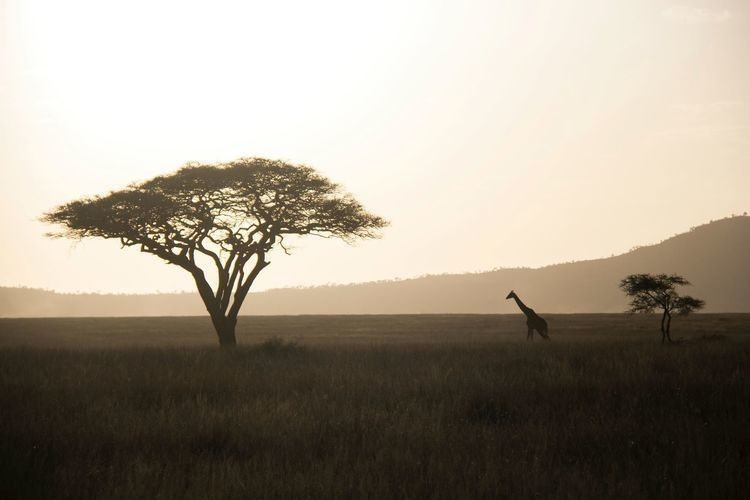
(photo by Justin Lane)
Additional Information
Program
Einaudi Center for International Studies
Institute for African Development
Classical Chinese | Stephen Teiser, Princeton University
May 20, 2022
3:30 pm
Rockefeller Hall, Asian Studies Lounge 3rd Floor
The Cornell Classical Chinese Colloquium (CCCC) is pleased to welcome Stephen Teiser, of Princeton University to lead our final CCCC text reading of the semester. HYBRID
He will present one or two Chinese Buddhist liturgical texts (zhaiwen 齋文) composed largely in parallel prose (pianliwen 駢儷文 or siliuwen 四六文)
The Cornell Classical Chinese Colloquium (CCCC) 古文品讀 is a reading group for scholars interested in premodern Sinographic (古文) text. The group typically meets monthly during the semester to explore a variety of classical Chinese texts and styles. Other premodern texts linked to classical Chinese in Japanese, Korean, and Vietnamese have been explored. Presentations include works from the earliest times to the 20th century. Workshop sessions are led by local, national, and international scholars. No preparation is required, all texts will be distributed at the meeting.
Additional Information
Program
Einaudi Center for International Studies
East Asia Program
Classical Chinese | Tristan Brown, MIT
May 6, 2022
3:30 pm
The Cornell Classical Chinese Colloquium (CCCC) is pleased to welcome Tristan Brown, of MIT to lead our next CCCC text reading titled, "Fengshui in Texts from Qing China."
The Cornell Classical Chinese Colloquium (CCCC) 古文品讀 is a reading group for scholars interested in premodern Sinographic (古文) text. The group typically meets monthly during the semester to explore a variety of classical Chinese texts and styles. Other premodern texts linked to classical Chinese in Japanese, Korean, and Vietnamese have been explored. Presentations include works from the earliest times to the 20th century. Workshop sessions are led by local, national, and international scholars. No preparation is required, all texts will be distributed at the meeting.
Additional Information
Program
Einaudi Center for International Studies
East Asia Program
Contemporary China Initiative: Instinct and Society
April 25, 2022
4:45 pm
Goldwin Smith Hall, GSH64
CCCI welcomes Tani Barlow, the George and Nancy Rupp Professor of Humanities and Professor of History at Rice University to speak on, "Instinct and Society."
When Li Zehou burst onto the scene during the 1980s ‘culture fever’ he dragged back in altered form a much earlier foundational debate over evolution and instinct theory launched in the new social theory and human science movement during the May Fourth era. Barlow's general research question now is how society got ontologized a century ago. How did proof of “society,” a materialized model, get so embedded in our explanatory frameworks that we have trouble thinking outside of it, even though we regularly confront questions it cannot resolve.
The Contemporary China Initiative this spring is directed by Arnika Fuhrmann, Associate Professor of Southeast Asian Studies at Cornell University and the author of Ghostly Desires: Queer Sexuality and Vernacular Buddhism in Contemporary Thai Cinema.
This semester's CCCI lecture series is connected to Asian 6623 being taught by Professor Fuhrmann called 'The City.'
CCCI spring 2022 is co-sponsored by the East Asia Program, the Department of History, Asian Studies, the Cornell Society for the Humanities, Comparative Literature, and the Migrations Initiative.
Additional Information
Program
Einaudi Center for International Studies
East Asia Program
Southeast Asia Program
Classical Chinese | Wang Jinping, National University of Singapore
April 15, 2022
9:00 am
The Cornell Classical Chinese Colloquium (CCCC) is pleased to welcome Wang Jin Ping, of the National University of Singapore to lead our next CCCC text reading:
The 1265 Dual Steles: Narrating, Visualizing, and Gendering a Quanzhen Daoist Lineage on Stone
The Cornell Classical Chinese Colloquium (CCCC) 古文品讀 is a reading group for scholars interested in premodern Sinographic (古文) text. The group typically meets monthly during the semester to explore a variety of classical Chinese texts and styles. Other premodern texts linked to classical Chinese in Japanese, Korean, and Vietnamese have been explored. Presentations include works from the earliest times to the 20th century. Workshop sessions are led by local, national, and international scholars. No preparation is required, all texts will be distributed at the meeting.
Additional Information
Program
Einaudi Center for International Studies
East Asia Program
Cold War Reckonings: In the Shadow of Solzhenitsyn UPDATE: ONLY VIRTUAL
April 1, 2022
4:00 pm
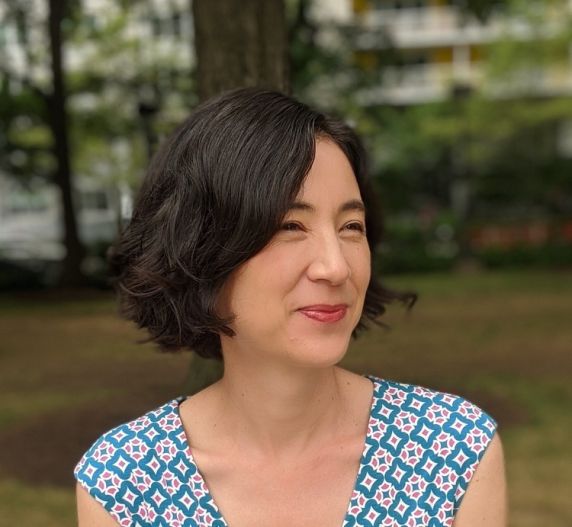
Jini Kim Watson, Associate Professor of English and Comparative Literature at New York University speaks on, 'Cold War Reckonings: In the Shadow of Solzhenitsyn.' UPDATE: ONLY VIRTUAL Register for Zoom below.
How did the Cold War shape political modernity in the decolonizing world, and what do literature and literary networks reveal about such political contestations and their afterlives? In the first half of the presentation, Kim gives an overview of her new book, "Cold War Reckonings: Authoritarianism and the Genres of Decolonization" (Fordham UP, 2021), which examines cultural production that emerges from, and reflects upon, the entanglement of the Cold War and decolonization in East and Southeast Asia.
In the second half, she considers several high-profile dissident writers from the region: Pramoedya Ananta Toer, Kim Chi-ha, and Ninotchka Rosca. Kim argues that these figures challenge Cold War liberal, human-rights notions of the dissident Third World writer via their emphases on incomplete decolonization and bipolar economic restructuring. Such an analysis, suggests Kim, helps us parse the way Cold War exigencies reshaped notions of literary and political freedom in postcolonial Asia.
This event is facilitated by Bonnie Chung, a Ph.D. student in the Department of Literatures in English at Cornell University.
Co-sponsored by the Asian American Studies Program and Literatures in English Department.
Additional Information
Program
Einaudi Center for International Studies
East Asia Program
Southeast Asia Program