
Einaudi Center for International Studies
Futures Past: Revolution, Communism, and Decolonization in Colonial India
April 11, 2022
11:00 am
Talk by Ali Raza
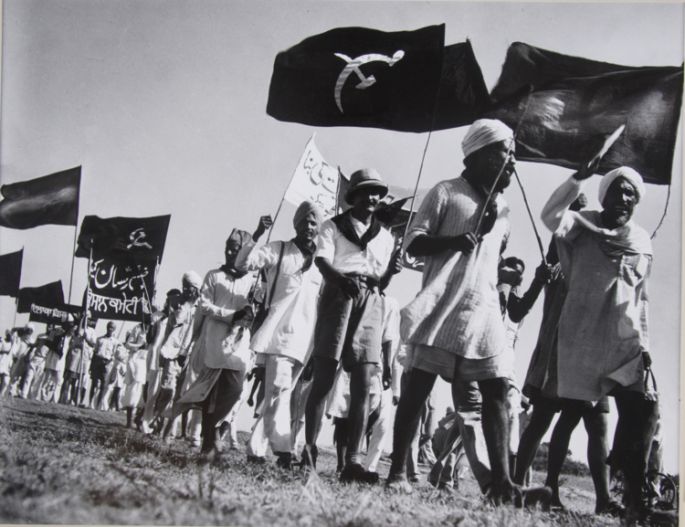
This work reveals the lives, geographies, and anti-colonial struggles of Indian revolutionaries and how they sought to remake the world. Driven by the utopian dreams of Communist Internationalism, Indian communists yearned for a revolutionary upheaval that would overthrow European imperialisms and radically transform their societies and the world. In doing so, they joined millions around the world equally invested in the transformative project of Communist Internationalism, by far one of the largest, and most radical, anti-colonial projects of the twentieth century. I present this global story from the vantage point of South Asia from the 1910s to the 1950s.
Ali Raza, Associate Professor, is a historian of South Asia at the Lahore University of Management Sciences (LUMS). His research and teaching interests include the social and intellectual history of South Asia, comparative colonialisms, 20th century internationalisms, and decolonization. Raza’s work has appeared in Comparative Studies of South Asia, Africa, and the Middle East; South Asia: Journal of South Asian Studies; Itinerario; South Asian History and Culture; and Contemporary South Asia. He is the co-editor of The Internationalist Moment: South Asia, Worlds, and World Views, 1917-39 (Sage, 2014) and the author of Revolutionary Pasts: Communist Internationalism in Colonial India. (Cambridge, 2020; Folio Books 2021; Tulika Books 2022)
Additional Information
Program
Einaudi Center for International Studies
South Asia Program
Collision Amid Collusion: Women’s Activism Across the Wings of Pakistan
April 18, 2022
11:00 am
Talk by Elora Shehabuddin
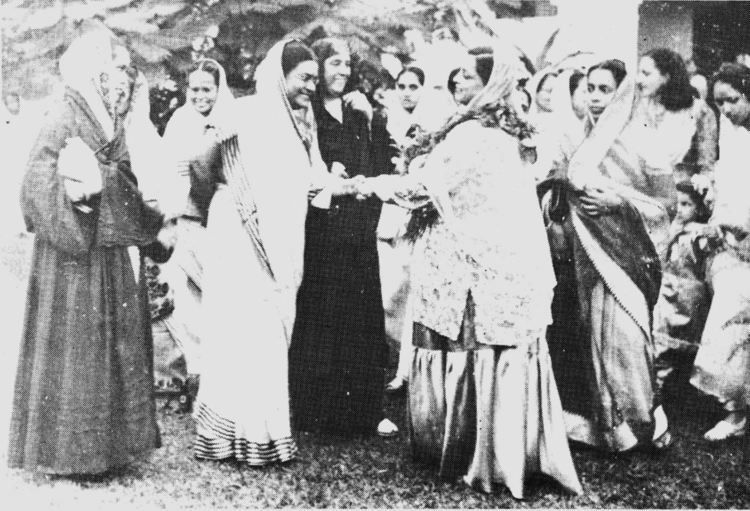
This paper analyzes the relationship between women’s rights advocates in East and West Pakistan in 1947–71, in an effort to contribute to the small but growing body of scholarship complicating Bangladesh’s linear nationalist narrative as well as recent scholarship on the history of united Pakistan in this period that pays serious attention to the country’s eastern wing. I show how, during the Pakistan amal, not only did many Bengali women engage with the central state as Pakistani citizens alongside West Pakistani women activists in order to elicit resources and favorable policies, but they also took pride in being citizens of a new nation that had overthrown its colonial rulers. I show this engagement with the state through their involvement in electoral politics, their activism for the reform of personal laws, and their pride in the nation in their willingness to serve as representatives of Pakistan in delegations overseas, even as they organized and published in opposition to state policies such as the imposition of Urdu as the state language and growing economic and political disparities between the two wings.
Elora Shehabuddin is Professor of Transnational Asian Studies and Core Faculty in the Center for the Study of Women, Gender, and Sexuality at Rice University. She received her A.B. in social studies from Harvard University and Ph.D. in politics from Princeton University. She is the author of Sisters in the Mirror: A History of Muslim Women and the Global Politics of Feminism (California, 2021), Reshaping the Holy: Democracy, Development, and Muslim Women in Bangladesh (Columbia, 2008), and Empowering Rural Women: The Impact of Grameen Bank in Bangladesh (Grameen Bank, 1992). She has published in numerous journals and edited books and co-edited a special issue of Feminist Economics on “Gender and Economics in Muslim Communities.” Her research has been supported by the National Endowment for the Humanities, the Carnegie Corporation, the Woodrow Wilson Foundation, the American Association of University Women, the Social Science Research Council, the Andrew W. Mellon Foundation, and the US Institute of Peace. Professor Shehabuddin currently serves on the editorial board of the Journal of Bangladesh Studies, as an Associate Editor of the Encyclopedia of Women and Islamic Cultures (Brill), and as an elected member (and current chair) of the South Asia Council of the Association for Asian Studies.
Additional Information
Program
Einaudi Center for International Studies
South Asia Program
Anthropology Colloquium: Austin Lord
April 15, 2022
3:00 pm
Herding in the Wake: Afterlives and Material Ethics Within Unsettled Moral Ecologies
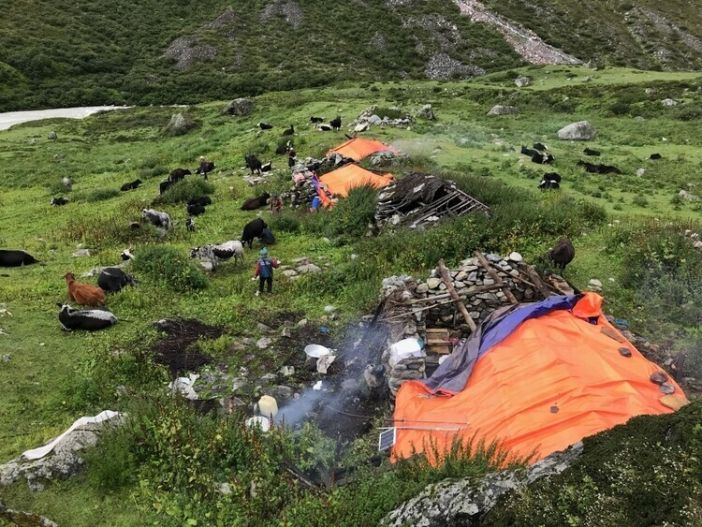
Herding was still a vibrant aspect of life in the Langtang Valley at the moment the Gorkha Earthquake struck Nepal on April 25, 2015, triggering a series of co-seismic avalanches and landslides that killed nearly half of the herding community and over four hundred yak and yak hybrids. As the aftermath continued to unfold, more and more herders sold their animals and left herding, and five years later as the COVID-19 pandemic began to unfold, only twelve herders remained. Many Langtangpas speak of herding as a lifeway at risk, since most of those who remain in the gorey (herding hut) are elders and the younger generations have no interest in carrying on this work - they fear that the potential ‘end’ of herding is just a few years away.
In this talk, based on a chapter of my forthcoming dissertation, I offer an ethnographic portrait of “living in the gorey” (herding hut) which examines the seven year period in the the disaster - a critical moment in the history of Langtangpa herding suffused with the losses of 2015, historically constituted precarities, the struggles of post-disaster recovery, nostalgia for herding pasts, and even feelings of anticipatory grief. The current crisis in herding, as many Langtangpas see it, is an ethical one that reflects broader concerns about the erosion of traditional lifeways and deteriorating social relations. By contextualizing current concerns within the historical morphologies of herding in Langtang and ongoing debates about the social and material impacts of the tourism economy, I show how the remaining goreypa are herding in the wake of many different events still taking their toll within unsettled moral ecologies. How do people conceptualize and anticipate the uncertain futures of herding amid broader patterns of development, vulnerability, and intergenerational change?
Austin Lord is a PhD Candidate in the Department of Anthropology whose research focuses on lived experiences of disaster and aftermath, questions of time and temporality, political ecologies of the water-energy nexus, infrastructural politics, the impacts of climate change and climate science, and the construction of environmental knowledge in the Himalayan region. Austin's dissertation research focuses on the afterlives of disaster in the Langtang Valley of Nepal – where a massive co-seismic avalanche occurred during the 2015 Gorkha earthquake. Drawing from over five years of research and volunteer work, his work carefully examines the ways that the Langtangpas conceptualize recovery, resilience, and uncertainty as they seek to rebuild their lives in the wake of an unthinkable disaster.
This event is co-sponsored by the South Asia Program. Thank you.
Additional Information
Program
Einaudi Center for International Studies
South Asia Program
An ‘Unlawful Object of Gathering’: Stealing a Corpse in 1927 Delhi
February 7, 2022
11:00 am
Talk by Kelsey Jane Utne
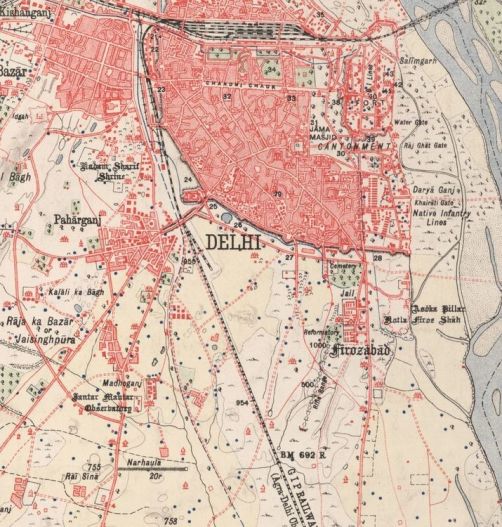
This talk explores the disrupted burial of convicted murderer Abdul Rashid in 1927 in order to understand how urban expansion altered and constrained commemorative praxis in late colonial India. Because of the subsequent criminal prosecutions for corpse theft and official inquiry, we have access to an incredibly detailed account of the movements of the police, the so-called “mob,” and Rashid’s body through space. In turn, the case study reveals an alternative necrogeography imagined by Delhi’s Muslim community – one closed off by the built infrastructure of the colonial city.
Kelsey J. Utne is a prison educator, digital humanities scholar, and 2021-22 ACLS Dissertation Completion Fellow in Modern South Asian History at Cornell University. She is finishing her dissertation, Corpse Politics: Disposal and Commemoration of the Indian Interwar Dead.
Additional Information
Program
Einaudi Center for International Studies
South Asia Program
“Perspectives on Latin American Issues: Mining Disaster in Brazil and Environmental Agenda in Chile,” LACS Seminar Series
April 11, 2022
1:00 pm
Stimson Hall, G01
Andressa Lanchotti
The Minas Gerais State Prosecutor’s Office actions in search for reparation for the Vale’s mining disaster in Brumadinho
On January 25, 2019, three tailings’ dams owned by Vale, a Brazilian multinational corporation which is the largest producer of iron ore and nickel in the world, located in the Córrego do Feijão mine, in the city of Brumadinho, Minas Gerais, collapsed, releasing more than 10 million m³ of tailings in the Paraopeba River, destroying the flora and fauna found along the way, and killing 270 people.
Since the disaster, the Minas Gerais State Prosecutor’s Office took several actions searching for reparation to the affected communities, to restore the disaster-affected environment and to prevent future mining disasters. As a result of this work, the recovery of the Paraopeba hydrographic basin is currently at an advanced stage and concrete improvements were achieved in the state control system of mining tailings disposal.
Andressa Lanchotti has a bachelor’s degree in Law from the University of São Paulo, Brazil (1998), master’s degree in international environmental law from the Limoges University, France (2008) and master’s degree in Environmental Engineering from the Federal University of Ouro Preto, Brazil (2010). She holds a PhD in Fundamental Rights and Public Liberties from the University of Castilla-La Mancha, Spain (2013), and conducted postdoctoral research at the Postdoctoral Program in Democracy and Human Rights of the University of Coimbra, Portugal (2018).
Since November 1999, she is a public prosecutor working for the Minas Gerais State Prosecutor’s Office (MPMG), where she served as environmental prosecutor, handling mostly conflicts related to mining, housing and urban development and their environmental impacts. Her work includes research, mediation, negotiation, conflict resolution, identify and initiate civil and criminal complaints and prosecutions. She also served as Coordinator of the Support Center for the Environment (CAOMA) and coordinated the task forces that were created by the MPMG to mitigate the impact of the mining disasters in Brazil (2016 – 2020).
She taught courses and created the Post-Graduate Course "Environmental law and Sustainability: Theory and Practice”, offered by the Minas Gerais State Prosecutor’s Office Center of Studies and Professional Development (CEAF/MPMG) and Dom Helder Law School (2017-2018). She is also the author and co-author of books and author of several articles about environment, human rights, and sustainable development.
She is current a Humphrey Fellow at Cornell University, where her field of study is natural resources, environmental and climate change.
Pedro Rossi (Chile)
The Environmental agenda in Chile, new legislations and future challenges
Chile is one of the most vulnerable countries to climate change in Latin America, with high levels of pollution and a huge water crisis. That’s why the Congress and the Ministry of Environment have been working on different legislations to improve the country’s environmental standards. Among the new laws that has been approved in the last years we can mention: the urban wetlands law, the single use plastics law, and the light pollution law. There are also some important bills waiting to become Law, like the biodiversity law bill and the framework law on Climate Change.
Chile is also in the middle of a constituent process that is going to restructure a large part of the legal order, especially in the environmental area, so it’s important to analyze not only the legislative reforms but also some of the main debates in the Constitutional Convention, because the new constitution will set the basis for the future legislation.
Pedro Rossi is a Lawyer, with a bachelor’s degree from the Pontifical Catholic University of Valparaíso, Chile (2013) He is a problem-solver professional with experience in the public sector, in areas such as environmental law, science and legislative processing.
Since 2010, he started worker as a junior advisor in the Ministry General Secretary of The Presidency, after getting his degree he worked for five years at the National Commission of Scientific and Technological Research (CONICYT), solving legal problems of researchers and centers financed by the State of Chile. Then, he returned to the Ministry of the Secretary General of the Presidency where he was in charge of the fulfillment of the legislative Government plan.
The last three years he worked as a legislative advisor in the Minister of Environment, where he was responsible of leading the environmental agenda of the Ministry at the Congress and advise the Minister and the Undersecretary. He had to coordinate, elaborate and study the bills and motions related to the top priorities of the environmental agenda. Likewise, he oversaw conducting the political debate between the Executive and Legislative branches and handling parliamentary motions within the lawmaking process of those bills.
He is current a Humphrey Fellow at Cornell University, where his field is Natural Resources, Environmental Policy and Climate Change.
Additional Information
Program
Einaudi Center for International Studies
Latin American and Caribbean Studies
"Composing Toxic Landscapes: an Evidential Ethnography of the Destruction of the Amazon Forest and the Creation of Soy Monocultures," by Fábio Zuker, LACS Seminar Series
April 21, 2022
4:30 pm
G-01 Stimson Hall
The Lower Tapajós River is a multiethnic territory located in the heart of the Brazilian Amazon Forest, in the Pará state. This region is the dwelling place of 13 indigenous peoples, hundreds of traditional riverside communities, and dozens of quilombos (formerly enslaved communities with a background of anti-racist struggle). One of the main perils they are now facing is the expansion of both soy monoculture plantations and the infrastructure the exportation of the grains demands. In this presentation, I want to approach the process of creating a soy monoculture landscape over the place where a multispecies tropical forest existed, by following two traces left behind in this process: the remaining of forests and communities as a "farce" and the emergence of viruses (especially hantavirus). I will particularly focus on the role of pesticides in emptying communities and allowing more space for soy plantations to expand.
Fábio Zuker is an anthropologist and journalist. He is the author of The Life and Death of a Minke Whale in the Amazon (forthcoming May/22 with Milkweeds editions). He holds a master’s degree from Paris’s School for Advanced Studies in Social Sciences and is a PhD candidate in Social Anthropology at the University of São Paulo. As a journalist, he has been three times a Pulitzer Center grantee and has written articles for different media outlets, including Thomson Reuters Foundation and Mongabay.
Additional Information
Program
Einaudi Center for International Studies
Latin American and Caribbean Studies
Matthew Morgan

Administrative Coordinator
Matthew Morgan provides direct administrative support for finance and HR.
Additional Information
Emerging Markets Institute Conference 2022: Reinventing Global Value Chains
November 4, 2022
9:00 am
Verizon Executive Education Center
Registration Link: emiconference.com
The Emerging Markets Institute Conference 2022
Reinventing Global Value Chains
The Cornell Emerging Market Institute Conference is the United States’ leading annual forum for discussing the ongoing trends and phenomena in our world’s rapidly growing emerging markets. Bringing together heads of the world’s largest multilateral institutions and preeminent business, the conference fosters engaging discussions on economic development and this year, specifically, through the lens of global supply chains.
The Conference is hosted at Cornell’s landmark Cornell Tech campus on Roosevelt Island in New York City and will feature a variety of key-note speakers, thought-provoking panel discussions, networking sessions, and two sponsored competitions: the Cornell EMI Mark Mobius Pitch Competition and the Cornell EMI Corning Case Competition. The Conference also marks the launch of the Institute’s Annual Report, a collection of research and articles from the past year developed by researchers within Cornell as well as the Emerging Multinationals Research Network in collaboration with OECD Development Center, UNCTAD, IFC, and Inter-American Development Bank.
The theme of the 2022 Conference, “Reinventing Global Value Chains”, invites speakers to envision the connections that are evolving between industries, governments, and environments, which have compounding effects on trade and economic development, especially as we reach into a post-pandemic world riddled with uncertainty.
Additional Information
Program
Latin American and Caribbean Studies
Einaudi Center for International Studies
Muslim Environmental Ethics as Environmental Justice, Anna Gade

April 27, 2022
4:45 pm
This presentation builds on material in the book, Muslim Environmentalisms (Columbia University Press, 2019), which explains how the idea of "the environment" is an ethical idea. Anthropogenic ecological change considered as a matter of environmental justice (EJ) means developing new scales and connections of theory and practice as environmental ethics. According to Gade's argument, Islam's consequential relations relate not only theory to practice, law to ethics, but also this world to the next in the context of challenges like climate justice. Drawing material from the world's most populous Muslim-majority nation, Indonesia, and elsewhere, Gade presents an overview of current perspectives in Islamic environmental thought and activism that render contemporary Muslim environmental ethics as EJ, and thereby further decolonize the field of Environmental Studies.
Additional Information
Program
Einaudi Center for International Studies
Southeast Asia Program
Black American Muslims and African Sufi Orders

April 12, 2022
12:00 pm
In the late 1920s, Black American-led Muslim congregations and organizations began to emerge in around New York City. By the 1970s, the city was home to a Black Muslim community that was culturally rich and ideologically diverse. Fueled by an enduring interest in African Muslim Diasporic pasts, some of the city’s Black American Sunni Muslims sought to cultivate tangible relationships with African Muslims and lineages of African Islamic scholarship.
This resulted in the creation of new congregations whose members participated in global networks associated with a handful of African Sufi orders. The Black American Muslims who joined these orders often lived transnationally, splitting their time between New York City and the African continent.
This talk by Rasul Miller (UC Irvine) explores the emergence of two of the city’s oldest and largest Black American Muslim communities affiliated with African Sufi orders – the Senegalese-based Tijani order and the Sudanese- based Burhani order. It considers how African immigration to the Unites States impacted Black American Muslims’ understandings of Islam in Africa, and interrogates the intro-communal tensions that arose as Black American Muslims debated the merits of orthodox Muslim universalism and cultural particularism.
Additional Information
Program
Einaudi Center for International Studies