
Einaudi Center for International Studies
Art of Brand India: Aesthetics and Economy of Hope in the early Twenty-First-Century
January 31, 2022
11:00 am
Talk by Ravinder Kaur (South Asian Studies, University of Copenhagen)
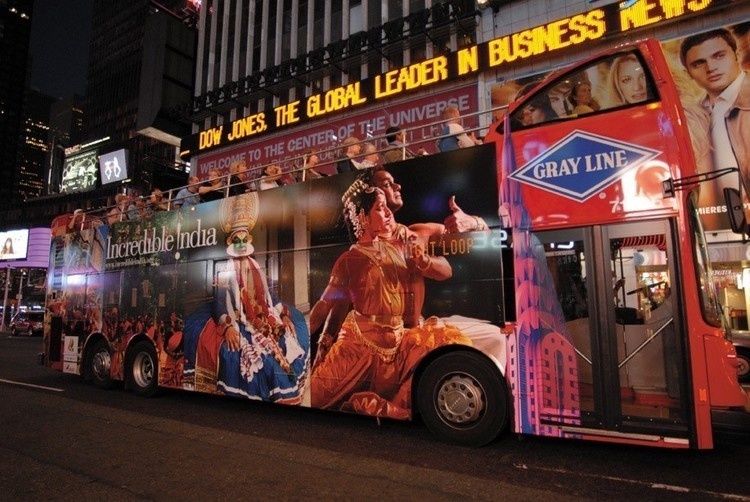
In this talk, I unpack the affective-material entanglements of the moment of “opening up” of the Indian economy. The great transformation of the nation-form into commodity-form – Brand India – entailed more than structural adjustments and free-trade formula prescribed by the global financial institutions. It took shape upon the tantalizing promise of the great spectacle of capitalist growth stories unfolding across the old third-world. Drawing upon my recent work Brand New Nation, I trace the affective and bureaucratic designs of the dreamworlds of New India, the hopes and anxieties, contradictions and speculations, and the production of an authentic Hindu civilizational identity in the circuits of twenty-first-century global economy.
Ravinder Kaur is a historian of contemporary India. She is Associate Professor of Modern South Asian Studies and the Director of the Centre of Global South Asian Studies at the University of Copenhagen. Her core research focuses on the processes of capitalist transformations in twenty-first-century India. This is the subject of her most recent book Brand New Nation: Capitalist Dreams and Nationalist Designs in Twenty-First-Century India (Stanford University Press, 2020). This work was selected as the “Financial Times Best Book of the Year” in 2020 and longlisted for the “Kamaladevi Chattopadhyay NIF Book Prize” in 2021. She is also the author of Since 1947: Partition Narratives among the Punjabi Migrants of Delhi (Oxford University Press, 2007; 2nd edition, 2018).
Co-sponsored by the History Department
Additional Information
Program
Einaudi Center for International Studies
South Asia Program
“Culture, Nation and the People: a Century of University Extension in Latin America,” by Agustin Cano, LACS Seminar Series
March 14, 2022
1:00 pm
Stimson Hall, G01
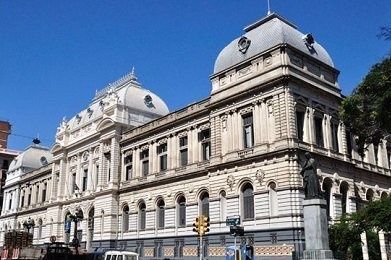
The European university extension tradition started in the decade of 1870 in Cambridge and Oxford universities, and rapidly spread through Europe in the form of conferences of cultural diffusion and “Popular University”. In its origin, university extension is the result of two interconnected processes: the European university reform under the German model and the concern of modern states to build national systems of general literacy. In the beginning, extension practices expressed the pedagogical optimism of Enlightenment, the hygienist influence, and the democratization of knowledge and culture, particularly among two groups of people excluded from a university education: workers and women. University extension was conceived as a “movement”, and that is why it has transformative potential.
This university extension tradition arrived in Latin America in the early Twentieth Century. By the connection with the university, social, and political processes in Latin America, and by being part of the program of the University Reform Movement, known as “La Reforma de Córdoba”, university extension suffered a deep transformation, and now we can talk about a Latin American extension, from a reformist tradition. From these processes, university extension gained conceptual complexity and depth, ample and rich repertoire of practices, and, at the same time, a deeper ambiguity in its meanings and definitions. As a concept located in the unstable frontiers that the university generates with its surroundings, our reflection on extension requires us to go beyond the academic field and consider the historical, social, and political processes that overdetermine them.
The presentation will cover this topic and answer the following questions: What subjects, pedagogical conceptions, and political orientations articulated the Latin American university extension in different historical times, from the Twentieth Century to the present? What subjects, pedagogical and epistemological conceptions, and what meanings and political orientations were challenged, tensioned, or articulated in the production of university extension in Latin America? What lessons can we draw to think around the challenges of the relationship between university and society today?
Agustín Cano Menoni received his BA in Psicology from Universidad de la República (Uruguay), his Master in Social Project Management from LUMSA-Università (Rome, Italy) and his Ph.D. in Pedagogy from Universidad Nacional Autónoma de México (UNAM). He is currently a professor, extensionist, and researcher at the Universidad de la República de Uruguay (UDELAR), where coordinates the Núcleo de Intervención e Investigación en Educación y Territorio of the Programa Integral Metropolitano of UDELAR. He is a undergraduate and graduate professor at the Institute of Education of the Faculty of Humanities and Education Sciences of UDELAR, and a member of the National System and Researchers of Uruguay. He is the author of the book "Cultura, Nación y Pueblo: la extensión universitaria en la UNAM (1910-2015)", published in 2019 in Mexico by the UNAM, as well as numerous articles and chapters of books on topics of university extension and Latin American University.
Additional Information
Program
Einaudi Center for International Studies
Latin American and Caribbean Studies
"Football/Soccer: The Fiction Machine" by MartÍn Caparrós (A.D. White Professor-at-Large), LACS Public Issues Forum
March 7, 2022
1:00 pm
Stimson Hall, G01
This is a hybrid lecture. Professor Caparrós will be speaking in-person at G01 Stimson Hall as well as virtually, use the link below to register to attend virtually.
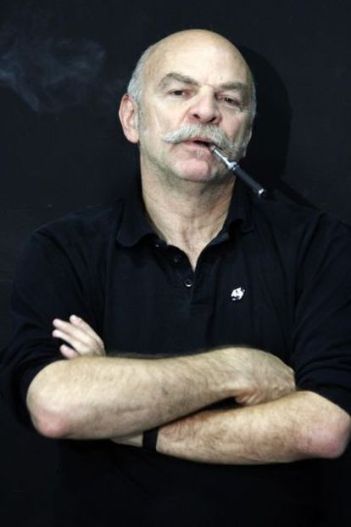
MartÍn Caparrós is a distinguished Argentine author, writer, and narrative journalist, and one of the fundamental Latin American voices of our time. In 2017, he was awarded the prestigious Maria Moors Cabot award by the Columbia Graduate School of Journalism, for outstanding reporting on America; specifying work on his nonfiction book-length work El Hambre (Hunger: The Mortal Crisis of Our Time, 2016), in which the author visits both the richest and poorest people of the earth in order to explore why hunger is one of today’s big unresolved issues. The book has been translated into 14 languages.
He was the recipient of the prestigious Herralde Prize (2011) for his novel, Living; the Planeta Prize (2004) for his novel, Valfierno; and the Guggenheim Fellowship (1994). He also writes biweekly columns for The New York Times and Spain’s El País. His expertise interconnects with a range of cross-disciplinary topics including inter-American dialogue, food insecurity, and climate change.
This event is part of Caparrós’s first visit as an A.D. White Professor-at-Large (ADW-PAL) to Cornell. His on-campus residency runs March 7-11, 2022. He was elected as an ADW-PAL in 2019. His appointment runs through 2025.
Additional Information
Program
Einaudi Center for International Studies
Latin American and Caribbean Studies
"Fragile Knowledge: Owning the Scars of Second Generation Holocaust Survivors in Latin America" by Annette Levine, LACS Seminar Series

February 14, 2022
1:00 pm
Stimson Hall, G01
Co-Sponsor: Jewish Studies Program
This presentation will explore various ways in which second generation Holocaust survivors in Argentina have witnessed the wound transmitted by their parents. This talk will consider issues of representation and agency while citing instances where second generation survivors have gained access to that which has been frozen in silence.
Annette Prekker Levine is Associate Professor at Ithaca College where she teaches courses on Latin American literature, theatre, and translation. She has written about issues of memory and representation associated with the Argentine military dictatorship of 1976-83 and has been engaged in ongoing research about collective memory and injustice in the aftermath of the 1994 terrorist attack on the Jewish cultural center, the AMIA, in Buenos Aires. Her current ethnographic work is focused on the transmission of traumatic memory among second generation Holocaust survivors in Argentina.
Additional Information
Program
Einaudi Center for International Studies
Latin American and Caribbean Studies
Crooked Cats: Beastly Tales from India

March 21, 2022
11:00 am
Talk by Nayanika Mathur (Anthropology, University of Oxford, UK)
This talk weaves together beastly tales of big cats that make prey of humans in India to ask what may they be telling us about a planet in crisis. There are many theories on why and how a big cat comes to prey on humans, with the ecological collapse emerging as a central explanatory factor. Yet, uncertainty over the precise cause of crookedness persists. Drawing upon over 15 years of anthropological research in India, conducted largely in the Himalaya, this talk explores the many lived complexities that arise from this absence of certain knowledge to offer new insights into both the governance of nonhuman animals and their intimate entanglements with humans. It deploys ethnographic storytelling to explain the Anthropocene in three critical ways: as method, as a way of reframing human-nonhuman relations on the planet, and as a political tool indicating the urgency of academic engagement.
Nayanika Mathur is Associate Professor in the Anthropology of South Asia, Fellow of Wolfson College, and Director of the South Asia center at the University of Oxford. She is the author of Paper Tiger: Law, Bureaucracy, and the Developmental State in Himalayan India (Cambridge University Press, 2016) and Crooked Cats: Beastly Encounters in the Anthropocene (University of Chicago Press, 2021).
Co-sponsored by the Anthropology Department
Additional Information
Program
Einaudi Center for International Studies
South Asia Program
Separating Sindh, Connecting Partitions: Territorializing Minority Representation before Partition

March 7, 2022
11:00 am
Talk by Uttara Shahani (Refugee Studies Centre, University of Oxford, UK)
The 1947 partition of India is inadequately understood within the context of earlier partitions in the British Indian empire. Sindh, an understudied province in the historiography on partition, provides a particularly important angle of vision through which to view the history of partitioning. The key committees that recommended the shape of constitutional reform in the lead up to the Government of India Act 1935 justified the creation of the new province of Sindh (separated from Bombay) on the basis of religious majority as well as ‘racial’ difference. The debates on the subject of ‘provincial autonomy’ that dominated discussions on the future of constitutional reform at this time threw into sharp focus the question of the territorialization of minority rights and representation. Constitutional deliberations on establishing Sindh as a ‘communally’ defined province were embedded in wider considerations not only of the ‘internal’ redistribution of boundaries on linguistic lines but also the geographical and political severance of certain territories from British India by reason of racial and ethnic difference. Eventually, The Government of India Act 1935 separated Sindh from the Bombay Presidency and established Odisha and Bihar as separate provinces, in addition to enabling a wider process of boundary formation that included the separation of Burma and Aden from British India. The separation of Sindh itself informed nascent ideas of Pakistan and what partitioning Palestine might mean.
Uttara Shahani is a historian and former lawyer who works on the history of Sindh, the partition of India, the Sindhi diaspora, and the history of global refugee regimes. She is currently Departmental Lecturer at the Refugee Studies Centre, University of Oxford. Previously she was postdoctoral researcher at the Refugee Studies Centre, University of Oxford where she worked on the British Academy funded project Borders, Global Governance, and the Refugee (1947-1951) which has a focus on India and Palestine. Prior to this, Uttara was Economic and Social Research Council (ESRC) Postdoctoral Fellow at the Faculty of History, University of Cambridge. She was postdoctoral affiliate Trinity College Cambridge, and affiliate scholar, Centre for South Asian Studies, Cambridge. Her doctoral dissertation, ‘Sind and the partition of India, 1927-1952' was awarded by the Faculty of History, University of Cambridge in 2019. Uttara is working on a book manuscript on Sindh and partition. Her latest publications are ‘Following Richard Burton: Religious Identity and Difference in Colonial Sindh,’ forthcoming in Philological Encounters and ‘Language without a land: Partition, Sindhi refugees, and the Eighth Schedule of the Indian Constitution,’ forthcoming in the Journal of Asian Affairs.
Co-sponsored by the History Department
Additional Information
Program
Einaudi Center for International Studies
South Asia Program
"Interrogating Intimacies: Black Feminist Desahogos in Antiracist Activism" by Amarilys Estrella, Rice University, LACS Seminar Series
March 28, 2022
1:00 pm
Stimson Hall, G01
In-person viewing: G01 Stimson Hall
Zoom Viewing upon registration:
Cosponsors: Africana Studies and Research Center/Feminist, Gender and Sexuality Studies (FGSS)
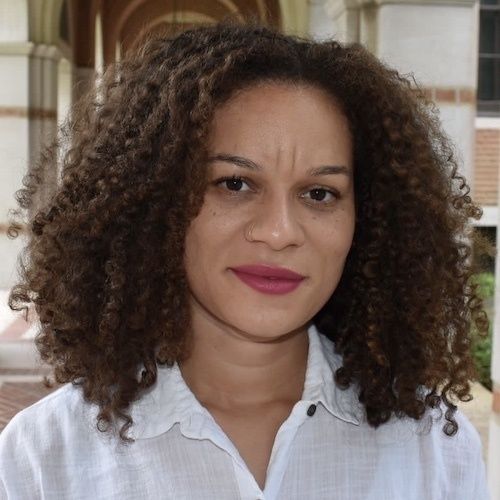
In this talk, Amarilys Estrella (Rice University) explores the everyday negotiations that Black Dominican women of Haitian descent within the Reconoci.do movement face as they fight against systemic racism in the Dominican Republic.
While noting the gendered dimensions of state sanctioned violence and denationalization policies, Estrella also interrogates the intimate spaces that Black women who form part of the movement inhabit, in which they are often confronted with gender-based violence. By engaging in local and transnational encounters where they share their stories and build with other women, Black Dominican women of Haitian descent are reimagining and transforming intimate relationships on a personal and communal level.
Additional Information
Program
Einaudi Center for International Studies
Latin American and Caribbean Studies
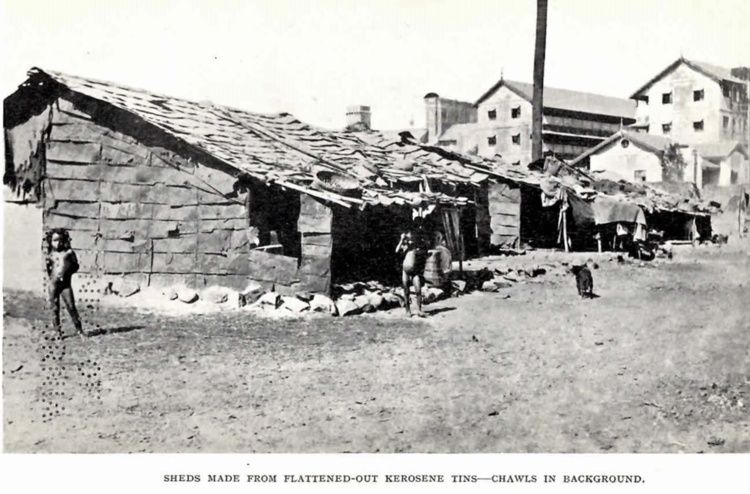
Revolution and Slums in Bombay
February 14, 2022
11:00 am
Talk by Juned Shaikh (History, University of California, Santa Cruz)
Revolution and Slums were keywords in twentieth century Bombay: they are interpretive categories to capture the relationships of power in the city and the visions for transforming the relationships as well as the city itself. Revolution was invoked by different social groups in the city – Marxists, workers, urban planners, and Dalit leaders and writers all wanted a revolution at different moments in the twentieth century. And often the subjects of these revolutions (and possible counterrevolutions) lived in slums. Revolution meant different things to these groups. The Marxist vision of a political and social revolution, that would end class inequality was not shared by the urban planners who wanted to alter the spatial arrangement of the city and make it more conducive for the circulation of capital. Marxists also faltered on the question of caste. They laid great store in the power of capital to desiccate caste and believed that social reformers would address the vestigial caste practices. In their view, the arrival of socialism would overcome it completely. Therefore, any assertions of caste identity by the anti-Brahmin and the Dalit movements invited Marxist opprobrium and allegations of being reactionary, fascists, and petit bourgeois. Dalit leaders and writers critiqued Marxist for their aversion to the caste question. The tensions between the Marxist and Dalit social movements shaped the politics of 20th century Bombay (and India). But in the 1950s, 60s, and 70s many Dalit writers borrowed Marxist conceptual categories, like the lumpen proletariat, to write about life in the city slums. For them, the lumpen proletariat was not an object of abhorrence, but a human being struggling to make ends meet and for whom life often ended tragically. This paper uses revolution and slums as a lever to revisit the social, political, and cultural history of twentieth century Bombay.
Juned Shaikh is Associate Professor of History at the University of California, Santa Cruz. His recent book, Outcaste Bombay: City Making and the Politics of the Poor, was published by the University of Washington Press in the US and by Orient BlackSwan in India. He is a visiting research fellow at the Shelby Davis Center at Princeton University this semester. His new work is on the life and times of Gangadhar Adhikari, a Bombay Marxist. He was the recipient of the Dean’s medal for the Social Sciences as a graduate student at the University of Washington. Before his reinvention as a historian, he was a journalist in India.
Co-sponsored by the History Department
Additional Information
Program
Einaudi Center for International Studies
South Asia Program
Info Session: Community College Faculty Professional Development Opportunity

January 12, 2022
3:00 pm
Join us for an information session to learn more about the Cornell Migrations initiative’s Community College Fellowships on Racism, Dispossession, and Migration (RDM) for faculty of any discipline at two-year institutions in upstate New York.
With support from the Mellon Foundation Just Futures Initiative and Global Cornell, this opportunity is a year-long supported program that provides $1,000 for community college faculty to integrate issues of racism, dispossession, and migration into their curricula.
RDM projects may include a new course, a new unit for an existing course, or a service-learning component to an existing course that encourages discussion on issues of racism, dispossession, and migration. Understanding the historical and contemporary relationships between the displacement of people, including through the dispossession of Indigenous lands and rights, and racism, xenophobia, opposition to immigration, and anti-immigrant violence.
The Cornell Migrations co-directors will address any questions about priorities, selection criteria, budgets, and other guidance on how to prepare a successful application. Proposals due on February 22, 2022, by email to Mary Ball, Migrations initiative program manager, mjn3@cornell.edu. Consultation on proposal ideas is strongly encouraged and questions about this fellowship are wholly welcome.
Additional Information
Program
Einaudi Center for International Studies
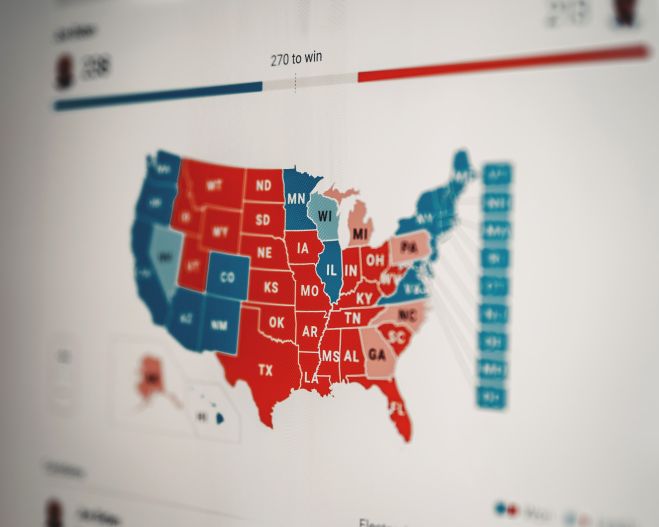
More Americans Than Usual Have Been Changing Parties. Why?
Landon Schnabel in Washington Post
Landon Schnabel, assistant professor of sociology, co-authors this opinion piece about why more Americans have been changing political parties.