
Einaudi Center for International Studies
How Gender Shapes Security Sector Restraint
October 14, 2021
11:25 am
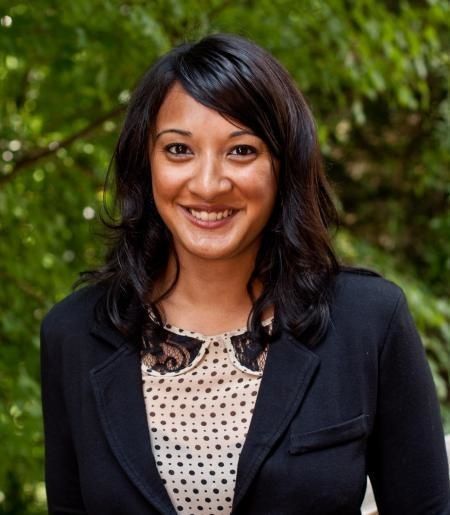
Dr. Sabrina Karim, the Hardis Family Assistant Professor in Government, will present preliminary research from the Gender and Security Sector Lab that she runs at Cornell University. The presentation will focus on how gender equality within the security forces affects personnel’s beliefs and norms about the use of violence as well as how different forms of socialization, such as through participation in United Nations Peacekeeping Operations, affects the same outcomes. The research draws on surveys conducted with the security forces in Ghana, Zambia, Senegal, and Uruguay.
This seminar is part of a series organized by the Reppy Institute for Peace and Conflict Studies (PACS) and the Gender and Security Sector (GSS) Lab. Download the Fall 2021 Seminar Series schedule here.
Additional Information
Program
Reppy Institute for Peace and Conflict Studies
Einaudi Center for International Studies
Oct. 1 Skytte Award Ceremony

Peter Katzenstein, Johan Skytte Prize Laureate
Oct. 1 at 11:30 a.m. ET: Tune in to Katzenstein's Skytte Prize lecture, “Thinking about Spaghetti—Served by German and Italian Waiters.”
Additional Information
Meet Our New Program Directors

New Directors Take Helm at LACS, IES, SEAP
New program directors Ernesto Bassi, Mabel Berezin, and Tom Pepinsky share their programs' plans for this academic year.
Additional Information
Tumbuka: Cultural Orientation and Elementary Language Elements
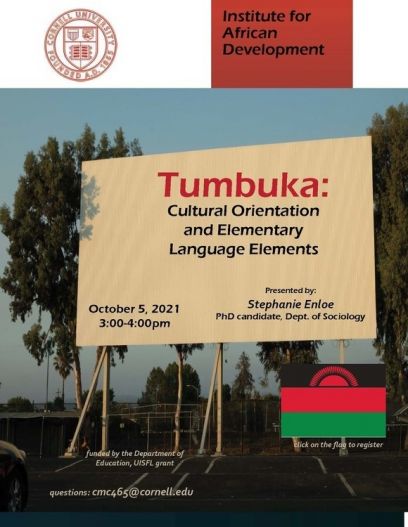
October 5, 2021
3:00 pm
Join the Institute for African Development for our conversation hour in Tumbuka on 10/5! Learn about traditional and cultural norms in Malawi as well as greetings, basic vocabulary and phrases in Tumbuka! (No previous knowledge of Tumbuka or African languages necessary!)
Additional Information
Program
Einaudi Center for International Studies
Latin American and Caribbean Studies
Institute for African Development
This Obscure, Now Contentious Law Is Being Used To Expel Thousands of Migrants

Stephen Yale-Loher, Immigration
“The problem is that it only protects people who were already in the United States,” says Stephen Yale-Loehr, professor of immigration law. “People who are entering now are not eligible for TPS."
Additional Information
Sex Differences in the Global Burden of Tuberculosis
Saurabh Mehta in Lancet
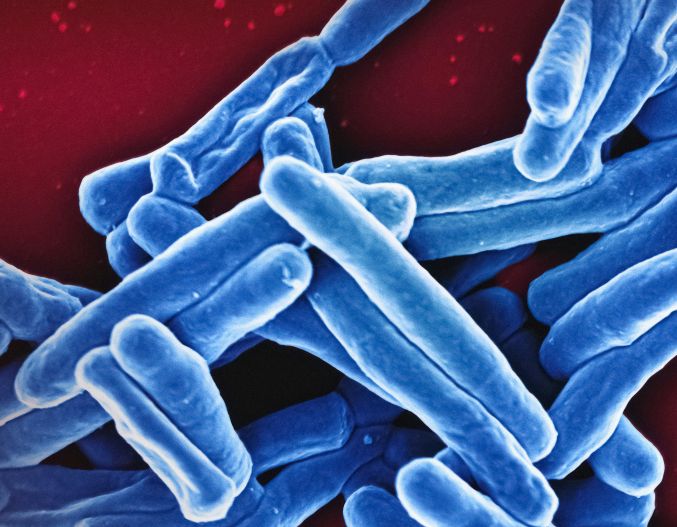
Tuberculosis is a major contributor to the global burden of disease, causing more than a million deaths annually. This Lancet article assesses the levels and trends of the global burden of tuberculosis, with an emphasis on investigating differences in sex by HIV status for 204 countries and territories from 1990 to 2019.
Additional Information
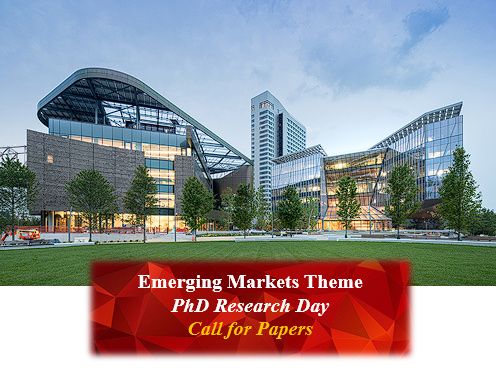
Emerging Markets Theme - PhD Research Day
November 3, 2022
8:30 am
Cornell Tech
Registration Link: https://cglink.me/2cm/r1635976
The Cornell S.C. Johnson College of Business Emerging Markets Theme brings together scholars from Cornell and beyond to provide thought leadership on the role of emerging markets – and emerging market multinationals – in the global economy.
The Emerging Markets Institute in collaboration with China Institute for Chinia Economic Research (CICER), the Cornell China Center, and the Entrepreneurship and Innovation Institute is hosting a PhD Research Day on Thursday, November 3. The workshop will be held at Cornell’s Cornell Tech Campus in New York City.
We will also feature a number of presentations from eminent faculty during the workshop. If you are interested in presenting your research, please send a half page abstract of the paper you wish to present to Andrew Foley (ajf283@cornell.edu). Limited funding is also available for presenters. Applications will be accepted through October 1, 2022.
The link to register is here. Your registration will be complete upon confirmation message. If you have issues, contactemi@cornell.edu.
Additional Information
Program
Einaudi Center for International Studies
East Asia Program
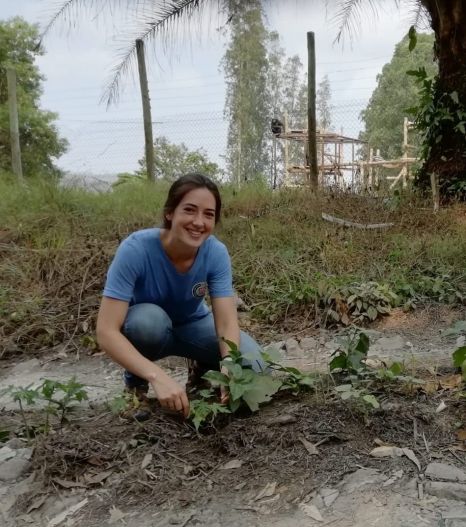
Students Promote Climate Resilence
Climate Research to Reduce Global Impacts
Students and recent alumni joined faculty-led research last summer to reduce climate threats in Haiti, East Africa, and Tajikistan.
Additional Information
Rhythms of the Land: Indigenous Knowledge, Science, and Thriving Together in a Changing Climate
October 13, 2021
12:00 am
Brian C. Nevin Welcome Center
A three-day, international conference bringing together communities, scholars and policymakers.
We will present our research findings from Indigenous and rural societies in the Pamir Mountains of Afghanistan, Kyrgyzstan, Tajikistan, as well as the Standing Rock Sioux Nation and Oneida Lake Watershed in the United States of America. These Indigenous and rural communities have contributed least to the anthropogenic climate crisis but are facing its harshest consequences. While these peoples are largely ignored, we are creating an enabling environment for their voices to be heard at our three-day conference. Rhythms of the Land Conference will present findings from the Ecological Calendars for Climate Adaptation Project (ECCAP) undertaken by a team of students and scholars from the USA, Germany, Italy, and China.
Oct. 11
To include presentations of our research findings on building local level anticipatory capacity for climate change through implementable ecological calendars. Our research will also be communicated through works of art presented by prominent Indigenous artists from around the world. The diverse calendars for each community will be presented within an artistic aesthetic. Preview the community reports.
Oct. 12
Will be devoted to policy formulation, communication of climate adaptation strategies, and next steps in applied research.
Oct. 13
Will identify specific initiatives for action. Collective insights from presenters offer a sustainable roadmap for climate change adaptation – and hope - for all, regardless of political ideology.
COVID-19 event public safety requirements:
RSVP for public events required by Oct. 10 (Registration is full)Wear masks at all times during the event.Every participant is expected to be fully vaccinated.
Oct. 11 public programming to include:
Nevin Welcome Center, Cornell Botanic Gardens
9 a.m. - 10 a.m.
Environmental Justice and Indigenous Communities
James Ross, Teetl’it Gwich’in, Past Chief of Fort McPherson and
Negotiator of the Gwich’in Land Claim Agreement
10 a.m - 10:40 a.m.
Methodology of Hope – The Role of Ecological Calendars in Responding to the Challenge of Climate Change
Dr. Karim-Aly Kassam, International Professor of Environmental & Indigenous Studies, Dept. of Natural Resources & the Environment
Herbert F. Johnson Museum of Art
3:15 p.m. - 3:55 p.m.
Measurements meet human observations:integrating distinctive ways of knowing in the Pamir Mountains to assess local climate change
Professor Cyrus Samimi, University of Bayreuth, Germany
4:00 p.m. - 4:50 p.m.
Artists and Communities Panel Conversation: Environmental Justice
Frederick McDonald, Past-Chief Executive Officer Fort McKay First Nation
Natani Notah, Navajo interdisciplinary artist and educator
Tony David, Director, Environmental Division, Saint Regis Mohawk Tribe
Oct. 12 public programming to include:
Nevin Welcome Center, Cornell Botanic Gardens
8:30 a.m. - 9:10 a.m.
What Are the Challenges for Climate Change Adaptation for Indigenous and Rural Communities?
James Ross, Teetl’it Gwich’in, Past Chief of Fort McPherson and Negotiator of the Gwich’in Land Claim Agreement
Schwartz Performing Arts Center
5:55 p.m. - 6:35 p.m.
Where Do We Go from Here? Concrete Outcomes for Climate Adaptations
James Ransom, Past Chief Saint Regis Mohawk Tribe, Past Director, Environment Program, SRMT
6:45 p.m. - 8:00 p.m.
Dance Performance: Blood, Water, Earth
Chancellor Santee Smith
Cornell University is located on the traditional homelands of the Gayogo̱hó꞉nǫ' (the Cayuga Nation). The Gayogo̱hó꞉nǫ' are members of the Haudenosaunee Confederacy, an alliance of six sovereign Nations with a historic and contemporary presence on this land. The Confederacy precedes the establishment of Cornell University, New York state, and the United States of America. We acknowledge the painful history of Gayogo̱hó꞉nǫ' dispossession, and honor the ongoing connection of Gayogo̱hó꞉nǫ' people, past and present, to these lands and waters.
Additional Information
Program
Einaudi Center for International Studies
Reppy Institute for Peace and Conflict Studies
South Asia Program
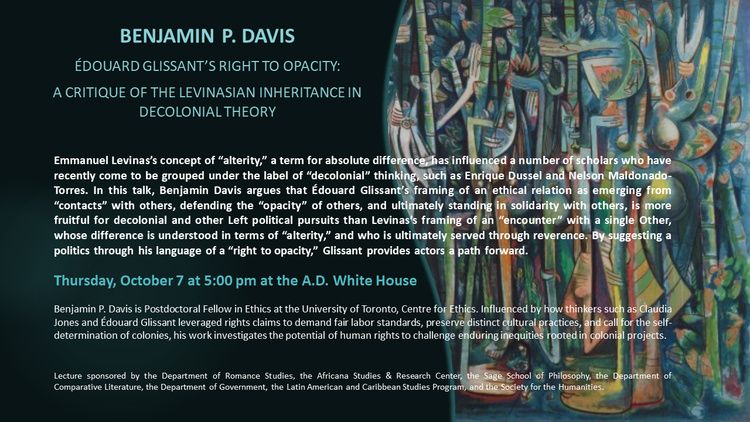
Benjamin P. Davis, ‘Édouard Glissant’s Right to Opacity: A Critique of the Levinasian Inheritance in Decolonial Theory’
October 7, 2021
5:00 pm
A.D. White House
Summary: Emmanuel Levinas’s concept of ‘alterity’, a term for absolute difference, has influenced a number of scholars who have recently come to be grouped under the label of ‘decolonial’ thinking, such as Enrique Dussel and Nelson Maldonado-Torres. In this talk, I argue that Édouard Glissant’s framing of an ethical relation as emerging from ‘contacts’ with others, defending the ‘opacity’ of others, and ultimately standing in solidarity with others, is more fruitful for decolonial and other Left political pursuits than Levinas’s framing of an ‘encounter’ with a single Other, whose difference is understood in terms of ‘alterity’, and who is ultimately served through reverence. By suggesting a politics through his language of a ‘right to opacity’, Glissant provides actors a path forward.
Bio: Benjamin P. Davis is Postdoctoral Fellow in Ethics at the University of Toronto, Centre for Ethics. Influenced by how thinkers such as Claudia Jones and Édouard Glissant leveraged rights claims to demand fair labor standards, preserve distinct cultural practices, and call for the self-determination of colonies, his work investigates the potential of human rights to challenge enduring inequities rooted in colonial projects.
Additional Information
Program
Einaudi Center for International Studies
Latin American and Caribbean Studies