
Einaudi Center for International Studies
Crooked Cats: Beastly Tales from India

March 21, 2022
11:00 am
Talk by Nayanika Mathur (Anthropology, University of Oxford, UK)
This talk weaves together beastly tales of big cats that make prey of humans in India to ask what may they be telling us about a planet in crisis. There are many theories on why and how a big cat comes to prey on humans, with the ecological collapse emerging as a central explanatory factor. Yet, uncertainty over the precise cause of crookedness persists. Drawing upon over 15 years of anthropological research in India, conducted largely in the Himalaya, this talk explores the many lived complexities that arise from this absence of certain knowledge to offer new insights into both the governance of nonhuman animals and their intimate entanglements with humans. It deploys ethnographic storytelling to explain the Anthropocene in three critical ways: as method, as a way of reframing human-nonhuman relations on the planet, and as a political tool indicating the urgency of academic engagement.
Nayanika Mathur is Associate Professor in the Anthropology of South Asia, Fellow of Wolfson College, and Director of the South Asia center at the University of Oxford. She is the author of Paper Tiger: Law, Bureaucracy, and the Developmental State in Himalayan India (Cambridge University Press, 2016) and Crooked Cats: Beastly Encounters in the Anthropocene (University of Chicago Press, 2021).
Co-sponsored by the Anthropology Department
Additional Information
Program
Einaudi Center for International Studies
South Asia Program
Separating Sindh, Connecting Partitions: Territorializing Minority Representation before Partition

March 7, 2022
11:00 am
Talk by Uttara Shahani (Refugee Studies Centre, University of Oxford, UK)
The 1947 partition of India is inadequately understood within the context of earlier partitions in the British Indian empire. Sindh, an understudied province in the historiography on partition, provides a particularly important angle of vision through which to view the history of partitioning. The key committees that recommended the shape of constitutional reform in the lead up to the Government of India Act 1935 justified the creation of the new province of Sindh (separated from Bombay) on the basis of religious majority as well as ‘racial’ difference. The debates on the subject of ‘provincial autonomy’ that dominated discussions on the future of constitutional reform at this time threw into sharp focus the question of the territorialization of minority rights and representation. Constitutional deliberations on establishing Sindh as a ‘communally’ defined province were embedded in wider considerations not only of the ‘internal’ redistribution of boundaries on linguistic lines but also the geographical and political severance of certain territories from British India by reason of racial and ethnic difference. Eventually, The Government of India Act 1935 separated Sindh from the Bombay Presidency and established Odisha and Bihar as separate provinces, in addition to enabling a wider process of boundary formation that included the separation of Burma and Aden from British India. The separation of Sindh itself informed nascent ideas of Pakistan and what partitioning Palestine might mean.
Uttara Shahani is a historian and former lawyer who works on the history of Sindh, the partition of India, the Sindhi diaspora, and the history of global refugee regimes. She is currently Departmental Lecturer at the Refugee Studies Centre, University of Oxford. Previously she was postdoctoral researcher at the Refugee Studies Centre, University of Oxford where she worked on the British Academy funded project Borders, Global Governance, and the Refugee (1947-1951) which has a focus on India and Palestine. Prior to this, Uttara was Economic and Social Research Council (ESRC) Postdoctoral Fellow at the Faculty of History, University of Cambridge. She was postdoctoral affiliate Trinity College Cambridge, and affiliate scholar, Centre for South Asian Studies, Cambridge. Her doctoral dissertation, ‘Sind and the partition of India, 1927-1952' was awarded by the Faculty of History, University of Cambridge in 2019. Uttara is working on a book manuscript on Sindh and partition. Her latest publications are ‘Following Richard Burton: Religious Identity and Difference in Colonial Sindh,’ forthcoming in Philological Encounters and ‘Language without a land: Partition, Sindhi refugees, and the Eighth Schedule of the Indian Constitution,’ forthcoming in the Journal of Asian Affairs.
Co-sponsored by the History Department
Additional Information
Program
Einaudi Center for International Studies
South Asia Program
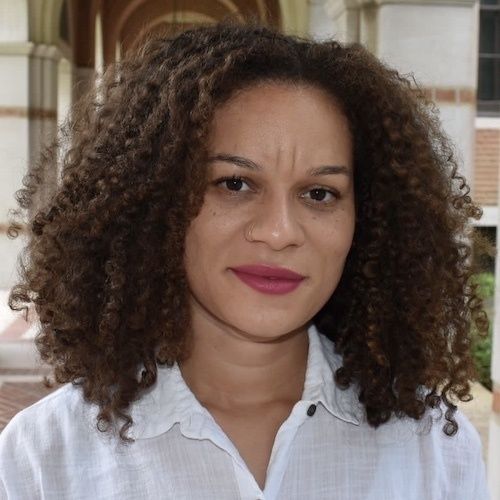
"Interrogating Intimacies: Black Feminist Desahogos in Antiracist Activism" by Amarilys Estrella, Rice University, LACS Seminar Series
March 28, 2022
1:00 pm
Stimson Hall, G01
In-person viewing: G01 Stimson Hall
Zoom Viewing upon registration:
Cosponsors: Africana Studies and Research Center/Feminist, Gender and Sexuality Studies (FGSS)
In this talk, Amarilys Estrella (Rice University) explores the everyday negotiations that Black Dominican women of Haitian descent within the Reconoci.do movement face as they fight against systemic racism in the Dominican Republic.
While noting the gendered dimensions of state sanctioned violence and denationalization policies, Estrella also interrogates the intimate spaces that Black women who form part of the movement inhabit, in which they are often confronted with gender-based violence. By engaging in local and transnational encounters where they share their stories and build with other women, Black Dominican women of Haitian descent are reimagining and transforming intimate relationships on a personal and communal level.
Additional Information
Program
Einaudi Center for International Studies
Latin American and Caribbean Studies
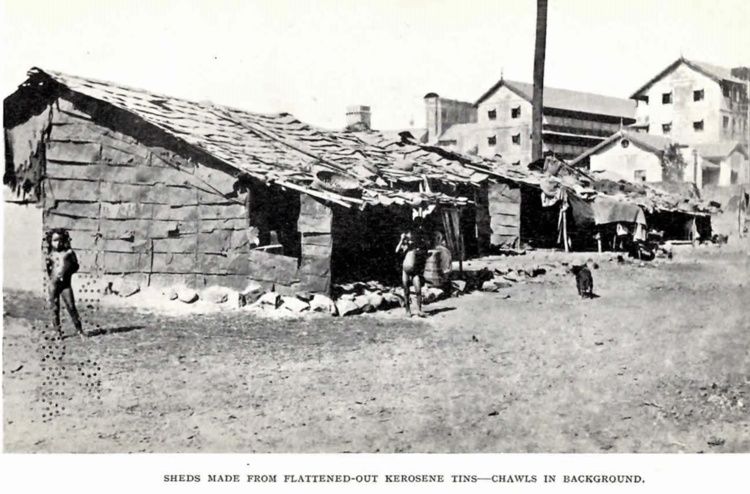
Revolution and Slums in Bombay
February 14, 2022
11:00 am
Talk by Juned Shaikh (History, University of California, Santa Cruz)
Revolution and Slums were keywords in twentieth century Bombay: they are interpretive categories to capture the relationships of power in the city and the visions for transforming the relationships as well as the city itself. Revolution was invoked by different social groups in the city – Marxists, workers, urban planners, and Dalit leaders and writers all wanted a revolution at different moments in the twentieth century. And often the subjects of these revolutions (and possible counterrevolutions) lived in slums. Revolution meant different things to these groups. The Marxist vision of a political and social revolution, that would end class inequality was not shared by the urban planners who wanted to alter the spatial arrangement of the city and make it more conducive for the circulation of capital. Marxists also faltered on the question of caste. They laid great store in the power of capital to desiccate caste and believed that social reformers would address the vestigial caste practices. In their view, the arrival of socialism would overcome it completely. Therefore, any assertions of caste identity by the anti-Brahmin and the Dalit movements invited Marxist opprobrium and allegations of being reactionary, fascists, and petit bourgeois. Dalit leaders and writers critiqued Marxist for their aversion to the caste question. The tensions between the Marxist and Dalit social movements shaped the politics of 20th century Bombay (and India). But in the 1950s, 60s, and 70s many Dalit writers borrowed Marxist conceptual categories, like the lumpen proletariat, to write about life in the city slums. For them, the lumpen proletariat was not an object of abhorrence, but a human being struggling to make ends meet and for whom life often ended tragically. This paper uses revolution and slums as a lever to revisit the social, political, and cultural history of twentieth century Bombay.
Juned Shaikh is Associate Professor of History at the University of California, Santa Cruz. His recent book, Outcaste Bombay: City Making and the Politics of the Poor, was published by the University of Washington Press in the US and by Orient BlackSwan in India. He is a visiting research fellow at the Shelby Davis Center at Princeton University this semester. His new work is on the life and times of Gangadhar Adhikari, a Bombay Marxist. He was the recipient of the Dean’s medal for the Social Sciences as a graduate student at the University of Washington. Before his reinvention as a historian, he was a journalist in India.
Co-sponsored by the History Department
Additional Information
Program
Einaudi Center for International Studies
South Asia Program
Info Session: Community College Faculty Professional Development Opportunity

January 12, 2022
3:00 pm
Join us for an information session to learn more about the Cornell Migrations initiative’s Community College Fellowships on Racism, Dispossession, and Migration (RDM) for faculty of any discipline at two-year institutions in upstate New York.
With support from the Mellon Foundation Just Futures Initiative and Global Cornell, this opportunity is a year-long supported program that provides $1,000 for community college faculty to integrate issues of racism, dispossession, and migration into their curricula.
RDM projects may include a new course, a new unit for an existing course, or a service-learning component to an existing course that encourages discussion on issues of racism, dispossession, and migration. Understanding the historical and contemporary relationships between the displacement of people, including through the dispossession of Indigenous lands and rights, and racism, xenophobia, opposition to immigration, and anti-immigrant violence.
The Cornell Migrations co-directors will address any questions about priorities, selection criteria, budgets, and other guidance on how to prepare a successful application. Proposals due on February 22, 2022, by email to Mary Ball, Migrations initiative program manager, mjn3@cornell.edu. Consultation on proposal ideas is strongly encouraged and questions about this fellowship are wholly welcome.
Additional Information
Program
Einaudi Center for International Studies
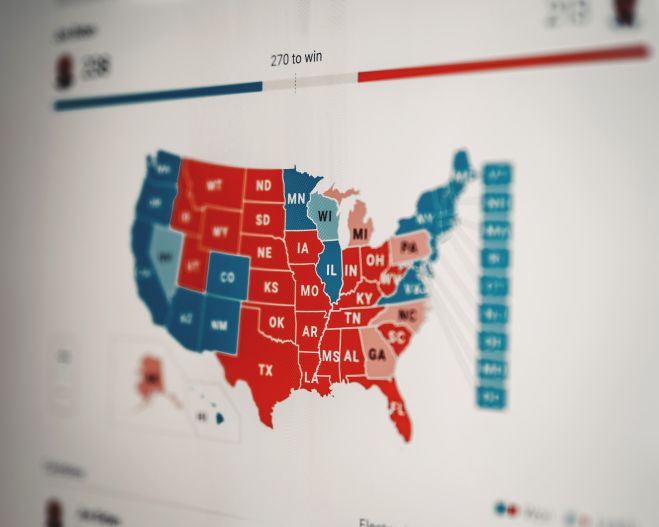
More Americans Than Usual Have Been Changing Parties. Why?
Landon Schnabel in Washington Post
Landon Schnabel, assistant professor of sociology, co-authors this opinion piece about why more Americans have been changing political parties.
Additional Information
Princess Mako’s Revolution

Kristin Roebuck, EAP
“It’s really striking to me when I look at family forms and how the royal family is this bastion of older norms that no one else in Japan is required to live by,” says Kristin Roebuck, assistant professor of history. “Why is it that the lawmakers who govern that institution think it’s so important that they want to maintain gender inequality at the highest symbolic level of society?”
Additional Information
Omicron Shows the Covid Vaccines Work.

Gunisha Kaur, Migrations Faculty Fellow
Migrations faculty fellow Gunisha Kaur co-writes this article, outlining how "breakthrough case" is a misleading term.
Additional Information
How Does This End? Where the Crisis in American Democracy Might Be Headed.
Tom Pepinsky, SEAP
“That has always been my view: we’ll wake up one day and it’ll just become clear that Democrats can’t win,” says Tom Pepinsky, a political scientist at Cornell who studies democracy in Southeast Asia.
Additional Information
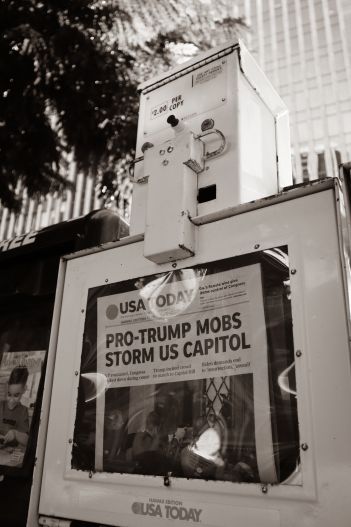
Capitol Rioters Got Tougher Sentences in 2021 From Obama's Judges Than From Trump's
Jens David Ohlin, PACS
Jens David Ohlin, dean and professor of law at Cornell Law School, told Newsweek that judges factoring in individual specifics of cases before issuing a sentence limit a defense attorney's ability to predict how a judge will rule in their client's case.