
Einaudi Center for International Studies
Living in Multiple Boundaries: Migrant Workers in the Arab Gulf

February 3, 2022
8:00 pm
Talk by Naomi Hosoda
The Arab Gulf region, composed of Bahrain, Kuwait, Oman, Qatar, Saudi Arabia, and the United Arab Emirates (UAE), have attracted the attention of international labor migration studies, as all these countries have among the highest ratio of migrant workers to local workers in the world. Gulf labor migration policies are now characterized by exclusionary citizenship laws and the kafala (sponsorship) system, which governs migrant employment and lives. Against this backdrop, I will discuss how nationals and migrants construct new relationships in the segregated socioeconomic spaces of the region. Instead of assuming segregation is disadvantageous for migrant workers, I emphasize multiple aspects and present various voices. In this way, I try to unfold the region’s segregated socioeconomic space, as well as its new forms of networking and connectedness, in order to understand how the various peoples coexist: a situation that often entails conflict and discrepancies between expectations and reality.
Additional Information
Program
Einaudi Center for International Studies
“The Birth of a (Korean) Nation (in Mexico): Transpacific Intimacies and Modern Entanglements in Kim Young-ha’s Black Flower,” by Junyoung Verónica Kim

April 25, 2022
1:00 pm
G-01 Stimson Hall
Co-sponsored by the East Asia Program
The speaker has changed her title and abstract (4/21/22). Below is the new abstract for the title above:
In 1905, as the Russo-Japanese War deepened and the rise of the Meiji Empire began to take hold including Japan’s annexation of the Korean peninsula, a thousand Koreans left their homes for Yucatán, Mexico, thereby becoming the first case of Korean migration to the Americas. Without the protection of the Korean government and lured by Mexican and Japanese contractors with the false promise of wealth and comfort, these migrants were sold into indentured servitude to work in the henequen plantations of the Yucatán. One of the most recognized writers of the Korean New Wave, Kim Young-ha recuperates this slice of history that had been silenced by all the nations involved – Korea, Japan and Mexico – in his novel Black Flower (2003). In this talk, I examine Kim’s rewriting of history that situates the 1905 Korean migration to Mexico not as a minor episode in Korean national history, but rather as a central event in the transpacific chain that links Korea and Mexico within contemporary global history. The novel’s reconfiguration of global/national history is hinged on two interlinked narrative technologies: first, Black Flower utilizes Japanese imperialism as a ready-made trope to not only construct the idea of a putative Korean nation, but also to directly connect Korean independence to the Mexican revolution; second, the novel ineluctably legitimizes the current discourse of South Korea as a multicultural trans-nation by situating the birth of the Korean modern nation in Latin America and highlighting the mobility and heterogeneity of (Korean) national borders. I contend that the current historical moment in which South Korea is imagined as a global trans-nation and sub-empire calls for a certain recuperation of this transpacific history which places the Korean Mexican indentured worker as the modern subject of the South Korean nation.
Additional Information
Program
Einaudi Center for International Studies
East Asia Program
Latin American and Caribbean Studies
“Plantation Patienthood: Chronic Liver Disease and Health Activism in Nicaragua," by Alex Nading, LACS Weekly Seminar Series
March 21, 2022
1:00 pm
G-01 Stimson Hall
Co-Sponsor: Cornell University Public Health Program
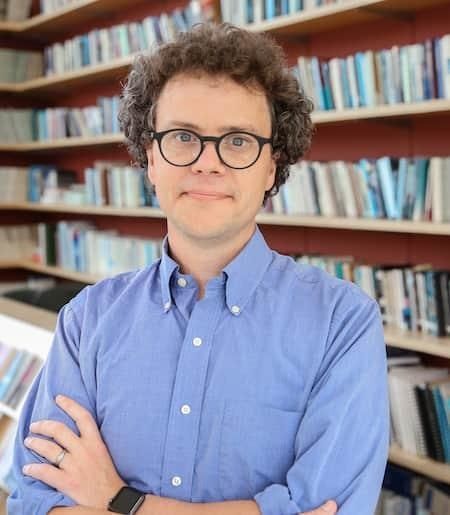
This presentation draws from a chapter in Alex Nading's book in progress, Non-Traditional Causes: Kidney Disease, Climate Change, and Life Support in Nicaragua’s Sugar Plantation Zone. In it, he follows the treatment trajectories of former sugarcane plantation workers in Nicaragua who have been consigned to hemodialysis due to a novel condition called Chronic Kidney Disease of Non-Traditional Causes (CKDnt). In order to access dialysis treatment, these patients rely on the material and financial support of their former employers at the plantation company--a company whose labor and environmental policies they blame for the onset of CKDnt. The talk describes how, joined together in a loose activist alliance, patients and their families confront the ambivalence of end-of-life care. While many ethnographic studies have noted that dialysis can sever patients from the lives they had known prior to treatment, in the case Professor Nading describes, the treatment operates in a way that pulls patients more deeply into the social and economic fabric of the plantation.
Alex Nading is a medical and environmental anthropologist. His research, mostly focused on Nicaragua, has examined transnational campaigns against dengue fever, bacterial disease, and chronic kidney disease, as well as grassroots movements to address these issues. In all his work, he uses ethnographic methods to bring the theoretical concerns of medical anthropology together with those of critical environmental studies and science and technology studies. His teaching includes courses on the anthropology of global health, anthropological methods, and international development. He is also the editor of the journal Medical Anthropology Quarterly and is currently working on a book entitled Non-Traditional Causes: Kidney Disease, Climate Change, and Life Support in Nicaragua’s Sugar Plantation Zone from which his talk will be derived.
Keyword: Public Health
Additional Information
Program
Einaudi Center for International Studies
Latin American and Caribbean Studies
Beyond the Camp and the Surgery: Cochlear Implants and Complex Dependencies in India
March 9, 2022
4:45 pm
Uris Hall, G08
Talk by Michele Friedner (Comparative Human Development, University of Chicago)
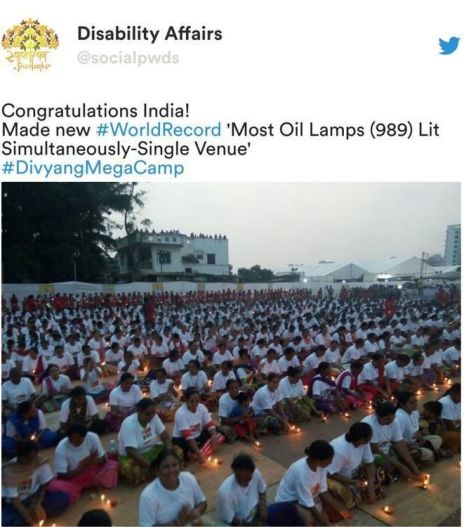
The Indian state relates to the category of disability through the distribution of aids and appliances such as hearing aids, canes, and wheelchairs that are ‘make in India,’ as examples. In 2014, the state modernized its distribution program and started providing cochlear implants to children living below the poverty line. While aspirations exist to create and manufacture an indigenous Indian cochlear implant, currently the state purchases implants from four multinational corporations. This cochlear implant program reveals new directions for the state in regards to engaging with disability and introduces novel assemblages of welfare, medicine, rehabilitation, and multinational capital. In these assemblages, new relationships form between the state, multinational corporations, and families with deaf children. These relationships stretch beyond the one-time disability camp or the one-off surgery and have resulted in opportunities for government administrators, surgeons, and rehabilitation professionals to reinvent themselves in relation to the seemingly miraculous power of cochlear implants while also producing complex dependencies for families with deaf children.
Michele Friedner is an associate professor in the Department of Comparative Human Development at the University of Chicago. A medical anthropologist, she conducts research on deafness and disability in India and is the author of Valuing Deaf Worlds in Urban India (Rutgers, 2015) and the forthcoming book Sensory Futures: Deafness and Cochlear Implant Infrastructures in India (2022, University of Minnesota Press).
Co-sponsored by the Departments of Anthropology, Linguistics, and Science and Technology Studies
Communication Access Real-time Translation (CART) will be available at this event.
Additional Information
Program
Einaudi Center for International Studies
South Asia Program
Laidlaw Scholar Spotlight: Ainav Rabinowitz

Ainav Rabinowitz, a Cornell Laidlaw Scholar, on analyzing the militarization of law enforcement, sharing women's voices from MENA, and transforming personal dreams into shared dreams.
Additional Information
Representation and Resistance: The History of Chinese Coolies in 19th-Century Cuba (LACS Weekly Seminar Series)

May 2, 2022
1:00 pm
G-01 Stimson Hall
This talk by Mey-Yen Moriuchi (LaSalle University) explores the history of Chinese migration to Cuba, which began with the coolie trade in the mid-nineteenth century. Between 1847 and 1874, approximately 150,000 Chinese were brought to Cuba under termed contracts to fulfill a labor shortage on the sugarcane plantations. They suffered harsh conditions and were treated severely.
Chinese coolies were generally viewed as dutiful and submissive, and their voices have largely been confined to the margins of literature and history. However, the 19th-century testimonies and illustrations of Chinese coolies denounce the savagery and cruelty of the Spanish overseers, while simultaneously revealing that the coolies were not passive victims. The coolies demonstrated agency, courage, and resistance in the act of migrating, in their words, and rebellions.
Coolie labor played a major role in reshaping Cuba’s sugar economy and its existing systems of production. In addition, the amplified presence of the Chinese in Cuba challenged existing paradigms of race and nation. Cuban society was no longer black and white. The growing Chinese population forced a reconsideration of this traditional binary vision of society and, in the formation of a new Chinese-Cuban identity, complicated notions of what constituted cubanidad.
This event is co-sponsored by the Einaudi Center's East Asia Program.
Additional Information
Program
Einaudi Center for International Studies
Latin American and Caribbean Studies
East Asia Program
Art of Brand India: Aesthetics and Economy of Hope in the early Twenty-First-Century

January 31, 2022
11:00 am
Talk by Ravinder Kaur (South Asian Studies, University of Copenhagen)
In this talk, I unpack the affective-material entanglements of the moment of “opening up” of the Indian economy. The great transformation of the nation-form into commodity-form – Brand India – entailed more than structural adjustments and free-trade formula prescribed by the global financial institutions. It took shape upon the tantalizing promise of the great spectacle of capitalist growth stories unfolding across the old third-world. Drawing upon my recent work Brand New Nation, I trace the affective and bureaucratic designs of the dreamworlds of New India, the hopes and anxieties, contradictions and speculations, and the production of an authentic Hindu civilizational identity in the circuits of twenty-first-century global economy.
Ravinder Kaur is a historian of contemporary India. She is Associate Professor of Modern South Asian Studies and the Director of the Centre of Global South Asian Studies at the University of Copenhagen. Her core research focuses on the processes of capitalist transformations in twenty-first-century India. This is the subject of her most recent book Brand New Nation: Capitalist Dreams and Nationalist Designs in Twenty-First-Century India (Stanford University Press, 2020). This work was selected as the “Financial Times Best Book of the Year” in 2020 and longlisted for the “Kamaladevi Chattopadhyay NIF Book Prize” in 2021. She is also the author of Since 1947: Partition Narratives among the Punjabi Migrants of Delhi (Oxford University Press, 2007; 2nd edition, 2018).
Co-sponsored by the History Department
Additional Information
Program
Einaudi Center for International Studies
South Asia Program
“Culture, Nation and the People: a Century of University Extension in Latin America,” by Agustin Cano, LACS Seminar Series
March 14, 2022
1:00 pm
Stimson Hall, G01
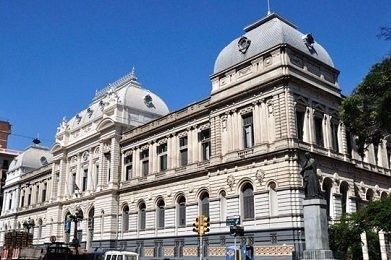
The European university extension tradition started in the decade of 1870 in Cambridge and Oxford universities, and rapidly spread through Europe in the form of conferences of cultural diffusion and “Popular University”. In its origin, university extension is the result of two interconnected processes: the European university reform under the German model and the concern of modern states to build national systems of general literacy. In the beginning, extension practices expressed the pedagogical optimism of Enlightenment, the hygienist influence, and the democratization of knowledge and culture, particularly among two groups of people excluded from a university education: workers and women. University extension was conceived as a “movement”, and that is why it has transformative potential.
This university extension tradition arrived in Latin America in the early Twentieth Century. By the connection with the university, social, and political processes in Latin America, and by being part of the program of the University Reform Movement, known as “La Reforma de Córdoba”, university extension suffered a deep transformation, and now we can talk about a Latin American extension, from a reformist tradition. From these processes, university extension gained conceptual complexity and depth, ample and rich repertoire of practices, and, at the same time, a deeper ambiguity in its meanings and definitions. As a concept located in the unstable frontiers that the university generates with its surroundings, our reflection on extension requires us to go beyond the academic field and consider the historical, social, and political processes that overdetermine them.
The presentation will cover this topic and answer the following questions: What subjects, pedagogical conceptions, and political orientations articulated the Latin American university extension in different historical times, from the Twentieth Century to the present? What subjects, pedagogical and epistemological conceptions, and what meanings and political orientations were challenged, tensioned, or articulated in the production of university extension in Latin America? What lessons can we draw to think around the challenges of the relationship between university and society today?
Agustín Cano Menoni received his BA in Psicology from Universidad de la República (Uruguay), his Master in Social Project Management from LUMSA-Università (Rome, Italy) and his Ph.D. in Pedagogy from Universidad Nacional Autónoma de México (UNAM). He is currently a professor, extensionist, and researcher at the Universidad de la República de Uruguay (UDELAR), where coordinates the Núcleo de Intervención e Investigación en Educación y Territorio of the Programa Integral Metropolitano of UDELAR. He is a undergraduate and graduate professor at the Institute of Education of the Faculty of Humanities and Education Sciences of UDELAR, and a member of the National System and Researchers of Uruguay. He is the author of the book "Cultura, Nación y Pueblo: la extensión universitaria en la UNAM (1910-2015)", published in 2019 in Mexico by the UNAM, as well as numerous articles and chapters of books on topics of university extension and Latin American University.
Additional Information
Program
Einaudi Center for International Studies
Latin American and Caribbean Studies
"Football/Soccer: The Fiction Machine" by MartÍn Caparrós (A.D. White Professor-at-Large), LACS Public Issues Forum

March 7, 2022
1:00 pm
Stimson Hall, G01
This is a hybrid lecture. Professor Caparrós will be speaking in-person at G01 Stimson Hall as well as virtually, use the link below to register to attend virtually.
MartÍn Caparrós is a distinguished Argentine author, writer, and narrative journalist, and one of the fundamental Latin American voices of our time. In 2017, he was awarded the prestigious Maria Moors Cabot award by the Columbia Graduate School of Journalism, for outstanding reporting on America; specifying work on his nonfiction book-length work El Hambre (Hunger: The Mortal Crisis of Our Time, 2016), in which the author visits both the richest and poorest people of the earth in order to explore why hunger is one of today’s big unresolved issues. The book has been translated into 14 languages.
He was the recipient of the prestigious Herralde Prize (2011) for his novel, Living; the Planeta Prize (2004) for his novel, Valfierno; and the Guggenheim Fellowship (1994). He also writes biweekly columns for The New York Times and Spain’s El País. His expertise interconnects with a range of cross-disciplinary topics including inter-American dialogue, food insecurity, and climate change.
This event is part of Caparrós’s first visit as an A.D. White Professor-at-Large (ADW-PAL) to Cornell. His on-campus residency runs March 7-11, 2022. He was elected as an ADW-PAL in 2019. His appointment runs through 2025.
Additional Information
Program
Einaudi Center for International Studies
Latin American and Caribbean Studies
"Fragile Knowledge: Owning the Scars of Second Generation Holocaust Survivors in Latin America" by Annette Levine, LACS Seminar Series

February 14, 2022
1:00 pm
Stimson Hall, G01
Co-Sponsor: Jewish Studies Program
This presentation will explore various ways in which second generation Holocaust survivors in Argentina have witnessed the wound transmitted by their parents. This talk will consider issues of representation and agency while citing instances where second generation survivors have gained access to that which has been frozen in silence.
Annette Prekker Levine is Associate Professor at Ithaca College where she teaches courses on Latin American literature, theatre, and translation. She has written about issues of memory and representation associated with the Argentine military dictatorship of 1976-83 and has been engaged in ongoing research about collective memory and injustice in the aftermath of the 1994 terrorist attack on the Jewish cultural center, the AMIA, in Buenos Aires. Her current ethnographic work is focused on the transmission of traumatic memory among second generation Holocaust survivors in Argentina.
Additional Information
Program
Einaudi Center for International Studies
Latin American and Caribbean Studies