
Einaudi Center for International Studies
Contemporary China Initiative: At the Edge of China—life in a Tibetan town
September 27, 2021
4:45 pm
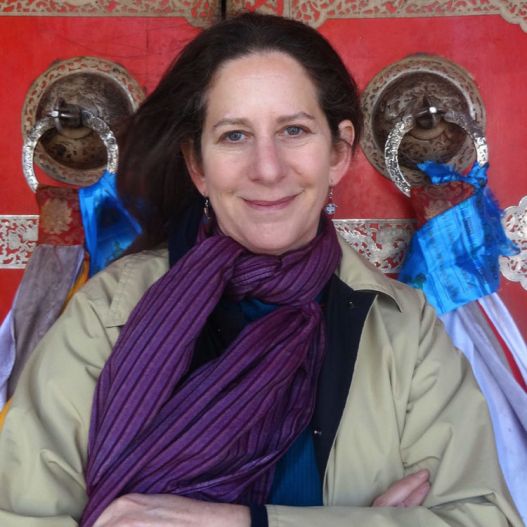
At the Edge of China—life in a Tibetan town is the focus of this talk by our guest speaker Barbara Demick, journalist, and author (Eat the Buddha, Penguin Random House, 2021). Under Xi Jinping, the Chinese Communist Party has exhibited zero tolerance for any slippage at the edges of the empire. The mass incarceration of the Muslim population of Xinjiang and the rollback of Hong Kong’s autonomy have grabbed the most attention. Tibet is experiencing the same erosion of its identity, even if the Party is proceeding more carefully.
Barbara Demick looks at life in Ngaba (Aba in Chinese), a small Tibetan county, which became the engine of Tibetan resistance to Chinese rule with a wave of self-immolations that started in 2009. Ngaba is the subject of Demick’s newest book, Eat the Buddha, which was listed among the best non-fiction of 2020 by the New York Times, Washington Post, Financial Times, Economist, and NPR, among others.
In the Cornell Contemporary China Initiative’s seventh year, our guest speakers and host Allen Carlson critically examine, the question “What is China?”
This topic is explored in the series through utilizing an inter-disciplinary perspective and making use of both historical and contemporary lenses. In so doing it will touch upon some of the most pressing and significant political and social issues now facing “China” and the rest of the world. In this context, particular attention will be paid to contested places, with special consideration of how they are placed within (or without) what is considered to be China. And will shed light on the impact such practices and processes have had on those living in these regions.
Hosted by Allen Carlson, CAPS Director, and Michael J. Zak, Chair, Cornell University | CCCI Director for Fall 2021
Cosponsored by the East Asia Program and The Levinson China and Asia-Pacific Studies (CAPS) Program.
The lecture series complements Professor Carlson’s course of the same name:
CAPS 3967 / ASIAN 3395 / GOVT 3967
Additional Information
Program
Einaudi Center for International Studies
East Asia Program
Institute for African Development Seminar Series: Reconceptualizing the Future of a New African Development Agenda with Lessons from the COVID-19 Pandemic

August 26, 2021
2:40 pm
Uris Hall, G-08
The Issues in African Development Seminar Series examines critical development issues in contemporary Africa using a different theme each semester. The seminars provide a forum for participants to explore alternative perspectives and exchange ideas and serves as a forum for students and faculty interested in African development. In addition, it will prepare students for higher level courses on African economic, social and political development.
This program is designed for students who are interested in African development, Africa’s place in global studies as well as those who want to know about the African people, cultures and societies. and explore development theories with their alternative viewpoints. Presentations will offer multidisciplinary and critical perspectives addressing a series of questions related to obstacles and enabling factors of growth and development in Africa.
Additional Information
Program
Einaudi Center for International Studies
Institute for African Development
Vital Uncertainties: Disaster, Climate Science, and the Political Ontology of an Avalanche in the Langtang Valley of Nepal, by Austin Lord
November 8, 2021
11:00 am
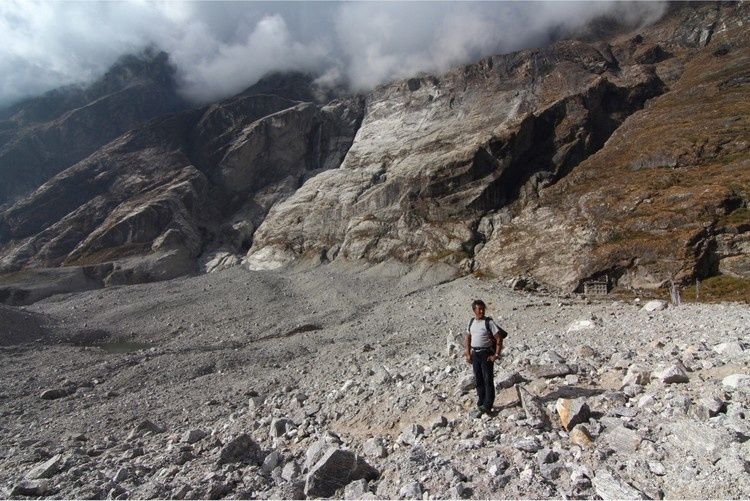
On the 25th of April 2015, during the Gorkha Earthquake, a massive glacier-rock avalanche destroyed the village of Langtang, killing over 300 people and causing unthinkable destruction and loss. My work examines the afterlives of this unthinkable event and the ways in which the people of Langtang have worked to rebuild and revitalize their communities, drawing from over five years of ethnographic research and post-disaster volunteer work, as well as my own firsthand experience of this tragedy. In this lecture, based on a chapter of my forthcoming dissertation, I analyze the ways in which the April 2015 disaster articulates with diverse ways of knowing and living with avalanches in the Langtang Valley, as the people of Langtang and climate scientist work to anticipate increasingly volatile hazard regimes and reckon uncertain climate futures.
The Langtang Valley is one of the most important sites for glaciological and climatological research in the Himalayan region – though relations and dialogue between scientific teams and the Langtang community were both uneven and limited prior to the 2015 disaster. In what ways have these situated patterns of knowledge production changed in the wake of the 2015 event, and in relation to disaster recovery and disaster risk reduction efforts? How do attempts to know cryosphere hazards and climate futures in Langtang draw together concerns about climate justice, epistemological pluralism, political ontology, and moral ecologies in the Himalayan region (cf. Sherpa 2014; Butcher 2017; Gagne 2018)? In what ways do differently positioned Langtangpas experience and conceptualize these vital uncertainties?
Austin Lord is a PhD Candidate in the Department of Anthropology at Cornell. Austin's dissertation research, titled “Inhabiting Impermanence: Disaster, Afterlives, and Vital Uncertainties in the Nepal Himalaya” focuses on the ways the people of Nepal’s Langtang Valley organize time, meaning, and uncertainty as they navigate intersecting disasters – a massive glacier avalanche, an earthquake, a pandemic, and climate change. This work is based on over five years of ethnographic research and volunteer work with Langtang communities. His broader research agenda focuses on post-disaster recovery and disaster risk reduction, hydropower development and water resource management, infrastructural politics, and the making of environmental knowledges in the Himalayan region. His scholarship has been published in journals and forums such Economic Anthropology; Cultural Anthropology; Political Geography; WIREs Water; Modern Asian Studies; Environment and Planning D: Society and Space; Himalaya: The Journal of the Association for Nepal and Himalayan Studies; Eurasian Geography and Economics; The Proceedings of the ACM on Human-Computer Interaction (CSCW), and Limn, as well as a handful of edited volumes. For more information and links to his academic work see here.
Additional Information
Program
Einaudi Center for International Studies
South Asia Program
We the Seditious People, by Ammar Ali Jan

October 25, 2021
11:00 am
South Asia is experiencing rising authoritarianism. The targets of right-wing movements are progressive forces who are increasingly viewed as outsiders threatening the imagined purity of the nation. The label of “foreign agent” is now widely invoked against political opponents who are accused of sedition. The sedition law was formulated and used by the British against anti-colonial activists. On the other hand, popular sovereignty was established in confrontation with Empire, creating an insurgent and rebellious conception of “the people”.
As someone who is under trial for sedition in Lahore, I witnessed how this law became a weapon in the hands of the state to silence internal dissent. Today, it is being used against academics, journalists, students and trade unionists to suppress critical voices. Contestations over the meaning of sedition and patriotism are at the heart of political struggles in contemporary Pakistan.
I explore three consequences for political theory emanating from discussions on sedition. First, I argue that foreignness does not denote geographical belonging but is a metaphor to describe those exceeding the normative frameworks of power. Second, the category of the internal “enemy” always maintained a subterranean existence in liberal political theory. This repressed history of violence and erasure becomes central for understanding politics in Pakistan. Finally, the criminalizing of dissent and dismantling of popular power impacts our understanding of sovereignty. The permanent state of emergency in Pakistan not only targets the category of “the people” but also undermines the concept of the sacred in the country’s polity, triggering a crisis of legitimation for the state.
Ammar Ali Jan is an academic and activist based in Lahore. He completed his Masters from the University of Chicago and his PhD in History from the University of Cambridge. His doctoral research was titled “A Study of Communist Thought in Colonial India, 1919-1951” in which he examined the relationship between European and anti-colonial political thought. Instead of viewing the non-European world as a passive recipient of European ideas, this work showed how political actors in the colonial world reframed the contours of modern political theory as a response to specific questions emanating from anti-colonial struggles.
Upon his return to Pakistan in 2016, Jan began teaching in public sector universities, became involved in the student and trade union movement, and started writing a weekly column for The News International. He was eventually fired from his position and charged with sedition as part of a crackdown against dissenting voices. Currently he is a member of the Haqooq-e-Khalq Movement (People’s Rights Movement), Cabinet Member of the Progressive International and does a weekly show on NayaDaur. His forthcoming book is titled Rule by Fear: Eight Thesis on Authoritarianism in Pakistan.
Additional Information
Program
Einaudi Center for International Studies
South Asia Program
Gatty Lecture Series: Gods of the Soil: The Continuous Creolizations of Cham Religions in Mainland Southeast Asia

November 11, 2021
12:15 pm
Kahin Center, 640 Stewart Ave
Part of the Ronald and Janette Gatty Lecture Series.
William Noseworthy, Visiting Fellow, Cornell SEAP
Dr. Noseworthy is a Visiting Fellow with the Southeast Asia Program (SEAP) at Cornell University. He is a social historian of Southeast Asia who has completed most of his fieldwork and archival work to-date in Cambodia and Vietnam. In Southeast Asia, he benefited from being one of the many students in Vietnam trained in Cham language and script by the great Gru Hajan (Dr. Thành Phần) and Gru Sakaya (Dr. Trương Văn Món), as well as from a term as a Senior Research Fellow with the Center for Khmer Studies. He has also been an SSRC-Global Residential Fellow at Gottingen University in Germany and previously received his PhD from UW-Madison's Department of History.
For questions, please contact seapgatty@cornell.edu.
Gatty Lectures will be held in-person at the Kahin Center, with the option to attend virtually as well. To attend virtually, please register at https://cornell.zoom.us/meeting/register/tJIrdeCprDkrGtHSzLD3ESseNvJrOv…?
In accordance with university event guidance, all campus visitors who are 12 years old or older must also present a photo ID, as well as proof of vaccination for COVID-19 or results of a recent negative COVID-19 test. If you are not currently participating in the Cornell campus vaccination/testing program, please bring proof of vaccination or the results of a recent negative test. More information on acceptable documentation is available here.
Additional Information
Program
Einaudi Center for International Studies
Southeast Asia Program
Gatty Lecture Series: Sacred States and Subjects: Religion, Law, and State-Building in Colonial Malaya
December 2, 2021
12:15 pm
Kahin Center, 640 Stewart Ave
Part of the Ronald and Janette Gatty Lecture Series.
Hanisah Sani, Faculty of Arts and Social Sciences, National University of Singapore
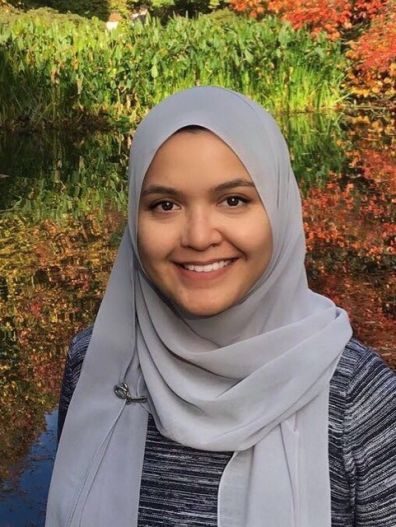
Hanisah Abdullah Sani is a comparative-historical sociologist of empire and state-formation, modernization, and development. Her research lies in the intersection of law and society, religion and politics, and social change; and she specializes in the colonial and modern histories of the Malay world and Southeast Asia. Dr. Sani received her PhD in sociology from the University of Chicago in 2019, and was a Visiting Associate at the Weiser Center for Emerging Democracies at the University of Michigan from 2019-21. She was a National University of Singapore Overseas Graduate Scholar and Overseas Postdoctoral Fellow, where she is currently faculty member in Malay Studies at the Faculty of Arts and Social Sciences.
For questions, please contact seapgatty@cornell.edu.
Gatty Lectures will be held in-person at the Kahin Center, with the option to attend virtually as well. To attend virtually, please register at https://cornell.zoom.us/meeting/register/tJArduyoqzstEtwmPHhgHmsMS1nbIZ….
In accordance with university event guidance, all campus visitors who are 12 years old or older must also present a photo ID, as well as proof of vaccination for COVID-19 or results of a recent negative COVID-19 test. If you are not currently participating in the Cornell campus vaccination/testing program, please bring proof of vaccination or the results of a recent negative test. More information on acceptable documentation is available here.
Additional Information
Program
Einaudi Center for International Studies
Southeast Asia Program
Gatty Lecture Series: Placing Blame: Climate, Culpability and Indigenous Lives in the Philippines
November 4, 2021
12:15 pm
Kahin Center, 640 Stewart Ave
Part of the Ronald and Janette Gatty Lecture Series.
Please note that this talk will not be held in person at the Kahin Center, and will take place on Zoom. Members of the SEAP community are welcome to come to the Kahin Center to watch the Zoom event together.
Will Smith, Alfred Deakin Institute for Globalization and Citizenship, Deakin University, Australia
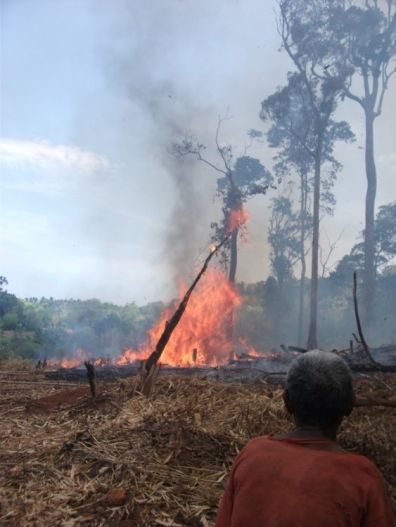
Will Smith is an anthropologist and human geographer whose research is focused on human-forest interfaces, the social dimensions of agricultural production, and the politics of indigenous knowledge in both Australia and upland Southeast Asia. His current research is focused on the illegal wildlife trade in the Philippines and conservation-based solutions to zoonotic disease emergence.
For questions, please contact seapgatty@cornell.edu.
To attend virtually, please register at https://cornell.zoom.us/meeting/register/tJErcuyvqDwrGdUzm_nO7lx6bSgc3D….
In accordance with university event guidance, all campus visitors who are 12 years old or older must also present a photo ID, as well as proof of vaccination for COVID-19 or results of a recent negative COVID-19 test. If you are not currently participating in the Cornell campus vaccination/testing program, please bring proof of vaccination or the results of a recent negative test. More information on acceptable documentation is available here.
Additional Information
Program
Einaudi Center for International Studies
Southeast Asia Program
Gatty Lecture Series: Civil-Military Relations in Myanmar's Failing Democratic Transition
October 28, 2021
12:15 pm
Kahin Center, 640 Stewart Ave
Part of the Ronald and Janette Gatty Lecture Series. ***This event is open to current Cornell NetID users only***
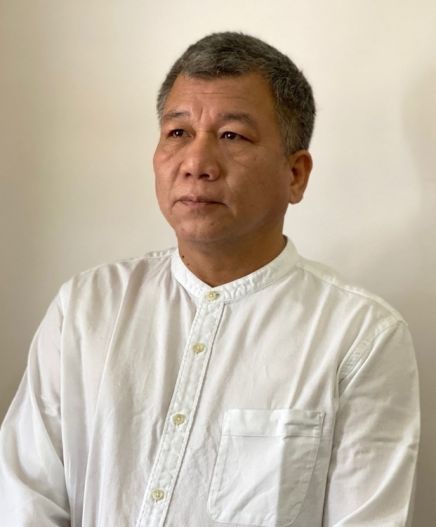
Kyaw Yin Hlaing, Center for Diversity and National Harmony
Dr. Kyaw Yin Hlaing is the executive director at the Center for Diversity and National Harmony. He earned M.A. and Ph.D. degrees from Cornell University, and has taught at the City University of Hong Kong and the National University of Singapore. He is a former Advisor to President U Thein Sein, a former member of the National Economic and Social Council, and a former director of the political dialogue program at the Myanmar Peace Center. He has published four edited volumes and more than 50 articles and reports on Myanmar politics and society. His research and teaching interests include state- and nation-building, authoritarian politics, democratization, state-society relations, social movements, communal problems, and peace building. He is currently researching what has gone wrong with Myanmar’s democratic transition.
For questions, please contact seapgatty@cornell.edu.
Gatty Lectures will be held in-person at the Kahin Center, with the option to attend virtually as well. To attend virtually, please register at https://cornell.zoom.us/meeting/register/tJIrcuyrrj0sHNNVeTzq4duFI-pfRm….
In accordance with university event guidance, all campus visitors who are 12 years old or older must also present a photo ID, as well as proof of vaccination for COVID-19 or results of a recent negative COVID-19 test. If you are not currently participating in the Cornell campus vaccination/testing program, please bring proof of vaccination or the results of a recent negative test. More information on acceptable documentation is available here.
Additional Information
Program
Einaudi Center for International Studies
Southeast Asia Program
Gatty Lecture Series: Integration, Accommodation, or Conflict: A Framework for Understanding Ethnic Politics in Southeast Asia
October 21, 2021
12:15 pm
Kahin Center, 640 Stewart Ave
Part of the Ronald and Janette Gatty Lecture Series.
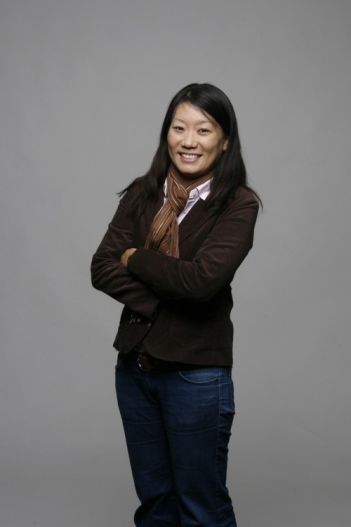
Amy Liu, Department of Government, University of Texas at Austin
Amy Liu (PhD Emory University; BA Smith College) is an associate professor in the Government Department and codirector of the Politics of Race and Ethnicity Lab at the University of Texas at Austin. Her research and teaching focus on the intersection of ethnic politics, language politics, and migration politics. Her first book Standardizing Diversity: The Political Economy of Language Regimes (2015, University of Pennsylvania) examines how the recognition of lingua francas can be conducive for economic growth – in Asia generally and in Southeast Asia specifically. Her second book The Language of Political Incorporation: Chinese Migrants in Europe (2021, Temple University Press) looks at the linguistic networks of Chinese migrants and the implications for engagement with local authorities in Europe. She is working on a new book project examining the diversity and representation of government cabinets. Liu is the current chair of the APSA Southeast Asian Politics Research Group, a member of the leadership board for Women in Southeast Asian Social Sciences, and on the advisory council for the Center for Taiwan Studies.
For questions, please contact seapgatty@cornell.edu.
Please note that this talk will not be held in person at the Kahin Center, and will take place on Zoom. Members of the SEAP community are welcome to come to the Kahin Center to watch the Zoom event together. To attend virtually, please register at https://cornell.zoom.us/meeting/register/tJ0qc-qsqT8oGtOd0Kz8y6htLhRZIp….
Additional Information
Program
Einaudi Center for International Studies
Southeast Asia Program
Reppy Institute for Peace and Conflict Studies
Gatty Lecture Series: What Happened in the Myanmar Election?
October 14, 2021
12:15 pm
Kahin Center, 640 Stewart Ave
Part of the Ronald and Janette Gatty Lecture Series. ***This event is open to current Cornell NetID users only***
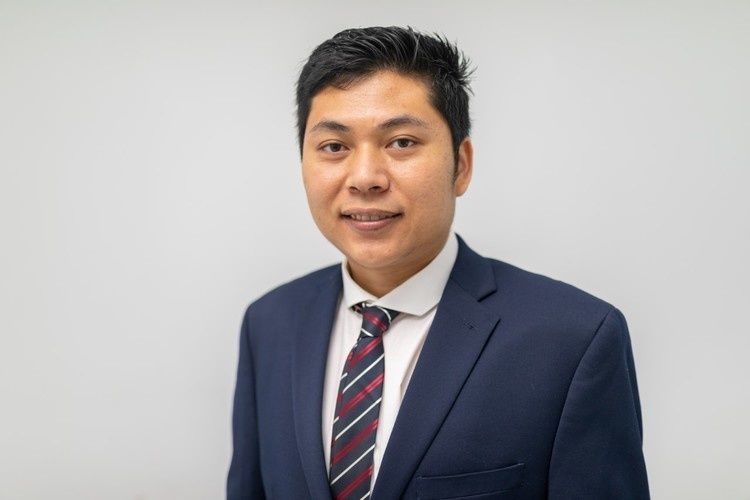
Nay Yan Oo, Visiting Scholar, The Southeast Asia Program, Cornell University
Nay Yan Oo is a visiting scholar in the Southeast Asia Program (SEAP) at Cornell University. He previously worked as a technical advisor for the Governance Program at The Asia Foundation in Myanmar, a resident fellow at the Pacific Forum in Hawaii, and a Program Manager at the Friedrich Naumann Foundation for Freedom in Yangon. He ran for the Myanmar parliament in the 2020 election from the People’s Party and exposed several scandals of the National League for Democracy government (2016-20). He has a Master of Public Policy from the University of Oxford and an MA in Political Science from Northern Illinois University. His research interests include the politics of Myanmar, civil-military relations, democratization, civil service reform, and political parties and elections. He is the founder and host of Trends in Myanmar – a political talk show. In Ithaca, he is living with Dr. Rachel Safman’s family (a SEAP alumnus and PhD in Sociology, ’02).
For questions, please contact seapgatty@cornell.edu.
Gatty Lectures will be held in-person at the Kahin Center, with the option to attend virtually as well. To attend virtually, please register at https://cornell.zoom.us/meeting/register/tJMpcuugpjsuGtHBEbUmkZ6me3g9Dl….
Additional Information
Program
Einaudi Center for International Studies
Southeast Asia Program