
Einaudi Center for International Studies
Europe and the Return of History
October 8, 2026
5:00 pm
Physical Sciences Building, 120
Russia's invasion of Ukraine, political radicalization, the crisis of the U.S., the rise of China—these are global shocks that define our current moment.
But in Europe, it is commonly said, they have a particular meaning. Not only are they close at hand. They signify a particular type of shock, a "pivot in time" as Germany's Chancellor Scholz put it. They signify an awakening. They signify the "return of history."
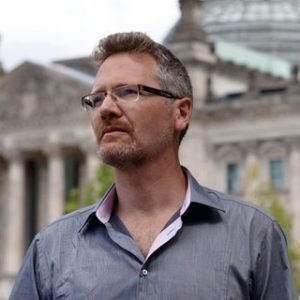
Looking back to the 20th century, Adam Tooze will explore the recurring theme in European public debate of the "end" and "return" of history.
***
About the Speaker
Professor Adam Tooze (Columbia University) teaches and researches widely in the fields of 20th-century and contemporary history, and is interested in a range of themes in political, intellectual, and military history, across a canvas stretching from Europe across the Atlantic. He is the author of prize-winning books such as The Wages of Destruction (2006), The Deluge (2014), Crashed (2018), and Shutdown (2021). His latest book, Carbon: Climate Crisis and the Decline of the West, is forthcoming in February 2027.
About the Event
This event is hosted by the Institute for European Studies (IES), part of the Mario Einaudi Center for International Studies. The IES Luigi Einaudi Distinguished Lecture is an annual event.
Additional Information
Program
Einaudi Center for International Studies
Institute for European Studies
East Asia Program
Southeast Asia Program
Latin American and Caribbean Studies
Institute for African Development
Migrations Program
Conference on Myanmar's Borderlands
July 12, 2026
12:00 am
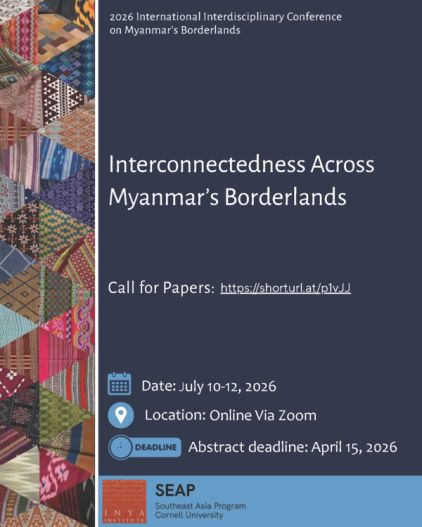
2026 International Interdisciplinary Conference on Myanmar's Borderlands (2026 IICMB)
A virtual conference hosted by the Inya Institute (Yangon), Cornell University's Southeast Asia Program (SEAP), and their Southeast Asia-based partners.
Myanmar’s multilayered crisis is profoundly reshaping the socio-economic and geo-political dynamics of the country’s borderlands—regions that have evolved into spaces of exchange, negotiation, and collaboration across geographical, cultural, and linguistic boundaries. The emergence of these spaces has been uneven, unfolding under stringent administrative control and persistent insecurity and marked by fluctuating intensity and periodic pushback from central authorities. Yet, the potential of borderlands to provide local and trans-local communities and networks with opportunities to shape the country’s future remains tremendous.
The conference’s focus on interconnectedness will highlight how inclusive learning and dialogue, local and trans-local community engagement, and recognition of our interdependence with the natural environment can further strengthen borderland dynamics across all markers. It will broaden the conversation on borderland issues that may only be addressed through the prism of ethnicity or framed as issues specific to group identities. It will also encourage dialogue across communities, inviting them to discuss the challenges they face and the aspirations they hold.
invite scholars and students to submit original research papers and/or panels covering any area of Myanmar borders with China, Laos, Thailand, Bangladesh, and India and addressing any of the following topics:
• borderland dynamics and their local and trans-local communities
• networks and partnerships emerging across ethnic, religious, cultural and linguistic boundaries
• communities, networks, and trade across borders
• natural resources and challenges to environmental protection in borderlands
• legal and illegal border migration
• humanitarian relief to refugees and public health in borderlands
• border regimes and governance
• infrastructure(s) and illicit economies and activities
• non-human mobility in borderlands
• formal and non-formal education in borderlands
• other themes related to Myanmar’s borderlands.
In order to preserve the confidentiality of presenters, the conference program will not be available for circulation beyond the group of conference presenters. Conference presenters will also be expected to follow the Chatham House Rule.
The conference will be held entirely online. Due to the time difference between Myanmar and the U.S., panels will be held in the evening for presenters based in Myanmar, Thailand, and elsewhere in Southeast Asia, and the morning for those located in the U.S.
Additional Information
Program
Einaudi Center for International Studies
Southeast Asia Program
Migrations Program
Information Session: Fulbright U.S. Student Program
May 18, 2026
5:00 pm
The Fulbright U.S. Student Program supports U.S. citizens to study, conduct research in any field, or teach English in more than 150 countries. The program is open to graduate students, recent graduates, and young professionals. Undergraduate students who wish to begin the program immediately after graduation are encouraged to start the process in their junior year. Recent graduates are welcome to apply through Cornell.
The Fulbright program at Cornell is administered by the Mario Einaudi Center for International studies. Applicants are supported through all stages of the application and are encouraged to start early by contacting fulbright@einaudi.cornell.edu.
Register for the virtual session.
Can’t attend? Contact fulbright@einaudi.cornell.edu.
Additional Information
Program
Einaudi Center for International Studies
Reppy Institute for Peace and Conflict Studies
East Asia Program
Southeast Asia Program
Latin American and Caribbean Studies
Institute for African Development
Institute for European Studies
South Asia Program
Migrations Program
Cornell Classical Chinese Colloquium with Wu Hung
April 24, 2026
3:30 pm
Rockefeller Hall, 374
Speaker: Wu Hung, Harrie A. Vanderstappen Distinguished Service Professor of Art History and the College Chinese Art, University of Chicago
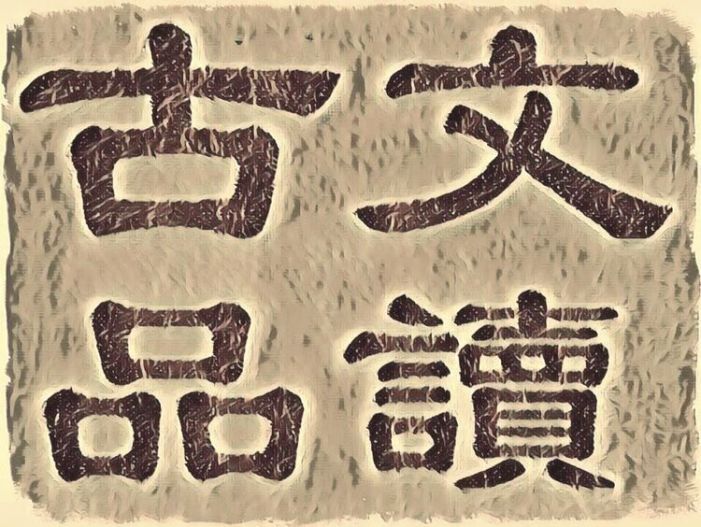
Title: How to Read Chinese Handscroll Paintings
About Cornell Classical Chinese Colloquium
The group meets monthly during the semester to explore a variety of classical Chinese texts and styles. Other premodern texts linked to classical Chinese in Japanese, Korean, and Vietnamese have also been explored. Presentations include works from the earliest times to the 20th century. Workshop sessions are led by local, national, and international scholars. Participants with any level of classical Chinese experience are welcome to attend.
o At each session, a presenter guides the group in a reading of a classical Chinese text. Attendees discuss historical, literary, linguistic, and other aspects of the text, working together to resolve difficulties in comprehension and translation.
o No preparation is required; all texts will be distributed at the meeting.
o Refreshments will be served.
Additional Information
Program
Einaudi Center for International Studies
East Asia Program
From Sand Dunes to Exotic Hard Timber Forests: An Environmental History of Coastal Vietnam
April 23, 2026
12:15 pm
Kahin Center
Gatty Lecture Series
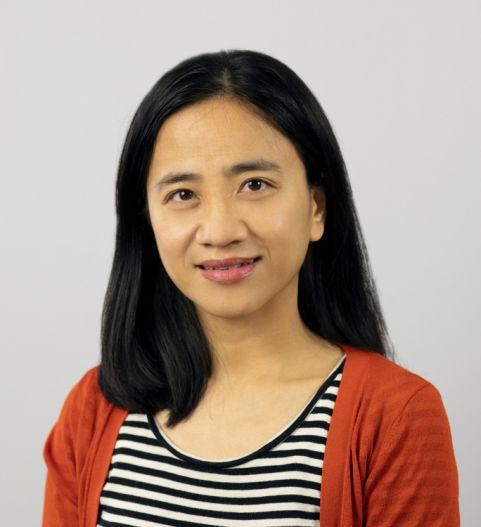
Join us for a talk by Thuy Linh Nguyen, Associate Professor of History from Mount Saint Mary College.
This Gatty Lecture will take place at The Kahin Center, 640 Stewart Ave. Lunch will be served. For questions, contact seapgatty@cornell.edu.
Abstract
My presentation explores the environmental history of the French introduction and mass planting of exotic timber species, such as Casuarina equisetifolia—commonly known as filao—and eucalyptus, to reforest and stabilize the vast moving sand dunes covering the majority of Vietnam’s 2000-mile coast, highlighting their effects on the coastal environment and indigenous communities. This research questions the colonial stereotype that portrayed coastal sand dunes as empty and barren landscapes devoid of vegetation. In contrast, as my presentation demonstrates, the ecological multiplicity of the dunes offers a new lens for examining various topics, including traditional knowledge, local economies, resources, property, land reclamation, and colonial state power.
About the Speaker
Thuy Linh Nguyen is an Associate Professor of History at Mount Saint Mary College in Newburgh, NY. Dr. Nguyen is a historian of modern Vietnam. A native of Vietnam, she received her PhD in History from the University of Pennsylvania. She is currently working as Associate professor of History at Mount Saint Mary College. Newburgh, NY. Her first book, Childbirth, Maternity and Medical Pluralism in French Colonial Vietnam, 1880–1945 (University of Rochester Press, 2016), examines the interactions between French colonial medicine and Vietnamese childbirth practices and their impact on maternal and infant health care. Her second book, Vietnam’s Coal Frontier: Mining, Environment and Empire (Cambridge University Press, November 2025), explores the environmental, economic, and social history of large-scale coal mining in French colonial Vietnam. She has also published peer-reviewed articles on other topics of modern Vietnamese history.
Additional Information
Program
Einaudi Center for International Studies
Southeast Asia Program
The Technopolitics of Nuclear Latency: How Isolated States Use Nuclear Technology to Engage the West
April 23, 2026
12:00 pm
Uris Hall, G08
Why do isolated latent proliferators insist on retaining some of their nuclear capabilities in nonproliferation settlements? Prominent scholarship on nuclear proliferation shows that weak states have used latent nuclear capabilities like uranium enrichment and plutonium reprocessing to draw Western states into negotiations and extract concessions. But when theories of nuclear latency are applied to isolated states like North Korea and Iran, scholars undertheorize those regimes’ political aspirations and black box their demands as generic “rewards” for nuclear restraint. This leads scholars to overlook the credibility deficits of the political commitments that superpowers make in nonproliferation agreements, and to misinterpret the nuclear-latency strategies of isolated regimes seeking to address those credibility challenges. This article analyzes the technopolitical strategies that North Korea and Iran used as they sought to keep Western states engaged and hold them to their commitments. Through a mixture of technical and political analysis, I identify a repertoire of nuclear latency strategies by which both states have sought to simultaneously signal nuclear capability and restraint while retaining nuclear latency in reserve to incentivize future engagement from the West.
About the speaker
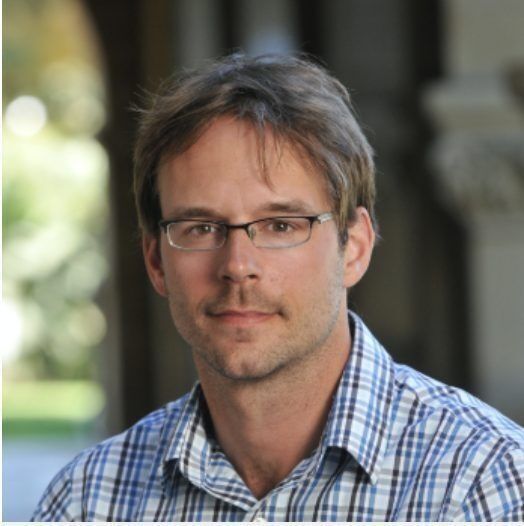
Christopher Lawrence is Assistant Professor of Science, Technology and International Affairs in Georgetown University's Walsh School of Foreign Service. He studies the histories of U.S. nonproliferation engagement with North Korea and Iran, as well as the epistemic communities in the West that create knowledge about those countries’ nuclear programs. His academic writing has been published in International Security, Social Studies of Science, Journal of Applied Physics, and IEEE Transactions on Nuclear Science. He has also written policy analysis for various online publications, including Bulletin of Atomic Scientists and War on the Rocks.
Host
Reppy Institute for Peace and Conflict Studies, part of the Einaudi Center for International Studies
Additional Information
Program
Einaudi Center for International Studies
Reppy Institute for Peace and Conflict Studies
Concepts, Categories of Knowledge, and Buddhist Imaginary: Burmese History and Semantic Shifts in Concepts
April 16, 2026
12:15 pm
Kahin Center
Gatty Lecture Series
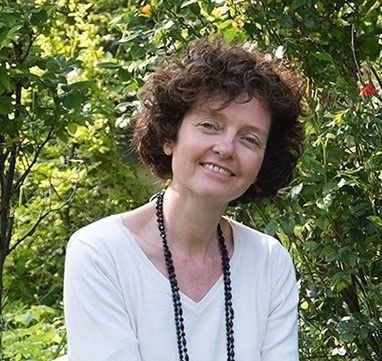
Join us for a talk by Aurore Candier, Associate Professor of History and Director of the Center for Burma Studies at Northern Illinois University.
This Gatty Lecture will take place at The Kahin Center, 640 Stewart Ave. Lunch will be served. For questions, contact seapgatty@cornell.edu.
Abstract
While living and working in Burma for over twenty years, Aurore Candier conducted research on the evolution of knowledge and concepts among Burmese elites, especially as evolved in their encounters with other cultures in the early and modern periods. Through conceptual history and discourse analysis, Candier has investigated the semantic shifts in Burmese words and concepts through a diachronic corpus made up of texts from different literary genres and traced the progressive changes in the imaginary and thought of the Burmese Buddhist universe. She has explored semantic changes in Burmese concepts and categories of knowledge such as “reform,” “time,” categorizations of “people,” “secular knowledge,” and “astrology.” She has forged an intervention which challenges some of the most basic assumptions of Burmese historiography, especially as conceived of in the classical sense.
About the Speaker
Aurore Candier has been Director of the Center for Burma Studies and Associate Professor of History at Northern Illinois University (USA) since 2024. She is a historian of Burma, where she has conducted research for over two decades, building strong ties with local scholars, students, and artists thanks to her fluency in Burmese. Her work spans pre-colonial Mainland Southeast Asian politics, early 20th-century colonial history, and Burmese intellectual and cultural history. She focuses on the longue durée of ideas and knowledge in Burma and contributes to interdisciplinary projects on astrology and divination in Burmese society.
Additional Information
Program
Einaudi Center for International Studies
Southeast Asia Program
Pop after Empire: Disco, Decolonization, and the Re-Making of Europe's Pop Music Industry
April 14, 2026
5:00 pm
A. D. White House, Guerlac Room
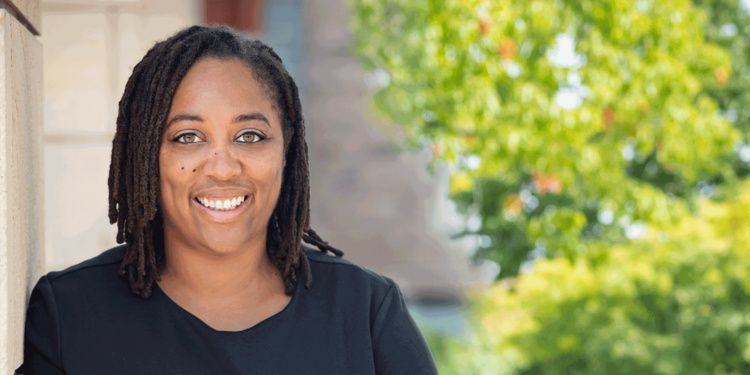
In this talk, Kira Thurman investigates the rise of Black Europeans in popular music since WWII. After the collapse of European empires, European popular music industries turned to the musical labor of former colonial subjects to reinvent themselves in an increasingly global and English-speaking marketplace. Interpreting many Black European pop stars such as Boney M or Milli Vanilli as Black Americans, however, transatlantic listeners often failed to recognize the musicians performing in front of them as belonging to European history. How, then, do we account for both the overwhelming presence—and discursive absence—of Black Europeans in modern history? This talk seeks to illuminate how musical producers, performers, and their audiences sought to make sense of—and occasionally reject—the category of ‘Black Europe’ in the wake of a newly emerging post-imperial Western Europe.
About the speaker
Kira Thurman is a highly-sought-after and award-winning historian and musicologist. A classically-trained pianist who grew up in Vienna, Austria, Thurman earned her PhD in history from the University of Rochester with a minor field in musicology from the Eastman School of Music. Her research, which has appeared in German Studies Review, the American Historical Review, Journal of the American Musicological Society (JAMS), Opera Quarterly, and Journal of World History, focuses on two topics that occasionally converge: the relationship between music and national identity, and Central Europe's historical and contemporary relationship with the Black diaspora.
Host
The Institute for European Studies, part of the Einaudi Center for International Studies
Additional Information
Program
Einaudi Center for International Studies
Institute for European Studies
Information Session: Fulbright U.S. Student Program
April 13, 2026
4:45 pm
The Fulbright U.S. Student Program supports U.S. citizens to study, conduct research in any field, or teach English in more than 150 countries. The program is open to graduate students, recent graduates, and young professionals. Undergraduate students who wish to begin the program immediately after graduation are encouraged to start the process in their junior year. Recent graduates are welcome to apply through Cornell.
The Fulbright program at Cornell is administered by the Mario Einaudi Center for International studies. Applicants are supported through all stages of the application and are encouraged to start early by contacting fulbright@einaudi.cornell.edu.
Register for the virtual session.
Can’t attend? Contact fulbright@einaudi.cornell.edu.
Additional Information
Program
Einaudi Center for International Studies
Reppy Institute for Peace and Conflict Studies
East Asia Program
Southeast Asia Program
Latin American and Caribbean Studies
Institute for African Development
Institute for European Studies
South Asia Program
Migrations Program
Cornell Classical Chinese Colloquium with Quan Gan
April 10, 2026
3:30 pm
Rockefeller Hall, 374
Speaker: Quan Gan, Lecturer of History, Rice University
Title: Invest the Gods, Praise the Lord: Royal Speeches on Temple Steles in Wuyue
Abstract: Throughout his political career, Qian Liu 錢鏐 (d. 932 CE) repeatedly petitioned the emperors in the north to grant honorific titles to powerful figures—both living and deceased, human and divine—within Wuyue. In this colloquium, I will examine two temple inscriptions commissioned by Qian Liu to commemorate the imperial bestowal of honorific titles upon two local deities: Pang Yu 龐玉, the patron god of Yuezhou 越州 (908), and the Dragon God of Hangzhou 杭州 (916).
These two steles offer valuable insight into practices of commemoration and political communication in post-Tang China. Both inscriptions are highly stylized, composed in the parallel prose form (pianwen 駢文), also known as “Four-Six Prose.” Written in Qian Liu’s first-person voice, they celebrate the political achievements of the ruler of Wuyue while foregrounding his ritual relationship with the northern emperor. Most intriguingly, both the textual content and the material form of the steles emphasize this connection. The imperial edict authorizing the bestowal of titles is not only incorporated into the inscription’s text but also visually reproduced on the stone itself.
I welcome discussion on how best to preserve the distinct registers, literary conventions, and layered voices of such inscriptions in English translation.
About Cornell Classical Chinese Colloquium
The group meets monthly during the semester to explore a variety of classical Chinese texts and styles. Other premodern texts linked to classical Chinese in Japanese, Korean, and Vietnamese have also been explored. Presentations include works from the earliest times to the 20th century. Workshop sessions are led by local, national, and international scholars. Participants with any level of classical Chinese experience are welcome to attend.
o At each session, a presenter guides the group in a reading of a classical Chinese text. Attendees discuss historical, literary, linguistic, and other aspects of the text, working together to resolve difficulties in comprehension and translation.
o No preparation is required; all texts will be distributed at the meeting.
o Refreshments will be served.
Additional Information
Program
Einaudi Center for International Studies
East Asia Program