
Einaudi Center for International Studies
Possible Landscapes

April 8, 2026
6:00 pm
Willard Straight Theatre
Possible Landscapes joins seven people in seven different regions of the Caribbean islands of Trinidad and Tobago in the course of their daily lives: Kevin, a fisherman on the east coast suffering the recent loss of one of his crew members at sea; four generations of the Josephs family in the steep hillsides of the northern range; Captain ‘Spaceman’ Philips and his glass-bottomed boat in Tobago from which he has witnessed the decline of the coral reefs; Crystal, a trade unionist active in supporting workers who lost their jobs when a major oil refinery was closed; Romulas, known as the “last sugar cane farmer” in the central plains and his Venezuelan workers; Stephanie a nurse who worked in the oil fields in the south starting just after World War II; Tony, originally from Jamaica, a climate change analyst, agriculturalist and rabbit farmer in St Joseph.
A collaboration between a documentary filmmaker, Kannan Arunasalam, and two professors, Tao DuFour (Architecture) a spatial theorist and Natalie Melas (Comparative Literature) a postcolonial comparatist and student of Caribbean thought, Possible Landscapes is the outcome of the team research project, “Possible Landscapes: Documenting Environmental Experience in Trinidad and Tobago,” funded through a grant from Cornell University’s Migrations: A Global Grand Challenge and the Mellon Just Futures Initiative.
Filmmaker Kannan Arunasalam and producers Natalie Melas (Associate Professor of Comparative Literature at Cornell) and Tao DuFour (assistant professor of architecture) will join for a conversation after the screening.
Free admission! Reserve your free ticket through Cornell Cinema. Sponsored by the Migrations Program with cosponsorship from the Latin American and Caribbean Studies Program, both part of the Einaudi Center for International Studies.
Additional Information
Program
Einaudi Center for International Studies
Migrations Program
Latin American and Caribbean Studies
Invisible Anatomy: Meridians and Math in Chinese Medicine
April 6, 2026
4:30 pm
Uris Hall, G-08
East Asia Program Lecture Series presents “Invisible Anatomy: Meridians and Math in Chinese Medicine"
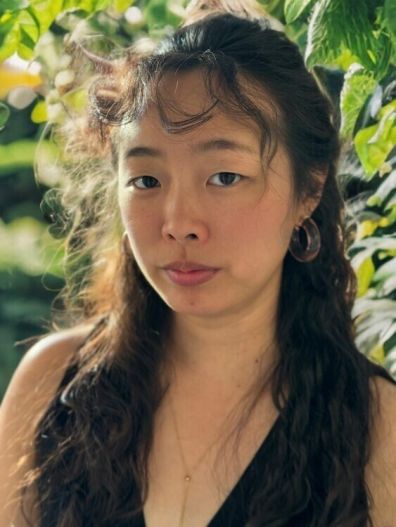
Speaker: Lan Li, Assistant Professor of The History of Medicine, Johns Hopkins University
Description:
This talk is based on Body Maps: Improvising Meridians and Nerves in Global Chinese Medicine, which reframes generic anatomical images by considering illustrations of invisible structures as maps. Body Maps offers a long global history of medicine through hand-drawn body maps and spans across the tenth to the twentieth centuries to re-think cultures of objectivity beyond normative geographies of science and medicine. In this talk, I focus on the graphic form of a tu 圖 as a historical category of technical images to understand how illustrations of lines guided diagnostic and therapeutic practice. Scholars often debated whether to discursively interpret these lines as meridians, channels, or tracts; practitioners often debated whether these lines merely visualized nerves to articulate needling and heating practices. Specifically, this talk offers a critical examination of a thirteenth-century image of jingluo 經絡, or meridians, and considers it within the epistemological frameworks of global East Asian medicine. Drawing on analytical approaches from science studies, visual culture, and medical humanities, it traces the aesthetic, conceptual, and political dimensions of these anatomical images across premodern, modern, and contemporary periods.
Speaker's Bio: Lan A. Li is an Assistant Professor in the Department of the History of Medicine at Johns Hopkins University. Li is a historian of the body and media producer, contributing to podcasts and exhibitions related to acupuncture, Buddhist medicine, and metaphors in science and medicine. Li’s first book, Body Maps: Improvising Meridians and Nerves in Global Chinese Medicine (JHU Press, 2025) considers the long history of graphically representing invisible anatomy.
Additional Information
Program
Einaudi Center for International Studies
East Asia Program
Language Resource Center Speaker Series - LeAnne Spino - Advancing Second Language Proficiency and Intercultural Competence in Postsecondary Education
March 26, 2026
4:30 pm
Stimson Hall, G25
"Advancing Second Language Proficiency and Intercultural Competence in Postsecondary Education"
LRC Signature Speaker
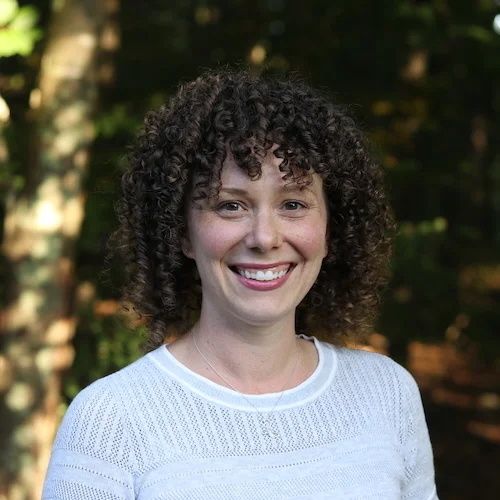
LeAnne Spino
Associate Professor of Spanish, Proficiency Coordinator, and Director of International Studies and Diplomacy, University of Rhode Island
This is a pivotal moment for language programs. Enrollments in languages other than English are plummeting across the United States. Also in flux is the landscape of higher education more generally. In this climate of uncertainty, language programs must be able to clearly and convincingly articulate their value. Yet how can we effectively make these arguments?
There are, of course, many possible strategies for demonstrating and communicating the value of language programs. In this talk, I will detail one possible approach, resulting from a deep realignment across six degree-granting language programs at the University of Rhode Island that sought to advance students' language proficiency and intercultural competence. We will explore what these constructs are, the extent to which they develop in postsecondary studies, and how they can be framed to university leadership, faculty, and students to successfully communicate at least part of the value of a postsecondary language education.
Bio: Dr. Spino (Spino-Seijas) received her Ph.D. from Michigan State University in Second Language Studies. She is currently an Associate Professor of Spanish at the University of Rhode Island and the Proficiency Coordinator for the Department of Modern and Classical Languages and Literatures, where she spearheads the Department’s Proficiency Initiative. This initiative seeks to increase students' language proficiency through faculty training, large-scale proficiency testing, and evidence-based curricular revamping. Dr. Spino is also the Director of the International Studies and Diplomacy program, a dual degree program in which students major in International Studies and a language, study abroad for at least a semester, and reach a high proficiency benchmark in the language they study before graduation.
Dr. Spino specializes in second language acquisition. Much of her research focuses on issues that impact language teaching directly. She is particularly interested in the development of second language proficiency and the sociopolitics of language acquisition and pedagogy, especially as it pertains to heritage language speakers of Spanish.
This event will be held in person in G25 Stimson and will also be streamed live over Zoom (registration required). Join us at the LRC or on Zoom.
The event is free and open to the public.
Additional Information
Program
Einaudi Center for International Studies
Latin American and Caribbean Studies
Information Session: Fulbright U.S. Student Program
March 18, 2026
4:45 pm
The Fulbright U.S. Student Program supports U.S. citizens to study, conduct research in any field, or teach English in more than 150 countries. The program is open to graduate students, recent graduates, and young professionals. Undergraduate students who wish to begin the program immediately after graduation are encouraged to start the process in their junior year. Recent graduates are welcome to apply through Cornell.
The Fulbright program at Cornell is administered by the Mario Einaudi Center for International studies. Applicants are supported through all stages of the application and are encouraged to start early by contacting fulbright@einaudi.cornell.edu.
Register for the virtual session.
Can’t attend? Contact fulbright@einaudi.cornell.edu.
Additional Information
Program
Einaudi Center for International Studies
Reppy Institute for Peace and Conflict Studies
East Asia Program
Southeast Asia Program
Latin American and Caribbean Studies
Institute for African Development
Institute for European Studies
South Asia Program
Migrations Program
Food Security Alone Not Enough, Focus Must Shift to Nutrition, Says Agri Expert Prabhu Pingali
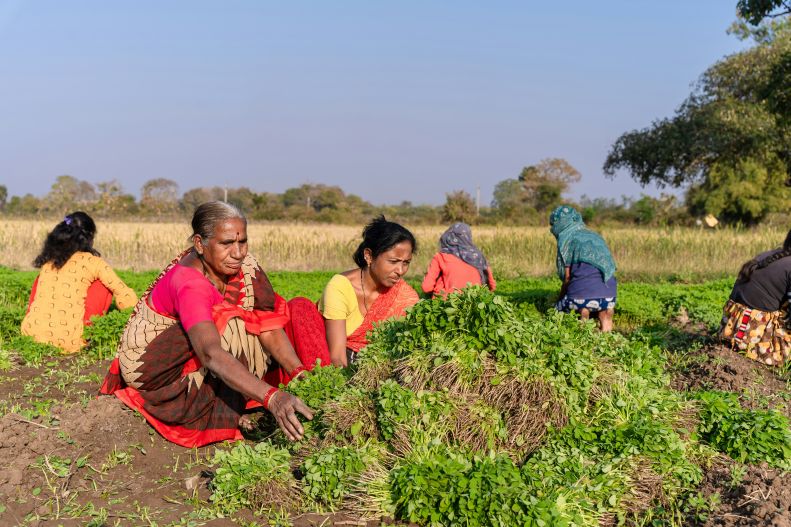
Prabhu Pingali, SAP
Prabhu L. Pingali, director of the Tata-Cornell Institute for Agriculture and Nutrition, advocates for policy shifts to improve India’s nutrition security.
Additional Information
Indonesia at 'point of No Return' on Big Prabowo Growth Bet, Despite Market Carnage
Thomas Pepinsky, SAP/SEAP
Thomas Pepinsky, a Cornell University professor, provides analysis on Indonesia's economic strategy and the risks posed to investor confidence.
Additional Information
Bay Area Braces for ‘March for Billionaires’, Which Organizers Promise Is Serious

Cristobal Young, IES
Cornell University sociologist Cristobal Young discusses how the ultra-wealthy are unlikely to leave California in response to new taxes.
Additional Information
The Risk of Nuclear War Is Rising Again. We Need a New Movement for Global Peace

David Cortright, PACS
David Cortright, a visiting scholar at Cornell University’s Reppy Institute for Peace and Conflict Studies, calls for new grassroots action to reduce nuclear risk.
Additional Information
Globalization and Technology Infecting Domestic Politics

Eswar Prasad, SAP
Eswar Prasad, Cornell University economics professor, analyzes the impact of globalization and technology on domestic politics.
Additional Information
Civilian Self-Protection in an Era of Escalating Harm and Uncertainty
March 12, 2026
12:00 pm
Uris Hall, G08
Civilians have long developed strategies to protect themselves and others in the face of violence. Over the past two decades, research on civilian self-protection (CSP) has documented these practices across diverse conflict settings, challenging the assumption that protection is primarily delivered by states or international actors. Today, this insight has taken on renewed urgency. Civilian casualties, displacement, and violations of international humanitarian law have surged, while international assistance has become increasingly fragmented and unreliable. In this context, civilian self-protection is not peripheral but central to how civilians navigate insecurity and survive.
In this talk, I examine what the current moment reveals about CSP and its limits. Drawing on my recent work on civilian protective agency, the risks of international engagement, and the role of digital technologies, I synthesize key insights from the CSP literature and assess why international efforts to recognize or support these practices—often framed through the language of localization—have remained partial, contested, and fraught with risk. I then analyze how information and communication technologies are reshaping civilian agency by amplifying coordination and visibility while simultaneously producing new forms of exposure and vulnerability. Taken together, the talk asks how civilian self-protection reshapes conflict dynamics, redistributes risk, and complicates prevailing assumptions about responsibility, authority, and protection itself.
About the speaker
Emily Paddon Rhoads is Associate Professor of Political Science at Swarthmore College, where she teaches courses in international relations, comparative politics, and peace and conflict studies. Her research examines how protection, legitimacy, and trust are constructed when formal institutions are strained or contested, and how communities, local and global, organize safety and cooperation under conditions of violence, crisis, and political fragmentation.
Host
The Reppy Institute for Peace and Conflict Studies, part of the Einaudi Center for International Studies
Co-sponsor
The Gender and Security Sector Lab
Additional Information
Program
Einaudi Center for International Studies
Reppy Institute for Peace and Conflict Studies