
Einaudi Center for International Studies
Kun Huang, EAP: Einaudi Student Path (video)
Kun Huang, a PhD student in comparative literature studying anti-blackness in China, is part of the Einaudi Center's East Asia Program. EAP's Graduate Student Steering Committee has offered her opportunities to find a community across disciplines and develop as a scholar.
Additional Information
Configuring the Future in Vietnamese Francophone: Readings of Marguerite Duras, Pham Duy Khiêm, and Kim Lefèvre

May 13, 2021
12:30 pm
Part of the Ronald and Janette Gatty Lecture series
Vinh Phu Pham, PhD Candidate in Comparative Literature, Cornell University
As a field of study, Vietnamese Francophone literature is a historically specific phenomenon that does not fit neatly within the broader framework of postcolonial literatures. On a pragmatic level, it is a limited literary traditionthat continues to diminish each day due to the waning significance of the French language within Vietnam, withless than 1% of the population still fluent, and among the diasporic Vietnamese communities abroad. Because of this trend, readings of this corpus tended to have primarily been framed within the nostalgic mode, or as a literature that once was, rather than something that is still alive.The unintended consequence of these readings is a premature foreclosure on whatever other possible readings there might be. Confronted with the reality that this tradition might soon evaporate, one of my central concerns has to do with the question of what it means to work within an archive where the production of the cultural objects themselves must reconcile with the very possibility oftheir own effacement? Or more concretely, what will happen to Vietnamese Francophone if there is no Vietnamese audience to receive it?My goal, therefore, is not to predict the future vitality of this body of work, since such predictions always fall short, but to pose a hypothetical of whether one might be able to read some of these novels against the grain of unlikely futurity, as dictated by secondary criticism. Inmy reading of three novels by Marguerite Duras, Pham Duy Khiem, and Kim Lefèvre, I propose that it is indeed possible to locate a yet-to-come future within these works, or a conscious effort of the authors in moving towards something other, ratherthan a singular longing for the colonial past. Paying close attention to their representation of romance and historical transmission, I suggest that these works were intended to be read for many future generations, even when that future appears bleak.
Additional Information
Program
Einaudi Center for International Studies
Southeast Asia Program
The Puzzle of Rising Education, Later Marriage, and Dowry Persistence in India: A Demographic Analysis, Alaka Basu
May 10, 2021
11:00 am
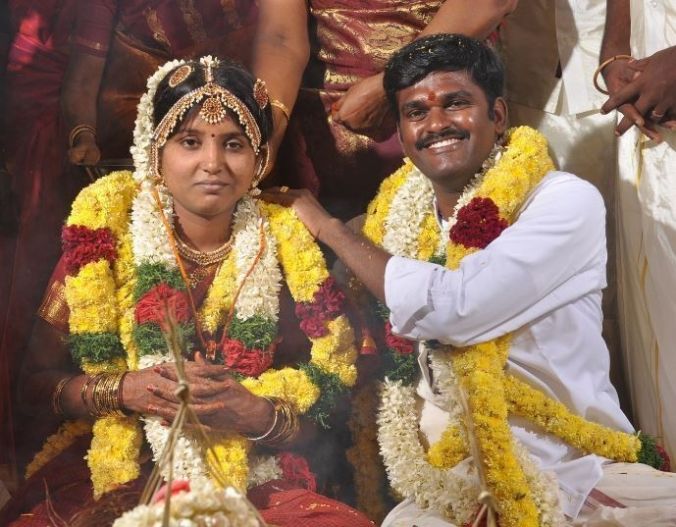
This paper records the rising age at marriage for women and men in India and discusses the possible contextual influences on these trends – government policy, economic and social development, aggressive social advocacy, and a marriage squeeze – and then goes on to discuss the potential implications of each of these influences. It cautions against the complacent assumption in international and domestic advocacy that rises in the age at marriage reflect only positive changes in underlying circumstances. Accordingly, it also cautions against the complacent assumption that rises in the age at marriage can have only positive consequences for the health and social welfare of society. These mixed conclusions mean that later marriage cannot be treated as an unequivocal indicator of progress on the development agendas of the Millennium Development Goals (MDGs) and the Sustainable Development Goals (SDGs).
Alaka M Basu is a professor in the Department of Global Development at Cornell University and a Senior Fellow at the United Nations Foundation in Washington, DC. For six years, she was also the Director of the South Asia Program at Cornell University. She has taught at Jawaharlal Nehru University in Delhi, the Harvard School of Public Health and Georgetown University. Her primary research publications are in the areas of reproductive health and family planning, gender and development, child health and mortality, the interface of fiction and demographic facts, and the politics of population policy. She is a regular contributor to national newspapers in India. She served/serves on the governing boards of the Population Association of America (PAA), the International Union for the Scientific Study of Population (IUSSP), the Population Council in New York and the Population Reference Bureau in Washington DC.. She was/is the chair of the IUSSP Scientific Committee on Anthropological Demography, a member of the Committees on Reproductive Health and on Population Projections of the National Research Council at the U.S. National Academy of Sciences and a member of the Lancet-Guttmacher Commission on Sexual and Reproductive Health and Rights. She is currently on the Editorial Advisory Boards of Population and Development Review and Asian Population Studies. She is the series editor of the Policy Briefs produced by the Sociology of Development section of the American Sociological Association.
Additional Information
Program
Einaudi Center for International Studies
South Asia Program
Kamala Harris and the History of South Asian America, by Nico Slate
May 3, 2021
11:00 am
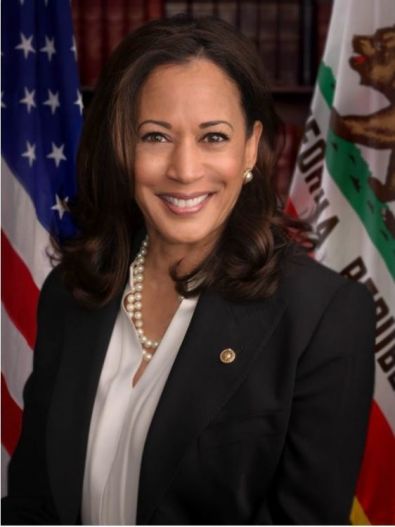
When Madame Vice President, Kamala Harris, ran for president of the United States, news coverage focused on her unusual ethno-racial roots. Her Indian mother was from Chennai and her father, who is Black, was born in Jamaica. Some journalists also questioned whether progressive voters would be put-off by Harris’s past as a prosecutor and her reputation as something of a cautious centrist. The history of South Asian America offers a way to connect Harris’s family history to her politics—and to rethink what it means that Harris is now the Vice President of the United States. An important facet of her South Asian identity has been largely ignored: the fact that her mixed-race heritage connects Harris to the long history of South Asian Americans who never fit neatly in any one racial box. Put differently, it’s not just her mother who links Harris to the South Asian community; equally important is the fact that she has had to find her way outside conventional American racial categories. This talk will explore the racial borders of South Asian America by juxtaposing the life and career of Kamala Harris with the lives and activism of a range of other figures, including another famous Kamala: the feminist and anticolonial activist, Kamaladevi Chattopadhyay. Through such comparisons, we will explore together histories of race, migration, and social struggle that continue to have profound resonance—not only in the United States but also in contemporary South Asia.
Nico Slate is Professor in the Department of History at Carnegie Mellon University. His research examines the history of struggles against racism, imperialism, and caste oppression in the United States and South Asia. He is the author of four books: Colored Cosmopolitanism: The Shared Struggle for Freedom in the United States and India (Harvard University Press, 2012), The Prism of Race: W.E.B. Du Bois, Langston Hughes, Paul Robeson and the Colored World of Cedric Dover (Palgrave Macmillan, 2014), Gandhi’s Search for the Perfect Diet: Eating with the World in Mind (University of Washington Press, 2019), and Lord Cornwallis Is Dead: The Struggle for Democracy in the United States and India (Harvard University Press, 2019).
Additional Information
Program
Einaudi Center for International Studies
South Asia Program
"Toxic Chemicals in Film," by Óscar Pérez Hernández, Border Environments, A Special Events Series
April 6, 2021
1:00 pm
Sponsored by the Central New York Humanities Corridor from an award by the Andrew W. Mellon Foundation
Oscar A. Pérez is an assistant professor of Spanish language and Hispanic studies at Skidmore College, in Saratoga Springs, New York. He holds a PhD in Spanish from the University of Wisconsin-Madison, and a master’s in the history of science and scientific communication from the University of Valencia, Spain. His research focuses on science, technology, and the environment in Hispanic literature and film. His work has appeared in critical volumes and various academic journals, including Hispania, Hispanic Issues Online, Imagofagia, Ibérica, and Film International. He is currently working on two book projects. The first one examines the relationship between authoritarianism and medicine in the Spanish-speaking world. The second one looks at contemporary narratives of disease in rural environments.
Co-Sponsored by: Latin American Studies Program, Latina/o Studies Program, Department of Comparative Literature, Cornell Cinema, and the Migrations Initiative
Additional Information
Program
Einaudi Center for International Studies
Latin American and Caribbean Studies
Musicophilia in Mumbai: Performing Subjects and the Metropolitan Unconscious, by Tejaswini Niranjana

April 5, 2021
9:00 am
This book talk focuses on the manifestations of musicophilia in Mumbai from the late 19th century to the present. Love and madness come together in the metropolis as a condition of subjective excess, the condition of the musical subject’s simultaneous psychic and social habitation of modern urban space. I propose that the phenomenon of music-loving, and the concept of a lingua musica, help us grasp the workings of the metropolitan unconscious of a large port-city like Mumbai, throwing new light on the ‘subjective’ and the ‘social’ as they take shape under conditions of colonial and post-colonial modernity.
Tejaswini Niranjana is currently Professor and Head, Department of Cultural Studies, Lingnan University, Hong Kong. She is also Visiting Professor with the School of Arts and Sciences at Ahmedabad University, India. She is co-founder of the Centre for the Study of Culture and Society, Bangalore, which offered an innovative inter-disciplinary PhD programme from 2000-2012. During 2012-16, she headed the Centre for Indian Languages in Higher Education at the Tata Institute of Social Sciences, Mumbai, and was Indian-language advisor to Wikipedia. She is the author of Siting Translation: History, Post-structuralism and the Colonial Context (University of California Press, 1992), Mobilizing India: Women, Music and Migration between India and Trinidad (Duke University Press, 2006), and Musicophilia in Mumbai: Performing Subjects and the Metropolitan Unconscious (Duke University Press, 2020). Among her edited volumes is Genealogies of the Asian Present: Situating Inter-Asia Cultural Studies (Orient Blackswan, 2015), with Wang Xiaoming.
Image designed by Jugal Mody.
Additional Information
Program
Einaudi Center for International Studies
South Asia Program
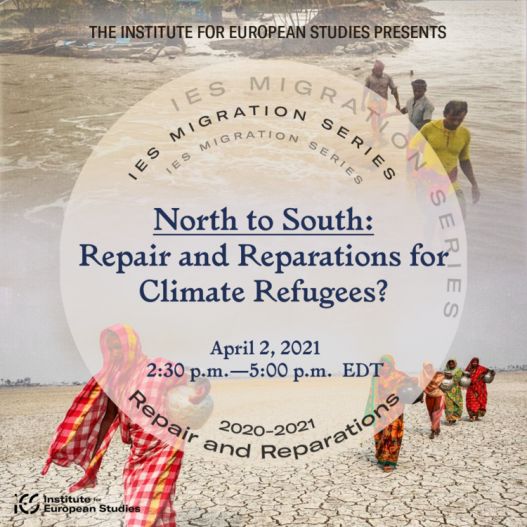
North to South: Repair and Reparations for Climate Refugees?
April 2, 2021
2:30 pm
The displacement of populations due to climate change forecasts an unprecedented phenomenon in human history. Neither international law nor nations are prepared to face up to this challenge in a way that would secure refugee’s human rights or their appropriate resettlement. This panel brings together different academic disciplines to bear on the question of rehabilitation and resettlement as a form of reparation to current and future climate refugees. How is it possible to think of restitutions to climate refugees by acknowledging the accountability of the first industrializing countries of the Global North in imposing this displacement on the peoples of the Global South? The intention is to start a conversation with scholars working in the areas of migration, transitional justice, art, architecture, and environmental humanities on the possibility of a just response to the displacement of climate refugees.
Speakers
Ashley Dawson | City University of New YorkAnne Mc Clintock | Princeton UniversityBronwyn Leebaw | University of California, RiversideAnooradha Iyer Siddiqi | Barnard College, Columbia UniversityBilly Fleming | University of PennsylvaniaModerated by Esra Akcan | Cornell University
The panel is sponsored by the IES of Einaudi Center for International Studies at Cornell University. It is organized as part of IES’ Migration Series for its AY 2020-21 theme Repair and Reparations. You may find information about the past events including their video recordings here: https://einaudi.cornell.edu/programs/institute-european-studies/events/….
Additional Information
Program
Institute for European Studies
Einaudi Center for International Studies
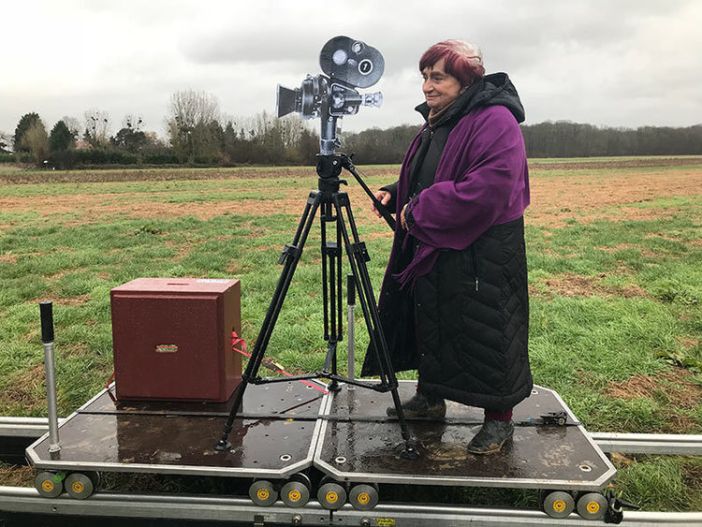
Varda by Agnès
April 8, 2021
12:01 am
2019 > France > Directed by Agnès Varda
With Agnès Varda, Sandrine Bonnaire, Herve Chandes
The final film from the late, beloved Agnès Varda is a characteristically playful, profound, and personal summation of the director's own brilliant career. Suffused with the people, places, and things she loved...this wonderfully idiosyncratic work of imaginative autobiography is a warmly human, touchingly bittersweet parting gift from one of cinema's most luminous talents. In French. Subtitled. More at janusfilms.com/films/1944
2 hrs
We will start taking reservations one week in advance of a film's first play date.
Reservations can be made here:
https://cinema.cornell.edu/virtual-cinema-order-form
Additional Information
Program
Einaudi Center for International Studies
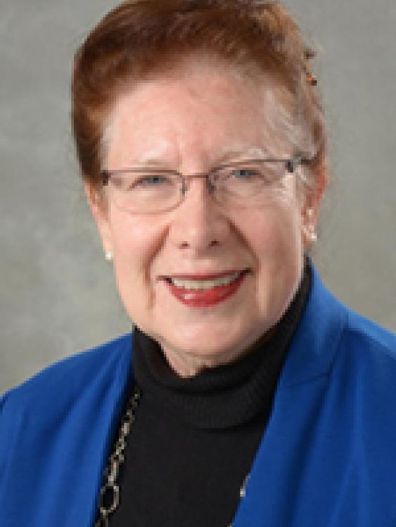
"Specimens by Amanda Keller-Konya," by Georgina Whittingham, Border Environments, A Special Series
March 30, 2021
1:00 pm
Sponsored by the Central New York Humanities Corridor from an award by the Andrew W. Mellon Foundation
Georgina J. Whittingham (B.A. Queens College, M.A. Stanford University, Ph.D. Rutgers University) is Professor of Spanish and Latin American Literature at the State University of New York at Oswego. She is the author of the book Gilberto Owen y la crisis del lenguage poético (Gilberto Owen and the Crisis of Poetic Language) published by Mexico's Autonomous State University Press and has published book chapters and articles on Hispanic theatre, poetry and narrative in texts issued by academic publishing houses and journals such as Iberoamericana/ Vervuert/Verlag, KARPA, Latin American Theatre Review, Romance Language Annual, Texto Crítico, Universidad Autónoma del Estado de México, and Studies in Modern and Classical Languages. Her recent research centers on image and text in contemporary Mexican Literature.
Co-Sponsored by: Latin American Studies Program, Latina/o Studies Program, Department of Comparative Literature, Cornell Cinema, and the Migrations Initiative
Additional Information
Program
Einaudi Center for International Studies
Latin American and Caribbean Studies
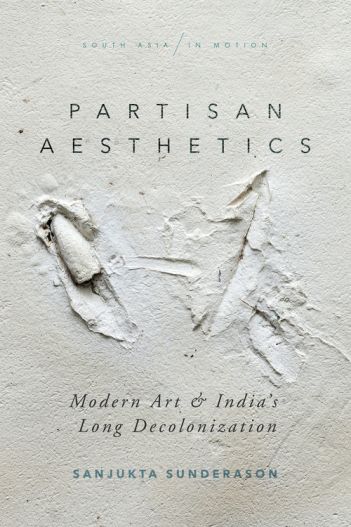
Partisan Aesthetics: Modern Art and India’s Long Decolonization
March 30, 2021
11:30 am
Partisan Aesthetics explores art's entanglements with histories of war, famine, mass politics and displacements that marked late-colonial and postcolonial India. Introducing "partisan aesthetics" as a conceptual grid, the book identifies ways in which art became political through interactions with left-wing activism during the 1940s, and the afterlives of such interactions in post-independence India. Using an archive of artists and artist collectives working in Calcutta from these decades, Sanjukta Sunderason argues that artists became political not only as reporters, organizers and cadre of India's Communist Party, or socialist fellow travelers, but through shifting modes of political participations and dissociations. Unmooring questions of Indian modernism from its hitherto dominant harnesses to national or global affiliations, Sunderason activates, instead, distinctly locational histories that refract transnational currents. She analyzes largely unknown and dispersed archives—drawings, diaries, posters, periodicals, and pamphlets, alongside paintings and prints—and insists that art as archive is foundational to understanding modern art's socialist affiliations during India's long decolonization. By bringing together expanding fields of South Asian art, global modernisms, and Third World cultures, Partisan Aesthetics generates a new narrative that combines political history of Indian modernism, social history of postcolonial cultural criticism, and intellectual history of decolonization.
This event is co-sponsored by the Columbia University South Asia Institute.
Debashree Mukherjee is Assistant Professor of film and media in the Department of Middle Eastern, South Asian, and African Studies (MESAAS) at Columbia University. Her first academic monograph, Bombay Hustle: Making Movies in a Colonial City (2020), approaches film history as an ecology of material practice and practitioners. In her new research she is developing a media history of indenture and South-South migrations, spanning photography, communications infrastructures, and film traffic. Debashree edits the peer-reviewed journal BioScope: South Asian Screen Studies and has published in journals such as Film History and Feminist Media Histories.
Iftikhar Dadi is Associate Professor and Chair of Cornell University’s Department of History of Art, Director of the South Asia Program, and Board Member of the Institute for Comparative Modernities. He researches art from a global and transnational perspective, with emphasis on questions of methodology and intellectual history.
Dwaipayan Banerjee is an Associate Professor of Science, Technology, and Society at the Massachusetts Institute of Technology. Banerjee's first monograph Enduring Cancer: Life, Death and Diagnosis in Delhi presents the efforts of the urban poor in Delhi to carve out a livable life with cancer, as they negotiate an over-extended health system struggling to respond to the disease. He has also co-authored Hematologies: The Political Life of Blood in India with Jacob Copeman. Banerjee's current research—Decolonizing Science: Towards a Cosmopolitics of Art, Physics and Computing in 1950s India—tracks scientific and aesthetic internationalisms in early postcolonial Bombay and Calcutta.
Sanjukta Sunderason is a historian of 20th century aesthetics, working with the interfaces of visual art and political thought. She is interested in particular in the ways in which art reflects and reframes struggles, imaginations, and dialogues around 20th-century decolonization. Her first book, Partisan Aesthetics: Modern Art and India’s Long Decolonization (2020) studied left-wing aesthetics in dialogue with formations of modern art in late-colonial and early postcolonial India. She is currently working on two book projects: a co-edited volume on the aesthetics of the postcolonial left in South Asia (with Lotte Hoek, University of Edinburgh); and a monograph on ideas/forms of the transnational in the art of decolonial liberation movements. Sunderason lives and works in the Netherlands, where she is Assistant Professor in the department of History of Art, University of Amsterdam.
Additional Information
Program
Einaudi Center for International Studies
South Asia Program