
Einaudi Center for International Studies
Strange Fish
March 4, 2021
12:01 am
Film is Sold Out, but Panel discussion with filmmaker Giulia Bertoluzzi on Tues Mar 2 at noon is still open, register here.
Ithaca Premiere>2018 > Italy/Tunisia > Directed by Giulia Bertoluzzi
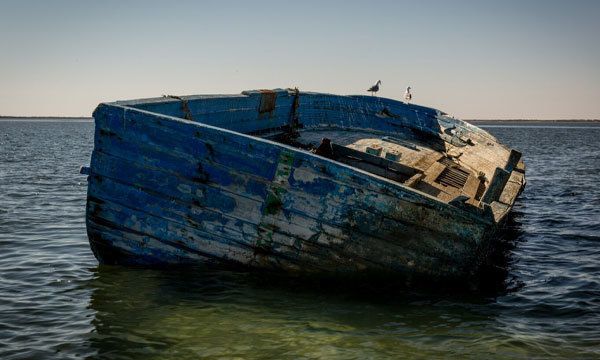
Set primarily in Zarzis, Tunisia, and the waters of the Mediterranean Sea, Strange Fish tells the story of Tunisian fishermen who have been rescuing migrants and recovering the dead along the world's deadliest migration route since the early 2000s. The film's title, a reference to Billie Holiday's "Strange Fruit," links the deaths of African migrants en route to Europe and the lynching of African Americans. In Arabic. Subtitled. Cosponsored by Cornell's Migrations Initiative and the Einaudi Center. More at prime.tv/strange-fish/?lang=en
54 min
Additional Information
Program
Einaudi Center for International Studies
"Hurricane Maria in Puerto Rican Comics," by Paul Humphrey, Border Environments, A Special Events Series

March 4, 2021
1:00 pm
Sponsored by the Central New York Humanities Corridor from an award by the Andrew W. Mellon Foundation
Paul Humphrey received his PhD in Modern Languages from the University of Birmingham (2013), and his research focuses on gender, sexuality and African-derived religions in Caribbean literature. His monograph, Santería, Vodou and Resistance in Caribbean Literature: Daughters of the Spirits (2019), was published in the Studies in Hispanic and Lusophone Cultures Series at Legenda (Cambridge, UK), an imprint of the Modern Humanities Research Association. Paul has published peer-reviewed articles in Sargasso, Studies in Comics, Journal of Haitian Studies, International Journal of Francophone Studies, Bulletin of Hispanic Studies and in the edited volume Capital Culture: Perspectives in Ethnic Studies II (2019).
Paul has taught courses on Caribbean and Latin American literature and cultural studies, gender studies, and Spanish and French language. His current research project focuses on identity, gender and sexuality in Caribbean speculative fiction and comics, a topic featured in the September 2019 issue of Colgate Research.
Co-Sponsored by: Latin American Studies Program, Latina/o Studies Program, Department of Comparative Literature, Cornell Cinema, and the Migrations Initiative
Additional Information
Program
Einaudi Center for International Studies
Latin American and Caribbean Studies
"Visual Anthropology Project: 'A Gregarious Species'," by Natasha Raheja, Border Environments, A Special Events Series

February 18, 2021
1:00 pm
Sponsored by the Central New York Humanities Corridor from an award by the Andrew W. Mellon Foundation
This found footage, single-channel video installation contemplates borders, migration, and human-animal relations in the context of bilateral management of “transboundary pests,” particularly gregarious desert locust swarms in South Asia. The piece brings together mobile phone videos of a series of desert locust swarms in 2019 shot by Indian Plant Protection Officers with rumors and allegations that Pakistan (an “enemy state”) sends swarms of locusts across the border to destroy Indian crops. The title, “Gregarious Species” is at once a celebration of the profuse force of human-animal sociality and also a critique of the ways border regimes deny a cross-border sociality to human migrants.
Natasha Raheja is an anthropologist working in the areas of migration, citizenship, and ethnographic film. Her current documentary video project, Kitne Passports? (How many Passports?), visualizes the migration trajectories of Pakistani Hindu families in India from different caste backgrounds. The documentary is a companion to her book manuscript, From Minority to Majority: Pakistani Hindu Claims to Indian Citizenship. The book is an ethnographic account of Pakistani Hindu migration to India and theorizes the flexibility of the religious minority form and the endurance of caste across state borders in South Asia. Together, this work explores the relationships between religious nationalism, state machinery, and modes of cross-border belonging in the context of majority-minority relations in liberal democracies. Extending her interest in uneven mobilities and borders, she is also completing an experimental short film series on the movement of non-human animals and everyday objects across the India-Pakistan border. Films in the series include: A Gregarious Species, Kaagaz ke chakkar, and Enemy Property. As part of her fieldwork, she has conducted collaborative documentary filmmaking workshops with Pakistani Hindu middle-school students to understand and amplify their perspectives on life in India. Professor Raheja’s scholarship has received generous support from the Fulbright Commission, the Wenner-Gren Foundation for Anthropological Research, the American Institute for Indian Studies, the NYU Vice Provost’s office and several other endowments. Her films have screened at colleges and festivals nationally and internationally and my publications have featured in the Journal of Refugee Studies, American Anthropologist, and Visual Anthropology Review.
Co-Sponsored by: Latin American Studies Program, Latina/o Studies Program, Department of Comparative Literature, Cornell Cinema, and the Migrations Initiative
Additional Information
Program
Einaudi Center for International Studies
Latin American and Caribbean Studies
South Asia Program
Kathryn Fiorella

Director, Migrations Program
Kathryn Fiorella is an associate professor of public and ecosystem health in the College of Veterinary Medicine. Her research interests include planetary health/one health, fisheries, livelihoods, HIV/AIDS, nutrition and environmental change.
Additional Information
Margarita Tsoutsoura

John and Dyan Smith Professor of Management and Family Business
Margarita Tsoutsoura is an associate professor and Smith Family Business Professor of Finance at the SC Johnson Graduate School of Management. She is also a faculty research fellow at the NBER Corporate Finance Program and a research fellow at the Center for Economic and Policy Research. Tsoutsoura has several research projects studying family firms and privately held firms.
Additional Information
Agricultural Transformation in an Evolving Nepal, by Andrew McDonald
February 15, 2021
11:00 am
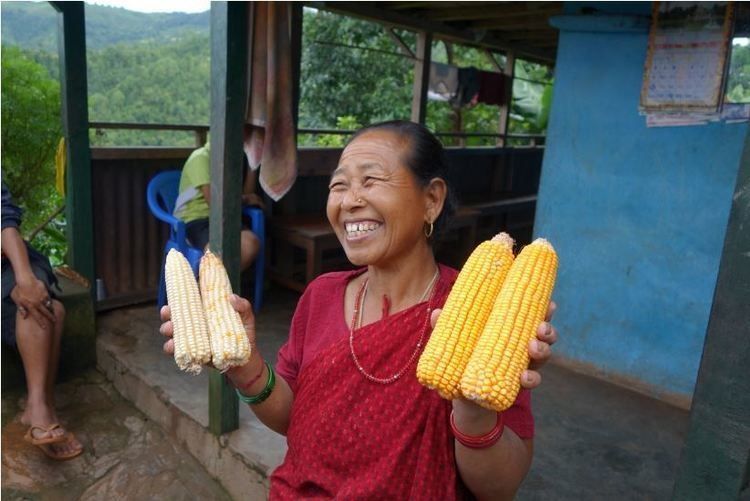
Despite more than a decade of intensive urbanization, Nepal remains heavily dependent on agriculture for domestic food security, rural livelihoods, and for the generation of employment opportunities in aligned service industries. At the same time, agricultural productivity remains, by many metrics, the lowest in the South Asia region. Development of the agri-food sector has benefited from a sustained period of relative political stability following the resolution of the Maoist insurgency in 2007. Nevertheless, the recent devolution of powers to the newly formed provinces following the adoption of the Constitution of 2015 has created a host of new coordination and administrative challenges. Furthermore, sustainable agricultural development in Nepal faces long-standing structural, technical and institutional barriers to change that are compound by factors such as intensifying climate variability, weak value chains, extreme levels of out-migration, and the lingering impacts of natural disasters such as the severe earthquakes that struck the country in 2015. In this retrospective presentation, I discuss some of the success and failures that have marked agricultural research and development investments over the last decade and offer insights into how new programming can be more effectively prioritized, targeted, and implement across the diverse agricultural landscapes of Nepal.
Andrew McDonald is Associate Professor in the Soil and Crop Sciences Section of the School of Integrative Plant Science at Cornell University, with a joint appointment in the Department of Global Development. He is a cropping systems ecologist who addresses global challenges to agricultural sustainability and food security through process-based agronomy, integrated systems analysis, development of decision frameworks, and by fostering innovation alliances to support sustainable rural development. Much of McDonald's current research program is anchored in South Asia where he previously led CIMMYT’s sustainable intensification program, including the eco-regional Cereal Systems Initiative for South Asia. At Cornell, McDonald is also a faculty fellow at the Tata-Cornell Institute as well as the Cornell Atkinson Center for Sustainability.
Additional Information
Program
Einaudi Center for International Studies
South Asia Program
Seema Golestaneh

Director, Southwest Asia and North Africa Program
Seema Golestaneh is an associate professor in Cornell’s Department of Near Eastern Studies. Her research, situated at the nexus of anthropology and religious studies, is focused on expressions of contemporary Islamic thought in the Persian-speaking world.
Additional Information
Program
Role
- Faculty
- SWANA Director
- SWANA Core Faculty
- SWANA Steering Committee
- Einaudi Faculty Leadership
Contact
Email: sg2327@cornell.edu
Emily Detrick

Director of Horticulture, Cornell Botanic Gardens
Emily Detrick is the director of horticulture for the Cornell Botanic Gardens.
Additional Information
Daniel Alpert

Adjunct Professor, Law
Daniel Alpert is a member of Einaudi's CRADLE research team. He is a senior fellow in financial macroeconomics at Cornell Law School, working within the Clarke Program on the Law and Regulation of Financial Institutions and Markets of the Clarke Business Law Institute. Alpert is a founding managing partner of Westwood Capital, LLC, and its affiliates.
Additional Information
Rethinking Vulnerability: Structural Inequality as National Insecurity

Rebecca Slayton, PACS
In the latest H-Diplo | ISSF Policy Series, Jason Ludwig (PhD candidate, STS) and PACS director Rebecca Slayton write on structural inequality in America.