
Einaudi Center for International Studies
Migrations Wins $5 Million Grant
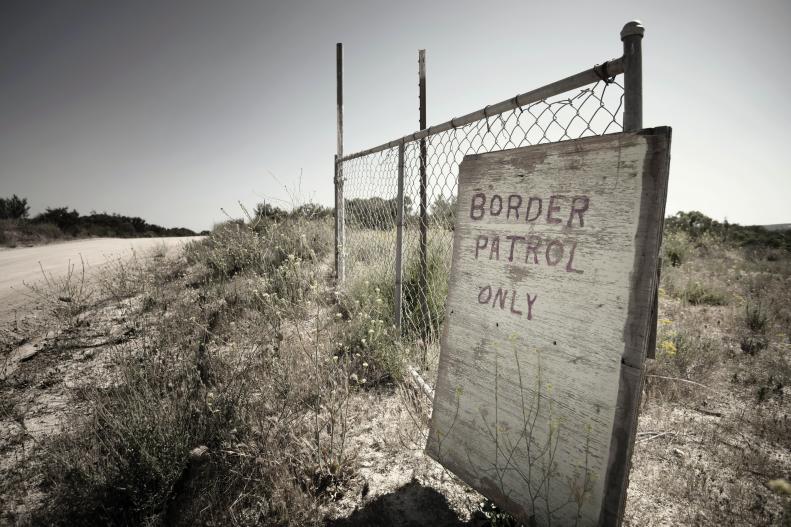
Cross-Border Movements: Racism, Dispossession, and Migration
Einaudi Center director Rachel Beatty Riedl and Einaudi's Migrations immigrant health team are among the project's leaders.
Additional Information
Death on the Mediterranean
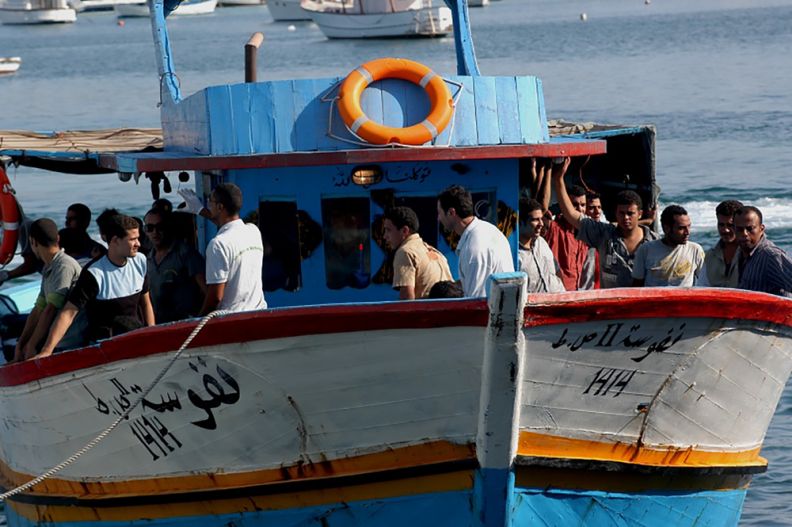
Eleanor Paynter on Migrant Deaths at Sea
Migrations postdoc Eleanor Paynter on the fate of asylum seekers crossing the Central Mediterranean and the politics of search and rescue.
Additional Information
Oil-Gotten Gain: Petrodollars, Abscam, and Arab American Activism, 1973-1981, by Salim Yaqub - CMS Seminar Series
May 12, 2021
4:30 pm
In the 1970s, soaring oil prices provided huge revenues to oil producing Arab countries, which, together with private Arab companies and individuals, invested billions of dollars in the U.S. economy. The influx of Arab petodollars drew mixed reactions from Americans. Some feared that wealthy Arabs were “buying up America” and gaining control over the nation’s political, economic, educational, and cultural institutions. Others welcomed Arab investment as a boon to the U.S. economy and to global stability. Petrodollars also played a key role in Arab American history. Demeaning portrayals of oil-rich Arabs in media and government discourse—reaching a crescendo in the FBI’s “Abscam” sting opererations of 1978–1980—goaded Arab Americans to adopt more organized methods of combating anti-Arab stereotypes. Salim Yaqub draws on his book, Imperfect Strangers: Americans, Arabs, and U.S.–Middle East Relations in the 1970s, to explore the complex legacy of Arab petrodollars in American life.
Additional Information
Program
Einaudi Center for International Studies
Farmers, Traders, Slaves, and Princes: Retrieving Lives of Eighteenth Century Inhabitants in and around Colombo, Sri Lanka, by Dries Lyna - CMS Seminar Series
April 28, 2021
4:30 pm
In this talk I will present the ongoing research project "Colonialism inside out" a Sri Lankan-Dutch research project, which has been running since 2017. The project aims at historical life writing, by combing macro-data from 18th century parish and census registers with qualitative data from legal courts, notary offices and church councils. The project brings in view the local farmers, Muslim and chettiyar merchants and Indian ocean exiles and slaves who inhabited Colombo and its surroundings.
Dries Lyna is Assistant Professor in Cultural and Economic, Social & Demographic History and Cultural History, Radboud University, Netherlands. He was trained at the Centre for Urban History (University of Antwerp), and was a Fulbright Visiting Scholar at Duke University and the Getty Research Institute. In the past he has been a guest lecturer at the History Departments of the University of Antwerp (2006-2012) and the Free University of Brussels (2011-2012), as well as at the Institut d'Etudes Supérieures des Arts in Paris (2006-2012).
His current research interest lies in the socio-legal history of colonial cities, with a focus on eighteenth-century Sri Lanka. Among others he studies the social function of colonial courts in Colombo, Jaffna and Galle. In addition he is interested in the family life of former slaves in the suburbs of Colombo, as part of the project 'Life after Slavery: Setting the Research Agenda of Slave Histories in the Global Era, 1750-1900', a collaboration with the University of Glasgow of which he is project leader. In the past he published on creative economies, art markets and material culture in the Low Countries (late 17th -19th centuries).
Additional Information
Program
Einaudi Center for International Studies
South Asia Program
Women, Religious Education, and the Transmission of Islamic Knowledge in Kenya, by Hassan Juma Ndzovu - CMS Seminar Series
April 13, 2021
12:00 pm
In Kenya there exist a chain of women educators in religious knowledge amongst the Muslim community. Due to their level of Islamic knowledge, their instructional role has for a long time been restricted to the traditional chuo (Quranic schools) to teach the reading and memorization of the Quran to children. This demonstrates the extent to which Muslim women were denied opportunities to pursue higher Islamic learning beyond the “necessary” basics. Even reputable early Muslim scholars in Kenya, like Sheikh Al-Amin Ali Mazrui (d. 1947) and Sheikh Sayyid Ali Badawi (d. 1963) did not make efforts to recruit and encourage women to advance their knowledge in Islamic education. Despite to the initial setback, presently there is a section of Muslim women who have successfully advanced their religious training through various initiatives. Owing to their advanced education, these women have assumed different roles in disseminating the religious knowledge to the Muslim community in the country.
Additional Information
Program
Einaudi Center for International Studies
Institute for African Development
Rough Work: A New Look at Chinese Paper-making Communities
April 7, 2021
11:30 am
ROUGH WORK with Yiyun Peng, Ph.D. Candidate, Cornell, History
Beyond Workshops: Spatial Distribution of Paper-making Communities and Properties in Upland Southeast China, 1700-1950
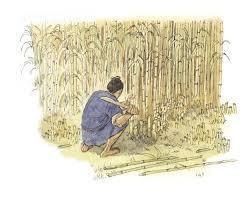
Paper-making was a prevalent and profitable industry in upland Southeast China in the late imperial and republican periods. Previous analyses have largely focused on paper workshops and studied their output, paper-making skills, and so forth. In other words, the paper industry was depicted as an agglomerate of paper-workers in small workshops. But the activities of paper-makers in the workshops were only part of the industry. This paper looks beyond the workshops and reveals the spatial distribution of various components, including its communities and properties, of the whole industry.
In all, this new way of looking at the industry provides a new perspective on the interactions of production and environment and of different groups of producers, and demonstrates the heterogeneity of utilizing the highlands and the ways in which people across space stretched their influence to the remote uplands to make the most of their living environment.
Please read the paper in advance - when you register, you'll receive a link to it via the registration confirmation email.
ROUGH WORK: Discussing research in progress, hence the term, rough work. This rough work session is hosted by the East Asia Program's Graduate Student Steering Committee (GSSC).
Additional Information
Program
Einaudi Center for International Studies
East Asia Program
Islam in the Estuary of Indonesia: Hamka, History, and the Nation, by James Rush - CMS Seminar Series
March 30, 2021
4:30 pm
Although Hamka (Haji Abdul Malik Karim Amrullah, 1908-1981) embraced modernist ideas of purity, he also embraced the idea that Islam manifested itself differently in different places and times. Indeed, this was natural and necessary. As a Indonesian writer of great popularity and authority, and also as an influential public actor, Hamka attempted to formulate Islam for his own country’s place and time. In his lifetime, history moved with lightning speed through eras of colonialism, foreign occupation, revolution, and nation-state building. An astounding flood of new ideas and experiences flooded Indonesia’s “estuary,” as he put it. This seminar talk will take up how Hamka attempted to reconcile Islam with some of these new ideas and experiences, including revolution, democracy, communism, and the nation.
Additional Information
Program
Einaudi Center for International Studies
Southeast Asia Program
Cornell Classical Chinese Colloquium: Yuanyaun Duan
February 12, 2021
3:30 pm
Writing and Printing for Praying: Colophons of Dali Buddhist Scriptures
Yuanyuan Duan, Ph.D. student, Cornell
This presentation introduces the colophons of the Sinitic Buddhist scriptures from Dali, Yunnan dating back to the 12th-17th centuries. These colophons usually consist of the information of the patrons who had the text copied or printed, the prayers stating their motivations to do so, and the date of manufacture. By examining the form and content of the colophons, especially the benediction directed at specific individuals, we will get a glimpse of what people believed that they could gain through engaging in writing or printing Buddhist scriptures, and how monastic and lay communities in Dali handled their everyday existence from the independent Dali Kingdom era (937-1253) to the period of being incorporated as the southwestern frontier of the Ming empire.
The Cornell Classical Chinese Colloquium (CCCC) 古文品讀 is a reading group for scholars interested in premodern Sinographic (古文) text. The group typically meets monthly during the semester to explore a variety of classical Chinese texts and styles. Other premodern texts linked to classical Chinese in Japanese, Korean, and Vietnamese have been explored. Presentations include works from the earliest times to the 20th century. Workshop sessions are lead by local, national, and international scholars. No prior experience or preparation is necessary.
Additional Information
Program
Einaudi Center for International Studies
East Asia Program
A Genealogy of African Islam Modernity, Wendell Marsh - CMS Seminar Series
March 17, 2021
4:30 pm
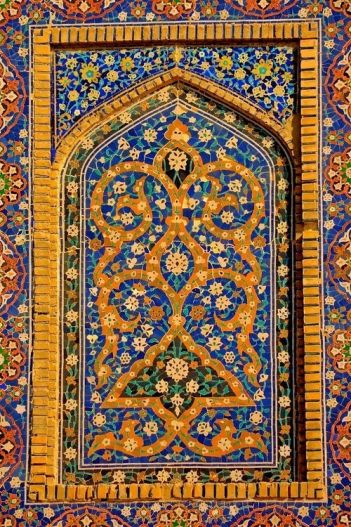
African Islamic modernity is a discourse, a historical condition, and a project that highlights the entanglements of African racial identities, Islamic forms of life, and modernity as the globally hegemonic mode of social, economic, and political being. While there are many lineages by which one might trace the story of entanglement — situated differently in various locations, traditions, and contexts — the contemporary nation-state of Senegal is the ideal setting to think through these relationships. It is a space marked by a millennium of Islamic presence and over five centuries of integration in the global economy sequentially defined by the trans-Atlantic slave-trade, colonization, and neoliberal economic structural adjustment. It is also a space in which conflicting Africanist and Orientalist discourses have competed to represent a society that consistently escapes both constructions. Between and beyond these discourses, there is an important national discourse that narrates a story of modernity in three key episodes: 1) Islamic revolution that enshrines Islamic principles of governance, 2) anti-colonial messianism that carves out an autonomous space of Islamic economics, and 3) Racial accommodation in which the colonial state and Sufi orders negotiate the terms of the social contract. In this talk, I will show how these episodes together constitute a history of the present.
Additional Information
Program
Einaudi Center for International Studies
Institute for African Development
Muslims in Tang, Song and Yuan China, by Angela Schottenhammer - CMS Seminar Series

March 3, 2021
4:30 pm
The seminar will introduce some examples of activities and transregional relations of Muslims in Tang, Song, and Yuan China (618-1279 CE). The talk will specifically concentrate of traders and physicians, and also introduce a few of the more important names that we know from this period. The scope of our inquiry here is intentionally kept wide, so that we can tap into various aspects of Muslim activities in the social, economic, and political life of then- contemporary China. The topics discussed in this seminar cover a period of some six hundred years, during the Medieval/Early Modern period of Chinese History.
Additional Information
Program
Einaudi Center for International Studies
East Asia Program