
Einaudi Center for International Studies
Welcome to Mars: The UAE’s Space Colonization Mission, Anticipatory Authoritanism, and the Labor of Hope, by Nicole Grove - CMS Seminar Series
February 17, 2021
4:30 pm
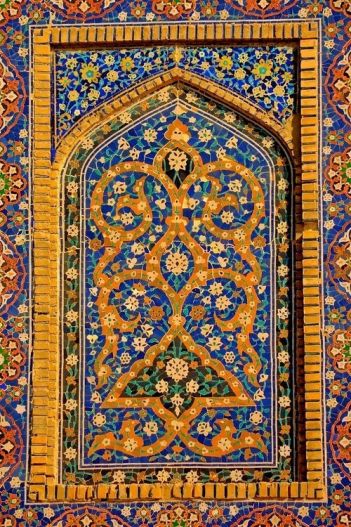
In 2017, the government of Dubai announced plans to create the first human settlement on Mars within one hundred years. This article considers how the ‘Mars 2117’ project and its Earth-bound beta tests represent an increasingly global vanguard relationship to the materials we call nature, combined with a world-forming narrative where the goal of politics is about making a new kind of habitat, rather than the creation of a polis. Mars 2117 reveals the ways in which the present grounds for authoritarian legitimacy specifically in the UAE are, in effect, on loan, for which the future functions as a form of collateral for its present day governance structure, and is hedged upon the engineered anticipation of a people, a place, and most importantly, an infrastructure to come. This form of authority is being innovated to skip over political contradictions, environmental limits, and the precarity of a tumultuous and potential catastrophic future caused by the feedback between peak oil and irreversible climate change. Anticipatory authoritarianism is an answer, even if not a solution, to a dialectic of destruction created by contemporary global labor practices and carbon economy-ecology.
Additional Information
Program
Einaudi Center for International Studies
Continuing Presence of Discarded Bodies with Eunjung Kim, Syracuse U
February 11, 2021
4:30 pm
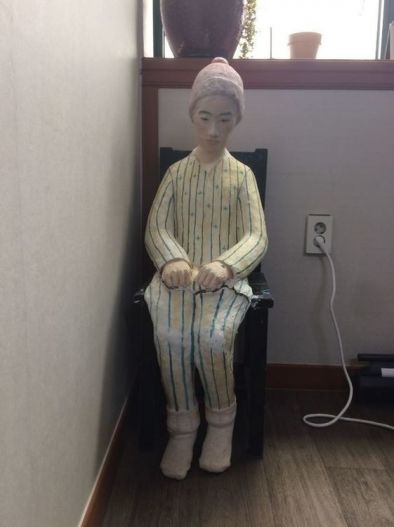
Continuing Presence of Discarded Bodies: Occupational Harm, Necro-Activism, and Living Justice with Eunjung Kim, Syracuse University.
Starting from the two activist campsites set up in Seoul, one by the coalition of disability organizations and the other by the Supporters for the Health and Rights of People in the Semiconductor Industry, Kim explores a history of occupational health movements and their intersections with disability rights movements in South Korea. Against the bureaucratic technology of rating the degree of disability and harm, necro-activism emerges in the form of persistent involvements of dead bodies, mourning, and other-than-human presence, making claims for justice as an ongoing practice of everyday life and afterlife.
Bio: Eunjung Kim is an Associate Professor of women’s and gender studies and disability studies at Syracuse University.
Julia Chang (Assistant Professor in the Department of Romance Studies and core faculty in Feminist, Gender, and Sexuality Studies at Cornell) will be serving as respondent to Eunjung’s talk.
Andrew Campana (Associate Professor, Department of Asian Studies) hosts and moderates.
The event image is of a statue by Pak Yujin (박유진). Description: A statue of Hwang Yumi is sitting in a chair in the corner of the room below the window with daylight shining through. After working at a Samsung Electronics semiconductor plant, Hwang Yumi died of acute myeloid leukemia. She is wearing striped hospital pants, a top, a pink cap, and pink socks. She is looking down toward the floor and her two hands are on her thighs in fists. There are two potted plants on the windowsill. Next to the chair is an outlet with a single white plug and cord trailing out of the frame of the image.
(Co-)Sponsored by the Central New York Humanities Corridor from an award by the Andrew W. Mellon Foundation
Co-sponsored by the Society for the Humanities
Additional Information
Program
Einaudi Center for International Studies
East Asia Program
The Trump Administration Misses an Opportunity to Protect the Air

Amanda Rodewald, LASP
Amanda Rodewald, professor and senior director of conservation science at the Cornell Lab of Ornithology, writes this opinion piece about the Trump administration’s missed opportunity to protect the air.
Additional Information
For a Post-Nationalist Biden
Kaushik Basu, SAP
Kaushik Basu, professor of economics, writes this opinion piece about the challenges President-elect Joe Biden and Vice President-elect Kamala Harris face when President Donald Trump leaves office.
Additional Information
Is Trump's coup a 'dress rehearsal?'
Valerie Bunce, Einaudi
"All Trump has on his side is his base," says Valerie Bunce, professor of international studies emerita. "That is the currency of his power, and he will hold on to is as much possible."
Additional Information
Biden's Get-Tough Plans Face Sobering China Reality

Eswar Prasad, SAP
"The U.S. and China are locked in an explicit and escalating power struggle that could tear apart the rules and institutions underpinning the global trade and governance systems,” says Eswar Prasad, professor of trade policy.
Additional Information
Sculpture "S.1200—99th Congress" Inspired by the LASP Seminar Series Course

aka "Cage Luggage"
Undergraduate art student Sabrina Haertig was inspired to create a migrations sculpture after participating in this semester’s Contemporary Issues in Latin-Latino America fall seminar series (LATA 4000/6000).
The sculpture entitled S.1200—99th Congress., takes its name from “the 1986 immigration reform act that was passed by the Reagan administration that essentially criminalized migration,” she said. Using steel and other mixed materials, the work depicts variously sized pieces of luggage that mimic cages as a commentary on migration and immigrant detainment.
The seminar, led by the Latin American Studies Program’s director Kenneth Roberts, featured a series of lectures from speakers on migration, borders, and racial justice issues. Some of these speakers include Beth Jorgensen and Abby Cordova.
“This course has been transformative towards my research [as a Rawlings Cornell Presidential Research Scholar] and now I am sure to have picked up the habit of attending LATA lectures out of curiosity for my remaining semesters at Cornell,” she said.
LASP will hold the seminar series again in spring 2021 for students of any level and discipline. Sign up now!
Additional Information
Feminist Futures and Ecological Sense in South Korea
April 26, 2021
4:30 pm
Kimberly Chung, McGill University Kimberly Chung, McGill University
Faculty host: Ivanna Yi, Assistant Professor, Asian Studies
Professor Chung writes: This paper examines the interrelationship of feminism, ecological sense and art practice in the context of contemporary South Korea. Since 2018, the Me Too movement brought systemic gendered discrimination in all areas of South Korean political, cultural, and social life into focus, with books, like Kim Ji-Young, Born 1982, becoming a cultural touchstone for a generation of women who came into adulthood at the turn of the 21st century. While most discussions about South Korean feminism have had an anthropocentric focus, this paper focuses on the productive and often fraught relationship between feminism and ecological movements in South Korea, best exemplified by writers, artists, and art collectives who interrogate capitalist patriarchalism and patriarchal urban planning through an employment of ecological sense. Ecological sense frameworks like microbes, symbiosis and the “women’s work” of knitting and DIY are ways in which artists/art collectives like Rice Brewing Sister’s Club, Listen to the City, and Soyo Lee have exemplified an emerging feminist ecology that situates the exploitation of women within a wider web of human/nonhuman interrelations. This paper will utilize cultural works by South Korean artists, writers, and activists as important analytical tools for making sense of the consumption of nature, urban redevelopment, globalization, and dislocation of life. A particular line of questioning will focus on framings of landscape without nature, an aesthetics of dislocation, post pastoral perspectives, and science fiction futurist orientations.
Co-sponsored by the Departments of Asian Studies and Comparative Literature
Additional Information
Program
Einaudi Center for International Studies
East Asia Program
Cornell Classical Chinese Colloquium: Sophie Volpp, UC Berkeley
April 2, 2021
3:30 pm
This month's CCCC welcomes Sophie Volpp to lead a text reading on Qianlong Emperor’s Poem, “On the Mirror”
In 1763, the Qianlong emperor composed a poem entitled, “On the Mirror” (Jing yu (鏡 喻) that examines the novel properties of the western plate glass mirror in tandem with those of plate glass windows. In the poem, the emperor sits in a pavilion, observing the glow of the setting sun. The first half of the poem is dedicated to a prosaic examination of the technology of the glass mirror, while the second half launches in a different direction, exploring the novel capacity of the plate glass windows of the pavilion to act as mirrors once darkness sets in. Ultimately, the mirror's capacity for perfect and passive reflection becomes a metaphor for good government.
The Cornell Classical Chinese Colloquium (CCCC) 古文品讀 is a reading group for scholars interested in premodern Sinographic (古文) text. The group typically meets monthly during the semester to explore a variety of classical Chinese texts and styles. Other premodern texts linked to classical Chinese in Japanese, Korean, and Vietnamese have been explored. Presentations include works from the earliest times to the 20th century. Workshop sessions are led by local, national, and international scholars.
No previous experience with Classical Chinese or preparation is required.
Additional Information
Program
Einaudi Center for International Studies
East Asia Program
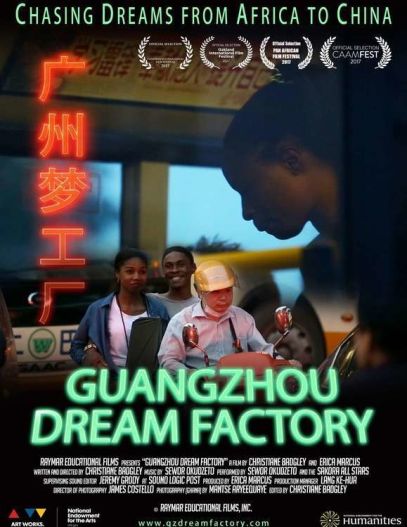
Chasing Dreams from Africa to China - "Guangzhou Dream Factory"
February 19, 2021
3:00 pm
"Guangzhou Dream Factory" Film discussion (participants watch the film on their own) with filmmakers Christiane Badgley and Erica Markus. Watch a film trailer here: https://vimeo.com/197863673
Featuring a dynamic cast of men and women from Cameroon, Kenya, Nigeria and, Uganda, Guangzhou Dream Factory is a provocative story of immigration, globalization, and the pursuit of “Made in China” African dreams.
Immigration, globalization, Chinese factories, and African dreams… Guangzhou Dream Factory weaves stories of Africans chasing alluring, yet elusive, “Made in China” dreams into a provocative critique of 21st-century global capitalism.
Guangzhou, a.k.a. Canton, is southern China's booming commercial center. A mecca of mass consumption, the city’s vast international trading centers attract more than half a million Africans each year. Most are doing business – in China to buy goods they’ll sell back in Africa. But some choose to stay, and for these Africans, China looks like the new land of opportunity, a place where anything is possible. But is it?
Discussants:
Tristan Ivory, Assistant Professor at the School of Industrial and Labor Relations (ILR);Tao Leigh Goffe, Assistant Professor at Africana Studies and Research Center and Program in Feminist, Gender, and Sexuality Studies.This event is hosted by the East Asia Program Graduate Student Steering Committee (GSSC) and co-hosted by the Afro-Asia Group. Kun Huang, a Ph.D. candidate in Comparative Literature, and GSSC officer will moderate.
Cornell Cinema also co-sponsors this event as part of their Migrations Stories film series in conjunction with Global Cornell's Global Grand Challenges Migrations Initiative.
How to view the film:
Cornell students, faculty, and staff and those with library access to Kanopy may view the film here: https://cornell.kanopy.com/video/guangzhou-dream-factory.
A time-limited screening link will be made available one week in advance to other community members who have registered for the event.
All participants need to register to receive the Zoom link for the discussion with the filmmakers.
Additional Information
Program
Einaudi Center for International Studies
East Asia Program
Institute for African Development