
Einaudi Center for International Studies
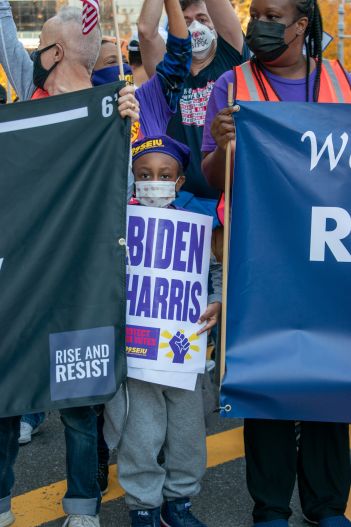
VP-Elect Kamala Harris Ticks Many Firsts, But the Old Problem of Racism Still Lurks
Peter Katzenstein, PACS
The article notes Peter Katzenstein, professor of government, says that Trumpism is based on three pillars: nationalism, religion and race.
Additional Information
China's Ouster of Pro-Democracy Lawmakers: Is It Game Over for Hong Kong's Opposition?

Allen Carlson, CMSP, EAP, SAP
“There is a danger that (Chinese President) Xi Jinping will see this period as one of especially pronounced American weakness and look to take advantage of it to forcefully move to challenge the status quo in China's peripheral regions,” says Allen Carlson, associate professor of government.
Additional Information
Why the US could be the Big Loser in the Huge RCEP Trade Deal Between China and 14 Other Countries

Eswar Prasad, SAP
"The trade pact more closely ties the economic fortunes of the signatory countries to that of China and will over time pull these countries deeper into the economic and political orbit of China,” says Eswar Prasad, professor of economics and trade policy.
Additional Information
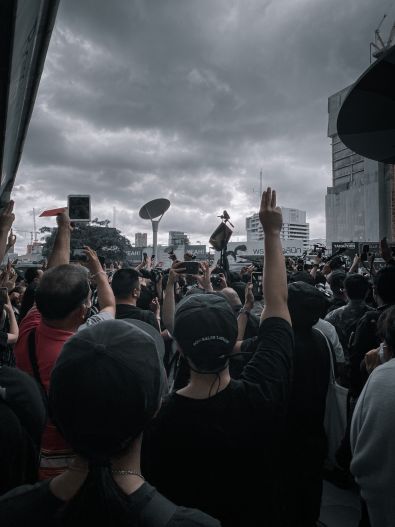
Thailand Protests at a Tipping Point
Tamara Loos, SEAP
Tamara Loos, chair and professor in the Department of History, discusses why the current protests in Thailand are different from any the country has ever seen before.
Additional Information
Where is Wall Street in Biden's Transition Team?

Jens David Ohlin, Law School
Jens David Ohlin, vice dean of the Law School and professor of law, says that the president absolving himself of his legal woes would be a “shocking” and odd twist on the concept of “sovereign grace” which is what originally spawned the pardon.
Additional Information
Top CEOs Largely Silent on Trump Election Denial, For Now

Eswar Prasad, SAP
Eswar Prasad, professor of economics, says President Donald Trump’s denial of election results is “whipping up an extraordinary degree of uncertainty that, if prolonged much further, will act as a drag on what is at best a nascent and fickle economic recovery."
Additional Information
With Pick for Treasury Secretary, Biden will Tip Hand About His Economic Agenda
Eswar Prasad, SAP
"We have been in a regime where there is a sense that cooperating with other countries weakens the U.S. She felt and acted completely differently,” says Eswar Prasad, a professor of trade policy. “She’s a master in the art of gentle persuasion rather than using sticks to get people to do the right thing."
Additional Information
Buddhist Nuns and Their Crusade for Recognition in Southeast Asia

Mary Kate Long, SEAP
Mary Kate Long, a doctoral candidate in Asian studies, explains Sri Lanka’s decision to be the first and only Theravada Buddhist country allowing for the full ordination of women.
Additional Information
Buffetted by Trump, China has Little Hope for Warmer Relations with Biden
Jessica Chen Weiss, EAP
"The unchecked spread of the virus and continuing political tumult in the United States have reinforced Beijing’s view that the United States is in decline,” says Jessica Chen Weiss, associate professor of government.
Additional Information
US / Mexico Border Crisis
November 25, 2020
7:00 pm
There's a crisis at the border. How did we get here? From conflicts in the Northern Triangle to US detention and asylum procedures, Professor Cordova will explore the geopolitical history and US foreign policy that continues to drive migrants north. With a focused look at El Salvador, Professor Cordova will examine the physical and psychological sequelae of migration through first hand accounts of her interviewees. For more information or Zoom details, email Reine Ibala: rwi4001@med.cornell.edu and Rinu Alakiu: gra4002@med.cornell.edu.
Additional Information
Program
Latin American and Caribbean Studies
Einaudi Center for International Studies