
Einaudi Center for International Studies
ROUGH WORK In Search for a Cure: Trust and Social Inequality in Contemporary China
November 18, 2020
12:00 pm
In Search for a Cure: Trust and Social Inequality in Contemporary China
Presenter: Xisai Song, Ph.D. candidate, Anthropology
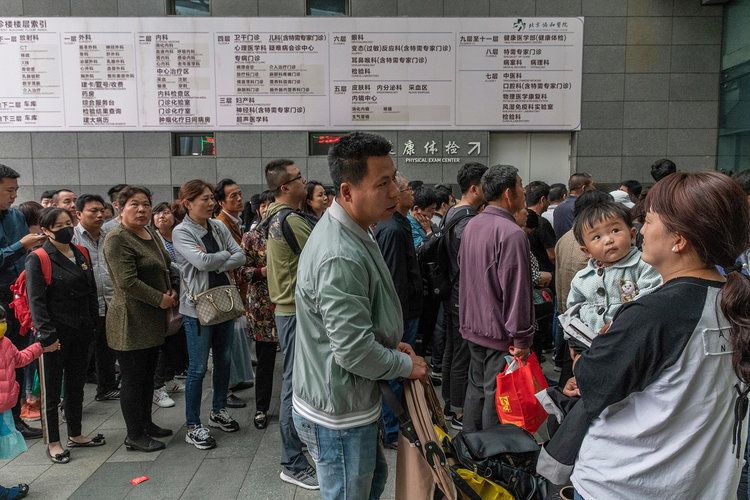
This paper unpacks how social inequality shapes patients’ trust in medicine in contemporary China. In particular, I examine how rural low-income patients struggle with chronic kidney disease (CKD).
ROUGH WORK: Discussing research in progress, hence the term, rough work. This rough work session is hosted by the East Asia Program's Graduate Student Steering Committee (GSSC).
Additional Information
Program
Einaudi Center for International Studies
East Asia Program
Cornell Classical Chinese Colloquium with Lan Li
November 13, 2020
3:30 pm
"Bones, Brains, and Meridians: Animated Anatomy and Image-Text Analysis"is the title of this Classical Chinese text-reading with Lan Li of Rice University.
"Bones, Brains, and Meridians: Animated Anatomy and Image-Text Analysis"
This discussion interrogates the representation of the brain in a 1956 reproduction of the early modern print Zang Fu Mingtang Tu 臟腑明堂圖. Despite its vague genealogy, this 20th century version of Zang Fu Mingtang Tu 臟腑明堂圖 was often associated with either a set of meridian maps from the early fourteenth century, or with an even earlier set of Inner Canon (neijing 內經) or Inner Vision (neijing 內景) treatises. What is curious about this image are the inscriptions in the head, which read: “The ocean of Yin bone marrow penetrates all the way down” 髄海至隂之在通尾骶. This suggests that inside the head/brain through the spine/back was bone marrow, not the brain--that inside the skull was not a wet, chunky lump of grey matter, but suihai 髓海 or “bone marrow sea,” which was one of the “four seas” listed in the Yellow Emperor’s Inner Cannon. By bringing together approaches in the history of medicine, art history, and science studies, this discussion opens a visual and philological study to understand the ontological implications of the brain in 臟腑明堂圖. What kinds of things were solid? What kinds of things were fluid? Was the distinction between solid and fluid a matter of scale? A matter of relative movements? How does this elaborate on the history of anatomy in classical Chinese texts?
All are welcome, with any level of experience with classical Chinese.
At each session, a participant presents a classical Chinese text. Attendees discuss historical, literary, linguistic, and other aspects of the text, working together to resolve difficulties in comprehension and translation.
No preparation is required, all texts will be distributed at the meeting.
Additional Information
Program
Einaudi Center for International Studies
East Asia Program
Dirty Coffee: Scandal, Scrutiny, and Food Safety in Vietnam
November 12, 2020
12:40 pm
Part of the Ronald and Janette Gatty series
Sarah G. Grant, Assistant Professor of Anthropology, California State University, Fullerton
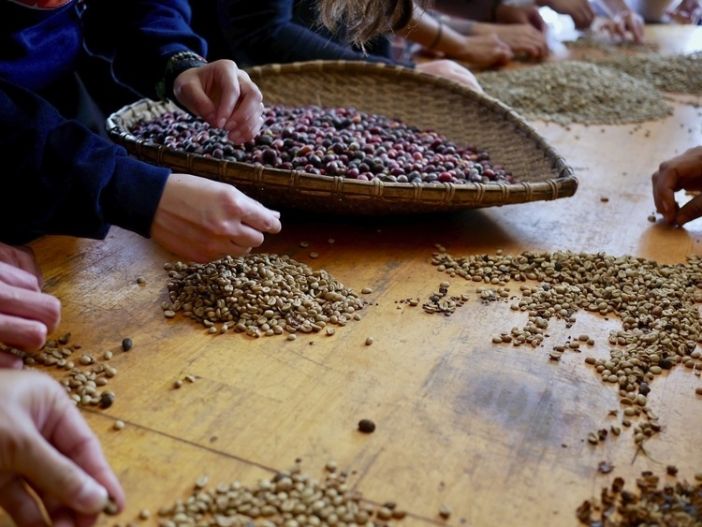
This talk traces the emergence of “dirty coffee” in Vietnam across the 1990-2000s coffee production and export boom. I use the term “dirty” to position several iterations of Vietnamese coffee in the past decade: green Robusta (Coffea canephora) coffee beans that commingle with twigs, pebbles, and other debris; “fake” coffee, or coffee that has been adulterated with additives such as corn, soybean, or manganese dioxide; and the microbial worlds of coffee where mycotoxins lurk, threatening farmer livelihoods and consumer health. I explore the ways in which industrial coffee production perpetuates food safety scandals while simultaneously maintaining regulatory systems of governance. Drawing upon ethnographic data, I argue that when coffee is subject to the scrutiny of the state, it is part of a dynamic governing logic, ultimately becoming a way for regulatory authorities to perform effective rule while reinforcing the notion that Vietnam produces clean and safe coffee for domestic and global consumption.
Additional Information
Program
Einaudi Center for International Studies
Southeast Asia Program
The Lowest Depths: Partition through Objects of Fictitious Togetherness, by Atul Bhalla

November 12, 2020
12:10 pm
“….if history cannot solve our problems then we have to stop listening to it for solutions. For the only answer it has offered us is violence that refuses to meet, or hear, the other”
"In cities, the government had ensured that Hindu Pani and Muslim Pani were separately served at Railway stations and other public places , an arrangement that did not seem to invite popular protest"
'Punjab" by Rajmohan Gandhi
I aim to conceptualize my presentation focusing on the interplay between memory, postmemory and truth around the Freedom Struggle, Partition and subsequent events in Punjab. I deploy the trope of water to interrogate people, territories and the politics of water sharing, rivers and borders activated by the above historical moments. Drawing on local meanings of rivers and water of the land for each community and Punjabis in general, I aim explore the notion of truth within ‘Punjabiyat’ (being from The Punjab) - which both Hindus and Muslims pride themselves here and across the border. My inquiry stems from the ways in which a nexus of opacity, denial and untruth appears to mark the relationship between India and a major event such as Partition. Through my work titled “Objects of fictitious togetherness-I” I explored how this nexus has emerged, what it means to understand history and the present through this nexus, and what are the implications in the context of the present political regime.
Atul Bhalla has explored the physical, historical, and political significance of water in the urban environment of New Delhi through artworks that incorporate sculpture, painting, installation, video, photography, and performance. He is SAP’s Virtual Artist-in-Residence in Fall 2020.
His recent solo shows include “Anhedonic Dehiscence” (Vadehra Art Gallery, New Delhi, 2018), “You always step into the same river” (SepiaEYE, New York, 2015) and “Ya Ki Kuch aur …” (Vadehra Art Gallery, New Delhi, 2014). He was also the Mellon Artist Research Africa fellow at WITS University 2018, Johannesburg with the project “The Excavated distance of gold,” examining acid mine drainage at the gold mines. Recent group exhibitions have brought his work to FotoFest Biennale Houston in 2016 and 2108, The Pompidou Center, Paris, the IVAM Institute of Modern Art in Valencia, and the Devi Art Foundation in New Delhi. Important books on his works are Yamuna Walk and monograph 'You always step into the same river'.
Additional Information
Program
Einaudi Center for International Studies
South Asia Program
Social Media and International Relations

November 12, 2020
11:30 am
Sarah Kreps, John L. Wetherill Professor of Government, Cornell University, will join the Reppy Institute for Peace and Conflict Studies for a discussion of her new book Social Media and International Relations (Cambridge University Press, 2020).
Please note that the author will not give a formal presentation of her work, so it is best to read in advance. A link to the reading will be sent to you with the registration confirmation.
Please pre-register at https://cornell.zoom.us/meeting/register/tJUpde-hrTMoHdZTwJtmIrjAAyRNJL….
This is part of Peace and Conflict Studies Institute Reading Group Series.
Additional Information
Program
Einaudi Center for International Studies
Reppy Institute for Peace and Conflict Studies
Climate Change and Oceanic Migrations
November 11, 2020
3:00 pm
In a biocultural study, researchers from the Center for Conservation Bioacoustics at Cornell's Lab of Ornithology analyze acoustic survey data to pinpoint how bowhead whale seasonal migration patterns are linked to climate change and how recent changes affect Alaskan Arctic whale hunters.
Presenters:
Aaron Rice, Principal Ecologist, Bioacoustics Research Program, Laboratory of Ornithology
Michelle Fournet, Postdoctoral Associate, Bioacoustics Research Program, Laboratory of Ornithology
Register: https://cornell.zoom.us/webinar/register/WN_blrF257rTIysuRlL22h9Kg
Part of the series "Migrations: A Global, Interdisciplinary, Multi-Species Examination"
Additional Information
Program
Einaudi Center for International Studies
Health Sector Contestation in Cold War Laos, 1950-1975
November 6, 2020
8:00 pm
Part of the Ronald and Janette Gatty series
Kathryn Sweet, Social Development Advisor and Independent Scholar, Vientiane, Lao PDR
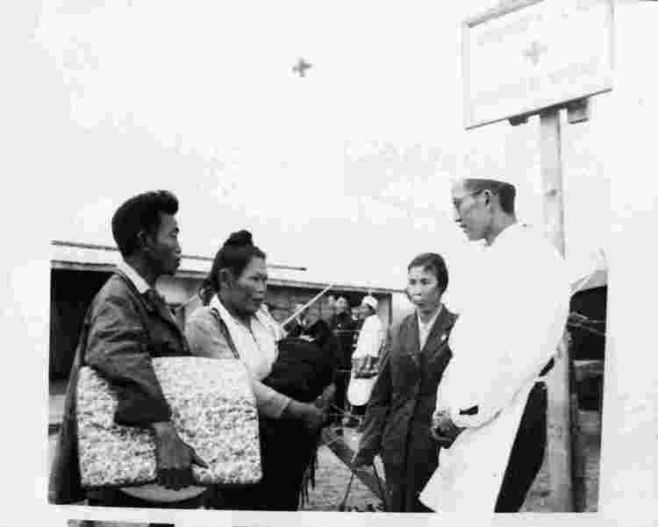
The presentation will explore the reasons for and the results of contestation within the Lao health sector during the initial decades of the Cold War from the early 1950s to 1975.
Laos’ small health sector diverged rapidly after the colonial health service transferred to the Royal Lao Government in April 1950. At least three civilian services and two military services, and a modest private sector, emerged in place of the colonial health service. The various new health services resulted not only from Laos’ post-colonial status but also from the nation’s position in the Cold War politics of Southeast Asia. In the Royal Lao Government’s zone, under the administration of the RLG and supported by the United States and other capitalist nations, civilian and military healthcare services separated by the late 1950s, and were supported by a US-funded, parallel and predominantly rural health network run by Filipino NGO, Operation Brotherhood. In the ‘Liberated Zone’, administered by the Lao Patriotic Front (often referred to as the Pathet Lao) and supported by its North Vietnamese neighbor, the Soviet Union, and other socialist nations, a civilian health service under the Central Health Committee split from its military counterpart in the mid-1960s. These various health services were motivated by different priorities, supported by different international donors, and employed different technical languages and standards of training and operation.
The presentation will provide much-needed context for the diverse health infrastructure, staffing, and professional and technical standardization inherited by the Lao PDR regime and the Ministry of Health’s challenges when confronted with the task of uniting these divergent health services into a uniform national healthcare system.
Additional Information
Program
Einaudi Center for International Studies
Southeast Asia Program
Paradigm Lost: From Two-State Solution to One-State Reality

November 5, 2020
11:30 am
Peace and Conflict Studies Institute Reading Group for November 5. Ian Lustick, Professor and Bess W. Heyman Chair, Political Science Department, University of Pennsylvania, will join us for a discussion of Paradigm Lost: From Two-State Solution to One-State Reality (University of Pennsylvania Press, 2019), Chapter 5, “The One State Reality and Its Future.” Please note that the author will not give a formal presentation of their work, so it is best to read in advance.
Please pre-register at https://cornell.zoom.us/meeting/register/tJEudemhrTkoGtFSable5i_dq5Yhuc…, and a link to the reading will be sent to you with the registration confirmation. Please contact pacs@cornell.edu with any questions.
Additional Information
Program
Einaudi Center for International Studies
Reppy Institute for Peace and Conflict Studies
ROUGH WORK: Sown in Grasses and Grains: Remaking Hokkaido for Livestock
November 4, 2020
12:00 pm
Presenter: Tinakrit Sireerat, Ph.D. candidate, Asian Studies, Cornell
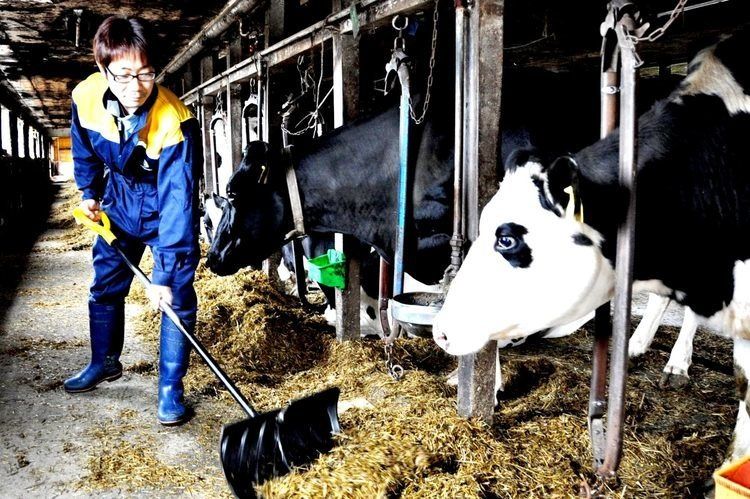
This paper is a reassessment of the claim that the natural environment of Hokkaido is ideal for livestock production.
ROUGH WORK: Discussing research in progress, hence the term, rough work. This rough work session is hosted by the East Asia Program's Graduate Student Steering Committee (GSSC).
Additional Information
Program
Einaudi Center for International Studies
East Asia Program
Polarized: Partisanship, Social Movements, and the Transformation of American Democracy
October 30, 2020
2:00 pm
Parties and movements have long provided a voice to U.S. citizens and connected them to the government, but these mediating roles are in flux. In their place is a more polarized "red" and "blue" America.
This Democracy 20/20 panel will examine how social movements and changes in the two major political parties are redefining American democracy. Some key changes we'll discuss include:
Who the parties represent and which social groups they mobilize;How organizations—ranging from the Koch network to organized labor, evangelical churches, and gun groups—have reshaped party politics;How social movements, including Black Lives Matter, motivate and mobilize key groups of partisan voters—and likely impacts on the 2020 election.Moderator: Tom Pepinsky, Government, Cornell University
Panelists: Julia Azari, Marquette University; Alexander Hertel-Fernandez, Columbia University; Leah Wright Rigueur, Brandeis University
Democracy 20/20: A webinar series sponsored by the American Democracy Collaborative, Mario Einaudi Center for International Studies, and the Institute of Politics and Global Affairs
Democracy 20/20 brings together historical and comparative experts to promote deeper understanding of the challenges these unsettling times pose for American democracy. Beginning in June 2020, the series continues through the 2020 election. The stakes for American democracy have never been higher—so please join us for these critical conversations.
Additional Information
Program
Einaudi Center for International Studies