
Einaudi Center for International Studies
Democracy’s Decline

Roadmap for Fighting Back
A global study of democratic backsliding from Einaudi's Democratic Threats team offers ways to resist authoritarian attacks.
Additional Information
2025 Annual David J. BenDaniel Lecture in Business Ethics

April 23, 2025
4:30 pm
Warren Hall B25
The 2025 David J. BenDaniel Lecture in Ethics will feature a multilayered conversation with Sanda Ojiambo, Assistant Secretary-General, Executive Director, and CEO of the UN Global Compact, Andrew Karolyi, Charles Field Knight Dean, Cornell SC Johnson College of Business, and Colleen Barry, Inaugural Dean, Cornell Jeb E. Brooks, School of Public Policy. Their discussion will link ethics and sustainability to business and policy issues on a global scale.
Additional Information
Program
Einaudi Center for International Studies
Japan’s “New Pre-War”: On the Repetition of a Capitalist Form

April 23, 2025
12:00 pm
Uris Hall, G-08
East Asia Program Lecture Series presents "Japan’s 'New Pre-War': On the Repetition of a Capitalist Form"
Ken Kawashima (Associate Professor, University of Toronto) will give a talk and lead a seminar on his current research, which explores the complex interrelationships between repeated capitalist crisis and the repetition of what he calls the ‘pre-war form’ of capitalist development in modern Japan. This talk is based on his recent article, “Japan’s ’New Pre-War’: Five Dislocations of its historical development”, published in Socialist Register 2024: A New Global Geometry.
To participate in the seminar, please read this article.
About the East Asia Program
As Cornell’s hub for research, teaching, and engagement with East Asia, the East Asia Program (EAP) is a forum for the interdisciplinary study of historical and contemporary East Asia. Part of the Mario Einaudi Center for International Studies, the program draws its membership of over 45 core faculty and numerous affiliated faculty, graduate, and undergraduate students from across Cornell's colleges and schools.
Additional Information
Program
Einaudi Center for International Studies
East Asia Program
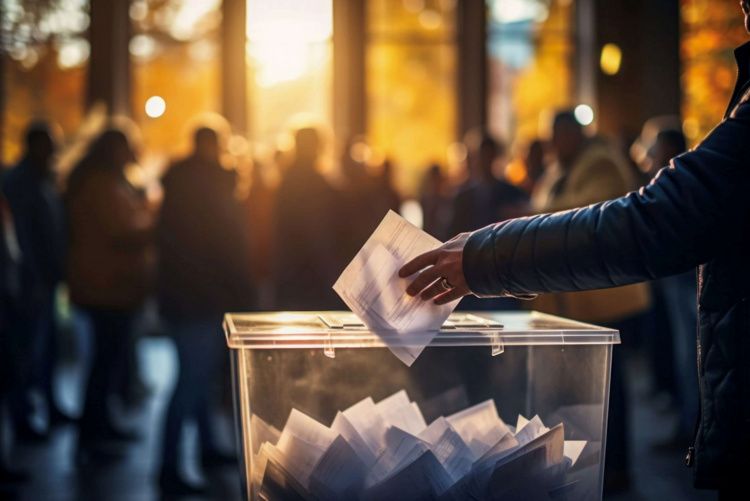
Democratic Challenges, Resilience, and the Role of Foreign Policy
April 8, 2025
3:00 pm
Morrill Hall, 106
Join experts Dr. Nancy Okail and Dr. Erin Snider for a conversation on the politics of democracy and development assistance, foreign aid, and U.S. foreign policy.
Nancy Okail is President and CEO of the Center for International Policy (CIP) based in Washington DC. Dr. Okail is a leading scholar, policy analyst, and advocate with 25 years of experience working on issues of human rights, democracy, and security in the Middle East and North Africa region. She previously served as a visiting scholar at the Center for Democracy, Development and the Rule of Law (CDDRL) at Stanford University, and as Executive Director of the Tahrir Institute for Middle East Policy (TIMEP), which under her leadership became an internationally renowned policy research organization.
Erin Snider is a senior advisor and researcher for USG projects on democratic erosion and openings. She has served as a professor at Texas A&M University’s Bush School of Government and Public Service and a Carnegie Fellow with New America. Her research focuses on questions of power in the provision of aid and understanding the role of international actors in promoting reform in authoritarian states. Recent publications include Marketing Democracy: The Political Economy of Democracy Assistance in the Middle East (Cambridge University Press 2022), which asks why democracy aid efforts have failed in the Middle East despite billions allocated for its promotion and explains how democracy aid may work to reinforce, rather than challenge authoritarian regimes. It also explains why particular ideas about democracy prevail over others in democracy aid programs, to the detriment of civil society in recipient countries.
Additional Information
Program
Einaudi Center for International Studies
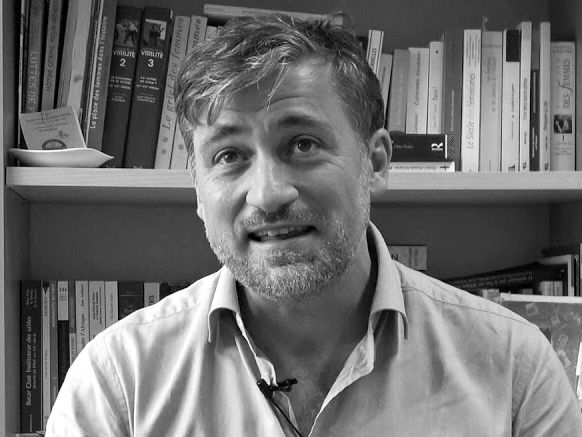
Pathway(s) into jihad? Quranic education and the career of Lake Chad Basin jihadist militants
April 7, 2025
5:00 pm
Martha Van Rensselaer Hall, 1219
Vincent Foucher is a research fellow at Les Afriques dans le Monde, a research unit of the French National Centre for Science Research based at the Institut d’études politiques in Bordeaux. He holds a PhD in political science from the School of Oriental and African Studies. He was a senior analyst at the West Africa office of the International Crisis Group in Dakar from 2011 to 2017. He has done research on the separatist insurgency in Casamance, southern Senegal, on the politics of transition in Guinea and Guinea-Bissau and on the Boko Haram insurgencies in the Lake Chad Basin.
Additional Information
Program
Einaudi Center for International Studies
South Asian New Year Celebration

April 19, 2025
3:30 pm
Klarman Hall, G70
New Year is a major cultural event celebrated across South Asia, and this campus-wide celebration highlights the rich languages and traditions associated with this festival. The event will serve as an opportunity for students of all backgrounds to engage through music, dance, food, and language-focused activities featuring the diverse ways New Year is celebrated across South Asia. It will promote awareness and appreciation of South Asian cultures and the less commonly taught languages within the Cornell community, foster cultural exchange and inclusivity, and strengthen the sense of community among South Asian students and beyond.
The event will feature:
Language Workshops: Interactive language sessions featuring greetings, common phrases, images of rituals and traditions, calligraphy, regional calendars, etc.Food Fair: A showcase of authentic cuisines from South Asian regions, small plates featuring traditional New Year's foodArts & Crafts Corner: Hands-on activities, including alpana (folk art), mask-making, mandala drawing and coloring activity, etc.Cultural Performances (starting at 5:00 pm in Klarman Auditorium): Poetry recitations, traditional music, and dance performances by student groups and artists from the Cornell Community
Additional Information
Program
Einaudi Center for International Studies
South Asia Program
From Colony to Diaspora: Enduring Legacies of U.S. Territorial Rule in Puerto Rico & the Philippines

April 22, 2025
4:30 pm
Mann Library, 160
Join us for a conversation discussing the historical and contemporary relationship between the United States, Puerto Rico, and the Philippines, beginning with their acquisition in 1898 following the Spanish-American War. As sites of U.S. territorial expansion, both were governed through military rule and colonial policies justified by racial and economic ideologies.
While Puerto Ricans were granted U.S. citizenship in 1917, the Philippines moved toward independence by 1946, creating divergent but interconnected paths shaped by migration, labor extraction, and strategic military interests. The discussion moves from this shared colonial foundation to contemporary issues—including large-scale migration, economic dependency, grassroots resistance, and debates over political status. It highlights how diasporic communities engage with questions of identity and belonging and how movements for self-determination continue to challenge the legacy of the U.S. empire today.
Panelists
Christine Bacareza Balance is an associate professor of performing and media arts and Asian American studies at Cornell University. Her work as a scholar and cultural worker bridges performance, popular culture, and Asian American studies, with a particular focus on Filipino and Filipino-American experiences. Her research and teaching explore how music, media, and performance shape diasporic identity, memory, and political life. She is also engaged in community-based and public humanities work that connects academia to broader conversations around race, empire, and cultural expression.
Rebeca L. Hey-Colón is an associate professor with a joint appointment in the Department of Literatures in English and the Latina/o Studies Program at Cornell University. She is a scholar of Afro-Latinx and Caribbean cultures whose work explores how race, migration, and religion shape identity and resistance across the Americas. Her research and teaching center on Afro-diasporic spiritual practices, visual and literary cultures, and the everyday experiences of Latinx communities. She engages questions of colonialism, borders, and belonging through a focus on cultural expression and community knowledge.
Host
This event is organized by the Migrations Program's undergraduate Migrations scholars and co-sponsored by Latina/o Studies Program and Asian American Studies
Don't miss our first event hosted by the Migrations scholars on April 21: Margins and Mobilization: Migrant Worker Precarity and Power in the Trump-era Economy.
Additional Information
Program
Einaudi Center for International Studies
Migrations Program
Southeast Asia Program
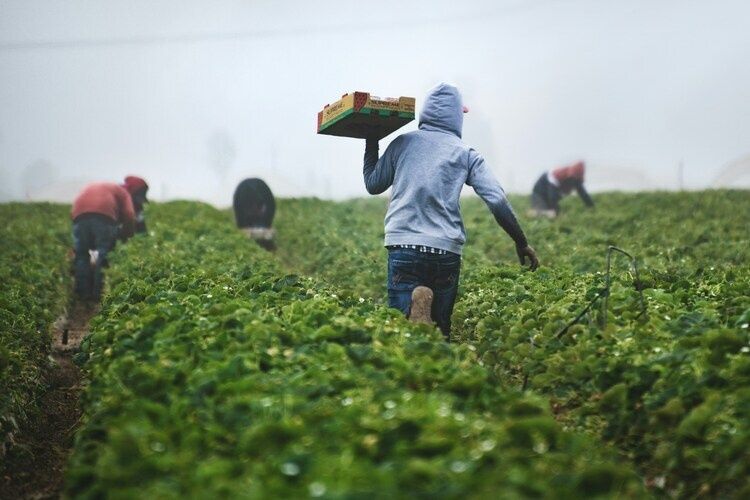
Margins and Mobilization: Migrant Worker Precarity and Power in the Trump-era Economy
April 21, 2025
5:00 pm
Mann Library, 160
Join us for a conversation on the role of migrant workers in the U.S. economy. Bringing together scholars and activists, the panel will examine how immigration laws and border enforcement function as tools of labor control, shape markets, and produce systemic vulnerability. The discussion will trace how these dynamics have intensified under the Trump administration amid the rise of ethnonationalism and increasingly punitive immigration policy, as well as how migrant workers have been pushing back and what forms of resistance have emerged.
This event is of interest to all those studying labor, immigration, human rights, and social justice to better understand the intersection of migration policy, politics, and the everyday lives of migrant workers.
Panelists
Aly Wane is a human rights organizer based in Syracuse, New York. Originally from Senegal, he has worked on anti-war, economic, racial, and immigrant justice. He has been involved with the American Friends Service Committee, the Workers' Center of Central NY, and has been on the Board of the Alliance of Communities Transforming Syracuse, a politically progressive interfaith organization. He is a member of the Syracuse Peace Council and the Black Immigration Network, the Black Alliance for Just Immigration, and the UndocuBlack Network. He is currently on the advisory boards of the Immigrant Justice Network and Freedom University out of Georgia.
Shannon Gleeson is professor of labor relations, law, and history in the School of Industrial and Labor Relations. Her research focuses on the labor rights of migrant workers and the enforcement of those rights, the vulnerabilities migrant workers face, migrant organizing and anti-capitalist currents within the immigrant rights movement, and the policing of migrant workers.
M. Cornejo is an assistant professor in communication. Trained as an interpersonal communication researcher, Cornejo examines how legally stigmatized migrants’ communication strategies to obtain humanization and access to essential resources (e.g., education, health care access) alter their self-view, psychosocial health, general well-being, and social mobility in the U.S.
Host
This event is organized by the Migrations Program's undergraduate Migrations scholars.
Don't miss our second event hosted by the Migrations scholars on April 22: From Colony to Diaspora: Enduring Legacies of U.S. Territorial Rule in Puerto Rico & the Philippines.
Additional Information
Program
Einaudi Center for International Studies
Migrations Program
A Landmark Decision for Indigenous Rights: The Inter-American Court Protects Peoples Living in Voluntary Isolation in Ecuador

David Cordero-Heredia, LACS Visiting Scholar
This post was co-authored by David Cordero-Heredia, Professor of Law at the Pontificia Universidad Católica del Ecuador, and Visiting Scholar for Cornell University’s Latin American and Caribbean Studies program, and Santiago Garcia Lloré, Acting Director Forest Partnerships, Environmental Defense Fund
Indigenous Peoples living in voluntary isolation (IPLVI) are communities that have chosen to avoid contact with the outside world. They maintain their traditional ways of life deep within remote forests and inaccessible regions. Their territories are among the most pristine and ecologically significant areas on the planet; IPLVIs play a crucial role in global biodiversity conservation.
Additional Information
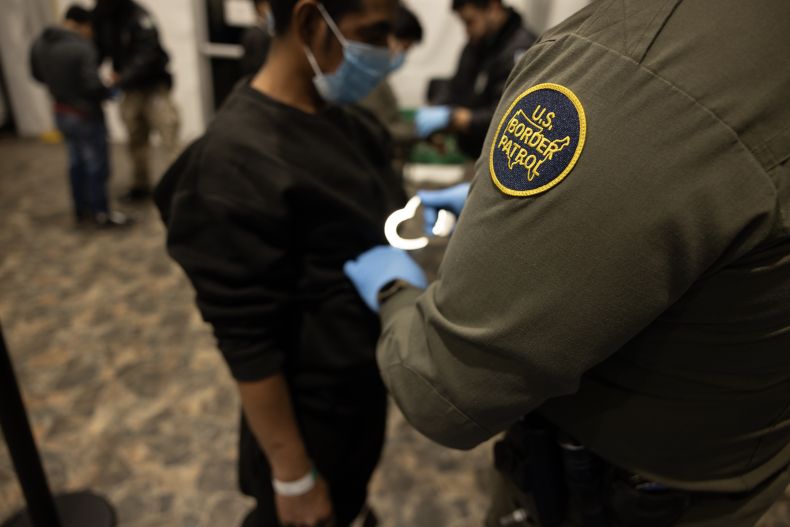
What Evidence Does the U.S. Government Need to Deport Green Card Holders?
Jaclyn Kelley-Widmer, Migrations
Jaclyn Kelley-Widmer, clinical professor of law, discusses the evidence the government must provide to deport a lawful permanent resident.