
Einaudi Center for International Studies
Discovery Green Hosts 'Stories of Belonging' Exhibit Showcasing Lives, History of Migrant Workers

Patricia Campos-Medina, Migrations
"At a time of impasse on our immigration policy reform, it is important to elevate the voices of these workers who are our neighbors and our colleagues at work," Campos-Medina said in the article. "They are fighting for their right to belong and by doing so strengthening our unions, our communities and our democracy."
Additional Information
Op-ed: Lessons for Democracy’s Defenders

New from Democratic Threats team
A global study of democratic backsliding from Ken Roberts and Rachel Riedl offers ways for U.S. democracy to resist authoritarian attacks.
Additional Information
Russian Eastern European Studies Upstate Network

April 26, 2025
12:00 pm
Uris Hall, G08
Paper Presentations (each paper followed by discussion):
Aiduosi Amantai, Binghamton University. History.
"Negotiating Power: White Bones and Black Bones in the Kazakh Khanate, 17th–18th Centuries".
Katrina Nousek, Cornell University Department of German Studies
“(Mis)recognition: Ethnicity, Society, and Postsocialist Poetics”
Yulia Antonian, Yerevan State University, Faculty of History, Dept. of Cultural Studies
“Assembling the socialist industrial city: urban environment, social structure and belonging in Charentsavan (Armenia).”
Additional Information
Program
Einaudi Center for International Studies
Institute for European Studies
From Cornell to Kyiv and Back Again!

April 15, 2025
3:00 pm
Sage Hall, B09
Jeffrey Gettleman, a Pulitzer Prize-winning journalist and foreign correspondent for The New York Times, has covered major global conflicts and issues throughout his career. A 1994 graduate of Cornell University with a major in philosophy, Jeffrey took a wide range of classes at Cornell, including sculpture, economics, and creative writing. He has reported from some of the world's most challenging locations, including Ukraine, where he recently covered the ongoing war, and from remote areas like Papua New Guinea and the Amazon. With years of experience in conflict zones, including living in Kenya, Jeffrey has also written extensively for outlets such as GQ, National Geographic, and The New York Review of Books. In addition to his work as a journalist, he authored the memoir Love, Africa and frequently appears on national networks like CNN and NPR. Jeffrey also holds a master's degree in anthropology from Oxford University as a Marshall Scholar. He will discuss his recent experiences reporting on the war in Ukraine, Eastern Europe's challenges with Russia, and the geopolitical competition for dominance in the Arctic. Having recently returned from Greenland, he is open to questions on topics related to Europe, journalism, and any other matters of interest.
Additional Information
Program
Einaudi Center for International Studies
Institute for European Studies
Reppy Institute for Peace and Conflict Studies
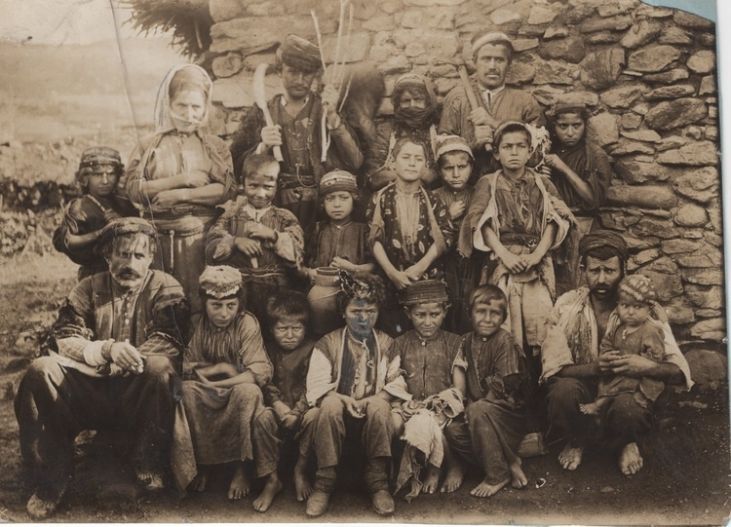
Khatchig Mouradian - Annual Armenian Genocide Commemoration Lecture
April 24, 2025
4:30 pm
White Hall, 106
The historical trajectories of ethnic cleansing in the 19th and early 20th centuries will be explored in this year’s Annual Armenian Genocide Commemoration lecture, given by Dr. Khatchig Mouradian. The lecture, “Ethnic Cleansing in the Long 19th Century: The Native American, Circassian, and Armenian Cases,” will be held on Thursday, April 24, at 4:30 p.m. in White Hall room 106.
“Cases of ethnic cleansing and genocide are often studied in historical isolation, yet Dr. Mouradian’s talk promises to illuminate how instances of forced displacement across world regions took shape out of related conditions of imperial decline and nation-state formation,” said Lori Khatchadourian, associate professor of Near Eastern studies and anthropology in the College of Arts and Sciences. “In comparing the ethnic cleansing of the Ottoman Armenians with the displacement of indigenous Americans and the Circassians of the Russian Empire, this talk by a leading historian of the Armenian genocide will reveal patterns and connections in the systematic removal of ethnic, racial or religious groups, and amplify the traumatic experience of displacement during the long 19th century.
“We are fortunate that Dr. Mouradian is giving this year’s Annual Armenian Genocide Commemoration Lecture at Cornell. It should be of great interest to students and faculty in Near Eastern studies and across the humanities and social sciences.”
Mouradian is a lecturer in Middle Eastern, South Asian, and African studies at Columbia University, and the Armenian and Georgian specialist at the Library of Congress. He is also a lecturer at the University of Wisconsin – Milwaukee.
Mouradian is the author of the award-winning book “The Resistance Network: The Armenian Genocide and Humanitarianism in Ottoman Syria, 1915-1918” (2021). He is a co-editor of “After the Ottomans: Genocide’s Long Shadow and Armenian Resilience,” (2023) and “The I.B. Tauris Handbook of the Late Ottoman Empire: History and Legacy,” (forthcoming in 2025).
Sponsored by the Department of Near Eastern Studies with support from Mario Einaudi Center for International Studies and its Southwest Asia and North Africa (SWANA) initiative, Department of History
Additional Information
Program
Einaudi Center for International Studies
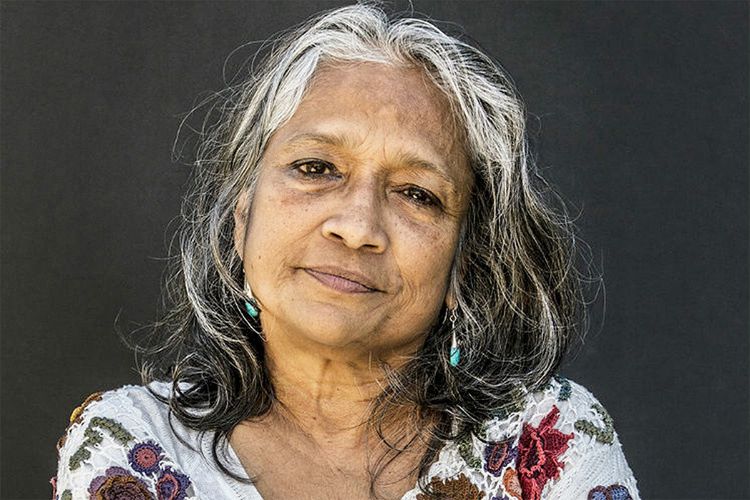
Renegotiating Patriarchy in a Challenging Environment: Stories of Change from Bangladesh
April 8, 2025
4:00 pm
Sage Hall, B09
Event featuring Naila Kabeer
- Talk: 4-5:30 p.m. (Sage Hall, B09)
- Reception: 6-8 p.m. (Statler)
- Register
About the Speaker:
Naila Kabeer is Professor of Gender and Development at the Department of International Development. Naila is also a Faculty Associate at LSE’s International Inequalities Institute and on the governing board of the Atlantic Fellowship for Social and Economic Equity. She has done extensive advisory work with international agencies (World Bank, ADB, UNDP, UN Women), bilateral agencies (DFID, SIDA, CIDA, IDRC) and NGOs (Oxfam, Action Aid, BRAC, PRADAN and Nijera Kori). Her most recent projects were supported by ERSC-DIFD Funded Research on Poverty Alleviation: Gender and Labour Market dynamics in Bangladesh and West Bengal. She is on the editorial boards of Feminist Economics and Gender and Development and on the international advisory board of the Canadian Journal of Development Studies She is also a member of the Inequalities Advisory Group, Bosch Foundation and a member of the Advisory Board of the United Nations University Institute for Global Health.
Supported By:
Polson Institute for Global Development, EQUAL Lab, Brooks School of Public Policy
Additional Information
Program
Einaudi Center for International Studies
South Asia Program
Historian Barry Strauss ’74 Wins 2025 Bradley Prize

Barry Strauss, PACS
Barry Strauss (PACS), the Bryce and Edith M. Bowmar Professor in Humanistic Studies Emeritus, won a 2025 Bradley Prize for his work on political and military leaders of the ancient world.
Additional Information
El Salvador Says Families can File Complaints Over Unjust Detention in Notorious Mega-prison

Gustavo Flores-Macías, LACS
Gustavo Flores-Macías, professor of government, says “Because of the PR benefits to both President Trump and President Bukele, Venezuelan deportees sent to El Salvador will face considerable challenges to get an opportunity to prove their innocence and regain their freedom.”
Additional Information
Trump’s Self-inflicted Trade War is Going to Hit Americans Where it Hurts

Kaushik Basu, SAP
Kaushik Basu, professor of economics at Cornell argues that the Trump administration’s approach to tariffs jeopardizes U.S. economic stability, undermining America’s competitiveness and long-term growth.
Additional Information
PACS Team Hosted United Nations Panel
Nuclear Disarmament Education
The Reppy Institute for Peace and Conflict Studies (PACS) organized the event with support from an Einaudi seed grant.
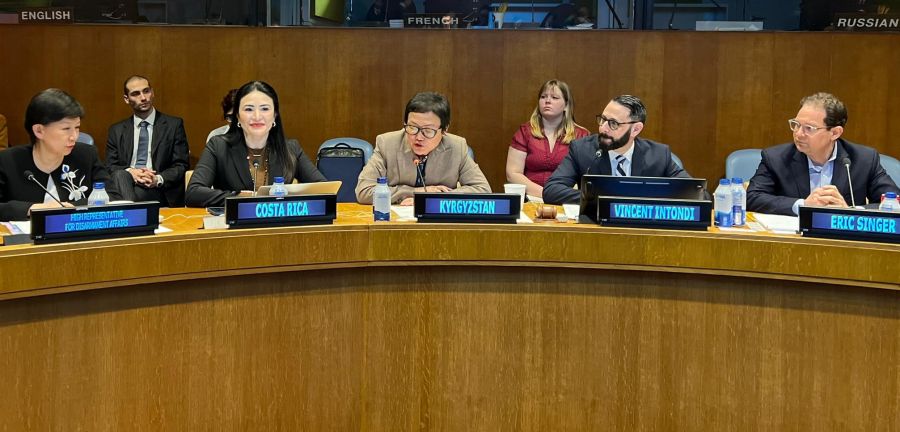
“The History, Success, and Challenges of Nuclear Disarmament Education” was held at United Nations headquarters in New York City on March 5. Cosponsored by the UN Office for Disarmament Affairs and Permanent Mission of the Kyrgyz Republic, the event commemorated International Day for Disarmament and Non-Proliferation Awareness.
PACS domestic affiliate Vincent Intondi moderated the roundtable, featuring four speakers and 28 nuclear disarmament experts and educators. Participants strategized ways to inspire and educate students—especially in schools with less access to disarmament education—and addressed the breakdown between those who create educational resources and teachers and administrators responsible for curriculum decisions. Participants also discussed how siloing the physical sciences and humanities makes comprehensive disarmament education more challenging.
“The UN event is one step in Reppy's long-term disarmament education project,” said Intondi. “We're encouraged by the reception of those attending and the number of UN member states that participated. The event clearly showed a need.” Read UN coverage.
Working Group on Nuclear Disarmament Education
PACS director Rebecca Slayton received a 2024 Einaudi Center seed grant to work toward establishing an international network on nuclear disarmament education—including scholars, policymakers, and civil society representatives—based at the Reppy Institute for Peace and Conflict Studies, part of the Einaudi Center at Cornell.
Slayton and co-investigator Agnieszka Nimark, PACS visiting scholar since 2014, got the project off the ground last summer by launching a working group. The group pulls together PACS researchers like Intondi and more than 30 nuclear disarmament experts and educators from around the world. Group members are currently benchmarking existing initiatives in the field and identifying education stakeholders as the groundwork for an assessment report. An important aim is amplifying the voices of communities affected by nuclear weapons.
“The working group plans submit our independent report with recommendations on disarmament education to the UN secretary-general in 2026,” said Nimark.
PACS continues to build its nuclear disarmament education network. Nimark invites researchers, educators, and other stakeholders to email to share information on disarmament educational resources and initiatives or to discuss working group activities.