
Einaudi Center for International Studies
Can Green Card Holders in the U.S. be Deported?

Jaclyn Kelley-Widmer, Migrations
Jaclyn Kelley-Widmer, clinical professor of law, is quoted.
Additional Information
Social Media and Playing at Democracy

Kaushik Basu, IES/SAP/CRADLE
In this op-ed, CRADLE director Kaushik Basu argues that social media has given the super-rich new tools to manipulate public opinion.
Additional Information
Topic
- Development, Law, and Economics
- World in Focus
Program
China Boosting Development of AI for Use in Trade War with US

Lourdes Casanova, LACS/GPV
Lourdes Casanova, senior lecturer of management, says “The government in China works directly with the private sector and universities in the advancement and deployment of AI technology and are reducing their dependence on imports of high-technology products.”
Additional Information
Coming Soon to a Sky Near You: 500 Million Birds

Andrew Farnsworth, Migrations
“Right now we're seeing lots of movement in Florida and the Southeastern United States as well as in some midwestern states,” says Andrew Farnsworth, visiting scientist at the Lab of Ornithology.
Additional Information
“The Crisis (and Resilience) of Global Democracy” keynote lecture
March 18, 2025
4:30 pm
Klarman Hall, Rhodes-Rawlings Auditorium
An A.D. White Professors-at-Large keynote public lecture
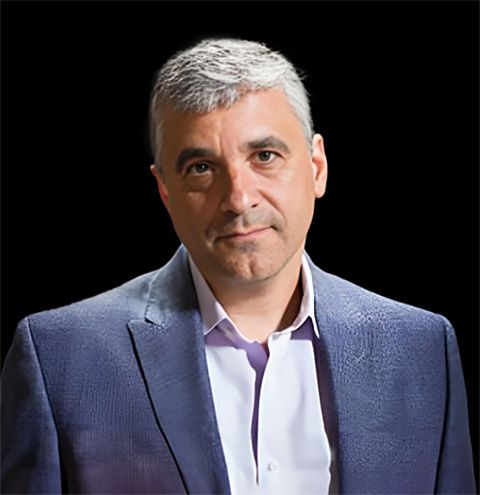
Steven Levitsky (Harvard University; A.D. White Professor-at-Large at Cornell) will present the keynote lecture, “The Crisis (and Resilience) of Global Democracy,” on Tuesday, March 18, at 4:30pm, Klarman Hall Auditorium. This event is open to all. A reception will follow in Klarman Atrium.
About the speaker: Steven Levitsky is David Rockefeller Professor of Latin American Studies and Professor of Government and Director of the David Rockefeller Center for Latin American Studies at Harvard. He is Senior Fellow at the Kettering Foundation and a Senior Democracy Fellow at the Council on Foreign Relations. His research focuses on democratization and authoritarianism, political parties, and weak and informal institutions, with a focus on Latin America. He is co-author (with Daniel Ziblatt) of How Democracies Die, which was a New York Times Best-Seller and was published in 30 languages, and Tyranny of the Minority: Why American Democracy Reached the Breaking Point. He has written or edited 11 other books, including Transforming Labor-Based Parties in Latin America: Argentine Peronism in Comparative Perspective (Cambridge University Press 2003), Competitive Authoritarianism: Hybrid Regimes after the Cold War (with Lucan Way) (Cambridge University Press, 2010), and Revolution and Dictatorship: The Violent Origins of Durable Authoritarianism (with Lucan Way) (Princeton University Press, 2022). He and Lucan Way are currently working on a book on democratic resilience across the world.
Levitsky has written for New York Times, The Washington Post, The Atlantic, Foreign Affairs, and The New Republic, and he has been a columnist for La Republica (Peru) and Folha de São Paulo (Brazil).
Levitsky visits Cornell as an A.D. White Professor-at-Large March 17-21.
Cosponsored by the Dept. of Government.
Additional Information
Program
Einaudi Center for International Studies
Immigration Policy Updates: Register to Attend

Webinar Series March 20 and 24
Cornell’s international community faces evolving questions about their rights and mobility amid uncertainty around the proposed alien registration order, visa challenges, and a potential travel ban. To help our community navigate these immigration policy changes, Global Cornell is sponsoring two webinars featuring legal and immigration experts.
Additional Information
Calligraphy Demonstration with Wang Tiande

April 11, 2025
2:30 pm
Johnson Museum of Art
Wang Tiande, the 2025 Wong Chai Lok Calligraphy Fellow at Cornell University, will conduct a special demonstration of his calligraphy process, free and open to all. Visitors can view the demonstration from the Hirsch Lecture Lobby, where the artist will work, or from above in the Gussman Entrance Hall.
This event is cosponsored by the East Asia Program and the Wong Chai Lok Calligraphy Fund.
Additional Information
Program
East Asia Program
Einaudi Center for International Studies
The Country and the City Graduate Conference

March 21, 2025
9:00 am
Kahin Center
Why do we see the country and the city as intrinsically different spaces and ways of being? Almost 50 years after Raymond Williams (1973) argued that this contrast is “one of the major forms in which we become conscious of a central part of our experience and of the crises of our society,” we continue to see agrarian economies and life as relics of an idyllic past, dissolving at the hands of the forward-marching cities. Against perspectives that saw the development of capitalism as an urban/industrial set of forces slowly gnawing away at rural/agrarian harmonious and simple living, Williams saw industrial capitalism as intrinsically connected to feudalism and agrarian capitalism, the urban to the rural. Rather than reflecting a historical reality, he argued that this spatial and ideological binary was constructed in direct response to the growth of capitalism and imperialism.
Today, more than half of the world’s population lives in urban areas—but agrarian livelihoods and lives are not merely withering away. The country-versus-city binary continues to govern our efforts to find solutions to the grave crises of our times. Contemporary solutions, such as agroecology as an antidote to industrial agriculture or green energy as a foil to fossil fuels, invoke the return to a pristine, sustainable past.
This conference will showcase graduate student papers that explore how the country and city constitute each other and investigate how capital, labor, imaginaries, and sentiments flow between the two.
10-11:30 am - Constructing Nature
Presentations by: Michael Cary, Jessie Mayall, Suraj Kushwaha and Finn Domingo
Discussant: Nataya Friedan
Constructions of nature, Williams reminds us, often contain veiled arguments about people, societies and social relations. This panel asks what kinds of social arguments are embedded in ideas of environmental instability and what kinds of politics emerge from them. We begin in England, where romanticized understandings of ‘the countryside’ underlie contemporary visions for landscape ‘optimization’ for food production and carbon sequestration. We then move to the remote Siachen glacier, where representations of the world’s highest battlefield by the Indian Army mediate public consent for militarization through appeals to martyrdom and national pride. From there we move to the aftermath of wildfires in Los Angeles, where the financial mechanisms and socio-economic effects of homeowners insurance are exacerbating an already unaffordable housing market. Finally, we turn to Paraguay, where the infrastructures of defense from destructive floods—and the politics of blame for when they happen—shape the relationship between an expanding city and neglected countryside.
12:30 -2pm - Morality of Improvement
Presentations by: Yui Sasajima, Maria Paula Espejo and Allen Huang
Discussant: Paul Kohlbry
These four papers examine the construction of rural spaces and urban fringes, paying attention to the flexible ideas of home that often lie behind the creation of certain spaces as desirable or ideal. At the heart of this question is the issue of improvement, which Raymond Williams points us to as a driver behind the subjection of tenants and the landless.Drawing on varying methodologies, these papers examine how rural and urban spaces are bridged—or thought to be bridged—through social reproduction, how home is made in new spaces, and who benefits from the drive to “improve.”
2:15-3:45pm - Structures of Feeling
Presentations by: Liam Greenwell, Georgia Koumantaros , Andrew Colpitts and Grace Myers
Discussant: Katharine Lindquist
Raymond Williams invites us to investigate the dialogic relationship between the rural and urban through the unspoken, shared, and historically contingent “structures of feeling” that emerge from cultural texts. This panel examines Williams’s contribution in relation to the moral, symbolic, representational, and material assemblages by which the rural is imagined. In doing so, we ask how the country and the city become sites of imagined dystopia and utopia alike by which people reimagine life in generative ways. These papers track imagined promises of the countryside—from a site for family values, national becoming, future imagination, and self-actualization—in contexts from rural evangelicalism in New York, queer reckonings with both limitation and thriving, folklore and placemaking in coal country, and the contradictions of village life in Greece. The unclear lines between utopia and dystopia trouble the position of the figures involved and promise—or threaten?—collective self-fashioning.
Additional Information
Program
Einaudi Center for International Studies
Latin American and Caribbean Studies
Institute for European Studies
South Asia Program
Artist’s Visit: Wang Tiande
April 10, 2025
4:00 pm
Johnson Museum of Art
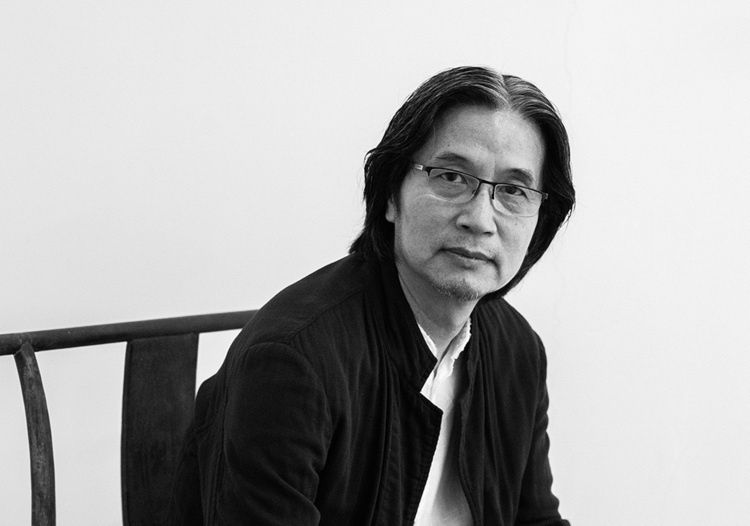
This artist’s talk with Wang Tiande, the 2025 Wong Chai Lok Calligraphy Fellow at Cornell, is presented in conjunction with an installation of his work in the Johnson Museum of Art’s fifth-floor Rockwell Gallery (on view April 8–July 20).
From 4:00–4:30PM, the artist will be in the Rockwell Gallery to connect with visitors about his art. The talk will begin at 5:15PM in the Frank and Margaret Robinson Lecture Hall. The talk will also be available to live stream.
Celebrated for his revolutionary takes on traditional Chinese art both in China and abroad, Wang Tiande is best known for his burned landscapes, consisting of a painted underlayer and an overlayer burned with cigarettes or incense sticks. More recently, he has incorporated landscape rubbings of famous ancient steles from his own collection. In their fusion of the fleeting and the timeless, Wang Tiande’s works meditate on creation and destruction. They are both elegies to the past and celebrations of its present persistence. A reception will follow the talk.
Click here to join the webinar.
This event is cosponsored by the Johnson Museum, the East Asia Program, and the Wong Chai Lok Calligraphy Fund.
Additional Information
Program
East Asia Program
Einaudi Center for International Studies
How to Make Millions Before Grandma Dies
March 29, 2025
8:30 pm
Cornell Cinema
A film screening by Cornell Cinema.
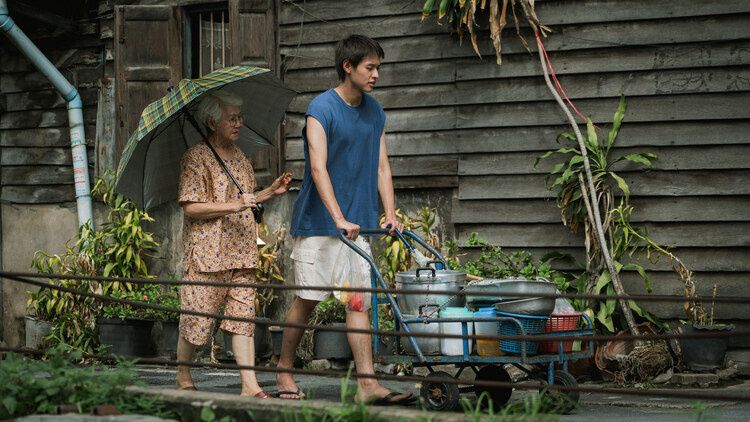
M, a university dropout low on money and luck, volunteers to take care of his terminally ill grandmother, in the hope of pocketing an inheritance. However, winning Grandma's favor is no easy feat. She proves to be a tough nut to crack—demanding, exacting, and exceedingly difficult to please. To add to the drama, he's not the only one gunning for the inheritance. M soon finds himself embroiled in a gripping competition, where he must go to great lengths to become the apple of Grandma's eye before time runs out, all in pursuit of a life-changing, multimillion-dollar inheritance.
Directed by Thai filmmaker Pat Boonnitipat, How to Make Millions Before Grandma Dies offers a candid and comedic take on life, love, and family affairs.
Cosponsored by the Southeast Asia Program at the Mario Einaudi Center for International Studies. Special thanks to Fulbright visiting researcher Vince Ha.
Part of Cornell Cinema's "Worth a Watch" series. Courtesy of Well Go USA Entertainment. In Thai with English subtitles.
Additional Information
Program
Einaudi Center for International Studies
Southeast Asia Program