
Einaudi Center for International Studies
Building Democracy: Global Scholars Showcase

April 15, 2025
4:30 pm
Mann Library, 100 and 102
Join the Mario Einaudi Center for International Studies’ undergraduate global scholars for a showcase of their capstone presentations providing public commentary and perspectives on global democracy.
Undergraduate global scholars advocate for building democracy on campus and around the world. They have partnered with the Einaudi Center's democratic threats and resilience faculty fellow Kenneth Roberts and Lund Practitioner in Residence Thomas Garrett—expert researchers and practitioners on building democracy—to design their projects.
Additional Information
Program
Einaudi Center for International Studies
Reppy Institute for Peace and Conflict Studies
East Asia Program
Southeast Asia Program
Latin American and Caribbean Studies
Institute for African Development
Institute for European Studies
South Asia Program
Migrations Program
Speed Talks: Lessons for the Domestic Moment

April 10, 2025
4:30 pm
Goldwin Smith Hall, G64
Join Einaudi Center and Brooks School researchers for three-minute speed talks and community conversation on our contemporary moment.
Speakers will jump off from interdisciplinary and international research, experiences, and world events to provide a fresh perspective on current U.S. politics and public policy. Together we'll look at challenges faced and solutions found in a variety of academic fields and places around the world—to help us think through how to address emerging issues at home.
The event features clusters of speed talks on related topics—including free speech, U.S. elections, and international aid—with time for Q&A and conversation on each topic.
***
Faculty Speakers
Lessons from Latin America
Kenneth Roberts, Democratic Threats Fellow (LACS) | GovernmentGustavo Flores-Macías (LACS) | Government and Public PolicySantiago Anria (LACS) | Global Labor and Work
International Implications
Magnus Fiskesjö (EAP/SEAP/PACS) | AnthropologyBryn Rosenfeld (IES) | GovernmentWilliam Lodge II (SAP) | Health Equity and Public Policy
Domestic Consequences
Mabel Berezin, IES Director | SociologyGautam Hans | LawMoon Duchin | MathematicsEllen Lust, Einaudi Center Director | Government and Public Policy
***
Sponsors
This conversation is hosted by the Mario Einaudi Center for International Studies, partnering with Cornell Brooks School of Public Policy's Governance and Local Development Institute and Data and Democracy Lab.
Find out how graduate and undergraduate students can get started at Einaudi.
Additional Information
Program
Einaudi Center for International Studies
Reppy Institute for Peace and Conflict Studies
East Asia Program
Southeast Asia Program
Latin American and Caribbean Studies
Institute for African Development
Institute for European Studies
South Asia Program
Migrations Program
Uncertainty and Cyber Threat Intelligence

Slayton: Trust in Systems vs. Adversary Threats
PACS director Rebecca Slayton's article on the role of uncertainty in the cyber security industry won an International Studies Association award.
Additional Information
Walls-as-Media: Between Cheng (Wall-City) and Ping (Wall-Screen)

April 17, 2025
4:45 pm
Goldwin Smith Hall, Room 64, Kaufman Auditorium
East Asia Program Lecture Series presents “Walls-as-Media: Between Cheng (Wall-City) and Ping (Wall-Screen)"
Speaker: Jinying Li, Assistant Professor, Modern Culture and Media, Brown University
Description:
As global networks promise boundless access, we are facing increasing layers of walls. From computer firewalls to China’s Great Firewall, from the Facebook wall to the virtual walls in virtual reality, digital media, in fact, are largely walled. The existence of these walls shatters the myth of what Manuel Castells has famously called “the space of flows,” and highlights the significant functions of walled enclosure in managing, controlling, and mediating information, knowledge, and experience. It problematizes the enlightenment ideals of transparency, depth, openness, and universal knowledge, and underlines walled mediation as the fundamental condition of modern experience. My talk proposes a theoretical framework to explore the meanings and functions of the wall in media history by studying its archeological formation as a media device as well as its genealogical development as a discursive metaphor. I first examine the media archeology of the wall as a material artifact, focusing on cheng 城 (wall-city) and ping 屏 (wall-screen) as two archetypal walls in Chinese media history. In their various renditions and configurations, both cheng and ping define the wall as an asymmetrical and contradictory structure, which is simultaneously a blocking barrier that encloses a territory and community as well as a displaying surface that expresses feelings and powers. This duality between a barrier and a surface further informs the genealogy of wall as a discursive formation, which I examine by comparing the development of the wall as a structure metaphor with that of the window metaphor in the competing conceptions of screen as a media system. I argue that the wall presents an alternative genealogy from the window, shifting from optical apparatus to spatial devices. This conceptual shift from the window to the wall, from optical projection to spatial construction, is also a move away from the perspective-centric conceptualization of modern media, pointing toward surface-oriented media configurations of environmental management, mobility control and socio-political demarcation.
Speaker Bio: Jinying Li is Assistant Professor of Modern Culture and Media at Brown University where she teaches media theory, animation, and digital culture in East Asia. She co-edited two special issues on Chinese animation for the Journal of Chinese Cinemas, and a special issue on regional platforms for Asiascape: Digital Asia. Her first book, Anime’s Knowledge Cultures (University of Minnesota Press, 2024), explores the connection between the anime boom and global geekdom. She is currently competing her second book project, Walled Media and Mediating Walls. Jinying is also a filmmaker and has worked on animations, feature films, and documentaries. Two documentary TV series that she produced were broadcasted nationwide in China through Shanghai Media Group (SMG). She is one of the co-writers of animated feature film Big Fish and Begonia (Dayu Haitang, 2016). She also produced an experimental VR documentary 47km (2017) in collaboration with Chinese director Zhang Mengqi at Beijing Film Academy.
About East Asia Program
As Cornell’s hub for research, teaching, and engagement with East Asia, the East Asia Program (EAP) serves as a forum for the interdisciplinary study of historical and contemporary East Asia. The program draws its membership of over 45 core faculty and numerous affiliated faculty, graduate, and undergraduate students from eight of Cornell’s 12 schools and colleges.
Additional Information
Program
East Asia Program
Einaudi Center for International Studies
From Crisis to Renewal: Immigration, Inclusion, and the Next 250 Years
April 7, 2025
4:30 pm
Willard Straight Hall, Memorial Room
JOHN W. NIXON ‘53 DISTINGUISHED POLICY FELLOWS PROGRAM
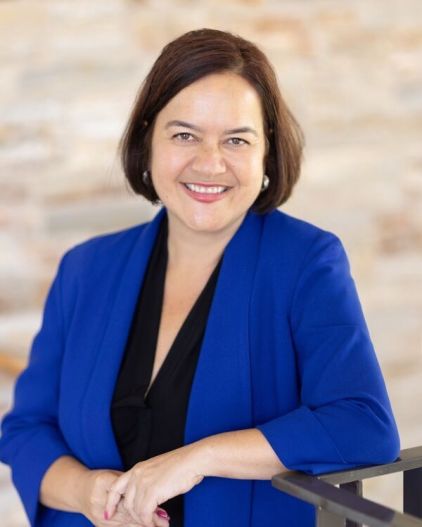
Marielena Hincapié, Esq.
Distinguished Immigration Fellow and Visiting Scholar
Cornell Immigration Law and Policy Program
Marielena Hincapié is a nationally respected leader, legal and political strategist, and a leading voice in the national immigration conversation. She was key in supporting youth leaders in creating and successfully implementing Deferred Action for Childhood Arrivals (DACA). She cofounded the Protecting Immigrant Families (PIF) coalition to address children and families' access to safety net programs. She is writing a forthcoming book Becoming America: A Personal History of A Nation’s Immigration Wars (Flatiron Books).
Additional Information
Program
Migrations Program
Einaudi Center for International Studies
Challenges and Opportunities of Artificial Intelligence for Advanced Social Research: The Case of the "xenometer" in Spain

April 16, 2025
12:00 pm
Uris Hall, G08
Today's society faces challenges of great complexity. Some of these problems are the result of modern society's past successes (such as climate change, the aging of the population, the impact of robotization on the workforce, or disinformation), and that is why they have proven so difficult to solve. The policy approaches, concepts, and instruments have also exhausted their capacity to manage a rapidly evolving society that does not match the social context for which they were designed. Finally, our Enlightenment knowledge systems, driven by the forces of specialization, are also incapable of addressing these problems, since they were one of the main causes of the progress that has now become paradoxical.
To address current social challenges, it is necessary to integrate disciplines and experiment with new scientific approaches and methods, rather than rely on fragmented systems that created the problems in the first place.
This workshop will focus on a nascent attempt in Spain, linked to Cornell's Clinic Lab program, to use artificial intelligence for two purposes: for rigorous social research through interdisciplinary teams, and to address xenophobia, a social ill that has been growing rapidly in online settings.
Sergio García Magariño has a Ph.D. in Sociology with international recognition and is a specialist in education and social development. He is currently a lecturer (associate professor) at the Public University of Navarra and a researcher at its Institute for Advanced Social Research: I-Communitas. He is co-founder and director of the Institute for Global Knowledge, Governance and Development and associate researcher at the think tank Globernance, directed by Daniel Innerarity. He has been a Visiting Fellow at the University of Essex, at Cornell University, Visiting Professor at the University College of Dublin, and Consulting Professor at Nur University in Bolivia. His research interests include processes of violent radicalization, mechanisms of collaborative governance, collective security, social and economic development, and issues related to the sociology of science and religion. These are reflected in some 85 academic articles and books. He is a regular contributor to written and audiovisual media. He was included in the catalogue of Thinking Heads 2020-2021, a communications consultancy, as one of the 100 new talented speakers in Spain. A sample of his production can be seen at sergarcia.es or at his website at the Public University of Navarra.
Additional Information
Program
Einaudi Center for International Studies
Institute for European Studies
Reppy Institute for Peace and Conflict Studies
"2 Million Dead by the End of the Year": Ex-USAID Chief Says Aid Cuts will Kill Starving Children

Rachel Beatty Riedl, DTR
“Where food supports are provided, those are such immediate and timely interventions that are responding to an acute crisis, but they have very long-term implications in thinking about who has influence with the population,” says Rachel Beatty Riedl, director of the Center on Global Democracy.
Additional Information
Poster Symposium: UN SDG 4: Quality Education in the U.S. and Ecuador

April 9, 2025
3:00 pm
Martha Van Rensselaer Hall, 2219
ECUADORCome visit a collaborative poster session featuring visiting students fromEcuador’s Universidad San Francisco de Quito (USFQ)! Students fromCornell and USFQ will present their collaborative research on comparativeeducation policy related to United Nations Sustainable Development Goal(SDG) 4: Quality Education. Together, they’ve examined two of the sevenoutcome targets: elimination of all discrimination in education, andeducation for sustainable development and global citizenship in thecontext of the United States and Ecuador. Stop by anytime 3-4:30 pm to see what they’ve discovered! Email Dr. Julie Ficarra (jmf389@cornell.edu)with questions or to request accommodations.
Additional Information
Program
Einaudi Center for International Studies
Latin American and Caribbean Studies
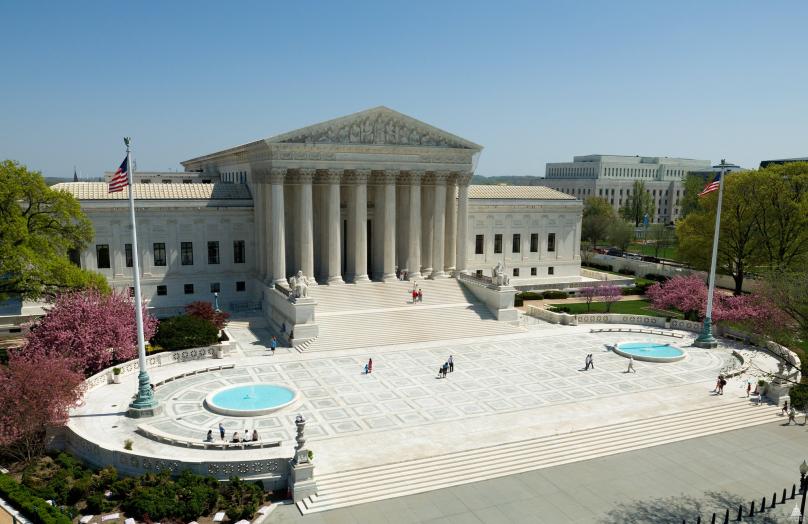
Trump Takes Birthright Citizenship to the Supreme Court
Stephen Yale-Loehr, Migrations
Stephen Yale-Loehr, professor of immigration law emeritus, says “I think that would cause chaos and confusion as to who was included in the court rulings and who is potentially subject to the birthright citizenship ban if the case goes in favor of the Trump administration on the merits.”
Additional Information
Want Your Scholarship to Influence Public Policy?

Alexandra Dufresne, GPV
In the Chronicle of Higher Education, past Global Public Voices fellow Alexandra Dufresne advises fellow academics on how to work with state and local policymakers.