
Einaudi Center for International Studies
Democratic Mobilizing: Comparative Responses to Backsliding Threats

March 5, 2025
5:00 pm
Goldwin Smith Hall, G76
A panel discussion moderated by Rachel Beatty Riedl, Peggy Koenig ’78 Director of the Brooks School Center on Global Democracy
Panelists:
David Bateman, Associate ProfessorSuzanne Mettler, John L. Senior Professor of American InstitutionsKenneth Roberts, Richard J. Schwartz ProfessorSidney Tarrow, Emeritus Maxwell Upson Professor of Government and Adjunct Professor, Cornell Law School
This panel discussion is hosted by Center on Global Democracy, and co-sponsored by American Democracy Collaborative, and Einaudi’s Democratic Threats and Resilience program.
Additional Information
Program
Einaudi Center for International Studies
Institute for African Development Seminar: Intersection of Climate Change and the Social and Political Implications of Emerging Digital Technologies

March 20, 2025
11:15 am
Sibley hall, 115 Sibley hall
The Seminar on Issues in African Development series examines a broad range of critical concerns in contemporary Africa including food production, human resource development, migration, urbanization, environmental resource management, economic growth, and policy guidance. The weekly presentations are made by invited specialists. Students write weekly memos about the talks. Graduate students (CRP 6770/GDEV 6770) facilitate one seminar question period.
Public Registration
Additional Information
Program
Einaudi Center for International Studies
The Idea of White Slavery: The West Indies Experience in the 17th Century

March 27, 2025
4:45 pm
Klarman Hall, Rhodes-Rawlings Auditorium
An A.D. White Professors-at-Large keynote public lecture
Thursday, March 27, at 4:45pm, Rhodes-Rawlings Auditorium, Klarman Hall, and via Zoom
Open to all. A reception will follow.
Abstract
The establishment of colonial dispensations on the Caribbean frontier by rival European imperial powers was conceived and implemented within an ideological framework that sanctioned and mandated the extensive use of servile labour. The creation and survival of economic enterprises across imperial borders in mining, agriculture, distributive trades and services, depended upon the availability of coerced unfree labour. Entrepreneurial thinking, likewise, was constrained by a set of specific economic references in which the attainment of growth and profitability, and a stable social order, were seen as contingent upon the supply and organization of unfree labour.
It was clear to all with an interest in the colonial mission that by the seventeenth century the options as far as labour use was concerned were reduced to three basic forms. These choices were the reduction of the conquered indigenous population to servitude on lands apropriated from them, the transfer or surplus labour from the imperial centre to the colonial periphery under set contractual conditions, and the trading in chattel labour from the already well established African market. Also, these forms were considered discrete in the sense that their structures were clilnically demarcated by racial differences – heightened by clearly distinct methods of recruitment.
About the speaker
Sir Hilary Beckles is the eighth vice chancellor of The University of the West Indies-UWI and a distinguished academic, international thought leader, United Nations committee official, and global public activist in the field of sustainability, social justice and minority empowerment. He is president of Universities Caribbean, chair of the Caribbean Examinations Council, chair of the CARICOM Reparations Commission, and advisor on sustainable development to former United Nations secretary-general Ban Ki-moon. He was knighted by the government of Barbados in 2007.
In 2021, Sir Hilary received the Martin Luther King Jr. Peace and Freedom Award. In 2022, he was elected as an Andrew D. White Professor-At-Large at Cornell University. Also in 2022, Sir Hilary presented an Einaudi Distinguished Speaker Series lecture at Cornell. In 2024, he was appointed as Chairman/Chancellor of the United Nations University (Tokyo), begin in May 2025.
Sir Hilary has published over 100 peer reviewed essays in scholarly journals, eight plays, and over 13 books on subjects ranging from Atlantic and Caribbean History to gender relations in the Caribbean, sport development, and popular culture. The breadth of Beckles’s scholarship and its generalizability to many fields has captured the interests and imaginations of a vast array of audiences worldwide.
A highly sought-after speaker, Sir HIlary has lectured extensively throughout Europe and Asia. Beckles received his higher education in the United Kingdom and graduated in 1976 with a B.A. (Hons) degree in Economic and Social History from The University of Hull, and a Ph.D. from the same university in 1980.
This event is part of an A.D. White Professors-at-Large (ADW-PAL) visit and is cosponsored by the Dept. of History and the Latin American and Caribbean Studies Program. For more information on a week of events with Sir Hilary Beckles, please visit this site.
Additional Information
Program
Einaudi Center for International Studies
Latin American and Caribbean Studies
Myanmar’s Humanitarian Crisis: A Son’s Plea for Daw Aung San Suu Kyi

March 20, 2025
7:00 pm
Cook House
Join Kim Aris, son of Daw Aung San Suu Kyi, for an important discussion on Myanmar's ongoing crisis. This event is an opportunity to come together, hear firsthand about Kim's mission and explore ways we can take action to support the people of Myanmar together.
Topics to be discussed:
The urgent need for access to his mother and concerns over her health.The worsening humanitarian crisis and ways to help those in need.Advocacy efforts to free all political prisoners and restore democracy.
Additional Information
Program
Einaudi Center for International Studies
Southeast Asia Program
Reppy Institute for Peace and Conflict Studies
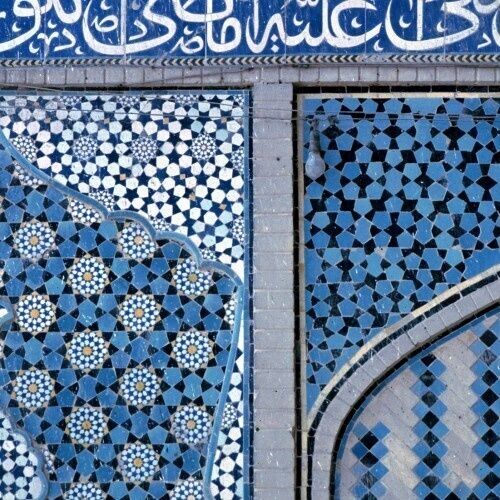
Rare Islamic Books in the Olin Library Collection
March 27, 2025
3:00 pm
Olin Library, Olin Rare Books Seminar Room
Talk by Ali Houissa and Laurent Ferri (Curators of Middle Eastern and Islamic Studies and Rare Books and Manuscripts Collection)
Our CMS seminar today will be led by the curator of the Middle Eastern Collection in Olin Library, who will be hosting us to see precious objects in the library's collection about Islam. We have many world-class books, some of them centuries old, which show the history and evolution of Islam over a long period, and across many cultures. This is a wonderful opportunity to see some of the treasures of Cornell’s collection that are rarely seen, and which span centuries of time and thousands of miles of geography in Islamic lands, from Morocco to Indonesia.
Additional Information
Program
Einaudi Center for International Studies
Southeast Asia Program
Security and Alliances: U.S. Presence in a Changing World

March 27, 2025
12:00 pm
Uris Hall, G08
Winston Churchill famously quipped, “There is only one thing worse than fighting with allies, and that is fighting without them.” For generations, the United States has wrestled with the complexities that come with international alliances. Nonetheless, ever since the early days of the Cold War, America's ability to attract like-minded allies to support and defend its interests has given it a competitive advantage relative to its main adversaries. As we continue the debates of previous generations regarding where and how the United States should be involved in the world, we need to understand the value of alliances, and how the debate itself—both within the United States and with its allies—matters to national security. Three panelists from the US Army War College will share perspectives on how Australia contributes to US security; the complexities of improving NATO effectiveness via increased contributions from its European members; and the importance of the American public engaging in well-informed debate about the country’s role in the world.
Panelists
Colonel Rob Haertsch, an Australian Army Officer with 25 years of service, recently served as Director - Land at Army Headquarters in Canberra, overseeing the integration of operational planning with the joint force and government. Prior to this, he was the Defense Adviser in Suva, Fiji, working with the Head of Mission at the Australian High Commission. His operational deployments include to the Solomon Islands, Iraq, and Afghanistan, along with domestic support to civil authorities in Australia. Colonel Haertsch holds a Bachelor of Civil Engineering from the University of New South Wales and a Masters in Defense and Military Studies from the Australian National University.
Lieutenant Colonel Frank Hartnett is a Public Affairs Officer in the U.S. Air Force. He has served for over 19 years, and his last assignment was as the Public Affairs Advisor to the Secretary of the Air Force. In this capacity, Lt Col Hartnett supported the Secretary’s efforts to modernize the force and improve the lives of Airmen through the coordinated use of media engagement, community outreach, and internal coverage. He holds a Master's Degree from Air University and a Bachelor’s Degree from the University of Pittsburgh.
Lieutenant Colonel Christiana Crawford is a U.S. Marine Corps Reserve Operational Planner and Western Europe Foreign Area Officer. She was commissioned in 2004 from the United States Naval Academy. She has spent considerable time living and working in Europe where she participated in the Robert Bosch Fellowship Program and worked in the German Foreign Ministry. Most recently Lieutenant Colonel Crawford served as the lead planner in the Pacific, overseeing the implementing of Marine Corps force modernization efforts. She is fluent in German and holds a Doctor of Chiropractic as well as master’s degrees in international relations and defense and strategic studies.
Host
Reppy Institute for Peace and Conflict Studies
Additional Information
Program
Einaudi Center for International Studies
Reppy Institute for Peace and Conflict Studies
Institute for European Studies
White Women and the Atlantic Slave System

March 26, 2025
12:20 pm
101 Bradfield Hall, 101 Bradfield Hall
Spring 2025 Harry ’51 and Joshua ’49 Tsujimoto Perspectives in Global Development Seminar Series
Abstract
The intersection of race, class and gender in the conception and design of the Atlantic Slave system continues to attract multidisciplinary research interest. The Caribbean, and the southern US colonies, provide sharp contrast in some areas but share common structural and social aspects. The presence of white women, bonded and free, was central to the roll out of chattel enslavement as a race-specific order that targeted Africans. The social interactions of white women and Africans, male and female, challenged legislators and provided the core context for continuous refinement of the rules of racial engagement. Indeed, the specific legal architecture of black enslavement (in particular the slave code) was principally a response by white males to protect property rights in production and reproduction. By defining the role and function of white women as carriers of the seed of freedom the slave based order was rendered economically sustainable.
About the speaker
Sir Hilary Beckles, eighth vice chancellor of the University of the West Indies, is a distinguished academic, international thought leader, United Nations committee official, and global public activist in the field of social justice and minority empowerment. Beckles is a 2024 Andrew D. White Professor-At-Large at Cornell University.
He received his higher education in the United Kingdom and is professor of economic history. He has lectured extensively in Europe, the Americas, Africa, and Asia. He has published over 100 peer reviewed essays in scholarly journals and over 13 books on subjects ranging from Atlantic and Caribbean History, to gender relations in the Caribbean, sport development, and popular culture.
Beckles is president of Universities Caribbean, chair of the Caribbean Examinations Council, chair of the CARICOM Reparations Commission, and advisor on sustainable development to former United Nations secretary-general Ban Ki-moon. He was knighted by the government of Barbados. He has received numerous honorary doctorates from around the world and recently received the Martin Luther King Jr. Peace and Freedom Award.
About the seminar series
The Harry ’51 & Joshua ’49 Tsujimoto Perspectives in Global Development Seminar Series showcases innovative approaches to development with experts from around the globe. Each year, the series attracts online registrants from over 45 countries and more than 350 organizations.
Seminars are held Wednesdays from 12:20-1:10 p.m. eastern time during the semester in 101 Bradfield Hall. Students, faculty and the general public are welcome to attend in-person or via Zoom.
The series is co-sponsored by the Department of Global Development, the Department of Natural Resources and the Environment, and the Charles H. Dyson School of Applied Economics and Management as part of courses GDEV 4961, AEM 4961, NTRES 4961, GDEV 6960, AEM 6960, and NTRES 6960.
Part of the A.D. White Professors-at-Large Program. For more information on a week of events with Sir Hilary Beckles, please visit this site.
Additional Information
Program
Einaudi Center for International Studies
Latin American and Caribbean Studies
Cornell Botanic Gardens Tour of Chinese and Asian Plants

May 8, 2025
12:00 pm
Brian C. Nevin Welcome Center, Please meet by the Welcome Center parking lot.
Cornell Botanic Gardens Tour of Chinese and Asian Plants
Join this guided outdoor stroll exploring different areas of the garden to highlight several plants endemic to China and eastern Asia. Discover the importance of trees and garden plants in East Asian culture, and learn about plans to develop an Asian Summer Garden to showcase tree and herbaceous peonies and other plants native to China, Japan, and Korea. Led by staff and volunteer garden guides. Co-organized by the Cornell Botanic Gardens, the Cornell China Center, and the Einaudi Center for International Studies' East Asia Program.
The walk will take place rain or shine, but will be postponed to the next day, Fri. May 9, 2025 in the event of severe or hazardous weather. Registrants will emailed at least 45 minutes in advance if this outdoor walking tour is postponed. Limited to 20 participants. Register here.
Please meet by the welcome sign/map next to the Nevin Welcome Center parking lot.
Additional Information
Program
Einaudi Center for International Studies
East Asia Program
Bounding War: the Institutional Logic of Prohibitions on Militarized Bargaining

May 1, 2025
12:00 pm
Uris Hall, G08
It is a familiar observation that the possibility of war permeates relations among states under anarchy. It is less well appreciated that states deliberately and routinely regulate that possibility by delineating prohibitions on the use of militarized bargaining. Three ambitious examples of such prohibition – the rule of non-aggression embedded in the Covenant of the League of Nations (1920), Kellogg-Briand Pact (1928), and Charter of the United Nations (1945) – have attracted enormous attention from political scientists and historians alike. Few scholars appreciate that these three instruments are, however, only the most well-known cases inhabiting a much broader universe. Indeed, across the past two centuries alone, various groups of three or more states concluded over 97 legal instruments containing 120 distinct provisions variously circumscribing the right and ability of different states to engage in militarized bargaining. Despite their ubiquity in modern international relations, states’ use of such prohibitions is documented only incompletely and rather imperfectly understood. Why do states enact them? What explains variation in their design? And what does the practice of such prohibitions tell us about the ability of states, especially the great powers, to cooperatively limit the use of military force in the international system? In this lecture, Anatoly Levshin will articulate a new institutionalist theory that resolves these questions. He will provide guidance on the use of prohibitions on militarized bargaining as policy instruments and, drawing on extensive archival research, develop new narratives of the origins of some of the most familiar prohibitions, including the rule of non-aggression articulated in Article 10 of the Covenant of the League of Nations.
Anatoly Levshin is a postdoctoral fellow at the Harvard Kennedy School at Harvard University. He is presently affiliated with two fellowships at the School’s Belfer Center: Technology and Geopolitics and the International Security Program. Anatoly is also Director’s Fellow with the Reimagining World Order research community at Princeton University, which he formerly co-curated with its director, G. John Ikenberry. Anatoly’s research explores fundamental international-security issues from the standpoint of world order. His first book project, Bounding War: Rules of Neutralization, Demilitarization, and Non-Aggression and the Institutional Logic of Prohibitions on Militarized Bargaining, investigates the history and theory of the rules of neutralization, demilitarization, and non-aggression as instruments for the bounding of war in the international system. Anatoly is also interested in the geopolitical implications of Artificial Intelligence (AI) as an emerging technology. He is currently investigating the ability of specialized AI systems, trained specifically in the strategic logic of interstate bargaining, to reliably assist policymakers, advisors, diplomats, and statesmen in negotiating complex international challenges. Anatoly’s second book project, tentatively entitled The Geopolitics of Digital Oracles, will explore the risks and benefits of national-security applications of AI more generally and consider alternative models of arms control that states can draw on to manage strategic contests supercharged by competitive deployment of rival AI systems.
Host
Reppy Institute for Peace and Conflict Studies
Cosponsor
Brooks Tech Policy Institute
Department of Government
Additional Information
Program
Einaudi Center for International Studies
Reppy Institute for Peace and Conflict Studies
Among Women across Worlds: North Korea in the Global Cold War
April 29, 2025
4:45 pm
Goldwin Smith Hall, Room 64, Kaufmann Auditorium
East Asia Program Korean Studies Speaker Series presents "Among Women across Worlds: North Korea in the Global Cold War"
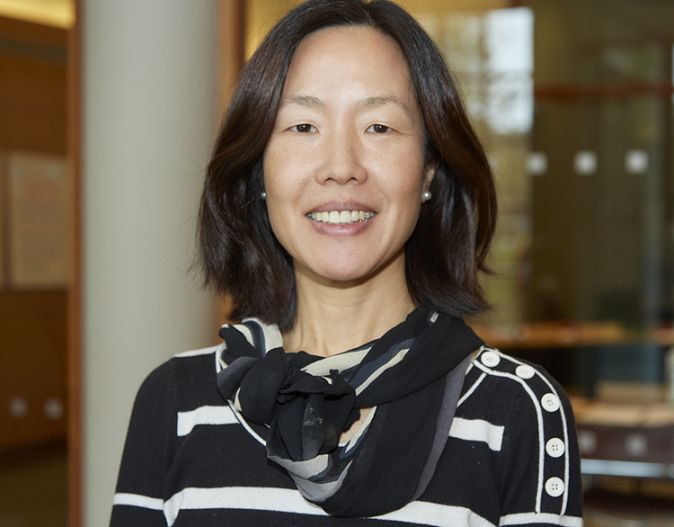
Speaker: Suzy Kim, Professor of Korean History, Rutgers University
Description: While social movements may appear to have receded in the 1950s with the rise of Cold War domesticity and McCarthyism (much like the upsurge of authoritarianisms today), the Korean War galvanized women to promote women’s rights in the context of the first global peace campaign during the Cold War. Recuperating the erasure of North Korean women from this movement, this talk excavates buried histories of Cold War sutures to show how leftist women tried to bridge the Cold War divide through maternalist strategies. Socialist feminism in the context of a global peace movement facilitated a productive understanding of “difference” toward a transversal politics of solidarity. The talk weaves together the women’s press with photographs and archival film footage to contemplate their use in transnational movements of resistance and solidarity, both then and now.
Speaker Bio: Suzy Kim is a historian and author of the prize-winning book Everyday Life in the North Korean Revolution, 1945-1950 (Cornell 2013). She holds a PhD from the University of Chicago, and teaches at Rutgers, the State University of New Jersey in New Brunswick. Her latest book Among Women across Worlds: North Korea in the Global Cold War (Cornell 2023) was completed with the support of the Fulbright Program and the National Endowment for the Humanities. She is senior editor of positions: asia critique, and serves on the editorial boards of Journal of Korean Studies and Yŏsŏng kwa yŏksa [Women and History], the journal of the Korean Association of Women’s History.
About East Asia Program
As Cornell’s hub for research, teaching, and engagement with East Asia, the East Asia Program (EAP) serves as a forum for the interdisciplinary study of historical and contemporary East Asia. The program draws its membership of over 45 core faculty and numerous affiliated faculty, graduate, and undergraduate students from eight of Cornell’s 12 schools and colleges.
Additional Information
Program
Einaudi Center for International Studies
East Asia Program