Einaudi Center for International Studies
LACS Research Symposium 2025

February 22, 2025
9:00 am
PSB 401
Latin America and the Caribbean: Connection, Integration, and Negotiation
LACS invites Cornell faculty, staff, graduate, and undergraduate students to participate in its Annual Research Symposium on February 21 and 22, 2025. This symposium aims to be a vibrant community-building space, fostering collaboration and dialogue among scholars, researchers, and practitioners from diverse disciplines and backgrounds. By bringing together Latinamericanist and Caribbeanist voices, the event will create opportunities for meaningful exchange, networking, and the co-creation of ideas. Through panel discussions and informal gatherings, participants can build lasting connections, form interdisciplinary partnerships, and contribute to a shared vision of regional integration and cooperation.
América Latina y el Caribe: Conexión, Integración y Negociación
LACS invita a la comunidad de Cornell a participar en su simposio de investigación anual a llevarse a cabo los días 21 y 22 de febrero de 2025. Este simposio tiene como propósito ofrecer un espacio comunitario que promoverá la colaboración y el diálogo entre académicos, investigadores y profesionales de diversas disciplinas y formaciones. Al unir voces latinoamericanistas y caribeñistas, el evento creará oportunidades para el intercambio, el networking y la co-creación de ideas. A través de discusiones de paneles y encuentros informales, los participantes podrán construir conexiones duraderas, formar colaboraciones interdisciplinarias y contribuir a una visión compartida de integración y cooperación regional.
Friday, February 21
5:00-5:15 Welcome, Ernesto Bassi Arevalo, Director of LACS
5:15-6:30 - Panel 1. Historicizing the Caribbean; Moderator: Harry Churchill
Carmine Couloute, “Haiti’s Two-Tiered Citizenship”Karina Beras, “Incendiary Instances, Extrinsic Energies”Jean-Michel Mutore, “The Discourse of Slavery Abolition on San Andrés and Old Providence, 1842-1873”Kaori Quan, “What Père Duchesne Saw in Saint-Domingue: Watching the Haitian Revolution from Afar”6:30-8:30 - Reception
Saturday, February 22
9:00-9:30 - Breakfast
9:30-10:45 - Panel 2. Bodies of Water; Moderator: Isabel Padilla
J. Rafael Ponciano, “Concerning Space and Atmosphere: Disaffected Kinship in Salón de belleza by Mario Bellatin”Michael Cary, “Engineering the Wetlands: Power, Infrastructure, and Agrarian Change in Ñeembucú, Paraguay”Jack Brown, “Do Dead Fish Like Merengue? Popular Music and Climate Change in the Caribbean”Maoz Bizan, “The Uruguayan Hydropower Network under Drought” 10:45-12:00 - Panel 3. Democracy and Representation; Moderator: Rocío Salas-Lewin
Emma MacCallum, “How Penal Populists Erode Democratic Norms: Legitimization of Undemocratic Anti-Crime Policies”Delphi Lyra, “The Effects of Top Down Polarization: The PT Party and Jair Bolsonaro in Brazil”Vivian Yellen, "Governing ‘White Gold’ during a ‘Pink Tide’: The Political Economy of Chile’s National Lithium Strategy" 12:00-1:00 - Lunch
1:00-2:15 - Panel 4. Transformations; Moderator: Jack Brown
Diego Cepeda, "Agency of the Unknown: Porous Subjectivity in Elaine Vilar Madruga's El cielo de la selva"Paulo Lorca, “Revisiting the Aesthetic Machine”Vanessa Sandoval, “Bugs, Bias, and Colonialism: Decolonizing Entomophagy in Mexico”Daniel Rosa Hunter, “Bored Writing: Crossings of Virtuality and Fiction in Teresa de la Parra’s Ifigenia (1924)” 2:15-3:30 - Panel 5. Global Mobilities and Governance; Moderator: Marcos Pérez Cañizares
Gorka Villar Vázquez, “The visit to Italy of Chilean communist leader Luis Corvalán (1977). An episode of the ideological tensions of the International Communist Movement in the West”Rocío Salas-Lewin, “Behavioral Responses to the Crisis of Representation: Voice and Exit in Chile and Spain”Dayra Lascano, “Bias or Bond? Alignment and Its Influence on Regional International Organizations”Tianran Chen, “Beyond “Saving” Life: Biopolitical Dynamics and Virus Narrative in Saving the World”3:30-3:45 - Coffee break
3:45-5:00 - Panel 6. Communities and Agency; Moderator: Leonardo Santamaría Montero
Alonso Alegre-Bravo, “Power to the People: Seeking Fair Electricity Access Indicators in Guatemala”Stephanie López, “Reframing Local Archives and Community Organizing in Medellín, Colombia”Brume Dezembro Iazzetti, “Travestis will save Brazil!”: Intersectionality, political history, and the gender/national identityCarolina Osorio Gil, “Semillas de Resistencia / Seeds of Resistance: Building a Medicinal Plants Project with a Campesina/o Resistance Movement in Antioquia, Colombia”Amanda Vilchez and Edwin Eddy Johan Machaca Condori, “Beyond Language: Collaborative Translation and the Recovery of Traditions”
Additional Information
Program
Einaudi Center for International Studies
Latin American and Caribbean Studies
Information Session: Laidlaw Research and Leadership Program

December 4, 2024
5:00 pm
Uris Hall, G08
The Laidlaw Undergraduate Leadership and Research Program promotes ethical leadership and international research around the world—starting with the passionate leaders and learners found on campuses like Cornell. Open to first- and second-year students, the two-year Laidlaw program provides generous support to carry out internationally focused research, develop leadership skills, engage with community projects overseas, and become part of a global network of like-minded scholars from more than a dozen universities. We’ll also share tips for approaching potential faculty research mentors and writing a successful application.
Can’t attend? Contact laidlaw.scholars@cornell.edu.
***
The Mario Einaudi Center for International Studies hosts info sessions for graduate and for undergraduate students to learn more about funding opportunities, international travel, research, and internships. View the full calendar of fall semester sessions.
Additional Information
Program
Einaudi Center for International Studies
Reppy Institute for Peace and Conflict Studies
East Asia Program
Southeast Asia Program
Latin American and Caribbean Studies
Institute for African Development
Institute for European Studies
South Asia Program
Migrations Program
Summer Program in India Info Session
November 20, 2024
5:15 pm
Rockefeller Hall, 183
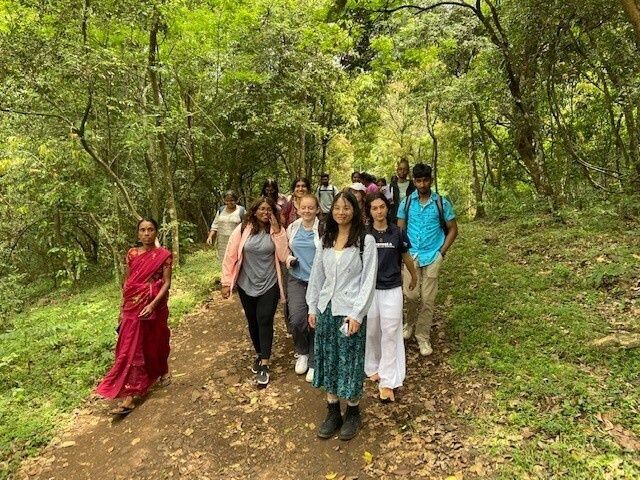
Are you interested in the intersection of mental health and culture, global health, and community engagement? Do you want to gain field research skills and learn about indigenous communities in South India’s beautiful and fragile Nilgiris Biosphere Reserve? If so, the Cornell-Keystone Nilgiris Field Learning Program might be for you!
Additional Information
Program
Einaudi Center for International Studies
South Asia Program
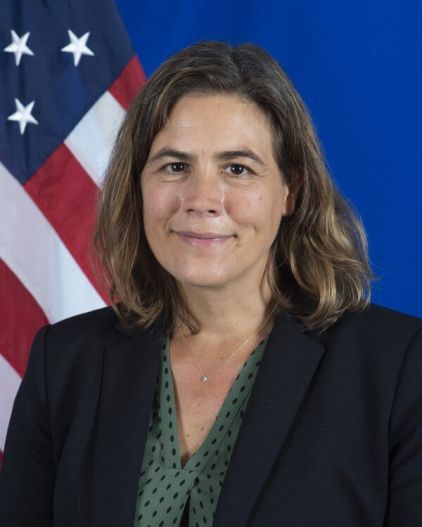
Keynote Address by Dr. Elizabeth Campbell, Deputy Assistant Secretary of State for Population, Refugees, and Migration
December 3, 2024
2:30 pm
Plant Sciences, 404
As part of the day-long Refugee Pathways Symposium, organized as part of the community-engaged course, PUBPOL 3050/5050: Refugee Pathways and Resettlement Policy, in collaboration with Cornell Law School and the Migrations Program, Dr. Elizabeth Campbell, Deputy Assistant Secretary of State for Population, Refugees and Migration will give a keynote address.
Additional Information
Program
Einaudi Center for International Studies
Migrations Program
Community Panel on the Post-Election State of Refugee Resettlement in Upstate NY
December 3, 2024
11:45 am
Physical Sciences Building, 404
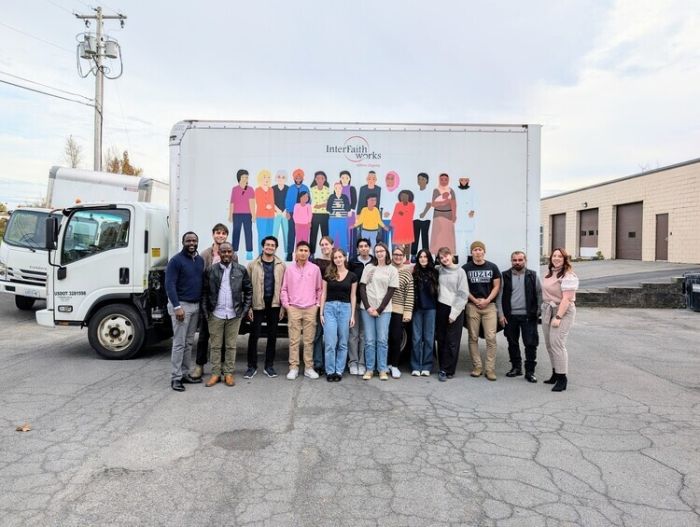
As part of the day-long Refugee Pathways Symposium, organized as part of the community-engaged course, PUBPOL 3050/5050: Refugee Pathways and Resettlement Policy, in collaboration with Cornell Law School and the Migrations Program, representatives from RISE and Interfaith Works (Syracuse), The Center (Utica), and Ithaca Welcomes Refugees will discuss the post-election landscape for refugee resettlement in Upstate NY. Lunch will be provided. Registration required.
Additional Information
Program
Einaudi Center for International Studies
Migrations Program
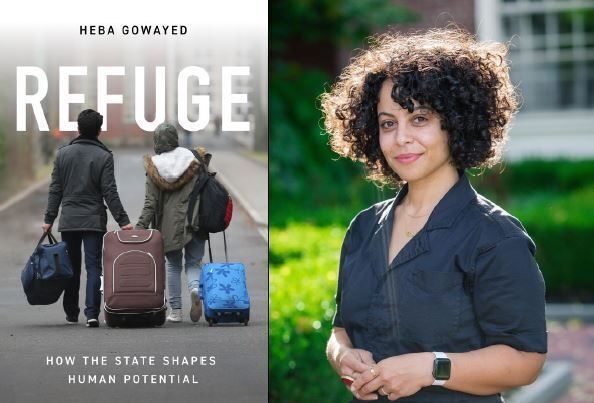
Hybrid Book Talk "Refuge: How the State Shapes Human Potential" with Dr. Heba Gowayed
December 3, 2024
10:30 am
Plant Sciences, 404
Dr. Heba Gowayed will join us virtually to discuss her recent book, Refuge: How the State Shapes Human Potential (2022) as part of the day-long Refugee Pathways Symposium, organized as part of the community-engaged course, PUBPOL 3050/5050: Refugee Pathways and Resettlement Policy course in collaboration with Cornell Law School and the Migrations Program. Refreshments provided for in-person participants.
Additional Information
Program
Einaudi Center for International Studies
Migrations Program
DNA Analysis Upends Long-held Assumptions About Pompeii Victims
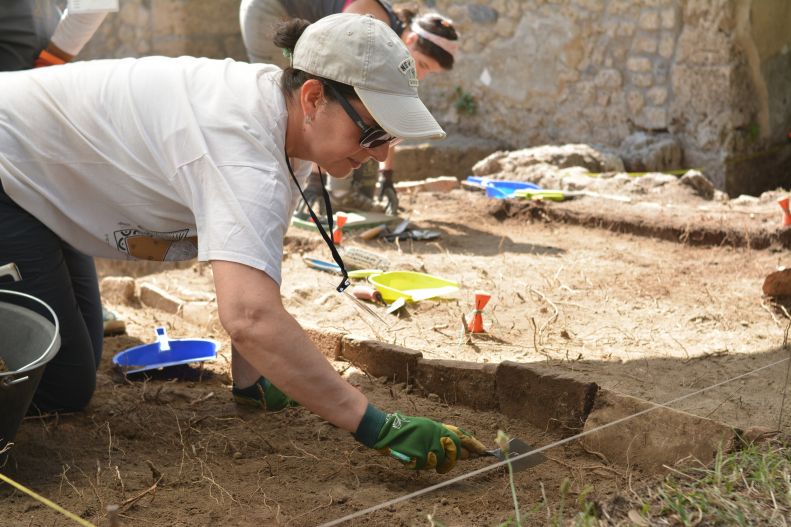
Caitlín Barrett, IES
Caitlín Eilís Barrett, an associate professor in the Department of Classics, discusses the tragedy that occurred in Pompeii when Mount Vesuvius erupted in AD 79.
Additional Information
In the End, Women Did Not Save Harris at Ballot Box

Sabrina Karim, PACS
Sabrina Karim, associate professor of government, explains why it is important to remember that women are not a monolithic group.
Additional Information
Trump Mass Deportation Pledge Faces Legal, Economic Barriers

Stephen Yale-Loehr, Migrations
“Rhetoric is one thing,” says the Migration Program's Stephen Yale-Loehr (Law). “Actual implementation is something else.”
Additional Information
What Trump’s Win Means for the World’s Most Pressing Problems

Rachel Beatty Riedl, DTR
Rachel Beatty Riedl, director of the Center on Global Democracy, discusses the impact of a second Trump presidency.