
Einaudi Center for International Studies
Institute for European Studies Graduate Fellows Symposium

December 2, 2024
2:30 pm
Uris Hall, G08
IES Graduate Fellows will be presenting their work in conference style presentations followed by time for discussions. Presenters will be:
Panel 1
Alican Taylan- Architecture Art Planning- "Disentangling Modernity and Colonialism: The St. Joseph Mission School in Ngasobil, Senegal"
Victoria Pihl Sørensen- Performing and Media Arts- "Making “Moral Mothers” and “Better Babies”: Reckoning with Eugenics in the History of Reproduction in Denmark"
Maria Luisa Palumbo- Architecture Art Planning- "Histories of Land, Grain, and Architecture Across Italy and Libya, 1912-1943"
Panel 2
Nora Siena- Romance Studies- "Inside/Outside: Primo Levi’s Liminal Relationship with Jewishness as a Source for Critique"
Rachel Horner- Music- "Remapping València in the Festival Borderlands"
Matt Finck- History- "The Cosmologies of Victor Serge: Science and Catastrophe in the Revolutionary Novel"
Additional Information
Program
Einaudi Center for International Studies
Institute for European Studies
Archives in Transit: Todosomos and the Venezuelan Migration Crisis
April 18, 2025
10:00 am
A.D. White House, Guerlac Room
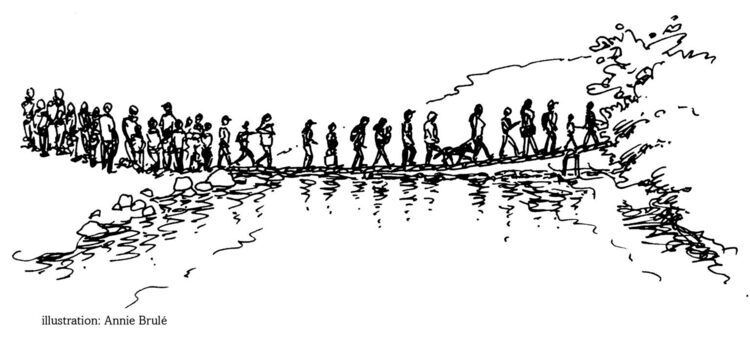
In this event, we will be officially launching the archive Todosomos, a collection of handwritten testimonies by Venezuelan migrants who crossed the border from Venezuela to Colombia between 2019 and 2021. The event will have several panels and include interventions by the founders of Todosomos, the library team in charge of the processing and transcription of the archive, Venezuelan artists and writers, a representative of the NGO Ithaca Welcomes Refugees, and a talk by Professor Zeb Tortorici (NYU). It will also include a lunch, a reception, and a pop-up exhibit of the handwritten notebooks. This event is free and open to the public.
View the event program
Additional Information
Program
Einaudi Center for International Studies
Latin American and Caribbean Studies
Migrations Program
Shifting Landscapes: A Conversation with the Cornell Community on Migration and Trump-Era Policy Changes
November 21, 2024
12:00 pm
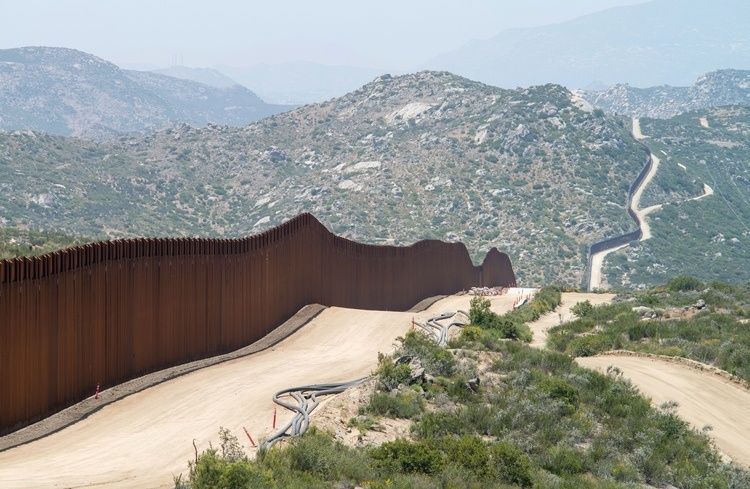
The recent U.S. election is likely to have significant impacts on immigration policy and practices. Based on experience with the previous Trump administration and standing efforts among Republicans in Congress, these changes may impact Cornell students, staff, and faculty. Join Cornell’s Migrations Program in a conversation about the current state of immigration policy.
This is a virtual-only meeting open to Cornell faculty, staff, and students. Registration is required.
Panelists
Shannon Gleeson, School of Industrial and Labor Relations and Brooks School of Public PolicyLaura Taylor, Director of International ServicesStephen Yale-Loehr, Cornell Law SchoolModerator
Wendy Wolford, Vice Provost for International Affairs and Robert A. and Ruth E. Polson Professor of Global Development in the College of Agriculture and Life SciencesHost and Sponsors
The Migrations Program, part of the Mario Einaudi Center for International Studies, builds upon the work of Migrations: A Global Grand Challenge to inform real-world policies and outcomes for populations that migrate.
Additional Information
Program
Einaudi Center for International Studies
Migrations Program
Reppy Institute for Peace and Conflict Studies
East Asia Program
Southeast Asia Program
Latin American and Caribbean Studies
Institute for African Development
Institute for European Studies
South Asia Program
The Demographic and Health Survey Program and The New Nutrition Team
November 21, 2024
11:15 am
109 Ives Hall
Rukundo Kambarami Benedict is a highly experienced nutrition researcher currently serving as the Lead Nutrition Research Associate at The Demographic and Health Surveys (DHS) Program since August 2017. In this role, Rukundo analyzes national datasets and authors reports to guide nutrition policy and programs. Prior to this, Rukundo was a Postdoctoral Research Associate at Cornell University, where research focused on breastfeeding practices in South Asia and the quality of maternal nutrition counseling. Rukundo's academic journey includes a PhD from Cornell University, where teaching and research on nutrition and health were key components, and a Master of Science in Public Health from Johns Hopkins University. Early experiences included a role as a Research Assistant for a WHO/Johns Hopkins collaboration and various research positions at the Zvitambo Institute, further emphasizing Rukundo's dedication to advancing nutrition and public health interventions.
Public Registration
Additional Information
Program
Einaudi Center for International Studies
Institute for African Development
Seeing Others: The Ongoing Challenges of Recognition Gaps in the United States and Europe

April 21, 2025
5:00 pm
Physical Sciences Building, 120
IES Luigi Einaudi Distinguished Lecture
Building on her recent book Seeing Others, on her recent work on the urban/rural divide across EU countries, and on the non-college educated young workers (18-30) in Manchester New Hampshire, and Manchester UK, Michèle Lamont discusses the challenges of addressing recognition gaps in the US and Europe at a time when attacks against various minoritized groups are multiplying. She also presents analytical tools and strategies for dealing with the current political backlash against inclusion.
Michèle Lamont is Professor of Sociology and of African and African American Studies and the Robert I. Goldman Professor of European Studies at Harvard University. Born in 1957, she grew up in Quebec and studied political theory at the University of Ottawa before obtaining a doctorate in sociology at the University of Paris in 1983. After completing post-doctoral research at Stanford University, she has served on the faculty at the University of Texas at Austin (1985-87), Princeton University (1987-2002) and Harvard University (2003-present). A cultural and comparative sociologist who studies inclusion and inequality, she has researched how we evaluate social worth across societies, the role of cultural processes in fostering inequality, symbolic and social boundaries, and the evaluation of knowledge, as well as topics such as dignity, stigma, racism, class cultures, collective well-being, social resilience, and social change. Her books include Money, Morals and Manners: the Culture of the French and the American Upper-Middle Class (1992), The Dignity of Working Men: Morality and the Boundaries of Race, Class, and Immigration(2000), How Professors Think: Inside the Curious World of Academic Judgement (2009), Getting Respect: Responding to Stigma and Discrimination in the Us, Brazil and Israel (coauthored, 2016), and Seeing Others: How Recognition Works and How It Can Heal a Divided World (2023). She is also the author of several collective works, and over a hundred articles published in American Sociological Review, American Journal of Sociology, Annual Review of Sociology, Human Nature Behavior, and other prominent outlets.
Additional Information
Program
Einaudi Center for International Studies
Institute for European Studies
Reconsidering Regions of the Atlantic World: The Case of the Revolutionary Greater Southern Caribbean
April 14, 2025
12:20 pm
Uris Hall, 153
Regions of the world are historical constructions yet over time they have seemed to become more and more fixed. This talk will cut across linguistic and cultural boundaries and re-examine conceptualizations of regions in the Americas and the wider Atlantic World, showing evidence for a very polyglot, cross-imperial and interconnected Greater Southern Caribbean during the late eighteenth and early nineteenth centuries. The second half of the eighteenth century saw the growth of the Windward Islands, the southern Dutch Antilles and the southern rimland. These developments, together with the continued importance of well-established Barbados, make it possible to conceive of a new zone of interaction, encompassing Venezuela and its offshore islands, the Guianas, Trinidad and Tobago, and the Lesser Antillean chain from Dominica to the Grenadines. Historians continue to reconsider the boundaries of the Caribbean, resulting in a shifting understanding of traditional regions in the Americas. They now increasingly focus on the relationships between the islands and territories of North, Central and South America that touch the Caribbean Sea.
This talk will explore the strong connections from most of the Lesser Antilles to the Spanish mainland and the Guianas. Furthermore, it will claim that the Southern Caribbean had special importance in the context of the Atlantic World since it helped to connect the North and South Atlantic. Southern Caribbean colonies were a source of news about events on the South American continent especially during the Spanish American War of Independence. Economic, political, scientific, and even missionary networks also consolidated across the sub-region and helped to forge new bonds across the North and South Atlantic. Ultimately, the Revolutionary Greater Southern Caribbean provides a good case to reconsider how regions are constructed and how they change over time.
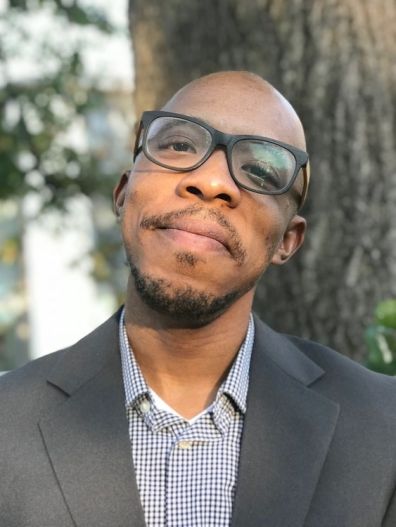
Dexnell Peters is currently Lecturer in Caribbean and Atlantic History at the University of the West Indies, Mona campus. He was previously a Teaching Fellow at the University of Warwick and Supernumerary Fellow and Bennett Boskey Fellow in Atlantic History at Exeter College, University of Oxford. Dexnell has a PhD in Atlantic History from Johns Hopkins University. He is broadly interested in the history of the Greater Caribbean and the Atlantic World. Dexnell's current research project, through the main themes of geography and the environment, inter-imperial transitions, migration, the plantation economy, politics and religion, makes a case for the rise of a Greater Southern Caribbean region (inclusive of Venezuela and the Guianas) in the late eighteenth century, showing evidence for a very polyglot, cross-imperial and interconnected world. His first book, written in collaboration with historian Shane Pantin at the University of the West Indies (UWI) St. Augustine, focused on the history of the campus’ Guild of Students in commemoration of the organization’s fiftieth anniversary and covered key issues of student movements, decolonization and post-independence in the former British Caribbean colony of Trinidad & Tobago.
Additional Information
Program
Einaudi Center for International Studies
Latin American and Caribbean Studies
Black Monserrat: Race, Migration, and Real Estate in Nineteenth-Century Buenos Aires
April 8, 2025
12:20 pm
Uris Hall, G08
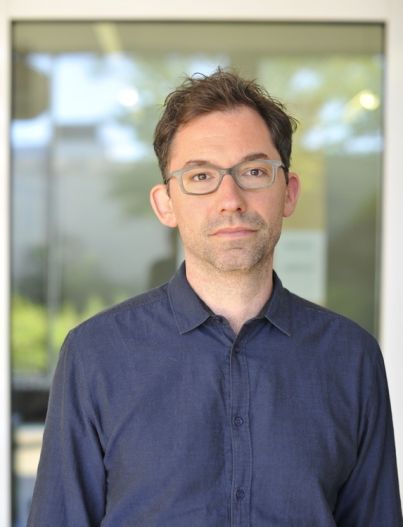
The global history of the interrelationship between race, migration, and real estate is still in its infancy, even as it promises a particularly rewarding angle on histories of how mobility and inequality have been intertwined. The Argentine capital of Buenos Aires, which during the second half of the nineteenth century received large numbers of European immigrants and underwent spectacular urban transformations, offers a window onto these problems. In recent decades, historians have increasingly viewed this migration through the lens of Argentine elites’ discourses of “whitening,” but they have rarely examined the concrete urban effects that European immigration had for the city’s Afro-descendants, who in the 1830s still constituted more than a quarter of the population. This talk attempts to do as much by looking at the formation of a Black neighborhood through real estate acquisition as well as the ensuing process of dispossession. While the empirical focus is micro-historical, the explanatory horizon is broader: The paper ultimately seeks to derive more general findings about the history of capitalism and inequality in the nineteenth-century Atlantic.
Michael Goebel is the Einstein Professor of Global History at Freie Universität Berlin and co-director of the university’s Center for French Studies. Since his Ph.D. (University College London, 2006) he has also worked at the European University Institute, Harvard University, and the Geneva Graduate Institute. Following his 2015 book Anti-Imperial Metropolis, which won the Jerry Bentley Prize in World History, he has increasingly grown interested in the emerging field of global urban history. He is currently the Principal Investigator of the SNSF-funded project Patchwork Cities, which explores the history of segregation in port cities in the nineteenth and twentieth centuries.
On Monday, April 9, Michael Goebel will be giving another lecture, "Contagion, Inevitability, and Teleology: Imperial Disintegration and Nation-State Formation in Global History."
Co-Sponsored by the Department of Government, Department of History, Institute for Comparative Modernities, and Institute for European Studies.
Additional Information
Program
Einaudi Center for International Studies
Latin American and Caribbean Studies
Institute for European Studies
Migrations Program
Contagion, Inevitability, and Teleology: Imperial Disintegration and Nation-State Formation in Global History
April 7, 2025
4:45 pm
Statler 196
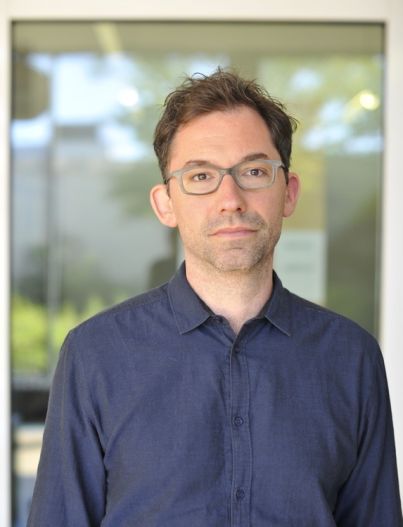
Historians have long been interested in the questions of how and why multinational empires gave way to nation-states. As revisionist scholars of various empires have lamented during the last few decades, post- imperial nationalist historiographies all too frequently construed the transition from empire to nation-state as a natural process governed by universal laws of awakening nationhood. But in light of the nation-state’s recurring seriality, the revisionist emphasis of each case’s inherent capriciousness creates new interpretive problems—in particular as we zoom out to a more global purview. In evaluating key terms in the global historiography about imperial disintegration and nation-state formation, such as contagion, inevitability, and teleology, this talk challenges revisionist accounts and argues that gestures to “contingency” are ill-suited to the purpose of explaining the global spread of the nation-state form during the last 250 years of world history. The talk ultimately points specifically to the centrality of popular sovereignty as a vehicle for the proliferation of nominal nation-states in the modern world.
Michael Goebel is the Einstein Professor of Global History at Freie Universität Berlin and co-director of the university’s Center for French Studies. Since his Ph.D. (University College London, 2006) he has also worked at the European University Institute, Harvard University, and the Geneva Graduate Institute. Following his 2015 book Anti-Imperial Metropolis, which won the Jerry Bentley Prize in World History, he has increasingly grown interested in the emerging field of global urban history. He is currently the Principal Investigator of the SNSF-funded project Patchwork Cities, which explores the history of segregation in port cities in the nineteenth and twentieth centuries.
On Tuesday, April 8, Michael Goebel will be giving another lecture, Black Monserrat: Race, Migration, and Real Estate in Nineteenth-Century Buenos Aires as part of the Latin American and Caribbean Studies Seminar Series.
Co-Sponsored by the Department of Government, Department of History, Institute for Comparative Modernities, and Institute for European Studies.
Additional Information
Program
Einaudi Center for International Studies
Latin American and Caribbean Studies
Institute for European Studies
Suspect Citizenship: Rethinking Belonging and Non-belonging in Plural Societies
March 12, 2025
4:30 pm
Warren, B02
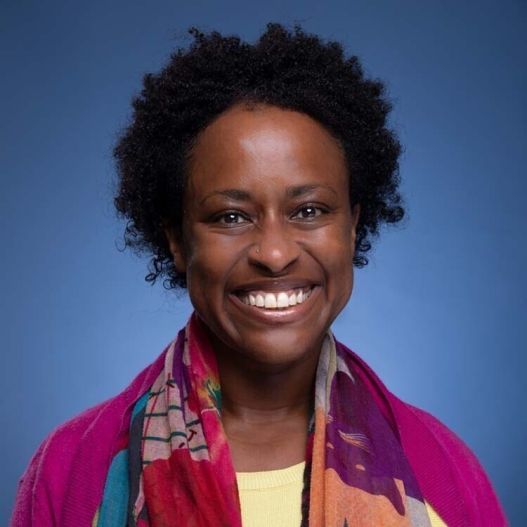
Based on years of ethnographic research on France’s present antiracist movement and mobilization against state violence, I introduce a framework of “suspect citizenship” which demonstrates how ethnoracial minorities are constantly outside of the boundaries of full societal inclusion. I argue that postcolonial plural societies like France position a certain populations as suspect or suspicious, due to their ethnoracial assignment. I examine suspect citizenship at the nexus between active citizenship, belonging/non-belonging, antiracism at a macro level, and activism against state violence. I consider how certain populations are automatically rendered suspicious or suspect by virtue of their ethnoracial assignment on micro and macro levels, and how this construction of citizenship is not just a postcolonial formation. I discuss how we can understand how individuals resist their categorization as suspect through examining mobilization against state violence, as well as how suspect citizenship exists without state recognition of ethnoracial difference. Suspect citizenship is therefore a framework and mode for understanding and making sense of how colonial hierarchies are maintained in postcolonial or neocolonial societies.
Jean Beaman (she/her) is Associate Professor of Sociology in the Ph.D. Program at the Graduate Center of the City University of New York (CUNY), and on leave from the University of California, Santa Barbara. Her research is ethnographic in nature and focuses on race/ethnicity, racism, international migration, and state violence in both France and the United States. She is author of Citizen Outsider: Children of North African Immigrants in France (University of California Press, 2017), as well as numerous articles and book chapters. She is also an Associate Editor of the journal, Identities: Global Studies in Culture and Power and a Corresponding Editor for the journal Metropolitics/Metropolitiques. She was a 2022-2023 fellow at the Center for Advanced Study in Behavioral Sciences at Stanford University, and a Co-PI for the Mellon Foundation Sawyer Seminar grant, “Race, Precarity, and Privilege: Migration in a Global Context” for 2020-2022.
Host
Institute for European Studies
Cosponsors
Sociology
French Studies
Additional Information
Program
Einaudi Center for International Studies
Institute for European Studies
From the Atlantic to the Pacific: Interoceanic Connections through Tehuantepec and Nicaragua in the Late 18th Century

March 4, 2025
12:20 pm
Uris Hall, G08
Since the end of the 17th century, English and French navigators increased their presence throughout the Pacific to connect existing Atlantic trade with Asia. Their navigations through the Pacific familiarized them with advantageous sites—such as in Tierra de Fuego—which functioned as stopovers. These new navigations posed a significant threat to Spain’s attempts to control maritime commerce between the Pacific and Atlantic oceans that passed through American waters. Spain’s need to diversify its maritime routes became clearer still after the Seven Years’ War and the English capture of La Havana and Manila. As a response, peninsular authorities considered extending Spain’s maritime presence in the Pacific by better using isthmus areas like Tehuantepec and Nicaragua. This presentation aims to explain how Spain’s new maritime projects reconsidered the geostrategic position of the isthmus as a crossable point between the Atlantic and the Pacific. In the case of Tehuantepec, the new projects were related to the Maritime Department of San Blas and Spanish expansion into the Northwest of America; in the case of Nicaragua, however, the projects focused on proposals to better connect with Asian trade. These cases let us think about the different particularities that exist in the maritime projects show how Spanish geostrategic considerations for the isthmuses of Tehuantepec and Nicaragua stressed the plurality of imperial visions exerted by late Bourbon officials.
On Monday, March 3, Dr. Pinzón will also be participating in a Spanish-language conversaiton with Dr. Ernesto Bassi, titled "Maritime History from Latin American Shores."
Guadalupe Pinzón Ríos is a Doctor in History from the Faculty of Philosophy and Letters of the UNAM, where she is currently a researcher and professor at the Institute for Historical Research. Pinzón Ríos is also a member of the National System of Researchers and an advisor of the graduate program in history. She has been studying maritime port activities throughout the Pacific, especially in New Spain, and has published Acciones y reacciones en los puertos del Mar del Sur. Desarrollo portuario del Pacífico novohispano a partir de sus políticas defensivas (1713-1789) and Hombres de mar en las costas novohispanas. Trabajos, trabajadores y vida portuaria en el departamento marítimo de San Blas (siglo XVIII). She also has various published works, articles, and book chapters.
Co-sponsored by Romance Studies, Science & Technology Studies, , and Society for the Humanities.
Additional Information
Program
Einaudi Center for International Studies
Latin American and Caribbean Studies