
Einaudi Center for International Studies
The (Im)possiblity of Immigration Reform?

November 8, 2024
8:30 am
Law School, 184 Myron Taylor Hall
The Cornell International Law Journal is hosting a symposium to honor Professor Stephen Yale-Loehr's career in immigration law. The event will cover topics such as the current state of asylum law, immigrants and the economy, and the need for increased legal representation for immigrants. Additionally, there will be a lighthearted roast of Professor Yale-Loehr and opportunities for networking during lunch and the reception. Articles presented during the symposium will be published in an upcoming issue of the Cornell International Law Journal.
Please visit website to register to attend in person or via webinar.
Additional Information
Program
Einaudi Center for International Studies
Migrations Program
Fish Biodiversity Benefits Household Nutrition

Kathryn Fiorella in World in Focus
Migrations Program director Kathryn Fiorella coauthored an article, “Commercially Traded Fish Portfolios Mask Household Utilization of Biodiversity in Wild Food Systems,” in the peer-reviewed journal PNAS.
“Natural resource–dependent households rely on surrounding biodiversity for their food and income. Explicating the ways households use biodiversity is critical to appreciating the true value of diverse ecosystems.”
Households living near rice field fisheries in Cambodia eat a much wider cross-section of their fish catch (43% of local species) than they take to market to sell (only 9%).
“Poorer households also consumed more species, underscoring how wild food systems may most benefit the vulnerable,” the article concludes. The results highlight the food security consequences of biodiversity loss—for families, communities, and global food systems.
The team's research integrated surveys of households and ecological sites collected over three years in the freshwater Tonlé Sap lake system in Cambodia. Cornell Chronicle coverage noted that the study—part of Cornell's 2030 Project—is one of the first to examine how diet and biodiversity interact in a wild food system.
Culinary habits are part of the reason why larger fish are more often sold, Fiorella said. “We tend to eat them as fillets, which tend to have a slightly lower nutrient content than some of the small fish where people are eating the head and the bones,” she said. To boost their household income, people sell the popular but less nutritious fish, and eat the more nutritious fish at home.
Kathryn Fiorella is director of Einaudi's Migrations Program and an associate professor of public and ecosystem health in the College of Veterinary Medicine.
Featured in World in Focus Briefs
Additional Information
Advancing Digital Agriculture in Nigeria: Innovations, Scalability Challenges, & Policy-Interventions
November 20, 2024
12:20 pm
Warren Hall, 175
Fall 2024 Harry ’51 and Joshua ’49 Tsujimoto Perspectives in Global Development Seminar Series
Register to attend via Zoom.
Abstract
Agriculture remains integral to Nigeria’s economy, accounting for 24% of the GDP and employing 38% of the workforce. Despite this, widespread multidimensional poverty impacts millions reliant on agriculture for their livelihoods. Driven by rapid adoption of mobile phones and increased access to internet connectivity, digital agriculture (DA) promises to unlock opportunities to boost productivity, enhance food security, and build resilience against climate crises. DA innovations such as mobile-based extension models, digital marketplaces, financial solutions, and shared mechanization services, offer smallholder farmers tools to sustainably improve yields, reduce losses, and optimize resource use. However, as an emerging sub-sector, DA in Nigeria faces key barriers, including inadequate infrastructure, limited access to finance and weak policy and regulatory environment. Based on ongoing research with several faculty members at Cornell University, this seminar explores Nigeria’s DA ecosystem, highlighting innovative use cases, scalability challenges, and critical policy interventions needed to advance digital transformation in agriculture.
About the speaker
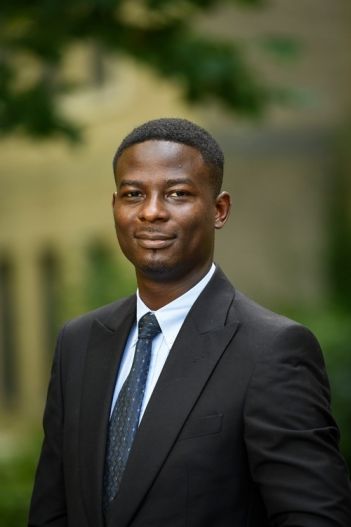
John B. Babadara is a development expert with about a decade of experience working to transform agrifood systems in Africa. He has led and supported complex, multi-stakeholder programs that create value and spur innovation in agriculture, climate adaptation, circular economy and rural entrepreneurship in Africa. He is the co-founder and managing partner of AceAgric Agritech, a management consulting firm, and the founder of Tomatrix Postharvest Innovation for Nutrition (TOPIN), a social enterprise which addresses rural poverty and food loss through value-added agro-processing. John champions sustainable development through policy intervention, innovation management and social entrepreneurship. In recognition of his significant contributions to agrifood systems in Nigeria, he was awarded the Hubert H. Humphrey Fellowship at Cornell University in 2022 by the US Department of State. Babadara holds a BSc. (ED) in Biology from the University of Ilorin, Nigeria and a Master’s degree in Development Studies from the Federal University of Dutsin-MA, Nigeria.
Seminar co-sponsors
Cornell Institute for Digital AgricultureInstitute for African Development in the Cornell Einaudi Center for International StudiesAbout the seminar series
The Harry ’51 & Joshua ’49 Tsujimoto Perspectives in Global Development Seminar Series showcases innovative approaches to development with experts from around the globe. Each year, the series attracts online registrants from over 45 countries and more than 350 organizations.
Seminars are held Wednesdays from 12:20-1:10 p.m. eastern time during the semester in 175 Warren Hall. Students, faculty and the general public are welcome to attend in-person or via Zoom.
The series is co-sponsored by the Department of Global Development, the Department of Natural Resources and the Environment, the Charles H. Dyson School of Applied Economics and Management, and the School of Integrative Plant Science as part of courses GDEV 4961, AEM 4961, NTRES 4961, GDEV 6960, AEM 6960, and NTRES 6960.
Additional Information
Program
Einaudi Center for International Studies
Institute for African Development
Landscape Architecture Fall 2024 Lecture Series: Ketevan Gurchiani
November 12, 2024
5:00 pm
175 Warren Hall
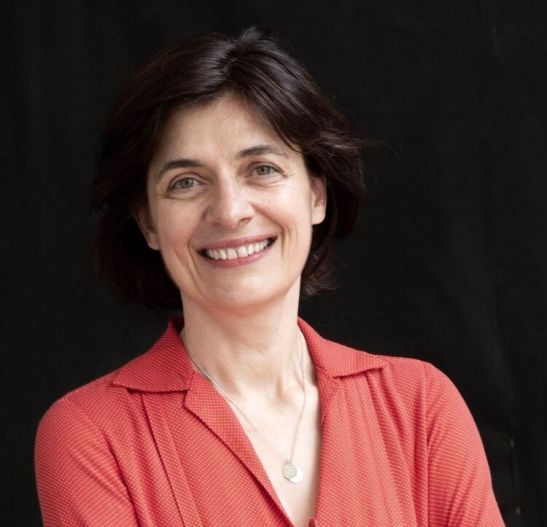
Join us in 175 Warren Hall for a lecture with Ketevan Gurchiani, Professor of Anthropology at Ilia State University in Tbilisi. This lecture is titled "On Hidden Power of Trees: Urban Resistance in Tbilisi." This event is co-sponsored by the Institute for European Studies and Einaudi Center for International Studies, Part of Global Cornell.
Additional Information
Program
Einaudi Center for International Studies
Institute for European Studies
Justice on the Brink: Thailand’s Struggle for Human Rights and Democracy
November 13, 2024
12:10 pm
Cornell Law School, 186
About our Speaker:
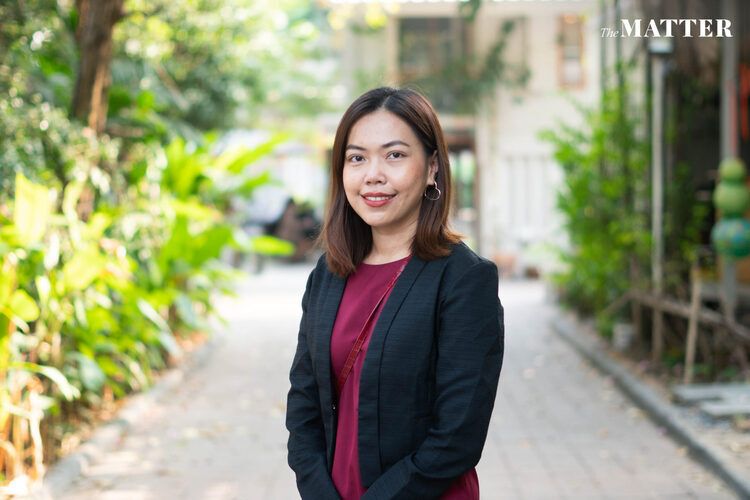
Sirikan “June” Charoensiri is the Executive Advisor at TLHR, which she co-founded after the 2014 military coup in Thailand. In 2024, she founded Engage Thailand to further democracy and human rights advocacy internationally. June has a legal background from Thammasat University and the University of Essex. She has faced threats for her advocacy work but continues to fight for justice. June has received several awards, including the Lawyers for Lawyers Award in 2017 and the U.S. State Department's 2018 International Women of Courage Award.
Additional Information
Program
Einaudi Center for International Studies
Southeast Asia Program
Russia and China in Africa; Contrasting Approaches with the U.S.
November 21, 2024
12:00 pm
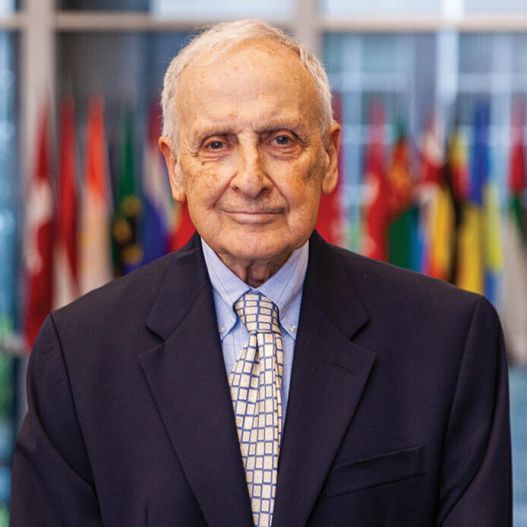
Since the end of colonialism in Africa, the continent has become a strategic battleground for influence among global superpowers. Russia, China, and the United States have each pursued distinct approaches that have shaped African nations in vastly different ways. An experienced diplomat in US-Africa relations, Ambassador Herman J. Cohen draws on his extensive career as a diplomat in the region, from the beginnings of African nationalism to the end of the Cold War, to share critical experiences from this varied history of involvement in Africa.
Ambassador Cohen explains what the past can tell us, not only regarding the enduring impact of these global power dynamics on Africa's trajectory but about the continent's evolving role in the shifting geopolitical landscape of the 21st century. He will be in conversation with Aileen Marshall, a former World Bank and USAID official, who worked closely with Ambassador Cohen during his career at the State Department.
About the Speakers
As an ambassador, advisor to Presidents, and a 38-year veteran of the Foreign Service, Ambassador Herman J. Cohen has devoted his entire professional career to African and European affairs. Cohen retired from the U.S. Department of State in 1993. His last position was assistant secretary of state for African affairs under President George H.W. Bush (1989-1993). During his 38-year career with the U.S. Foreign Service, he served in five African countries and twice in France. He was the ambassador to Senegal, with dual accreditation to the Gambia, from 1977 to 1980.
During assignments in Washington, he also served as special assistant to President Ronald Reagan (1987-1989), principal deputy assistant secretary for intelligence and research, and principal deputy assistant secretary for personnel. Through his role at the NSC in the Reagan White House, Cohen worked to bring about peaceful transitions of power in South Africa and Namibia and helped to end conflicts in Angola, Ethiopia, and Mozambique.
He is the author of a number of books, including Intervening in Africa: Superpower Peacemaking in a Troubled Continent (2000), The Mind of the African Strongman: Conversations with Dictators, Statesmen, and Father Figures (2015), US Policy Toward Africa: Eight Decades of Realpolitik (2020), and a recent memoir Africa, You Have a Friend in Washington (2023).
Aileen Marshall
Aileen Marshall has considerable professional experience of socio-economic development, political economy, governance and conflict management in Africa. Since retiring from the World Bank in 2020, she works as an international development consultant and is a member of the management team for Partnership for Transparency Fund, a non-profit. Earlier in her career, she was Senior Advisor to the Global Coalition for Africa, responsible for its political economy portfolio, and served with USAID in Africa. She holds bachelor’s and master’s degrees from the University of Durham in England.
Zoom Registration Link
Register in advance to join this virtual seminar
Host
Reppy Institute for Peace and Conflict Studies
Co-sponsors
Institute for African Development and the East Asia Program
Additional Information
Program
Einaudi Center for International Studies
Reppy Institute for Peace and Conflict Studies
Institute for African Development
East Asia Program
Global Cornell Experience Showcase

November 19, 2024
4:00 pm
Physical Sciences Building, Baker Portico & Atrium
Over 70 undergraduate students will present their international summer experiences in a poster session. Their work includes conducting research, working in Global Internships, and putting leadership into action as Laidlaw scholars.
The poster session will be in the Baker Portico & Atrium of the Physical Sciences Building. Light refreshments will be served.
Applications for Global Internships are open now. Applications for the Laidlaw Scholars Program will open on November 15.
Global Internships give undergraduate students valuable international experience in fields spanning global development, climate and sustainability, international relations, communication, business, governance, and more. They are managed by the Mario Einaudi Center for International Studies and Office of Global Learning, both part of Global Cornell.
The Laidlaw Undergraduate Leadership and Research Scholarship Program provides generous funding to first- and second-year undergraduates over two years as they pursue internationally focused research, engage in leadership training and a leadership-in-action experience, and join a global network of like-minded peers. The program is managed by the Einaudi Center.
Additional Information
Program
Einaudi Center for International Studies
Reppy Institute for Peace and Conflict Studies
East Asia Program
Southeast Asia Program
Latin American and Caribbean Studies
Institute for African Development
Institute for European Studies
South Asia Program
Migrations Program
How to Conduct Research in Malaysia & Singapore

November 14, 2024
7:00 pm
Are you a graduate student about to embark on research in Malaysia and/or Singapore for the first time? Join GETSEA for a roundtable and Q&A session with Dr. Meredith Weiss (Albany), Justin Weinstock (UC Berkeley) and Zheng Wang (Albany) to get a sense of what conducting research in these two countries entails.
This webinar is part of the GETSEA ‘How to Conduct Research in Southeast Asia’ Series, and is co-sponsored by the Malaysia-Singapore-Brunei Study Group.
Additional Information
Program
Einaudi Center for International Studies
Southeast Asia Program
Klenengan: A Gamelan Gathering

November 17, 2024
11:00 am
Klarman Hall Atrium
Featured guests Wakidi Dwidjomartono and Heni Savitri join the Cornell Gamelan Ensemble and leading members of the larger American gamelan community for a klenengan, a long and relatively informal gathering that best accommodates the temporal expansiveness of Javanese gamelan music. Audience members are free to come and go, to enjoy snacks, and even to chat quietly with one another. The relaxed atmosphere fosters a mood in which focused concentration is tempered by an equal sense of calm and comfort. Starting no later than 11am and ending no earlier than 4pm, with a hands-on workshop during a lunch break at 1pm.
Additional Information
Program
Einaudi Center for International Studies
Southeast Asia Program
Klein: “Conspiracy Influencers” Filling Political Vacuum

The bestselling author of Doppelganger: A Trip into the Mirror World delivered the 2024 Bartels lecture, then joined Cornell democracy experts for a conversation on the U.S. election.
Author and activist Naomi Klein believes that centrists, liberals, and progressives bear some responsibility for the proliferation of right-wing “conspiracy fantasies” in the run-up to the U.S. presidential election on Nov. 5.
In her Bartels World Affairs Lecture hosted by the Mario Einaudi Center for International Studies on Oct. 23, Klein described how “conspiracy influencers” thrive when the government and civil society fail to address “the myriad hardships and debasements of racial capitalism” and “an ambient feeling of deep injustice.”
“It’s a very simple principle: politics hates a vacuum. And if you don’t fill that vacuum with credible hope … someone else is going to fill it with hate.”
Klein’s visit was part of Global Cornell’s year of events and discussions exploring global democratic trends. Vice Provost for International Affairs and acting director of the Einaudi Center Wendy Wolford welcomed Klein and thanked her for “helping us better understand the world we have created and live in, because as she argues, putting our world in conversation requires confronting our doubles and shadows.”
Klein’s 2023 book Doppelganger looks at how the far right has appropriated issues and language historically associated with the left. Her research included listening to hundreds of hours of the “War Room” podcast hosted by former president Donald Trump’s close advisor Steve Bannon.
“The surging far right is feeding off of the silences of liberals and progressives,” Klein said. “When a potent issue ceases to be discussed by us …, people like [Ohio senator and vice presidential candidate] JD Vance and Steve Bannon move in and make a doppelganger reactionary version of those issues.”
This “mirror world” has very different goals than the social movements of the left. In railing against immigrants, for example, Trump, Vance, Bannon, and others “harness the power of public discontent at the powerful and redirect that anger systematically at the most vulnerable,” Klein said.
Reality has proven to be a weak weapon. Liberals and progressives once assumed that more—and more frequent—climate-related disasters would finally force skeptics to accept that climate change is real. Catastrophic storms, floods, fires, and heat waves have instead generated “parallel disinformation hurricanes.”
The right has seized on this season’s hurricanes Helene and Milton to spread false claims that Democrats are controlling the weather and the Federal Emergency Management Agency (FEMA) is broke because Vice President Kamala Harris has given all its money to undocumented immigrants.
“They get the facts wrong, but they get the feelings right,” she said. “And I think that’s one of the most important things to understand about conspiracy culture.”
That culture also obscures what Klein considers true conspiracies between large corporations, wealthy individuals and the government— including collusion between politicians and oil companies that have known for decades about the role of fossil fuels in climate change but have impeded efforts to regulate them.
“Without leaders willing to tell the truth—even hard truth—as we face increasingly dire realities, lies and conspiracy fantasies will continue to flourish,” Klein cautioned.
Klein spoke several times about the war in Gaza, calling it “the most evil thing that I have ever witnessed in my life” and urging audience members to pay attention and speak up. She closed the lecture with a reading from Doppelganger, where she described one of her own “encounters with Israel’s doppelganger politics” during a 2009 journey across the Israeli border to talk with Palestinians and see the aftermath of the first Gaza War.
“The borders and walls don’t protect us from rising temperatures or surging viruses or raging wars,” she concluded. “And the walls around ourselves and our kids won’t hold, either. Because we are porous and connected, as so many doppelganger stories have attempted to teach us.”
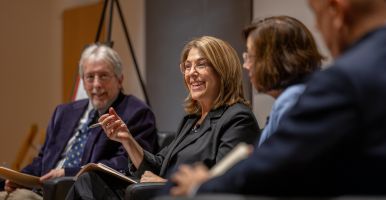
After the talk, Cornell political scientists Kenneth Roberts and Suzanne Mettler (both College of Arts and Sciences) and past secretary general of the Community of Democracies Thomas Garrett (Einaudi Center Lund Practitioner in Residence) joined Klein on stage for a panel discussion.
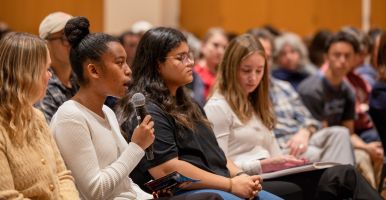
Undergraduates Afsheen Alvi ’26 (information science, Cornell Bowers CIS), Natalie Dreyer ’27 (health care policy, Cornell Brooks School of Public Policy), and Bally Warren ’26 (government, A&S) then addressed questions to Klein. All three are Undergraduate Global Scholars at the Einaudi Center.
The Einaudi Center’s annual Bartels World Affairs Lecture and related events are made possible by the generosity of Henry E. Bartels ’48 and Nancy Horton Bartels ’48.