
Einaudi Center for International Studies
The World at a Turning Point: Cornell Conference on Development Economics and Law

October 5, 2024
9:00 am
Statler Hotel
Join us October 3–5, 2024 for a three-day conference featuring distinguished Cornell faculty and prominent economists and scholars from around the world.
View and download the conference program.
The World at a Turning Point: Cornell Conference on Development Economics and Law will be an important stocktaking of the state of the global economy, with a special focus on the changing nature of labor markets, technological progress, inequality, climate change, and related laws and regulations. Speakers will highlight both empirical and theoretical research.
Cornell faculty, students, and staff are welcome to attend sessions of interest. Registration is not required for this in-person conference.
***
About the Event
A collaboration between CRADLE, a research group in the Mario Einaudi Center for International Studies, and the Department of Economics in the College of Arts and Sciences, CRADLE's annual conference offers a multifaceted perspective that spans economics, law, politics, and policy.
Additional Information
Program
Einaudi Center for International Studies
South Asia Program
Migrations Postdoc Wins Award for Excellence in Leadership

Congratulations to Sabrina Axster, who has been recognized for her innovative, initiative-driven leadership at Cornell.
Additional Information
Fulbright-Hays Awards Propel International Research

3 CALS Graduate Students Selected
Congratulations to this year's Fulbright-Hays awardees who will pursue their international research in Ghana, Mexico, and Morocco.
The three awardees are graduate students based in Cornell's College of Agriculture and Life Sciences.
The Einaudi Center has managed Cornell's applications for the Fulbright-Hays Doctoral Dissertation Research Abroad Program since 2000, supporting over 200 students in applying to this competitive opportunity. One in three of Cornell’s Fulbright-Hays applicants wins an award—much higher than the national average of one in ten.
Meet the Fulbrighters
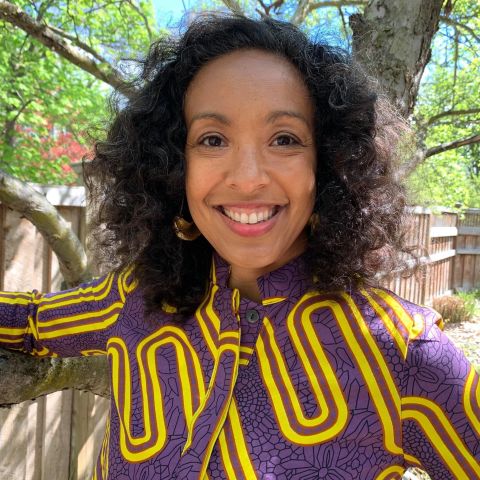
Christa Núñez
Ghana
Christa Núñez, PhD student in Global Development, will continue her work on black land politics while abroad in Ghana.
“The Back to Land Movement asserts that displaced Black and Indigenous peoples residing on marginal lands in urban regions and reservations in the U.S. are mobilizing liberatory trajectories toward food and land sovereignty in rural lands,” says Núñez.
She will collaborate with the University of Ghana to study how migration and international political exchange influence the processes of liberation and collaboration across regions.
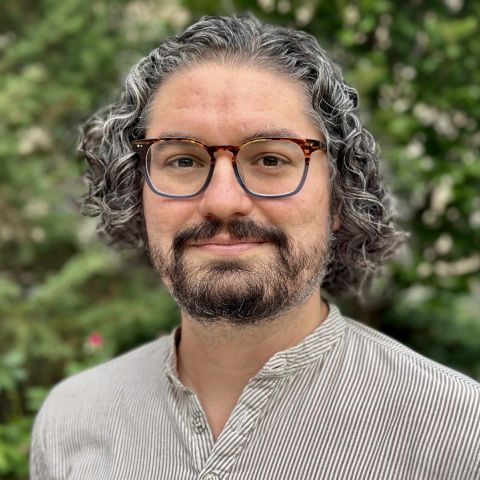
Steven McCutcheon Rubio
Mexico
Steven McCutcheon Rubio is a PhD student in Global Development who studies infrastructure security and mobility through the case study of the Corredor Interoceanico en el Istmo de Tehuantepec—"a sprawling transportation, logistics, manufacturing, and energy corridor under development in southern Mexico."
His project explores how this route “is shaping the emergence of an internal borderland in the region” and how it affects the state, agrarian communities, and migrants.

Adele Woodmanse
Morocco
Adele Woodmanse is a graduate student in the School of Integrative Plant Science Soil whose work studies adaptive agricultural landscapes in the High Atlas Mountains of Morocco.
“The High Atlas Mountains are a hotspot for biodiversity and climate change, and they conserve agrobiodiversity associated with unique cultural practices,” says Woodmanse. “Cereal crops are central to agricultural systems across the region, but little is known about cereal diversity.”
In collaboration with researchers at Mohammed VI Polytechnic University, Woodmanse seeks to better understand agricultural livelihoods in the region and evaluate the role of cereal diversity.
Additional Information
Left-leaning Leader Wins Sri Lankan Presidential Election

South Asia Program Manager on BBC
SAP program manager Daniel Bass speaks to the BBC about the election of Anura Kumara Dissanayake (video).
Additional Information
China’s Growing Export Market

Lourdes Casanova, LACS/GPV
For decades, “the world’s factory” has been churning out goods for export. But many of those products were made not by Chinese companies, but by American, European or Japanese ones looking to take advantage of China’s cheap labour. But as the country’s economy slows, domestic firms are increasingly looking abroad for growth and, as a trade war rages with the West, they have set their sights on the global south.
Additional Information
Climate Change Leaves Some Migrating Birds 'Out of Sync' and Hungry

Andrew Farnsworth, Migrations
Andrew Farnsworth, visiting scientist at the Lab of Ornithology, talks about the impact of climate change on migrating birds.
Additional Information
How Donald Trump's Chances Compare to Past Elections at 50 Day Mark
Sabrina Karim, PACS
“Younger female voters might be more attracted to Vice President Harris, who stands in strong opposition to the hyper-masculine personality and policies of the Trump-Vance ticket. She appeals to younger women, who don't want to lose their rights and see in Harris someone who will fight for them,” says Sabrina Karim, associate professor of government.
Additional Information
Musk Deletes Post About Harris and Biden Assassination After Widespread Criticism

Sarah Kreps, PACS
Sarah Kreps, director of Cornell University’s Tech Policy Institute, noted that Musk has long been trying to “push the boundaries of free speech, in part by engaging in impulsive, unfiltered comments on a range of political topics.”
Additional Information
Pepe w/filmmaker Nelson Carlos de los Santos Arias in person!
October 10, 2024
7:00 pm
Willard Straight Hall Theatre
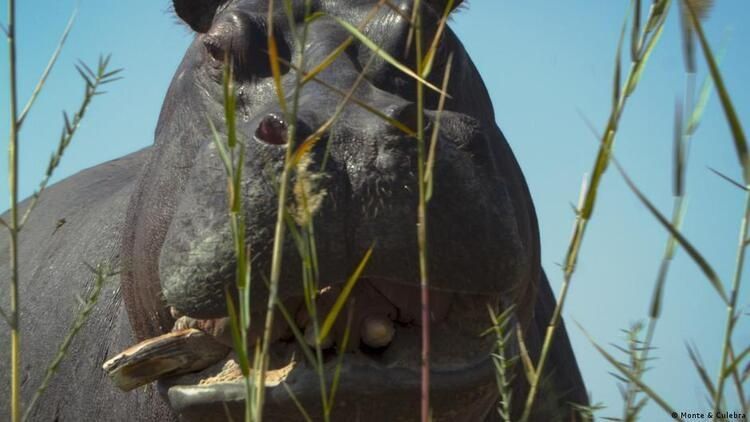
In the 1980s, Colombian drug lord Pablo Escobar imported four hippopotamuses for a personal menagerie to entertain and impress guests at his lavish estate, Hacienda Nápoles. While many of the animals either perished or were transferred to zoos after his death in 1993, the hippopotamuses survived and reproduced in the surrounding rivers, becoming an invasive species that threatened ecosystems and local fishing villages.
Based on real events, this enigmatic, feature film from Dominican filmmaker Nelson Carlos de los Santos Arias centers on Pepe, a sentient hippopotamus reflecting upon his life’s journey from Namibia to Colombia in a raspy, unconventional, meditative voiceover. "Pepe" was the name given by the Colombian press to an actual hippopotamus killed in 2009 by a hunting party aiming to stop Escobar’s hippos from infiltrating the nearby rivers.
As it shifts between Pepe’s existential reflections and the perspectives of local villagers, the film also playfully alternates between realism and fantasy — posing provocative questions about displacement, trauma, and the nature of being.
Filmmaker Nelson Carlos de los Santos Arias will join in-person for a conversation after the screening.
Pepe won the Silver Bear for Best Director at the 2024 Berlinale International Film Festival and will have its U.S. Premiere at the New York Film Festival on Saturday, October 5.
In Afrikaans, German, Spanish, and Mbukushu with English subtitles
The film screens as part of "Cine Con Cultura." Courtesy of the filmmaker and producers Monte y Culebra, Santo Domingo; 4a4 Productions, France; Pandora Films, Germany; and Joe’s Vision, Namibia.
About the filmmaker
Dominican filmmaker Nelson de los Santos Arias was born in Santo Domingo, where he also studied creative writing and media art at the Universidad Iberoamericana (UNIBE). He then studied cinema at Universidad del cine in Buenos Aires, Edinburgh College of Art, and received his MFA Film & Video at CalArts in 2014. His first short film SheSaid HeWalks was awarded a 2009 Scottish BAFTA. His first documentary, The Carriage, was included in the major Latin America art exhibition in the US at the Guggenheim Museum. His thesis from Calarts, Santa Teresa y Otras Historias, premiered at FidMarseille winning the Prix Georges De Beauregard. His film Cocote was released at Locarno winning the Golden Leopard in the Signs of Life category. He was a beneficiary of the DAAD where he started to develop his new film Pepe. It premiered in the 74th Edition of the Berlin International Festival, winning the Silver Bear for Best Director.
Additional Information
Program
Einaudi Center for International Studies
CRADLE Conference Oct. 3-5

Economists Convene to Analyze Global Economy
Talks will focus on AI and the changing nature of labor markets, inequality, and climate change impacts. Open to the public!