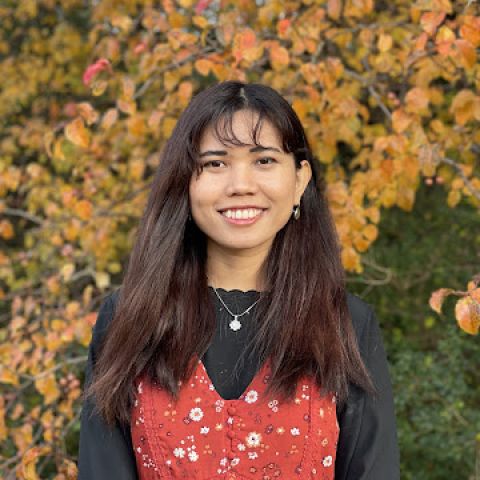
Graduate Student
Yulin Li
Reppy Fellow 2023-24
Yulin Li is a student in the MA Historic Preservation Planning program. Her research focuses on the value of informal practice as a participator in urban development and collective memory and heritage for people’s everyday life. She looks into the degrading industrial cities in China and USA and explores how collective memories are being destroyed with the industrial buildings, and discusses how to regenerate past industrial cities with the preservation of industrial memories.
Additional Information
Maria Alejandra Anaya-Torres
Reppy Fellow 2024-25
Maria Alejandra is a JSD Candidate at Cornell Law School. Her research interests include interdisciplinary approaches to law, environmental justice, and human rights. Her dissertation focuses on examining the intersection between rights-based climate litigation, climate movements, and climate governance at the global level.
Additional Information
André Nascimento
Reppy Fellow 2023-24
André Nascimento is a Ph.D. candidate in the Department of Romance Studies. His work examines how literature becomes an operative peacebuilding/peacekeeping instrument in times of armed conflicts, guerrilla warfare, or insurrections in Latin American contexts. Post 2007, the growing presence of organized crime has been accompanied by a sharp increase in rates of kidnappings, executions, and territorial encroachment.
Additional Information
Amelia C. Arsenault
Reppy Fellow 2023-24, IES Graduate Fellow 2024-25
Amelia C. Arsenault is a PhD student at Cornell University’s Department of Government. Her research considers the effects of artificial intelligence on international politics, with a particular interest in the global proliferation of contemporary surveillance and smart city technologies.
Additional Information
Program
Role
- Student
- PACS Past Graduate Fellow
- Graduate Fellow
- Graduate Student
Contact
Email: aa2758@cornell.edu
IAD Africa Community Grant
Details
The Institute for African Development (IAD) is accepting proposals for innovative community development projects to be implemented in Africa during the summer/winter of 2024-25.
Awards are made exclusively to Ph.D., M.S., or M.P.S. candidates across all Cornell colleges for overseas fieldwork expenses associated with their impact projects. Proposals should be for the actual implementation and travel expenses rather than for academic research. Undergraduates may apply for future internships communicated via our website. Projects in West Africa are highly encouraged to apply.
Continuing graduate students (alumni) are also eligible to submit proposals for projects that engage Cornell students (undergraduate or graduate) in the area of community development throughout the African continent. Applicants are broadly encouraged to submit proposals for ideas that will have tangible impacts on improving the well-being of African communities. Prospective applicants should take note of the following themes in crafting project ideas and proposals:
- Grassroots & Community-Driven: Projects should demonstrate a clear community support measure. Local communities should be engaged in the planning and implementation of the proposed projects. The project grant will not fund start-up projects or academic research.
- Commitment: Local community must demonstrate their commitment to the project and their ability to manage it successfully, openly, and honestly. The project’s budget must also include a 25% community contribution helping to ensure longevity and buy-in.
- Sustainability: The proposed project must be achievable within a reasonable time frame, and include a plan for the local community to continue in the future without the support of outside partners. Proposals should highlight any knowledge transfer needed to aid in sustainability.
Deadline
April 10, 2024
Amount
$7,000 - $10,000
How to Apply
Completed proposals and supporting documents should be submitted electronically to the Institute for African Development’s grant committee at iad@cornell.edu in Microsoft Word/PDF formats. Applicants are encouraged to submit proposals in advance of the deadline as late proposals will not be accepted. All applicants will be notified regarding the status of their submissions by May 1, 2024.
Project Proposal Format
- Title Page (1 Page)
- Project Description (250 words maximum)
- Applicant(s) Information (1 Page)
- Names | Contact Information | Department and College Affiliations | Background | Organizational/Community Role (include personnel names, titles, and contact information if included in the proposal)
- Affiliation Letter(s) (1-3 Pages)
- Whom this Project will be implemented with (i.e. NGOs, Community Groups, Institution)
- Outlining community participation, contribution, and desire for the project to be implemented within agreed upon timeline
- Whom this Project will be implemented with (i.e. NGOs, Community Groups, Institution)
- Proposal Narrative (3 Pages)
- Define the problem statement and project objectives
- Outline and explain the methodology (e.g. outlining the process for proposed project/outreach)
- Required inputs, outputs, and expected outcomes
- References, if any (1 page)
- Project Time Frame (1 Page)
- A brief description reflecting a current timeline and responsible personnel
- Budget (1 Page)
- Explain and justify the project budget. The proposed budget must give a complete and accurate assessment of all item costs and amounts. Costs should include items such as: personnel, travel, supplies, and activities as required for project competition.
- The budget must also reflect any outside funding already received through another institution or college, and include previous awards or grants.
Assessment Criteria
- Relevance, Significance, and Sustainability: Does the proposed project support the five research priorities of IAD? Will the proposed project have a meaningful and sustainable impact on the local community?
- Strength and Feasibility of Methodology: Is the project design clear? Do the inputs, outputs, and outcomes have a tangible impact on the proposed community project?
- Clarity of Work Plan and Outputs: Does the proposal clearly state the output/outcomes and deliverables? Does it provide guidelines on how to meet milestones? How is the local community involved in the project?
- Feasibility of the proposed budget: Does the budget account for reasonable expenses, and add up to the amount available ($7,000 - $10,000)? How much detail does the budget include? Is the 25% community contribution included?
Requirements
If selected to receive funding, the Grant Committee will request the appropriate bank account to transfer funds into. We encourage Cornell students to avoid receiving funds through their individual bursar accounts or personal checking accounts. If the organization is internationally registered, our team can work with you throughout the process to ensure funds are dispersed in a timely manner.
Grant recipients will be expected to maintain ongoing communication with IAD regarding progress in completing projects. Recipients will also be expected to produce at least two articles highlighting the work completed, a final report, photos/videos of their proposed project, and include a brief summary of their work on the IAD website.
Resources
The following resources may be used to better assist you with the submission process. Please note that these are simply recommendations and not strict requirements.
Additional Information
Laidlaw Graduate Mentors
Details
Shape the careers of undergraduate researchers and leaders as a graduate mentor for the Laidlaw Scholars Program.
As a graduate mentor, you will support up to five Laidlaw scholars as they complete a summer research project, ongoing leadership training, and a summer leadership in action experience. Through individual mentorship and small group facilitation, you develop relationships with students and enhance your mentorship skills.
In addition to receiving a stipend, you receive five hours of training from the David M. Einhorn Center for Community Engagement.
Amount
Graduate mentors receive a stipend of $1,500 paid in four installments over the 20-month duration of the program.
Eligibility
You must be a Cornell graduate student with research experience, preferably international. Previous experience providing mentorship to students, navigating conflict management, and managing your time effectively is required.
Experience facilitating community-engaged learning experiences, including orienting yourself to a new community, exploring social identities, and ethical principles of community partnerships, is preferred.
Requirements
- Commit to mentoring scholars for the entirety of the 20-month program, from April 2023 to November 2024. Mentors are needed on campus from June 5 to July 14, 2023.
- Attend all training and workshop sessions.
- Meet regularly with your Laidlaw scholars and program staff members.
How to Apply
Submit your application, including the following:
- Résumé (no more than two pages)
- Personal statement that speaks to your experiences with international engagement, mentoring students, community-based research, leadership development, and/or community-engaged learning (no more than 500 words)
- One Cornell faculty reference
Questions? Contact Laidlaw Coordinator Kristin Ramsay.
Additional Information
Funding Type
- Program
Role
- Student
Ariel Monzon Dela Cruz
Graduate Student
Degree Pursued: PhD
Anticipated Degree Year: 2028/2029
Committee Chair/Advisor: Christine Balance
Discipline: Performing and Media arts
Primary Language: Tagalog
Research Countries: Philippines
Additional Information
Yuxin Jia
Graduate Student
Degree Pursued: PhD
Anticipated Degree Year: 2028
Committee Chair/Advisor: Malte Ziewitz
Discipline: Science and Technology Studies
Primary Language: Chinese, English, German
Research Countries: Cambodia, Vietnam, Indonesia, Malaysia, Thailand, Brunei, Singapore
Research Interests: Infrastructure Studies
Additional Information
Eric Goh
Graduate Student
Degree Pursued: PhD
Anticipated Degree Year: 2027
Committee Chair/Advisor: Iftikhar Dadi and Kaja McGowan
Discipline: History of Art
Primary Language: Malay, Indonesian, Mandarin
Research Countries: Malaysia, Indonesia, Singapore
Additional Information
Geronimo Cristobal
Graduate Student
Degree Pursued: PhD
Anticipated Degree Year: 2027
Committee Chair/Advisor: Kaja McGowan
Discipline: History of Art
Primary Language: Tagalog, Cebuano, Indonesian