
Institute for African Development
The Revolution will be Livestreamed: Technology, Communication, and Terrorist Violence

September 22, 2022
11:25 am
Uris hall, G08
Dr. Levi West will articulate a framework for understanding the manner in which innovative forms of violence, narrative and communicative dynamics, and emergent information and communications technologies can be integrated by terrorists and other violent non-state actors to achieve strategic effect.
The framework will be applied to a contemporary case study, namely the Islamic State, while additionally making use of historical case studies including transatlantic anarchist terrorism in the late 1800s and early 1900s, and political violence undertaken in support of the liberation of Palestine in the aftermath of the 1967 War. The framework seeks to provide explanatory insight into the means by which asymmetrically weak actors are able to cause disproportionately consequential strategic effect on their adversaries. The framework can assist with understanding the non-kinetic purposes and impacts of terrorist violence, while also providing a degree of insight into the strategic utility of highly calibrated, choreographed, targeted violence. In identifying a consistent strategic calculus that underpins terrorist violence across temporal and ideological contexts, the framework also suggests that it is possible to understand the enduring nature and strategic logic to terrorist violence, despite its frequently changing character.
About the Speaker
Dr. Levi West is the Director of Terrorism Studies at the Australian Graduate School of Policing and Security at Charles Sturt University in Canberra, and the Executive Director of Leviathan Analysis, a bespoke consulting firm that provides research, advisory, and professional development services to the law enforcement and national security sectors.
Moderator
Paul Lushenko is a U.S. Army Lieutenant Colonel and a PhD student in International Relations at Cornell University.
***
Presented by the Reppy Institute for Peace and Conflict Studies. Co-sponsored by the Department of Government and the Gender and Security Sector Lab.
Additional Information
Program
Einaudi Center for International Studies
Reppy Institute for Peace and Conflict Studies
Institute for African Development
Institute for European Studies
Democracy in Hard Places
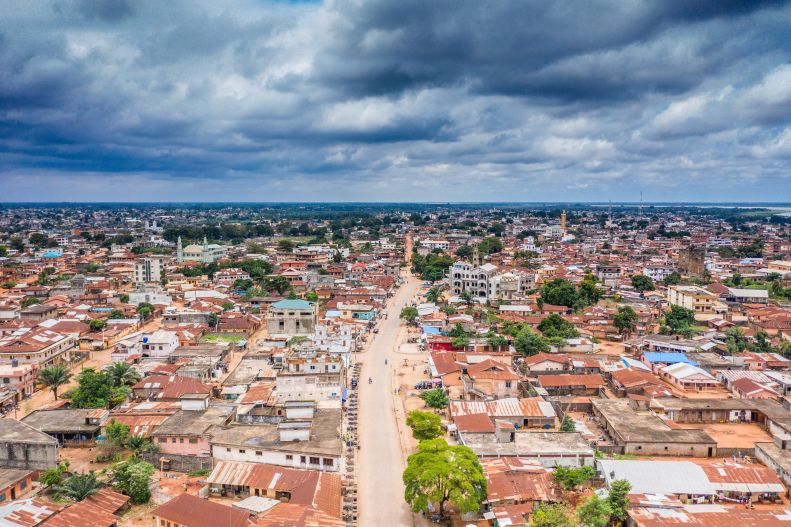
Einaudi Director on Benin and Democracy
"Benin’s transition to democracy is a complete rupture from the past," Rachel Beatty Riedl tells the Democracy Paradox podcast.
Additional Information
Peecyclers Have #1 Idea

Einaudi Faculty Research Addresses Supply Chain Shortage
Rebecca Nelson (IAD/LACS) is trying to bind urine’s nutrients onto biochar, a kind of charcoal, to enrich soil without chemical fertilizer.
Additional Information
How Bad Is the Global Food Crisis Going to Get?

Chris Barrett, IAD/SEAP
“It used to be that child stunting—the cumulative impact of poor nutrition and health—was basically every place that was poor,” says agriculture and development economist Chris Barrett in this column from writer David Wallace-Wells. “Now it’s basically just those places that are poor and have conflict,” Barrett says.
Additional Information
Congratulations, Faculty and Students

Einaudi Awards Fund Global Research and Activities
Einaudi awarded seed grants, student travel grants, and internships totaling $355,000. Congratulations to this year's recipients!
Additional Information
IAD Global Africa Monthly Webinar Series

The Role of Regional Economic Communities (RECs) in Ensuring Protection and Human Security on the African Continent: Combating Trafficking in Persons and Gender-Based Violence
Tuesday, May 17, 2022
10:00am EST / 2:00pm GMT
Open to the public | Registration via Zoom
The importance of human protection and security as the foundation of human development cannot be over emphasized. The Economic Community of West African States (ECOWAS) essentially has a “Prevention and Protection” mandate which covers the thematic areas of Humanitarian Affairs, which includes disaster risk reduction, drug prevention and control, and social affairs; Gender and Development which addresses, among others, gender and climate change, women and trade, gender and migration, gender and political participation; Counter Trafficking In Persons; Child Rights/Protection and Child Labor, which addresses violence against children; and Emergency Protection which covers refugees and internally displaced people (IDPs), mixed-migration, and international humanitarian law programs. Further, the Women, Peace and Security and Civil Society Programs are of central importance from the perspective of women’s equality and agency as well as in terms of a social mobilization approach that engages civil society and other non-state actors.
To advance its protection mandate and promote the institutionalization of protection and human security in the ECOWAS region, the Department of Social Affairs and Gender (DSAG)/DHD in 2021 introduced an integrated human security programming approach which considers the interconnection of all the above mentioned themes. The integrated approach supports member states to institutionalize a whole of government/state and society coordinated approach and shared responsibility to ensuring the protection and human security of every individual citizen and especially people in vulnerable situations. The integrated approach is hinged on the many regional normative frameworks in the different areas of concern mentioned above. They include policies on gender-based violence (GBV) and on sexual harassment, and its plan of action to promote a safe space for women and girls in the region. Others are the ECOWAS Child Policy and Strategic Plan of Action (2019-2030); the Strategic Framework for National Child Protection Systems Strengthening for Prevention and Response to Abuse, Violence and Exploitation of Children (2017); ECOWAS Roadmap on Prevention and Response to Child Marriage (2019-2030); ECOWAS Plan of Action on Implementation of International Humanitarian Law (2019 -2023), and the ECOWAS Plan of Action for the Combat of Trafficking in Persons, especially Women and Children (2018 -2023).
Similarly, other Regional Economic Communities (RECs) are involved in promoting the human development of their citizens and thus the proposed topic of the joint ECOWAS/Cornell-2022 Cornell IAD Global Africa Monthly Webinar Series is for ECOWAS and other RECs to share experiences in their work in ensuring protection and human security on the African continent. Particular focus will be on ECOWAS and other RECs work in combating human trafficking and gender-based violence as they are very critical to protection and human security. The focus is also premised on the growing menace and adverse impact of both issues on the vulnerability, victimization, and violation of peoples’ rights, quality of life, and in some cases, the survival of people in vulnerable situations. Unfortunately, the COVÍD-19 pandemic further worsened the protection and human security of persons on the African continent because the stringent response measures, especially the lockdown in most of 2020, undermined weak public services and systems which led to increased vulnerability of many people, especially children and women. From studies, it became clear that GBV was indeed a shadow pandemic as the incidences of abuses increased astronomically.
Webinar Schedule
10:05am - Welcome, Greetings and Introduction of the Keynote Speaker, Commissioner Dr. Siga Jagne
by N’Dri Assié-Lumumba, Professor of Africana Studies & Director of the Institute for African Development
10:10am - Introduction of Special Guests/Panelists of the Regional Economic Communities (10 min.) by Commissioner Dr. Siga Jagne
10:20am - Film on Gender-Based Violence - Mrs. Nana Oguntola, CEO, Local Media Initiatives
10:35am - Keynote Address - Dr. Siga Fatima Jagne, ECOWAS Commissioner for Social Affairs and Gender, Abuja, Nigeria
11:00am - Experience Sharing Panel Presentations and Discussions by Special Guests, Chaired by Commissioner Siga Jagne (60 minutes)
- Honorable Christophe Bazivamo, Deputy Secretary General / Productive and Social Sector, Arusha, Tanzania
- Madame Beatrice Hamusonde, COMESA Director of Social Affairs and Gender, Lusaka- Zambia
- Ms. Fathia Alwan, IGAD Director of Social Affairs, Djibouti City, Djibouti
- Her Excellency Mrs. Kapinga Yvette Ngandu, Commissioner for the Promotion of Gender, Human and Social Development, The Economic Community of Central African States, Kinshasa, Democratic Republic of the Congo
- Ms. Raheemat Momodu, Head Human Security and Civil Society Division, Directorate of Humanitarian and Social Affairs, Department of Social Affairs and Gender, ECOWAS Commission, Abuja, Nigeria
- Dr. Odile Ndoumbé Faye, Chargée de Programme Genre et Société Civile, Centre de la CEDEAO pour le Développement du Genre, Dakar, Senegal
12:00pm - Questions, Comments from the audience/participants (30 min.) - please use the chat box or the Q & A box
12:40pm - Synthesis by Commissioner Siga Jagne (10 min.)
12:50pm - Words of Thanks and Closing Remarks by Prof. Assié-Lumumba, Africana Studies Professor and IAD Director
Bios:
N’Dri Assié-Lumumba is the Director of the Institute for African Development and Professor in Africana Studies and Research Center at Cornell University, where she was the Africana Studies Director of Graduate Studies and Director of the Program on Gender and Global Change. She served as the President of the World Council of Comparative Education Societies and Chair of the Scientific Advisory Committee (SAC) of UNESCO’s Management of Social Transformation (MOST). Professor Assie-Lumumba is a Distinguished Visiting Professor at the University of Johannesburg (South Africa), and on the faculty of Abidjan Business School-École de Commerce (ABSEC) at Université Félix Houphouët-Boigny. She was a Carnegie Diasporan fellow at the University of Ghana, Distinguished Visiting Professor at the American University in Cairo (Egypt), Visiting Professor at Hiroshima University (Japan), and Resident Fellow at the International Institute for Educational Planning in Paris (France). Her numerous awards include Fellow of the World Academy of Art and Science, Fulbright Senior Research Fellow, Cornell/Ford Foundation Fellow, 2010 Distinguished Africanist and 2017 Ali Mazrui Outstanding Publication/Book & Educational Activities Awards of New York State African Studies Association (NYASA), and Fellow of the Japanese Ministry of Education. Her extensive publications on higher education, indigenous knowledge, and equity/gender include her recently co-edited book: Re-visioning Education in Africa: Ubuntu-Inspired Education for Humanity. She is the founding editor of Global Comparative Education: Journal of the WCCES. She earned her PhD in comparative education from the University of Chicago. Her published works include Education and Development: Outcomes for Equality and Governance in Africa (Palgrave Macmillan, 2020); Women and Higher Education in Africa: Reconceptualizing Gender-based Human Capabilities and Upgrading Human Rights to Knowledge (Cepared, 2007); and "Harnessing the Empowerment Nexus of Afropolitanism and Higher Education: Purposeful Fusion for Africa’s Social Progress in the 21st Century.” Journal of African Transformation 1, no. 2 (2016): 51–76.
Keynote Speaker: Dr Siga Fatima Jagne is currently the Commissioner of Social Affairs and Gender at the Economic Community of West African States (ECOWAS) where she leads the Commissions work in these areas. She is an Academic of international acclaim and a Senior Advisor on Gender, Research, Social Development, Youth Policy, Poverty, and a communications expert bringing over 27 years of research and practical experience in monitoring and evaluation to these development challenges. Dr Jagne received her Bachelor of Arts degree, magna cum laude in English and French from Spelman College in Atlanta, Georgia in 1985, the same year she was also awarded the prestigious Thomas J. Watson Fellowship to do independent research on the Politics of Black French Literature. After her Watson year, Dr. Jagne attended Atlanta University then Cornell University in Ithaca, New York where she received her master’s degree in 1989, in African and African American Studies. That same year, she proceeded to the State University of New York at Binghamton where she studied Comparative Literature, specializing in Philosophy, Critical Theory and Women’s Studies. She received her PhD in 1994.
In 1992, she returned to her alma mater, Spelman College, as Assistant Professor of English, African Diaspora Studies and Women Studies. At Spelman, she was actively involved with the Ford Diversity Project, the Women’s Center and worked on issues of diversity in the curriculum. She was part of the interdisciplinary team that first taught ‘the AFRICAN Diaspora and the World’ course at Spelman College. In 1996, she moved to Dakar, Senegal and taught at the CODESRIA Gender Institute whilst researching on Wolof women’s performance poetry and working on popular culture. Dr. Jagne has also been doing research on and in Africa for the last three decades, focusing on gender-related issues. Her PhD dissertation, an Interdisciplinary study entitled “African Women and the Category Woman in Feminist Theory,” is the culmination of years of research as a scholar from The Gambia, as a student and professor in the United States, as a gender expert, and as an African woman.
She returned to her native Gambia in 1997 to become the Executive Director of the National Women’s Bureau. In that role, she oversaw national gender policy, projects, and programs for the country. She was later chosen as one of the key architects to start the University of The Gambia, becoming a founder member of the first University Senate and Vice Chairperson of the Governing Council. In 2004, Dr. Jagne was appointed to work as head of the Pro-Poor Advocacy Group (Pro-PAG), a Department for International Development (DFID) program on pro-poor poverty and budget research, the results of which were used for advocacy for the inclusion of the poor with the National. In 2008, Dr. Jagne became the Director and a Partner at the International Development Support Services (IDSS), a global consulting firm. Dr. Jagne serves on numerous boards, advisory councils, ethics committees, advisory boards of academic journals and institutions. She is the author of two books and numerous interdisciplinary articles.
Ms. Hamusonde is the Director of Gender and Social Affairs at COMESA. She is responsible for programs on gender equality, women’s empowerment, youth engagement and empowerment, health and social affairs. She oversees Initiatives on small scale cross border trade to address gender related issues. Ms. Hamusonde oversees gender and youth mainstreaming in COMESA Secretariat, COMESA Institutions and Member States in line with the COMESA Gender Policy, Social Charter and Youth Program frameworks. She has led the development of a joint COMESA, EAC and ECOWAS digital platform for women in business targeting 38 Member/Partner States of the three Regional Economic Communities. Ms. Hamusonde served at the Women’s Justice and Empowerment Specialist at the USAID Zambia where she supported international and local organizations and the Zambian Government on the implementation of Gender Based Violence Prevention, GBV Survivor Support, and GBV Survivor Access to Justice programs. She supported the establishment of GBV survivor support centers in the country of Zambia. She chaired the Cooperating Partners’ Gender Group. Ms. Hamusonde led gender mainstreaming role in all USAID Zambia programs. and women’s economic empowerment initiatives. Ms. Hamusonde also worked at Plan International Zambia Country Office as Advisor on Child Protection, Gender, Women and Community Empowerment. She built joint partnership with International Organizations, Local Organizations and Zambia Police on address GBV in the Country. She chaired the INGOs Group on Child Protection. Before Plan, Ms. Hamusonde served as the Executive Director for Zambia Association for Research and Development, where she led research and advocacy on the status of women and implementation of regional, continental and international legal and policy frameworks on women and child rights. At ZARD she led the publishing of a book – Beyond Inequalities: Women in Zambia; Beijing +5 NGO Shadow Report; and other publications. Ms. Hamusonde has also worked for the Zambia National Women’s Lobby to advocate for women’s participation and representation in political decision-making. Ms Hamusonde’s first job was in the Ministry of Education where she worked as a teacher of languages and literature. Ms. Hamusonde has a Master of Arts Degree in Gender Studies (2003), Bachelor of Arts Degree with Education (1990), Post Graduate Diploma in Human Rights Law (2007), all from the University of Zambia, and Certificate in Monitoring Women’s Rights (2008) from Human Rights Education Associates, USA.
Hajiya Raheemat Momodu is currently the Head of Human Security and Civil Society, ECOWAS Commission in Abuja, Nigeria. She was the pioneer ECOWAS Representative to the African Union for 10 years (2008-2018). In her current position, she oversees the following Units/Programs- Trafficking In Person, Child Rights Child Protection and Child Labor, Emergency Protection, Civil Society Engagement and Women Peace and Security. She facilitated the launch of the FemWise West Africa Network of Women Peacebuilders, in November 2019 making ECOWAS the first REC to do so. She boasts of a vast and diverse working experience; in the United Nations Population Fund (UNFPA) as Pioneer National Program Officer / Gender and Youth Programs, European Union Delegation to Nigeria (EU) as Pioneer Program Manager Good Governance and Human Rights/ Gender Focal person, Friedrich Ebert Foundation (FEF) as Pioneer Project Officer/ Gender Equity and USAID/Office of Transition Initiative as Program Manager Conflict Management and Good Governance. She also had a rich career in journalism and left the sector as a Group Assistant Political Editor of the defunct Concord Group of Newspapers in 1999.
She holds three Masters Degrees in Managing Peace and Security in Africa; Gender and Development; and Geography and Planning with specialization in Cartography and Remote Sensing and is currently studying for a PHD in Peace and Conflict Studies. She is a British Government Chevening Scholar (1999/2000) and an alumna of United States Department of State’s International Visitors Leadership Program (IVLP) on Human Rights Advocacy. She has attended many professional courses including Senior Executives in National and International Security Harvard University’s Kennedy School, Cambridge- Boston (2013); NATO Crisis Management (M3-52-C-12)- 2012; African Union Senior Mission Leadership (2010) Hajiya Momodu is currently the pioneer President of the ECOWAS Commission Women Forum and a member of Security Sector Reform (SSR) Advisory Network to the United Nations, member of the African Security Sector Network (ASSN). She was recognized as one of the 107 Nigerian Women Who #ChooseToChallenge in commemoration of the 2021 International Women’s Day by OSIWA and BAOBAB. She is a Fellow of the Institute of Management Consultants, Nigeria, member of the Association of Communication Scholars & Professionals of Nigeria (ACSPN), Co-Founder- Journalism and Development Seminar (JADE Seminars) and member of the Feminism Lab facilitated by the Friedrich Ebert Foundation Nigeria.
Hon. Christophe Bazivamo is the current EAC Deputy Secretary General in charge of Productive and Social Sectors. Prior to his appointment as Deputy Secretary General, Hon. Bazivamo was a Member of the East African Legislative Assembly (EALA). Between 2009 and 2011, Hon. Bazivamo held various ministerial positions in the Republic of Rwanda, including Minister for Lands, Environment, Forestry, Water and Mines; Minister of Local Government; and Minister for Agriculture and Animal Resources among others. In 2005, he was the Minister of Internal Security and in 2000, 2001 and 2002 he served as Executive Secretary of the National Electoral Commission. Hon. Bazivamo is an agricultural engineer by profession and holds vast experience as a trainer. Hon. Bazivamo worked with a number of NGOs before joining the Public Sector as a Governor and later on as the first Executive Secretary of the Rwandan National Electoral Commission (NEC) from where he was appointed Minister.
Mrs. Nana Oguntola CEO and Founder of Local Media Initiatives CIC believes in placing the power to tell stories in the hands of the marginalized and believes that sustainable development can only be achieved through the triple bottom line of economic growth, social equality, and environmental protection. She has over twenty years of experience in freelance production in film and TV, event management, training, and consulting. She operates with a high degree of acumen across film, television, media, events, and training industries. She earned an Executive MBA in the Creative Industries from Ashridge Business School in Berkhamsted, United Kingdom.
Her Excellency Mrs. Kapinga Yvette Ngandu is the Commissioner for the Promotion of Gender, Human and Social Development, The Economic Community of Central African States. The commissioner has in-depth knowledge of the statutes, mechanisms, structures and functioning of international (UN, UNDP, UN Women, UNESCO, UNICEF) and sub-regional (AU, ECOWAS, ECA, ECCAS, COMESA, IGAD, SADC) institutions in the fi elds of Gender, Peace, Security, Democracy and Governance. More specifically, early warning, preventive diplomacy, mediation processes and political negotiations; reconciliation processes and dialogue; Transitional Justice; and the implementation of UN Resolution 1325 (and related resolutions) relating to the principles of the advancement, inclusiveness and protection of women. In twenty years (20 years) of career in the diplomatic world, Ms. Ngandu has worked in 6 international organizations and diplomatic bodies: the African Peer Review Mechanism (AU-APRM) in Johannesburg, the African Union Commission in Addis Ababa, the United Nations Secretariat in New York, the Institute for Peace in New York, the National Endowment for Democracy in Washington DC, as well as the US State Department in Washington DC. She also oversaw and coordinated the production of thematic reports to enable the various Chairpersons of the AU Commission (Jean Ping, Ms. Dlamini Zuma, Mr. Mahamat Faki), The Commissioners for Peace and Security and the AU Member States to take appropriate action on emerging threats to peace and security in Africa: such as the AU reports on “election-related conflicts” in 2008; the AU report on “Impunity, Justice and National Reconciliation” in 2009; and the report on “Women and Children in Armed Conflict” in 2010; the report on “Managing Unconstitutional Changes of Government” in 2012, and finally the AU Decision on the Culture of Peace, in 2015. She served as Diplomatic Advisor to the Presidency of the Democratic Republic of Congo, from April 2019 to October 2019, within the Executive Committee of the National Monitoring Mechanism of the Addis Ababa Framework Agreement for Peace, Security and Cooperation for the DRC and the Great Lakes Region. Ms. Ngandu previously worked as a Senior Program Officer at the International Institute of Peace (IPI) based in New York from 2003 to 2008. Prior to joining IPI, she worked with the National Endowment for Democracy (NED) and Voice of America in Washington. DC and the U.S. Department of State in Washington DC. She holds a Master’s degree in Public Administration and International Relations from Bowling Green State University. Some of her publications include “Positioning the APRM as an Early Warning Tool for Conflict Prevention”, published by the African Union African Peer Review Mechanism Newsletter, Governance Link, May 2020; and, “Electoral Conflicts and Political Violence: Strengthening the Role of the African Union in Conflict Prevention, Management and Resolution”, report of the AU Panel of the Wise (New York, International Institute of Peace, African Union, 2010).
Dr. Odile Ndoumbe Faye Academic, Sociologist and Researcher, Senior Specialist on Gender, Women, Family, Youth, Peace and Security in the African Region. Dr. Faye holds a PhD in Sociology from Gaston Berger University (UGB) (Senegal), a Postgraduate Degree in Information and Communication Sciences from Cheikh Anta Diop University (Senegal) and a Postgraduate Diploma in Human Resources Management in International Organizations from CESAG (Dakar – Senegal). She successively held the positions of Head of Documentation Department at the Training and Research Unit of Legal and Political Sciences at UBG, Head of the Communication Division of UGB and Director of the Antenna of UGB in Dakar. After 17 years at the UGB, which she headed from October 2007 to March 2016, she moved to the Executive Secretariat of a continental NGO named AAWORD (Association of African Women for Research and Development), which brings together 22 African countries in Africa and the diaspora. Dr. Faye joined the ECOWAS Commission in April 2016, precisely, at the ECOWAS Gender Development Centre (EGDC) as Program Officer for Gender and Civil Society. She works particularly on the designing and implementation of gender programs and for the mainstreaming and operationalization of ECOWAS gender policies in the 15 ECOWAS member states. She also works closely with civil society actors to give them the necessary support for the development and implementation of innovative gender projects in the region.
Dr. Faye has worked on development issues in the world. She has been a member of many international and continental networks such as LDC Watch, the African Women Caucus on Gender Equality, the African Women Lobby on Gender Equality, African Women CSW Group, the CSO group working with the World Bank and the African Development Bank. Dr Faye is also very committed to women movements in Senegal and development at the grassroot level. She has occupied the positions of Chairperson of the Scientific Committee of Conseil Sénégalais des Femmes (COSEF) (Council of Senegalese Women) and led the scientific work for the adoption of the parity law in Senegal. She has also been a member of the Senegalese National Observatory on Parity and led the Scientific Committee of the International Conference on Parity organized by the Senegalese Government in 2011. Furthermore, she coordinated the Forum of African Francophone Women during the 15th Summit of Francophony held in 2014 in Dakar, Senegal. Through these works, Dr. Faye has contributed to the improvement of the conditions of women, girls, boys and children in the Africa Region and to the visibility of the African Gender Equality Agenda in the World.
Ms. Fathia Alwan, Director, Health & Social Development. Intergovernmental Authority on Development (IGAD) in Eastern Africa
Ms. Alwan is the Director for Health and Social Development of the Intergovernmental Authority on Development (IGAD) as of May 2017. Prior to that (between 2005 and April 2017), Ms. Alwan served as Program Manager of the Health and Social Development of IGAD. She started her career at IGAD as a Desk Officer for Health but over the years she managed to expand the program to include a wide-range of the social development sector: health, social protection, youth, population and development, migration, education, including science, technology and innovation; culture and sports. She is a visionary committed and enabling leader who has transformed IGAD from a predominantly agriculture and security-focused entity to an institution committed to the promotion of broad-based social development programs.
Additional Information
June Opportunities for Faculty
ICC Grants and Fulbright-Hays FRA
Get funding support for your international teaching and research. Letters of intent due in June! Find out how to apply.
Additional Information
Ensuring Protection and Human Security on the African Continent
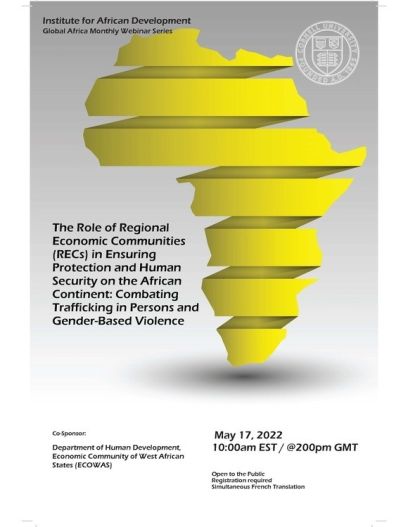
May 17, 2022
10:00 am
Tuesday, May 17, 202
10:00am EST / 2:00pm GMT Registration link
The importance of human protection and security as the foundation of human development cannot be over emphasised. The entire DSAG/DHD essentially has a “Prevention and Protection” mandate which covers issues of Humanitarian Affairs, Disaster Risk Reduction, Drug Prevention and Control and Social Affairs; Gender and Development which addresses, among others, Gender and climate change, women and trade, Gender and migration, Gender and Political participation ; Counter Trafficking In Persons; Child Rights/ Protection and Child Labour (which addresses Violence Against Children –VAC) ; Emergency Protection which covers Refugees and IDPs, Mixed-Migration and International Humanitarian Law Programs. Critically, the Women Peace and Security and Civil Society Programme are of central importance from the perspective of women’s equality and agency and in terms of a social mobilization approach embracing Civil Society and other Non-State Actors.
To advance its protection mandate and promote the institutionalisation of protection and human security in the ECOWAS region, the DSAG/DHD in 2021 introduced an integrated Human Security programming approach which considers the interconnection of all the above mentioned themes. The integrated approach supports Member States to institutionalise a whole of Government/ State and society coordinated approach and shared responsibility to ensuring the protection and human security of every individual citizen and especially people in vulnerable situations.
Additional Information
Program
Einaudi Center for International Studies
Institute for African Development
Inequalities, Identities, and Justice - International Studies Summer Institute 2022

June 28, 2022
9:00 am
A.D. White House
The 2022 International Studies Summer Institute (ISSI), a professional development workshop for practicing and pre-service K–12 teachers hosted annually by the Cornell University Einaudi Center for International Studies in collaboration with the Syracuse University South Asia Center, will be exploring inequalities, identities, and justice.
During this cross-curriculum workshop, educators will engage in activities that integrate world-area knowledge from regions such as South Asia, Southeast Asia, Latin America, and Africa by exploring inequalities, identities, and justice, both historical and contemporary issues. Teachers will explore ideas on how to use the experience of the protests against racism and structural inequality, which crescendoed in the United States and more than 60 countries around the world in 2020. Doing so will grant them extensive knowledge about intersectional inequalities worldwide where marginalized groups struggle to access resources, health, rights, security, and well-being. Topics will address inequalities experienced across the globe, including cleavages in a society like race, religion, gender and sexuality, class, caste, language, and ethnicity.
The nature of this theme, the 2022 ISSI, will be suitable for elementary, middle, and high school teachers from various disciplinary backgrounds. Participating teachers will complete a lesson plan that incorporates content from the workshop with the support and guidance of our outreach staff.
Topics and list of presenters:
Social injustices vulnerabilities and climate change in the Brazilian Amazon, by Fabio ZukerFábio will present how climate change exacerbates already existing inequalities, injustices, and vulnerabilities, taking as a departing point his own fieldwork at the Tapajós River (Pará Brazilian amazon), and the questions around the denial of indigenous identity by soy farmers. He will also mention other examples of how environmental conflicts and soybean expansion in the savannah-like biome named cerrado have exacerbated the sanitary vulnerabilities of the Xavante people during the Covid-19 pandemic.
Education and Social Transformation of Africa: Historical and Contemporary Factors of Gender Inequality, by N’Dri Assie-Lumumba The contemporary European-inherited systems of formal education that were introduced to African societies during the colonial era, were at their inception imbued with inequality on various grounds. Among the grounds of inequality, the gender-based imbalance was the most persistent, with typical patterns of female under-representation in education. In the 20th century, after independence, there was considerable progress in female enrolment, due to robust policies. However, in many countries, a plateau had peaked dating decades back. However, numerous reforms that are in place, lack either consistent implementation or tend to reproduce and intensify gender inequality. The gaps, which exist at the basic level, tend to generally widen in higher education. Furthermore, post-secondary education tends to be characterized by gender-based disciplinary clusters that have negative implications for the female population. These distortions impede access to education for girls and women, a basic human right. Furthermore, considering the centrality of formal education that translates to socio-economic attainments of individuals, families, and ultimately national development of the State, it is imperative to undertake educational policies that are transformational.
Hindu Exceptionalism in India, by Mona Bhan In this talk, Bhan discusses how Narendra Modi and his right-wing Hindu allies’ from the BJP, India’s ruling Hindu majoritarian political party, have diligently promoted “Hindu exceptionalism” as a framework for everyday governance (Bhan and Bose 2020). A vital goal of the BJP government since it came to power in 2014 was to establish India as a “Hindu Rashtra (nation)” and frame Muslims as foreign invaders responsible for diminishing Hindu glory and weakening India’s ancient and unique Hindu civilization. Bhan draws from her ethnographic fieldwork in the Indian-occupied region of Kashmir to discuss how Hindu exceptionalism has sanctioned unprecedented violence against Kashmir’s Muslim populations. She also explores how this legitimized settler-colonial interventions to materialize India’s transformations into a Hindu Rashtra.
The Rohingya Question in Myanmar’s Rakhine State, by Kyaw Yin Hlaing Since 2012, Myanmar's Rakhine State has been a site of communal violence and human rights violations. While around a million Rohingya now live in Bangladesh as refugees, hundreds of thousands of others were (and remain) internally displaced. A large majority of Rohingya have lost not only their homes, but also their citizenship and access to higher education and proper medical care. Mutual misunderstandings and lack of trust between Rohingya and members of other ethnic groups, especially the Rakhine, have caused persistent communal tensions that often boil over into communal violence. As a result, Rakhine State had become the most volatile state in Myanmar. However, there have recently been some positive developments. Awareness-raising on social cohesion by local civil society organizations and the political changes that have occurred following the military coup in 2021 have contributed to these improvements. This talk will explain how communal tensions between the Rohingya and other ethnic groups have evolved and how recent political changes have contributed to ameliorating these tensions in Rakhine State.
Teaching ‘the East’ in ‘the West’: From Postcolonial Theory to Pedagogical Practice, by Dr. Andrew Harding One of the major criticisms levelled at area studies disciplines over the last twenty years is that the division of the globe into distinct geo-political regions (e.g. “East Asia”) was initially undertaken in the interest of U.S. national security, rather than with a mind to greater cross-cultural understanding and collaboration. As a result, flagship Area Studies classes such as “Introduction to Japan” have tended to posit the target culture as an object “over there” which requires analysis precisely because it is distinct from “our” way of life “over here”. In a world in which border- and culture-crossing is increasingly the normal experience however, this assumed affinity between region and identity is becoming rapidly out of date and, from the perspective of students, largely irrelevant to their experience of the world as a single global continuum. In this presentation, I foreground a pedagogical approach in which I center authorial positionality, rather than national positionality, in relation to East Asian histories and societies. Rather than assuming that an author speaks for Japan, for example, what might it mean to think of them writing from or even to Japan? Why limit area studies to a study of those we assume to be from or representative of the “area” at all? By thus foregrounding an approach to “area” from a social, rather than national-cultural positionality, students are encouraged to consider social relations as a global operation, rather than one that is nationally or even culturally confined.
Registration is required https://bit.ly/22ISSI
Sponsored by Syracuse University, Moynihan Institute for Global Affairs, South Asia Center, Cornell University’s Mario Einaudi Center for International Studies, Southeast Asia Program, South Asia Program, Institute for African Development, East Asia Program, Latin American Studies Program, Cornell Institute for European Studies, TST-BOCES, U.S. Department of Education Title VI Program
Additional Information
Program
Einaudi Center for International Studies
Reppy Institute for Peace and Conflict Studies
East Asia Program
Southeast Asia Program
Latin American and Caribbean Studies
Institute for African Development
South Asia Program
Institute for European Studies
"I see your humanity"

Nobel Laureate Offers Wisdom for Forging Lasting Peace
Leymah Gbowee spoke to a crowd of more than 450, with hundreds more online, at the first in-person Bartels lecture since 2019.